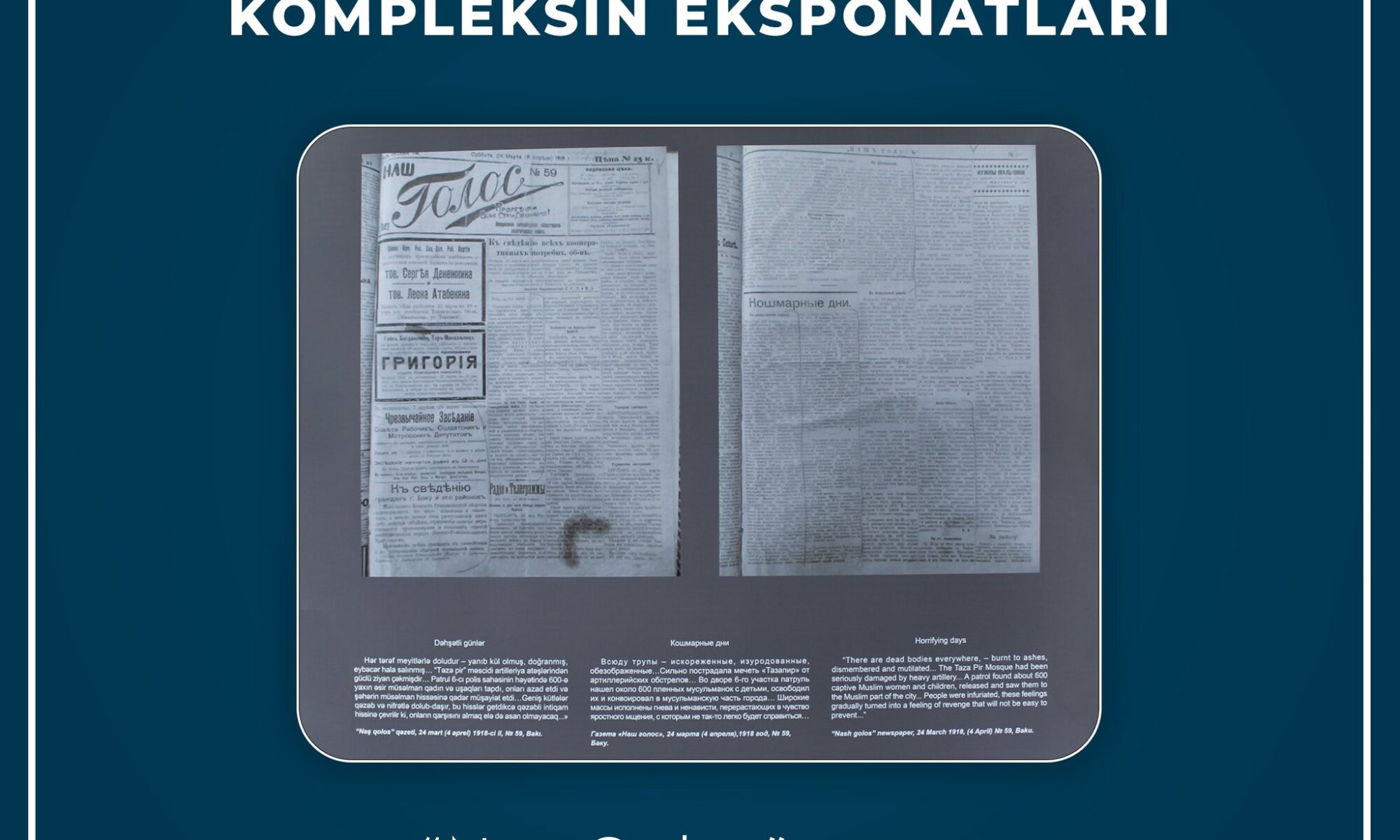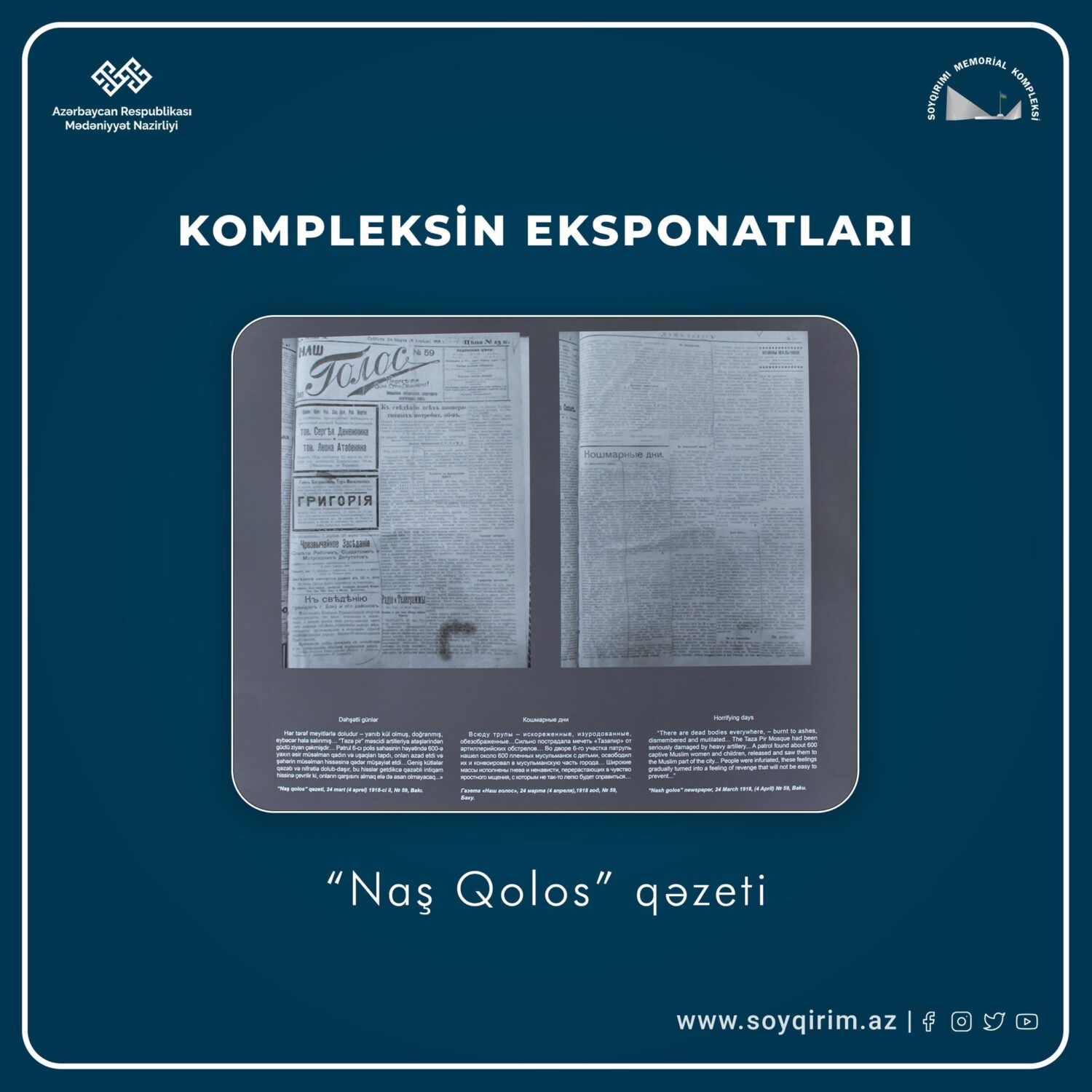
Horrifying days


“There are dead bodies everywhere, – burnt to ashes, dismembered and mutilated… The Taza Pir Mosque had been seriously damaged by heavy artillery… A patrol found about 600 captive Muslim women and children, released and saw them to the Muslim part of the city… People were infurated, these feelings gradually turned into a feeling of revenge that will not be easy to prevent…”
“Nash golos” newspaper, 24 March 1918, (4 April) № 59, Baku.

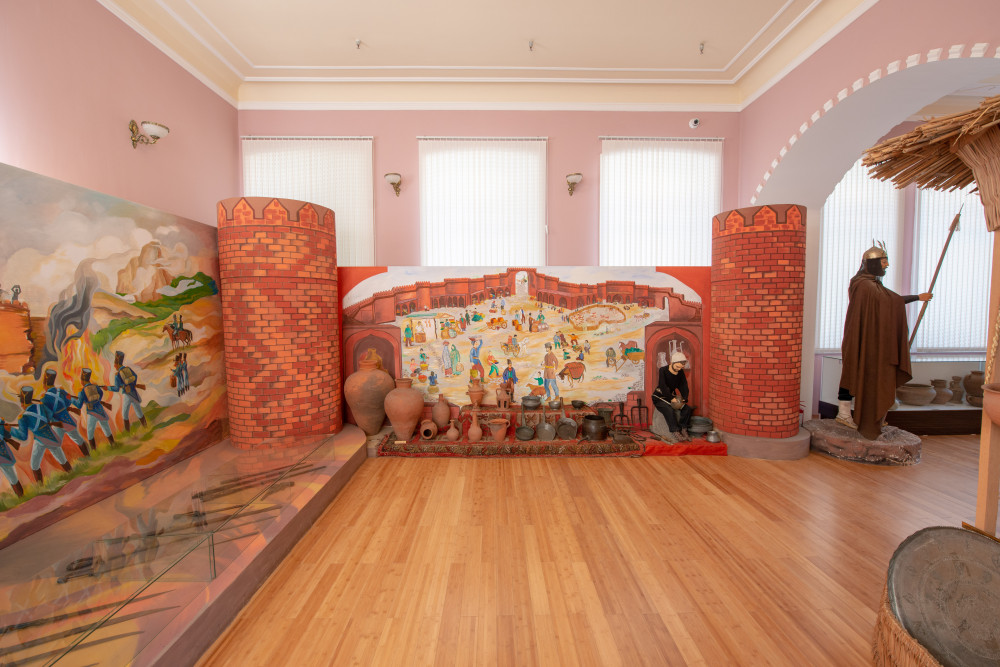
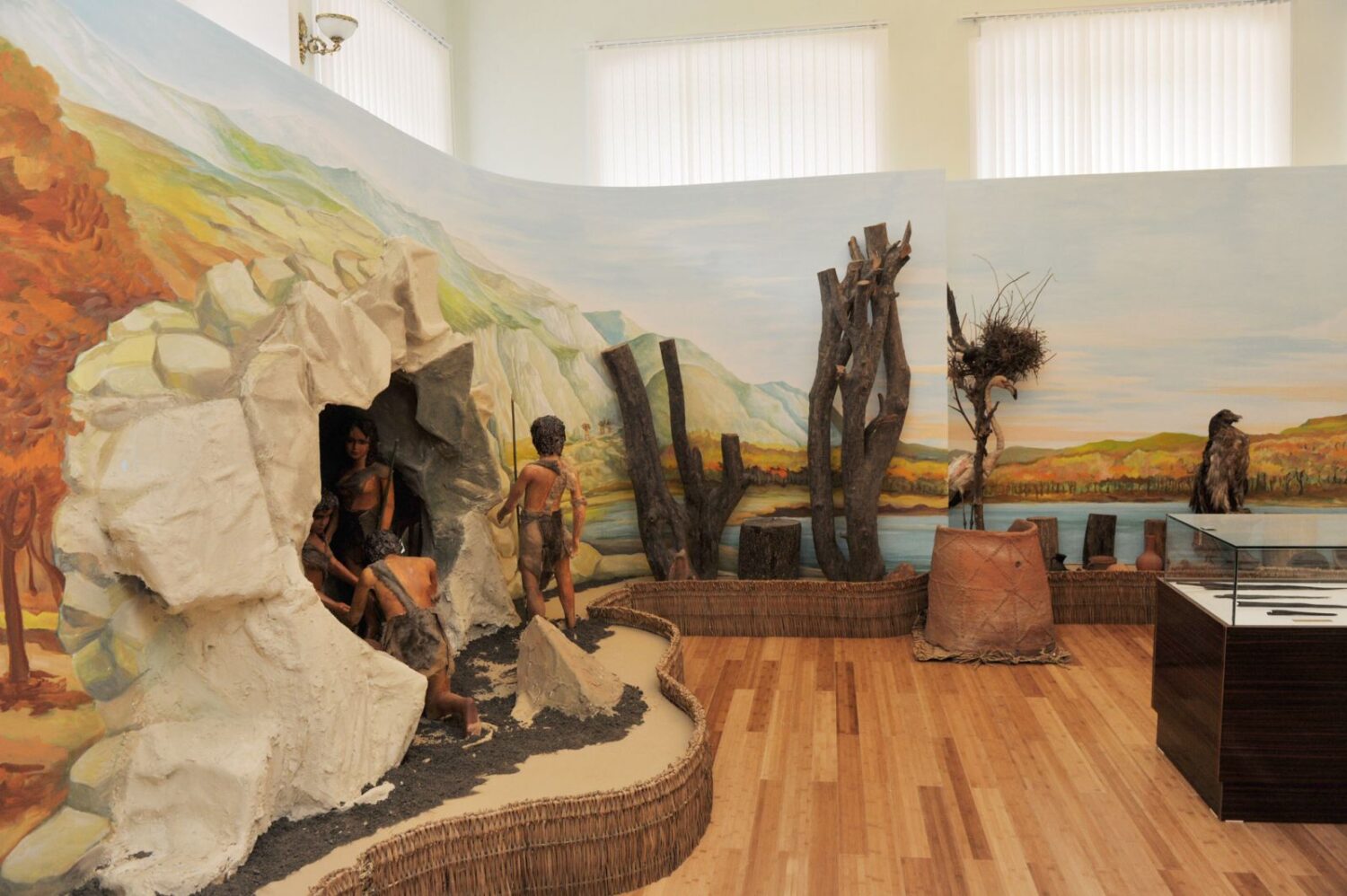
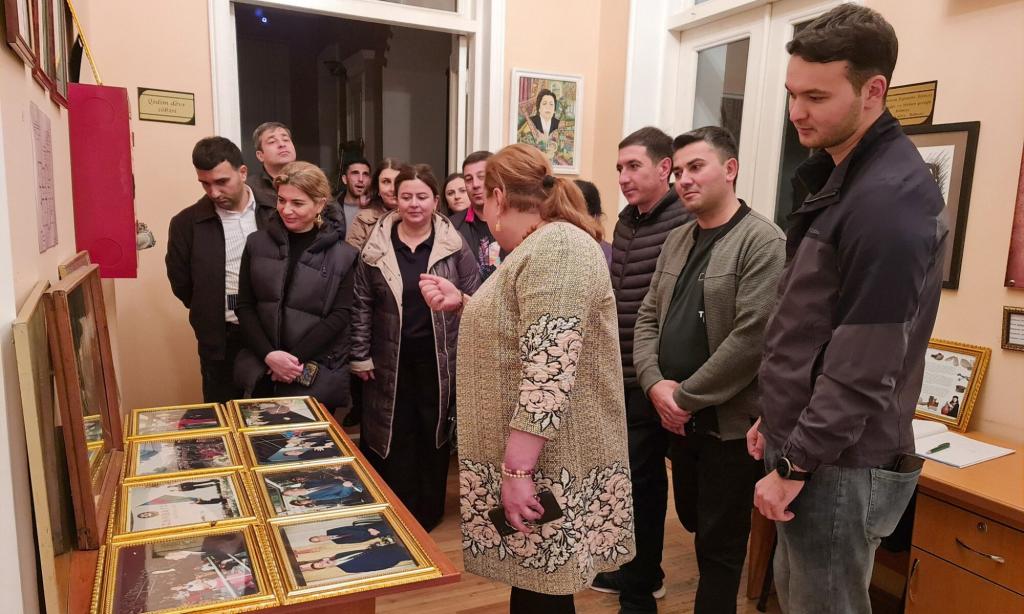
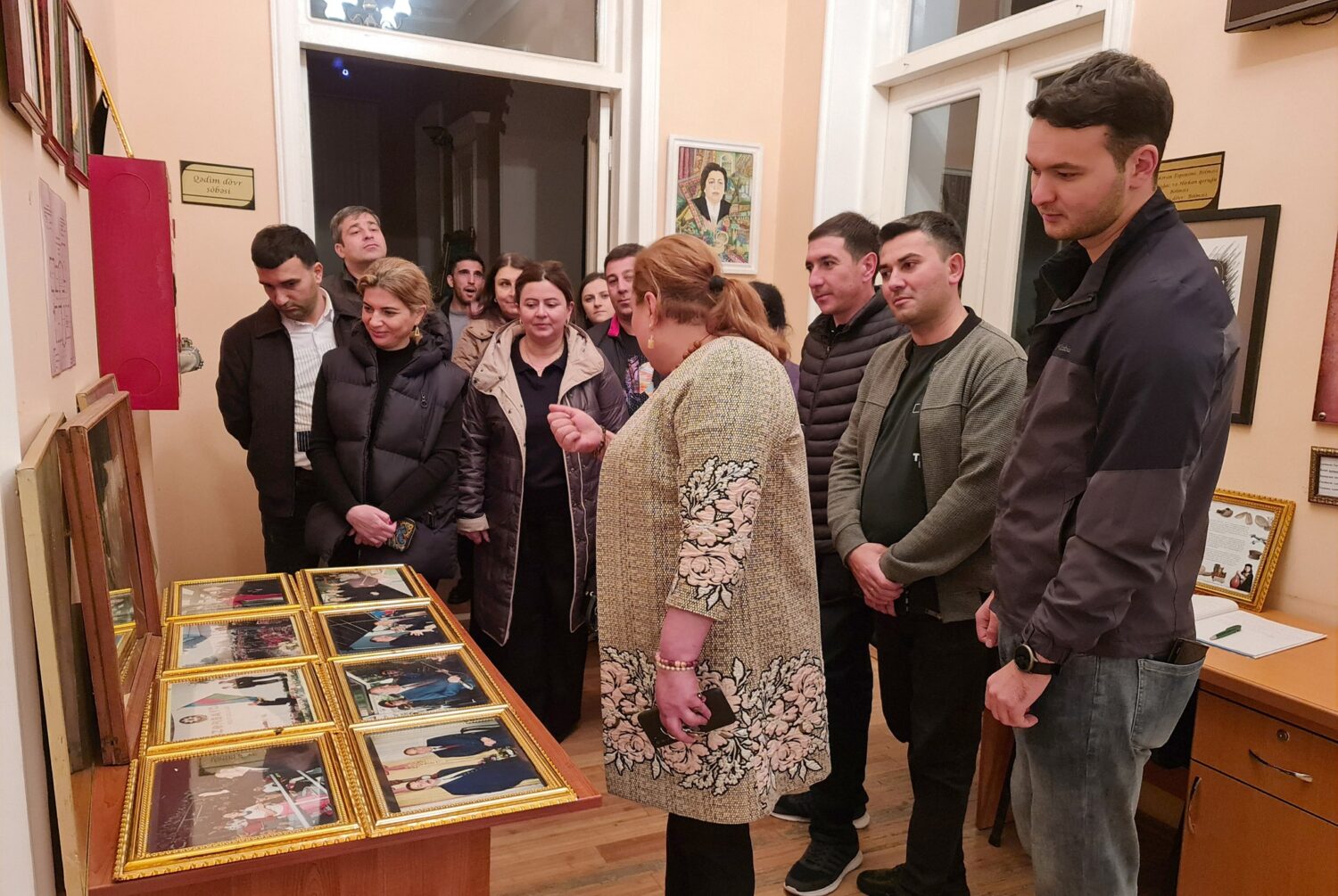
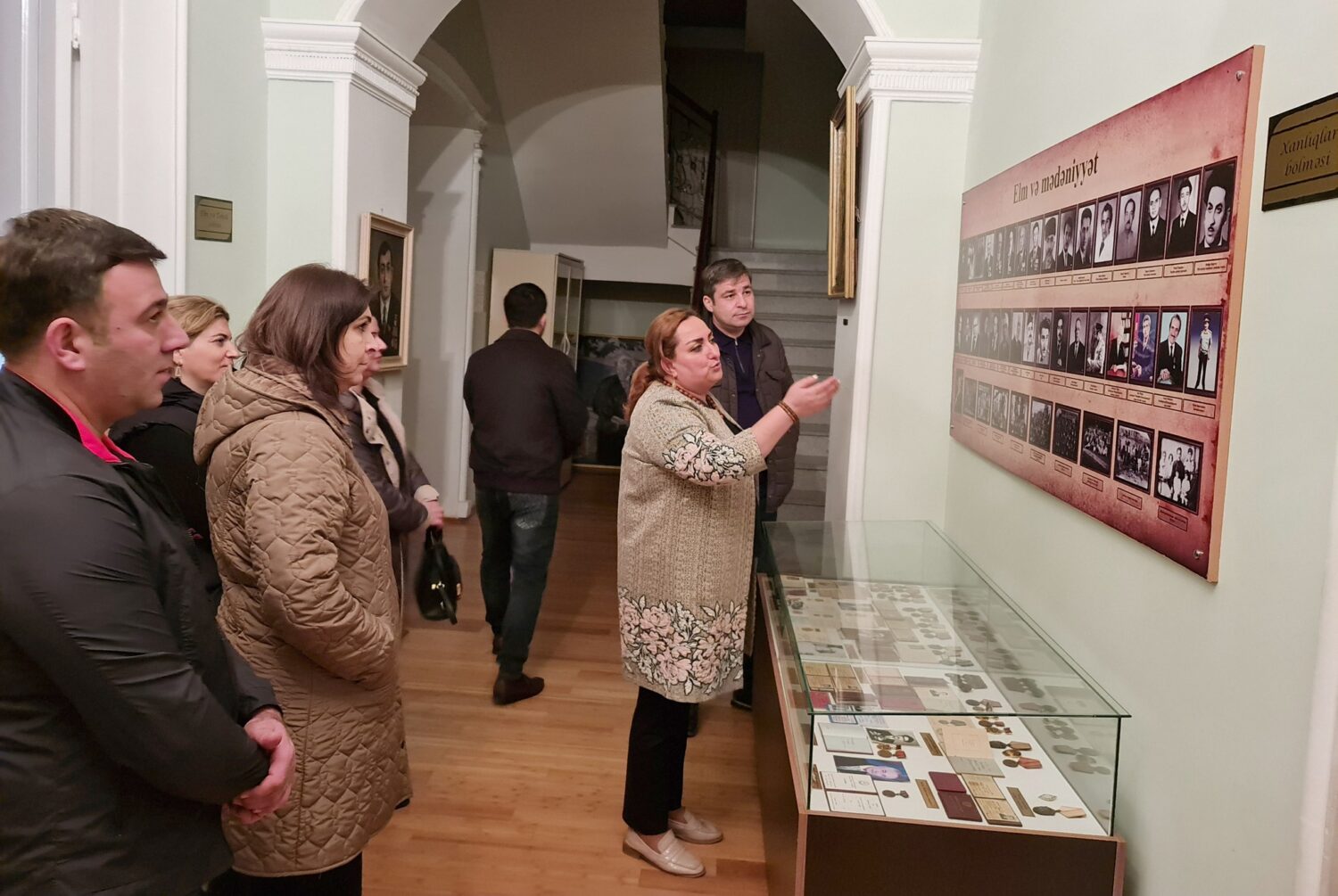
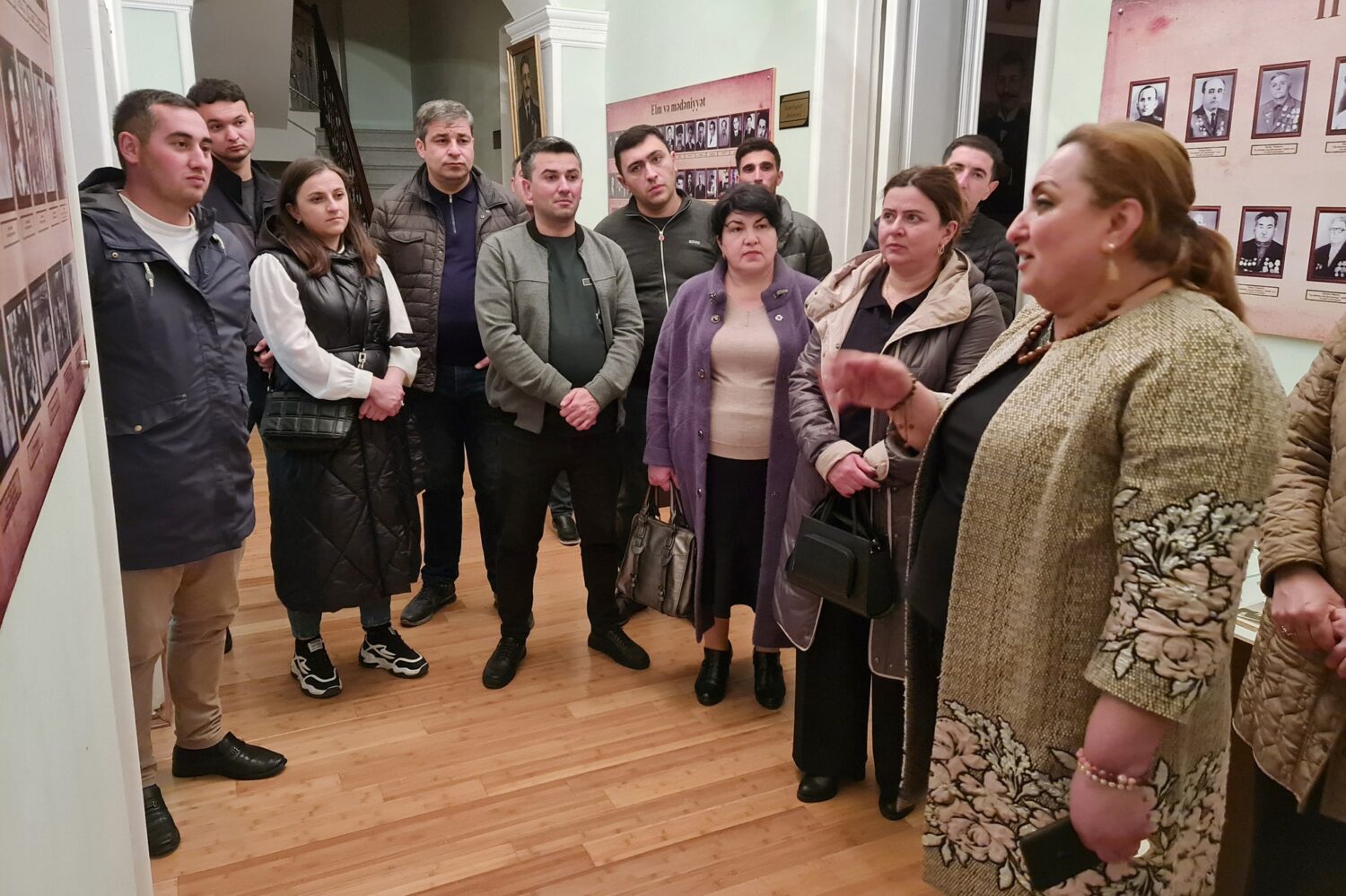
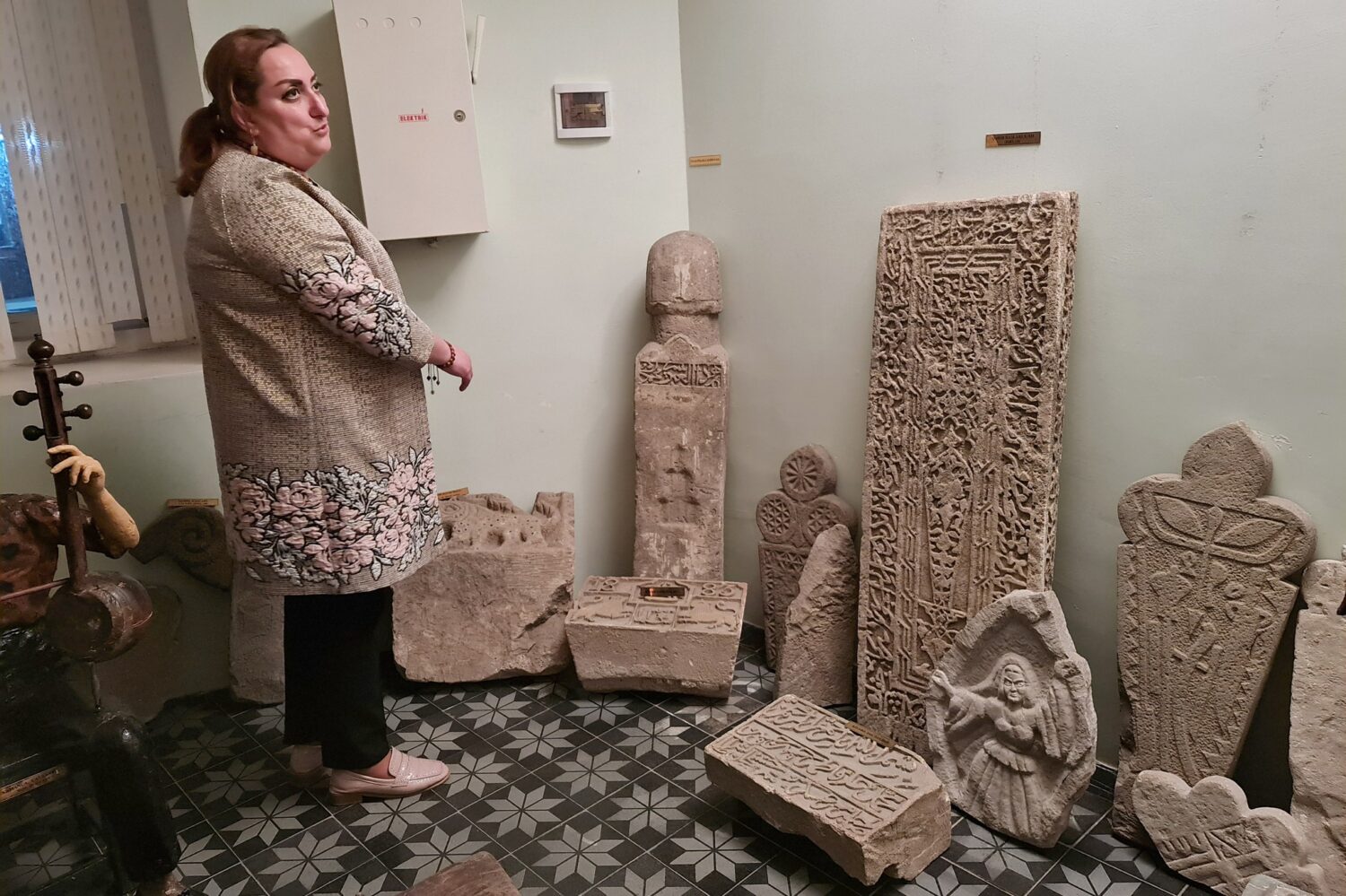
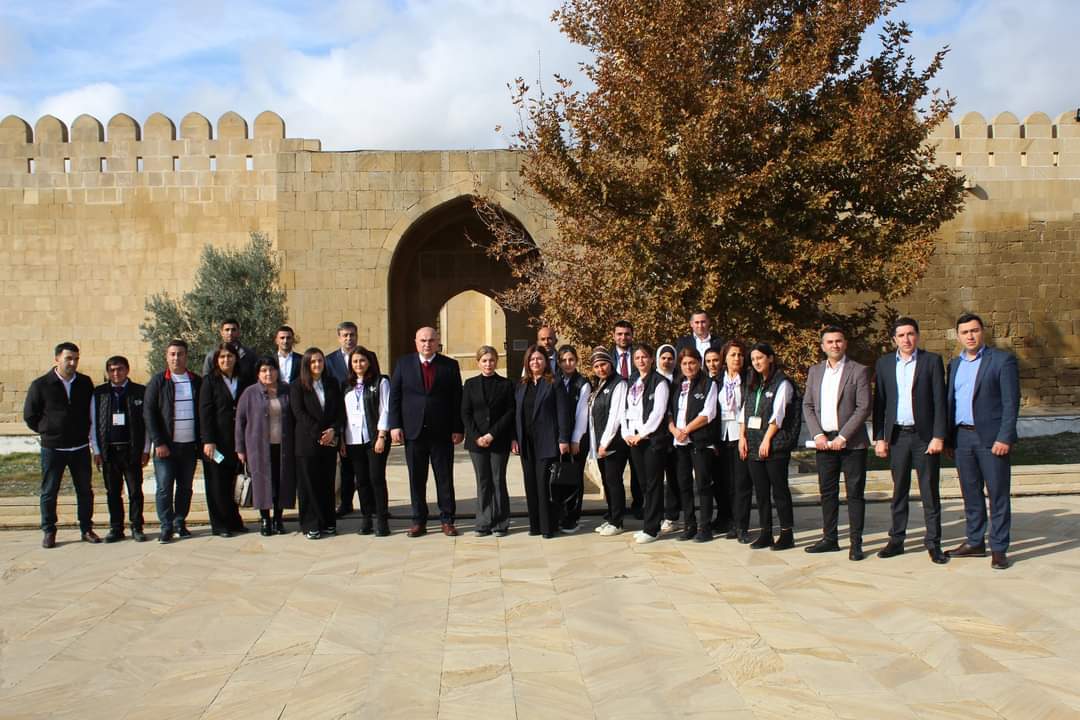
The team of "Genocide Memorial Complex" visited the Lankaran Museum of History and Geography in Guba. The employees of the complex were welcomed by the newly appointed director of the museum, Dr. Leyla khanum Majidova, by the order of the Minister of Culture Mr. Adil Karimli.

Giving detailed information about the Museum of Local History, Leyla Majidova noted that the foundation of the museum was laid by Mirza Agali Aliyev in 1934.
In the end, an agreement was reached to establish relations and hold joint events with the “Genocide Memorial Complex” and the Lankaran Museum of History and Geography in Guba.
Lankaran History and Country Studies Museum

Experience exchange project between reserve employees

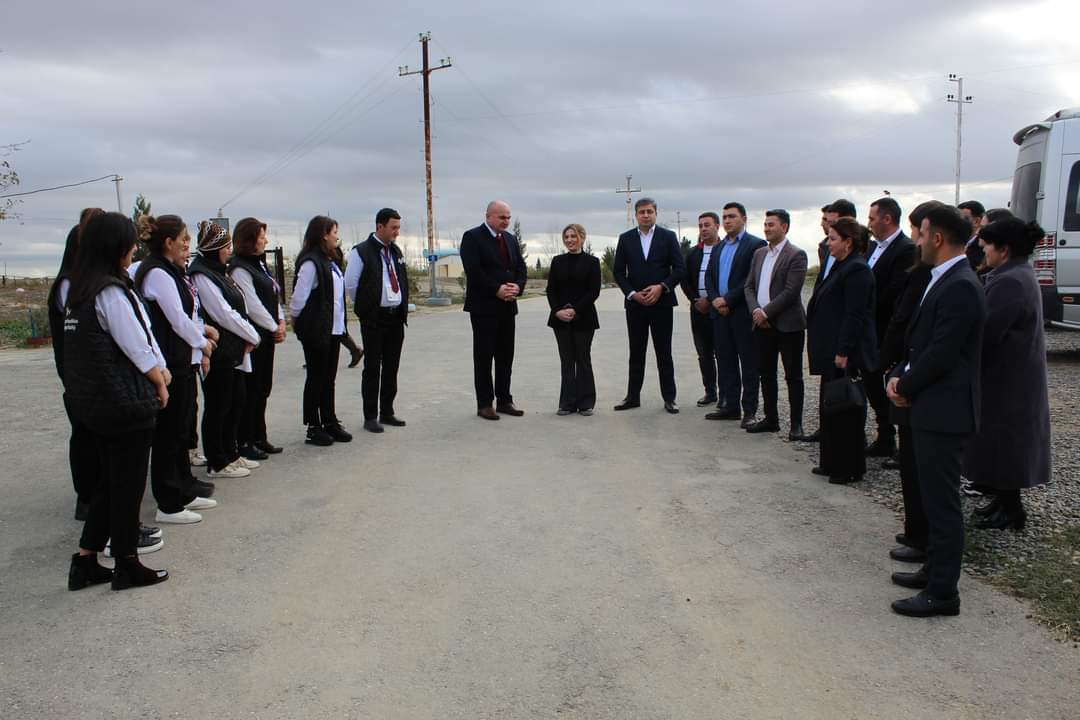
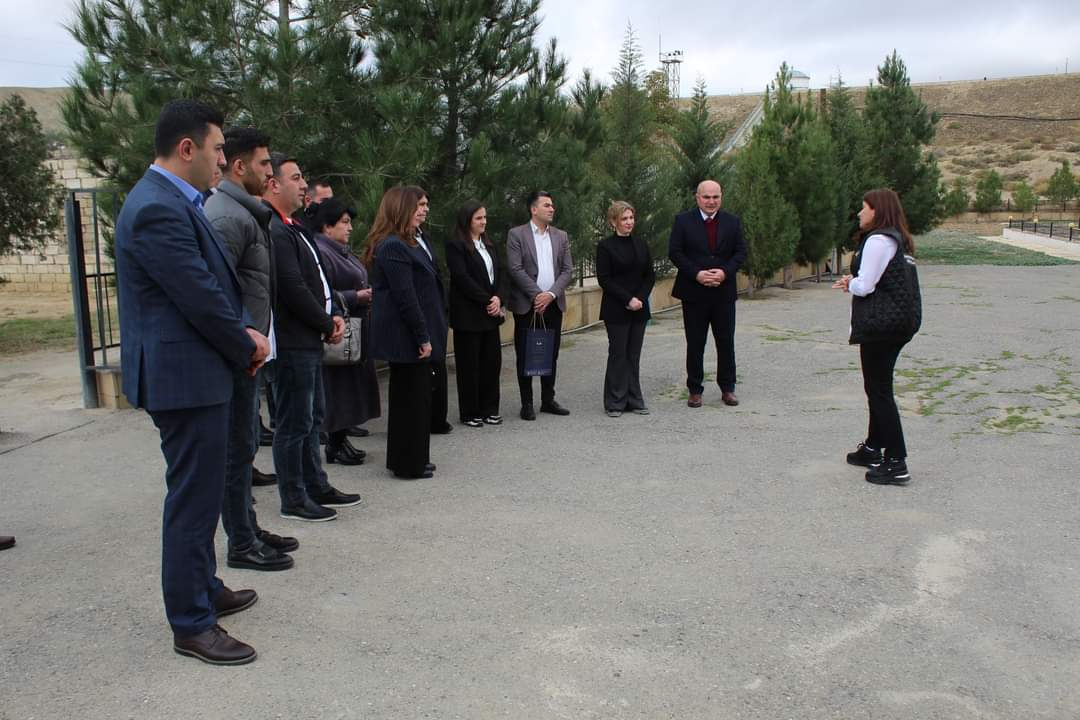
A group of employees of the Complex was sent to the “Pir Huseyn Khanagahi” historical-architectural reserve in order to cooperate and exchange experience in the field of scientific activity of the employees of the “Pir Huseyn Khanagahi” historical-architectural reserve. The management of the complex and a group of employees of the “Scientific Research, Exposition and Foundation Department” first visited the historical-architectural reserve “Pir Huseyn Hanagahi” located in the village of Gubali Baloglan, Hajigabul district.Within the framework of the visit, training and seminars on various topics were organized in order to exchange experience between the employees of both reserves. Directors of the reserve, Maharram Muslimov and Dr. Rakhshanda Bayramova, gave detailed information about the work done within the framework of the 2023 “Year of Heydar Aliyev”. Within the framework of the seminars and trainings, the employees of both reserves held detailed discussions on the topics of “Scientific articles”, “Foreign relations”, “Publicity in the media”, “Works done on Internet platforms”.

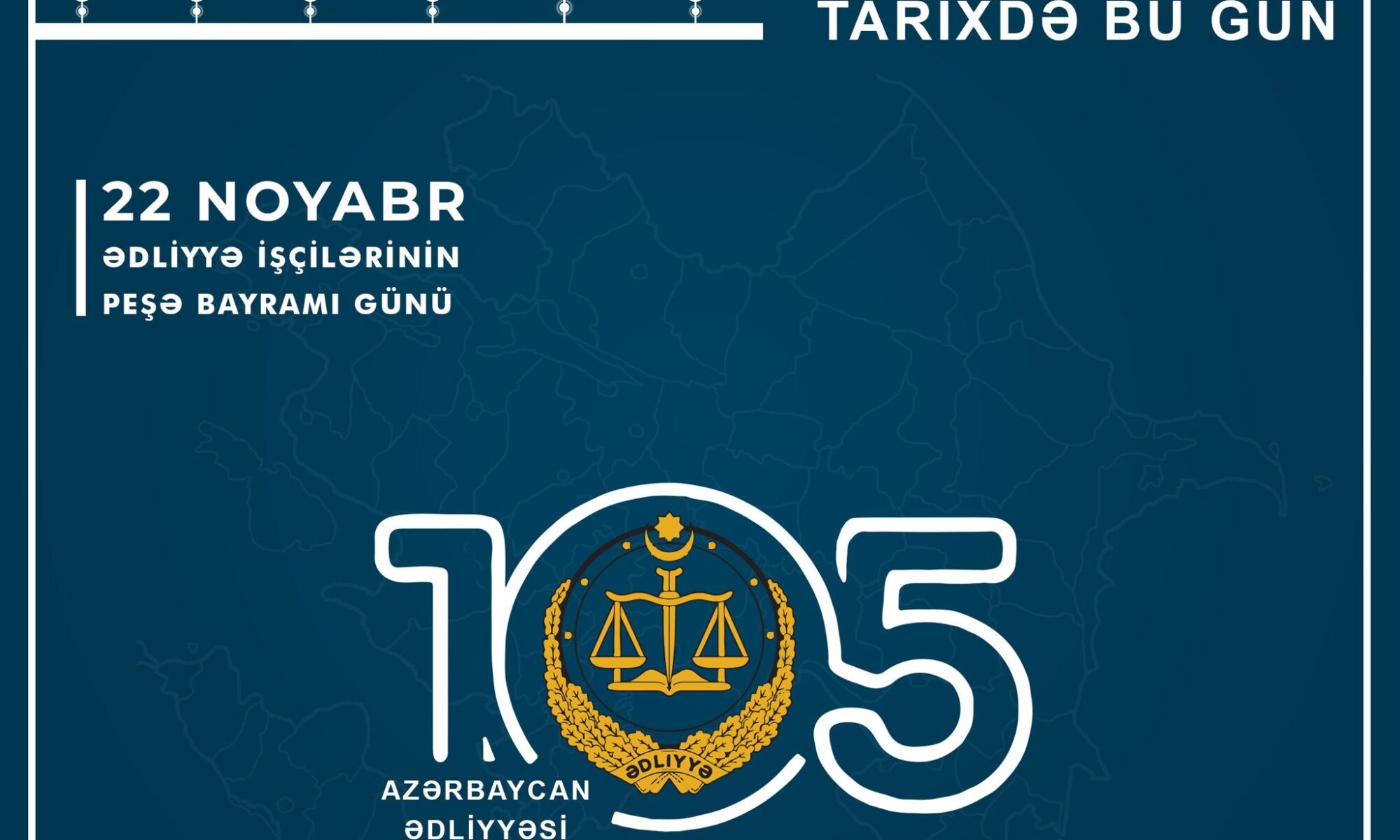
November 22 is the professional holiday of justice workers.

The Regulations on the Ministry of Justice were first established by the Azerbaijan Democratic Republic in 1918 and November 22 is celebrated as a professional holiday for justice workers. According to the Decree of National Leader Heydar Aliyev dated November 11, 2000, this holiday is being celebrated again in all regions of the country.
On September 23, 2020, the President of the Republic of Azerbaijan Ilham Aliyev signed a decree on expanding electronic services in the field of state registration of civil status acts. The main goal of the decree is to expand the use of modern information and communication technologies in the field of state registration of civil status acts, as well as to improve activities in the field of registration of births and deaths, ensuring efficiency and accessibility. The justice authorities play an important role in protecting the rights and freedoms of our citizens, improving legislation, and serving the state and people with honor.


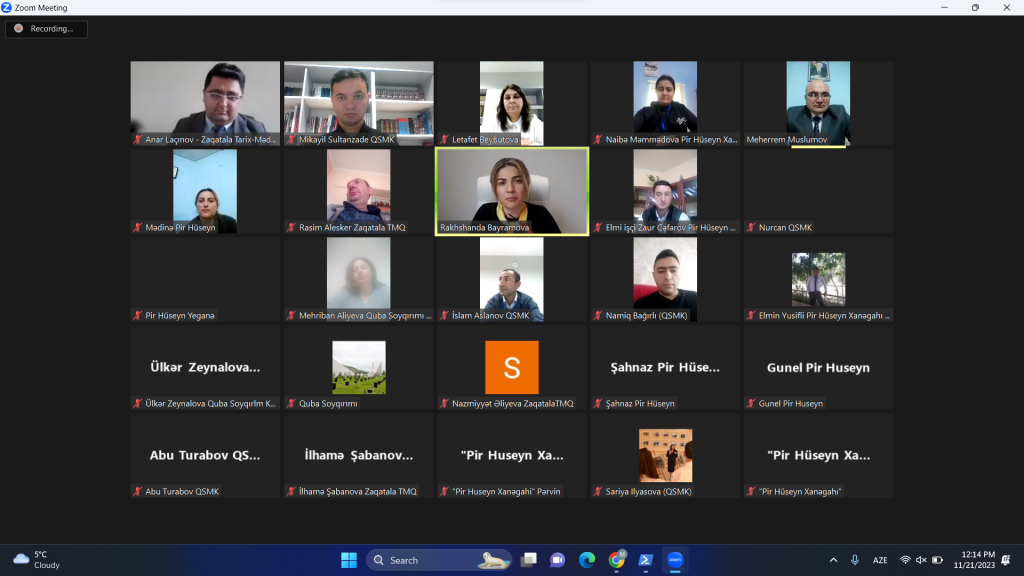
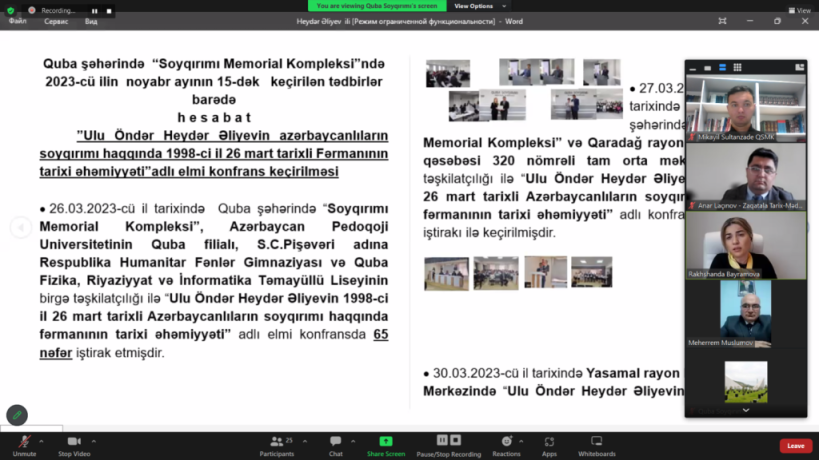
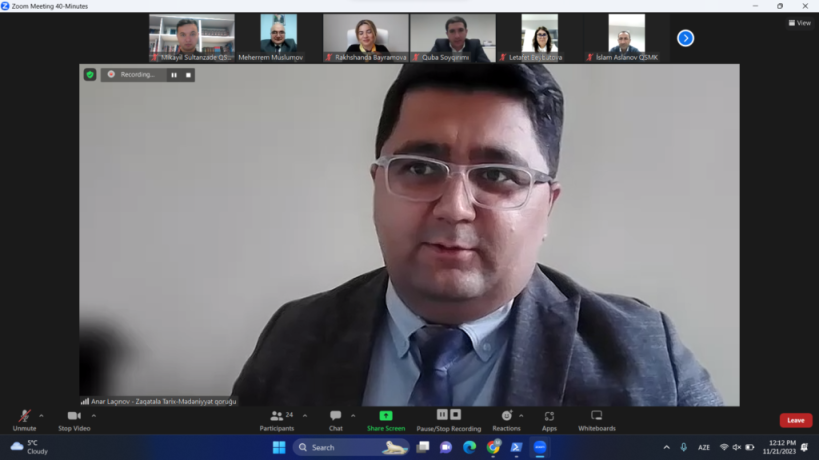
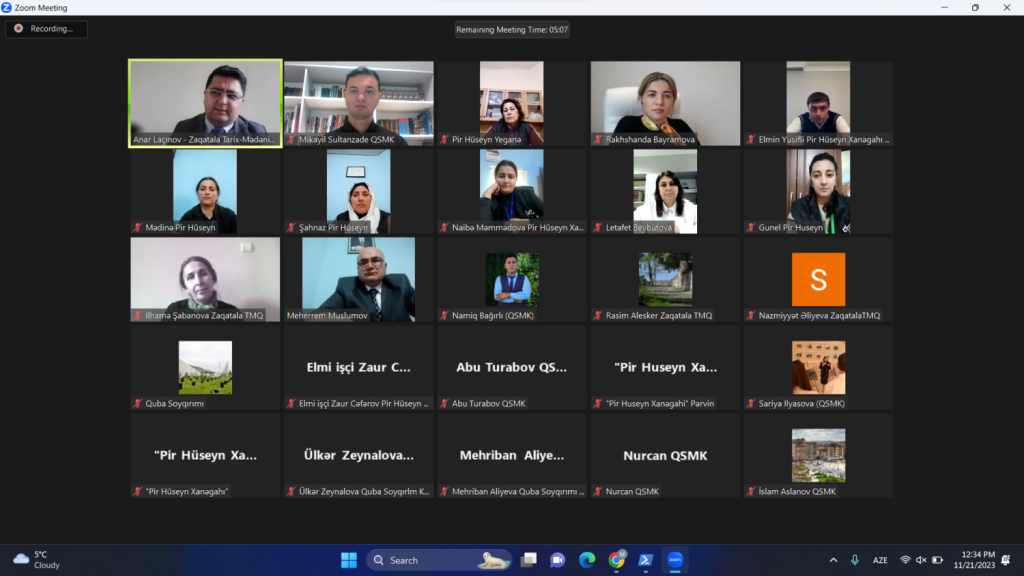
During the 9th month of 2023, an online meeting was held on the works done by the "Pir Huseyn Hanaghahi" historical-architectural reserve, the Zagatala Historical-Cultural Reserve and the "Genocide Memorial Complex" in the city of Guba within the framework of the "Year of Heydar Aliyev".

At the meeting, first of all, a film about the life and activities of the founder of modern Azerbaijan, the national leader, made by the Genocide Memorial Complex within the framework of the Heydar Aliyev year, was watched. Later speaking, the director of the “Pir Huseyn Khanagahi” historical-architectural reserve, Maharram Muslimov, the director of the Zagatala state nature reserve, Anar Lachynov, and the director of the “Genocide Memorial Complex” in Guba, Dr. Rakhshenda Bayramova, said that in the 20th century, a new era had begun in the cultural life of our people, and that this era stating that it is related to the name of the great leader Heydar Aliyev, the works carried out in all 3 reserves within the framework of the “Heydar Aliyev” year of 2023 were noted and positive experiences were shared with other employees of the reserve.
In the end, the scientific workers of the reserves presented short extracts from the scientific articles they wrote about the genius leader Heydar Aliyev.

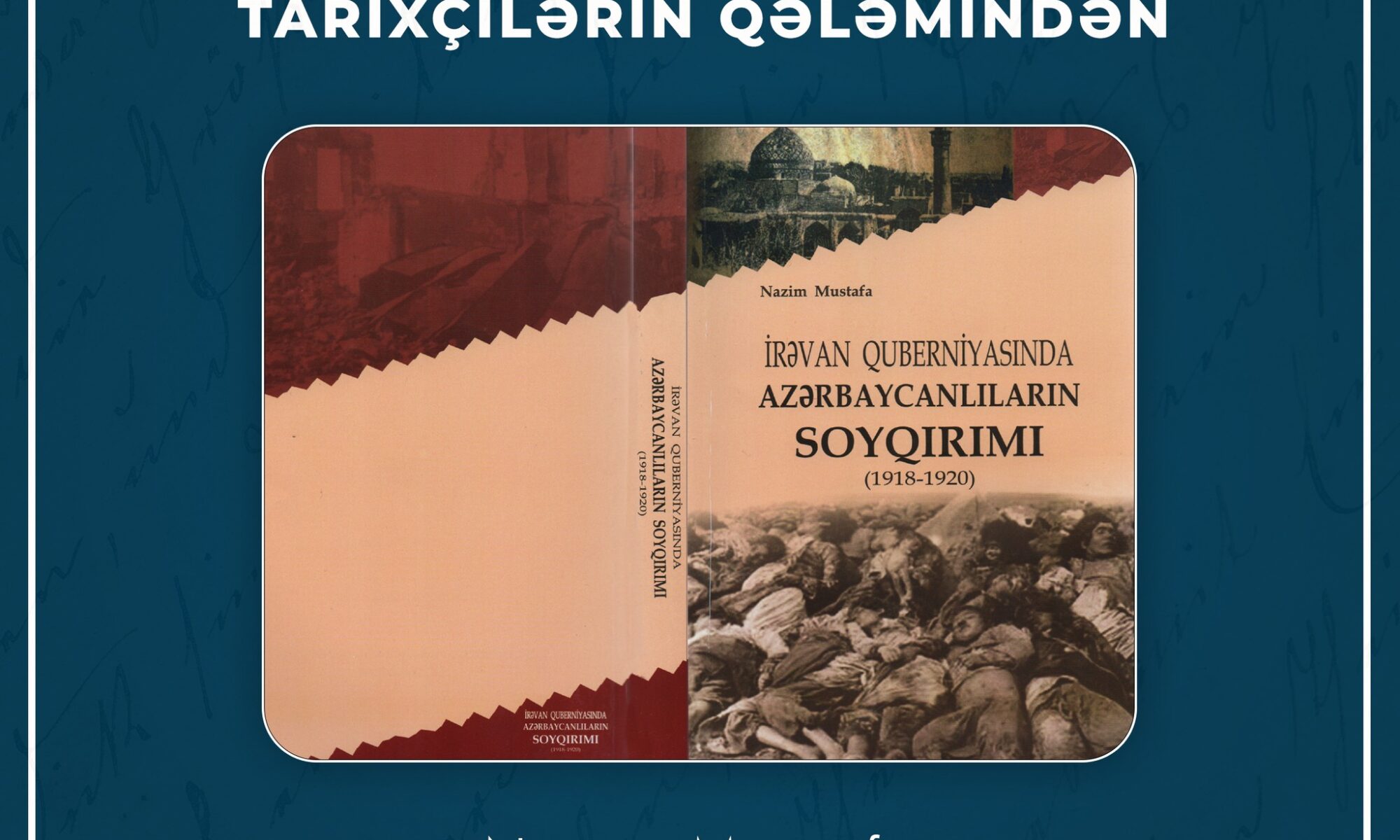
The book "Crimes against humanity (20th century)" by Subhan Talibly, specialist of "Genocide Memorial Complex", doctor of philosophy in history, docent in Guba city, was published in Arabic alphabet in Tabriz.

The book, which consists of 542 pages, was recommended for publication by the decision of the Scientific Council of the Institute of Oriental Studies. The scientific editor of the book is the director of the Caucasian Studies Institute of ANAS, corresponding member of ANAS, doctor of historical sciences, professor Musa Gasimli. The reviewers are Academician, Doctor of History, Professor Nargiz Akhundova, Department Head of the Institute of Caucasian Studies of ANAS, Doctor of History, Professor Gasim Hajiyev, Department Head of the Institute of Oriental Studies of ANAS, Doctor of Philosophy in History, Associate Professor Samad Bayramzade, doctor of philosophy in history, associate professor Jabi Bahramov. Chapter 1 of my monograph entitled “Massacres of 1905-1906 and the March Genocide of 1918” provides detailed information about the serious crimes against humanity of that period. Chapter 2 talks about the deportation of Azerbaijanis from their historical lands in 1948-1953, the unjustified land claims and occupation of territories by Armenians against Azerbaijan, and the treatment of Azerbaijani civilian and military prisoners by Armenia. Chapter 3 talks about “protests to Armenia’s baseless territorial claims and interference, and the tragedy of January 20, 1990 (the Neftchala and Lankaran tragedies of January 25, 1990). Chapter 4, called “Genocides in Karabakh”, describes the Agdaban genocide and the legal and political activities aimed at its recognition, the Garadaghli genocide, the genocide committed by Armenia against peaceful Azerbaijanis in Ballıgaya village of Goranboy district, the Malibayli, Lower and Yukhari Gushchular massacres Khojaly genocide which are serious crimes against humanity and civilization. The topic of the 5th chapter is the April battles and the Patriotic War. The 6th chapter, called “The policy of the state of Azerbaijan in conveying the truths of the genocide of Azerbaijanis to the world”, is dedicated to the policy of the Great Leader Heydar Aliyev and the President of the Republic of Azerbaijan Ilham Aliyev in connection with these tragedies, as well as the “Genocide Memorial Complex” in the city of Guba. The appendices at the end of the book contain documents, agreements, resolutions and decisions, declarations, maps and pictures.

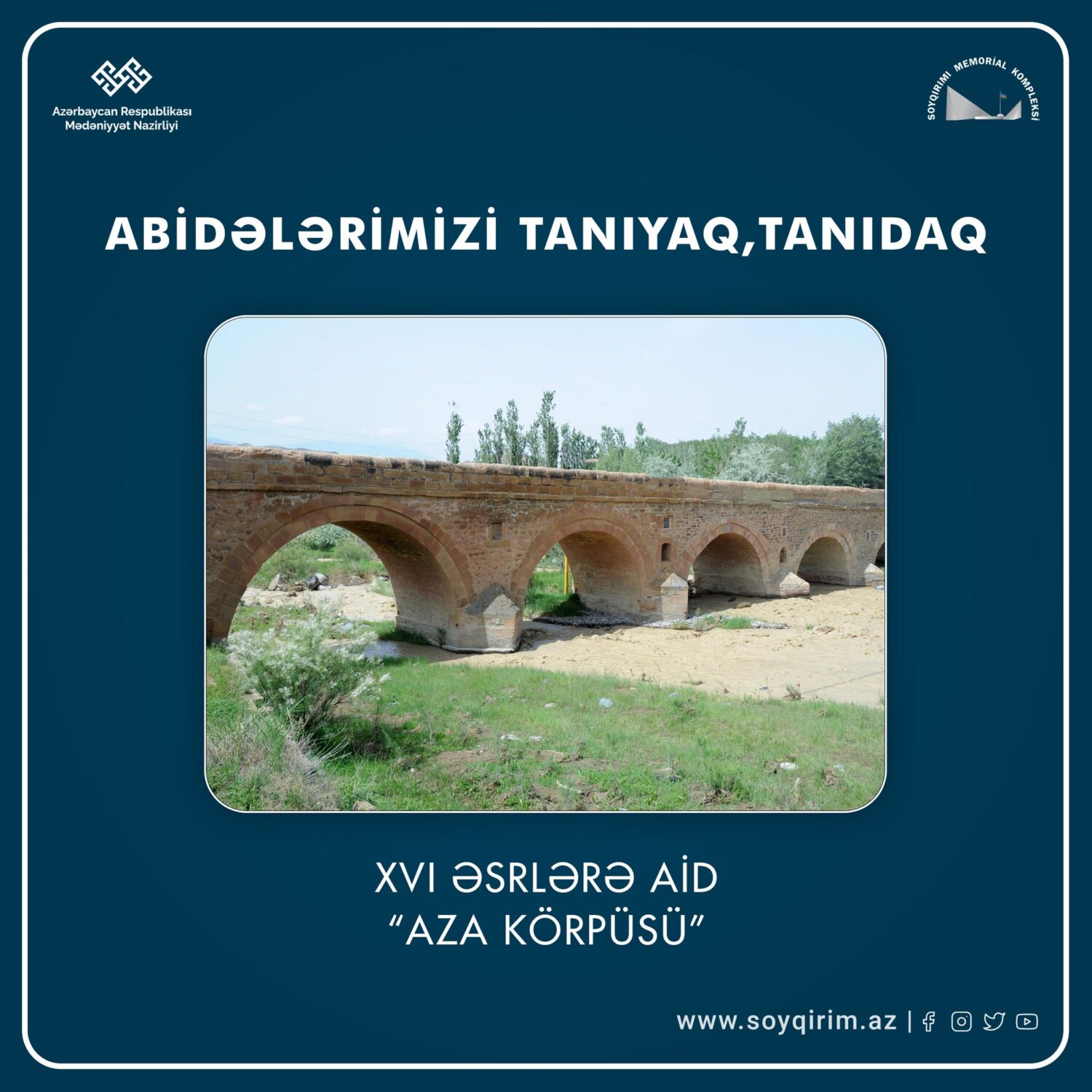
"Great Mardakan Castle"

The Great Mardakan Castle is a castle with an ancient history in the Mardakan settlement of Baku. The castle was built in the middle of the 14th century by Akhsitan I, the son of Manuchohr III the Great, in the form of four corners. This fortress was built in honor of Akhsita I’s brilliant victory over the enemy. The castle was used as a shelter and guard post for feudal lords. The height of the castle is 22 meters, the thickness is 2.10 meters from the bottom, and 1.60 meters from the top. The inner yard is 700 square meters. From the inside, the castle is divided into 5 levels.  

November 12 is Constitution Day in the Republic of Azerbaijan.

The first constitution of independent Azerbaijan was adopted through a national vote (referendum) held on November 12, 1995. The Basic Law of the State entered into force on November 27, 1995. The adoption of the constitution is one of the most important events in the history of our independence, and it is one of the great services of the great leader Heydar Aliyev to the statehood of Azerbaijan. This Constitution is a perfect and progressive document that regulates the process of independent state building, ensures democratic development, includes radical changes in the political, social, cultural, and economic spheres of society, and plays the role of a legal base for improving legislation.

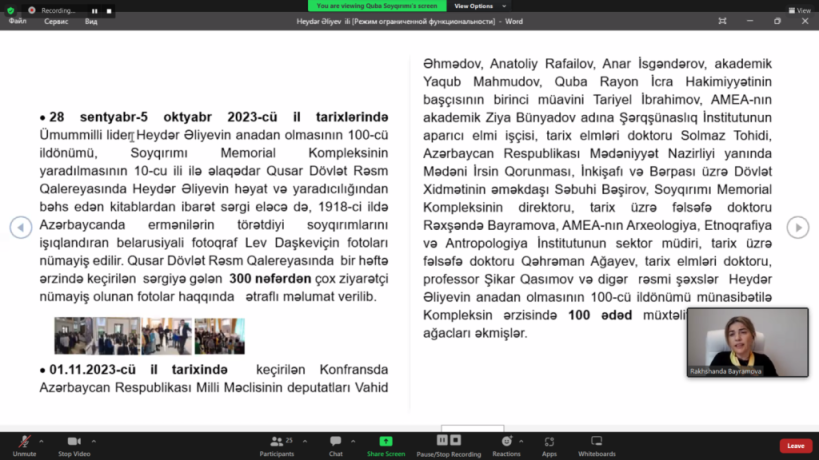
On 01.11.2023, a scientific-practical conference on the topic "The role of the great leader Heydar Aliyev in conveying the truths of Azerbaijan to the world" was held at the Heydar Aliyev Center in Guba.

At the conference, deputies of the Milli Mejlis of the Republic of Azerbaijan Vahid Ahmadov, Anatoliy Rafailov, Anar Iskenderov, academician Yagub Mahmudov, first deputy head of the Guba District Executive Power Tariyel Ibrahimov, leading researcher of the Institute of Oriental Studies named after academician Ziya Bunyadov of ANAS, doctor of historical sciences Solmaz Tohidi, Sabuhi Bashirov, an employee of the State Service for the Protection, Development and Restoration of Cultural Heritage under the Ministry of Culture, director of the Genocide Memorial Complex, Rakhshanda Bayramova, doctor of philosophy in history, sector director of the Institute of Archeology, Ethnography and Anthropology of ANAS, doctor of philosophy in history Kahraman Agayev, historical sciences doctor, professor Shikar Gasimov and other officials participated.
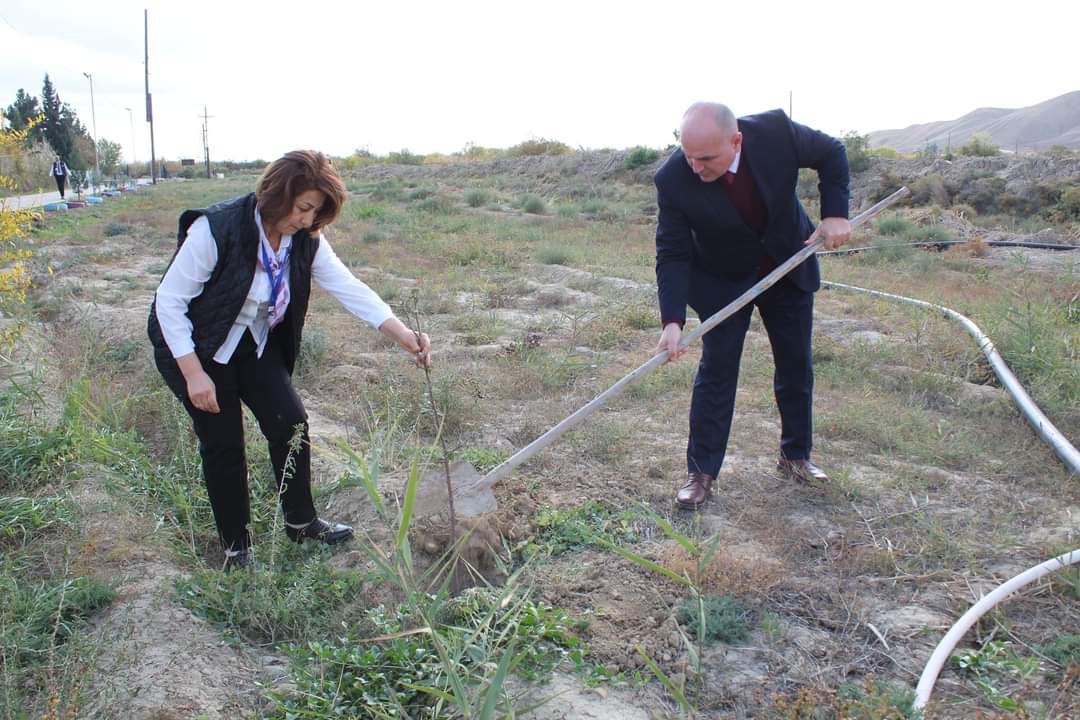
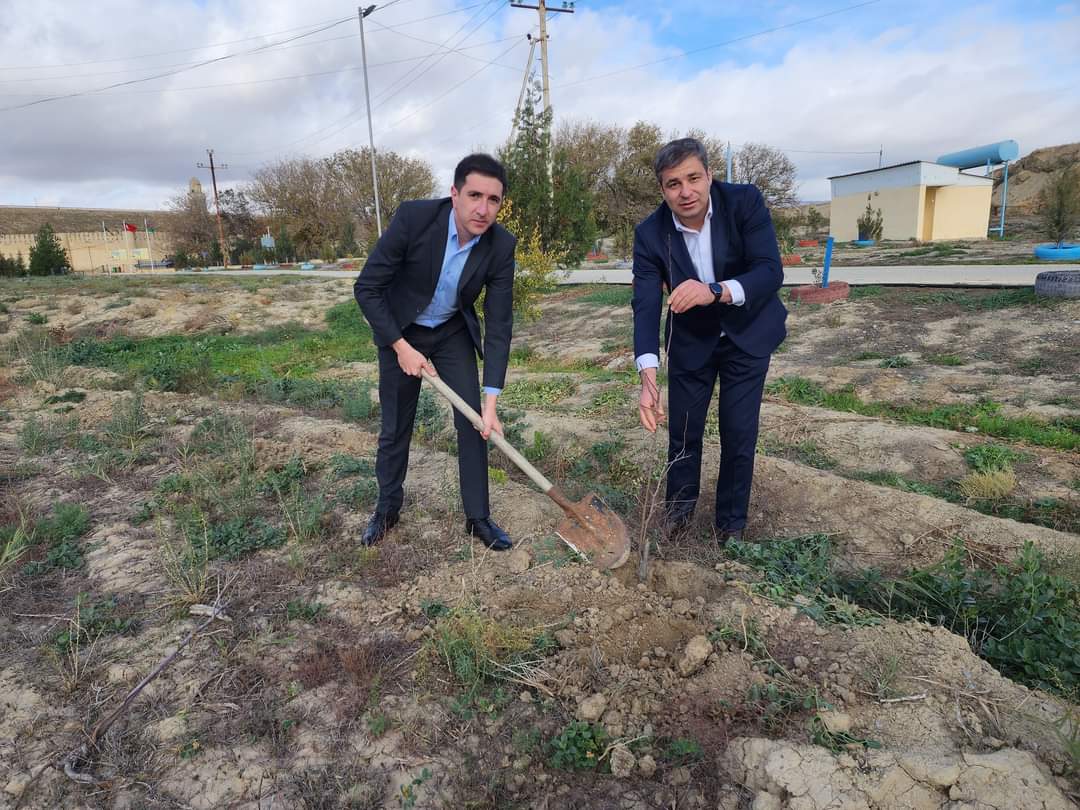
The conference participants first visited the memorial monument erected in memory of the victims of 1918 in the “Genocide Memorial Complex” in Guba, laid flowers on it and planted 100 fruit trees of different types on the side of the complex on the occasion of the 100th anniversary of the birth of the genius leader Heydar Aliyev.
Later, the participants of the conference arranged flower bouquets in front of the monument of the great leader in the Heydar Aliyev park and got acquainted with the exhibition organized in the Heydar Aliyev center of Guba district.
At the conference held in the assembly hall of the Heydar Aliyev Center, the National Anthem of the Republic of Azerbaijan was first played, and then the spirit of the great leader Heydar Aliyev and our martyrs who died for our land were remembered with a minute of reverent silence. Rakhshanda Bayramova, director of the Genocide Memorial Complex, Doctor of Philosophy in History, gave an introductory speech, welcomed the participants, gave a report on the 10-year activity of the Complex, and talked about the successes achieved so far. She also emphasized that the policy of genocide was carried out against our people by the aggressor Armenian nationalists for nearly two hundred years. In order to expel Azerbaijanis from their historical lands and to create a mythical “Greater Armenia” in these territories with the help of their foreign patrons, the Azerbaijani and Turkish peoples have been regularly subjected to ideological and military aggression by Armenians for decades. Centuries-old history of our people has been grossly falsified, our cultural monuments and toponyms have been appropriated by Armenians. She also brought to the attention of the conference participants that for the first time these events were given legal and political evaluation by the national leader, wise politician Heydar Aliyev.
Later, other speakers spoke about the essence and historical roots of the genocide and deportation policy carried out by Armenians against the people of Azerbaijan for hundreds of years. It was reported that on March 26, 1998, in the Decree of the President of the Republic of Azerbaijan “On the Genocide of Azerbaijanis” signed by national leader Heydar Aliyev, adequate political assessment was given to those terrible events and March 31 was declared the Day of Genocide of Azerbaijanis. In this important document, which is a full and comprehensive political and legal assessment of the criminal acts of Armenian nationalists, the mass killings – genocides committed against Azerbaijanis were officially mentioned for the first time.
It should be noted that employees of the State Service for the Protection, Development and Restoration of Cultural Heritage, reserve directors, district intellectuals, cultural workers and historians participated in the conference.

Emin Amrullayev, the Minister of Science and Education of the Republic of Azerbaijan, Mr. Erol Ozvar, the head of the Higher Education Council of Turkey (Higher Education Council), and Mr. Ilgar Mahmudov, the head of the Guba District Executive Authority, along with other officials, visited the "Genocide Memorial Complex" in the city of Guba.

The visitors began by laying flowers in front of the monument erected in memory of the victims of the 1918 genocide, and then proceeded to explore the museum within the complex. The guests were provided with a comprehensive presentation regarding the inhumane crimes committed by Armenian vandals in Azerbaijan in 1918, which amounted to a genocide. In conclusion, the guests were presented with a book and booklets detailing the events of the genocide, as well as a report booklet dedicated to the complex’s 10-year history.

The Republican scientific-practical conference, jointly organized by the Genocide Memorial Complex and Baku Girls' University, centered on "The Role of Great Leader Heydar Aliyev in the Protection of Our Cultural Heritage," unfolded on October 24, 2023.

In the assembly hall of Baku Girls’ University, the proceedings commenced with the rendition of the National Anthem of the Republic of Azerbaijan, followed by a solemn minute of silence to honor the indomitable spirit of the great leader Heydar Aliyev and the martyrs who laid down their lives for the liberation of our lands. Subsequently, attendees watched a documentary chronicling the life and achievements of Heydar Aliyev, the architect of modern Azerbaijan and its national leader.

In her opening address, Dr. Sevinj Rahimova, the Rector of Baku Girls’ University and a Doctor of Philosophy in Pedagogy, extended a warm welcome to the esteemed participants, underscoring Azerbaijan’s global renown for its rich cultural heritage, artistic legacy, and steadfast national-spiritual values. She emphasized that the cultural renaissance of the Azerbaijani people in the 20th century was irrevocably intertwined with the visionary leadership of Heydar Aliyev.

Following Dr. Rahimova’s remarks, Dr. Rakhshanda Bayramova, the Director of the Genocide Memorial Complex in Guba and a Doctor of Philosophy in History, shed light on Heydar Aliyev’s pivotal role in politically and legally condemning the genocide perpetrated against Azerbaijanis. Dr. Bayramova provided a comprehensive overview of the Complex’s initiatives and activities.

Subsequent speakers at the conference included Dr. Azizaga Alakbarli, Associate Professor and Head of the “History” Department at Baku Girls’ University, who expounded on “Heydar Aliyev and the Turkic World.” Dr. Aygun Jafarova, Vice-Rector for Educational Affairs at Baku Girls’ University and Head Teacher of the Department of Azerbaijani Language and Literature, delivered a discourse on “Heydar Aliyev’s Contribution to the Study and Promotion of Azerbaijani Literature.” Dr. Elnur Kalbizade, Head of the Institute of Caucasian Studies at ANAS and a Doctor of Philosophy in History, delved into “Heydar Aliyev’s Approach to Conflicts in the Caucasus.” Dr. Elnur Mustafayev, Head of the Institute of Oriental Studies at ANAS and a Doctor of Philosophy, examined “Heydar Aliyev’s Impact on Our National and Moral Values.” Dr. Subhan Talibli, a specialist at the Genocide Memorial Complex in Guba and an Associate Professor with a Doctorate in History, elucidated “Heydar Aliyev’s Contributions to the Multilateral Diplomacy of the Republic of Azerbaijan.” Finally, Dr. Jahangir Jahangirli, an Associate Professor at the Azerbaijan Academy of State Administration and a Doctor of Philosophy in Political Sciences, analyzed “Heydar Aliyev and the Ideology of Azerbaijaniism.” The concluding speech was delivered by Abutalib Turabov, the spokesperson of the Genocide Memorial Complex in Guba, who discussed “Heydar Aliyev’s Impact on Azerbaijan’s Cultural Policy.”

In recognition of their scholarly contributions, the participants who presented reports during the conference were presented with certificates of appreciation.

Sorrowful Day


The 31 of March tragedy, the most well-known example of Azerbaijan’s historical servitude, is a sorrowful day. The 31 of March should be remembered, and we should know that on this black day our enemies encroached upon our rights… They wanted to cross a bloody line our existence and fortune. Let us remember this sorrowful day. Let us be mourning. Because on that day they broke our hope and confidence. Because on that day our people and nation experienced the largest savagery and tyranny. Mourning will make us know solidarity, feel the pleasure of dying and giving sacrifice for the Homeland. Mourning will be a moral pillar of our freedom and sovereignty. Dying for freedom and sovereignty is an honour, living a duty.
Hey martyrs, lie in peace! Respect and regards to you, hey heroes of the Homeland! Greetings and prayers to you, hey patriots of the nation!
“Istiglal” newspaper, 29 March 1919, № 7, Baku.