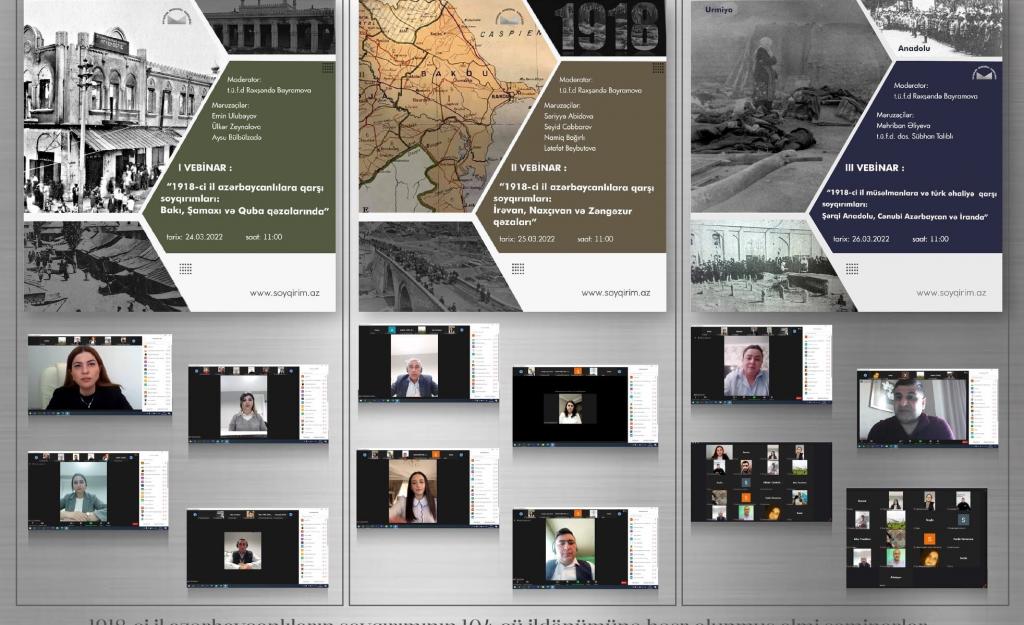
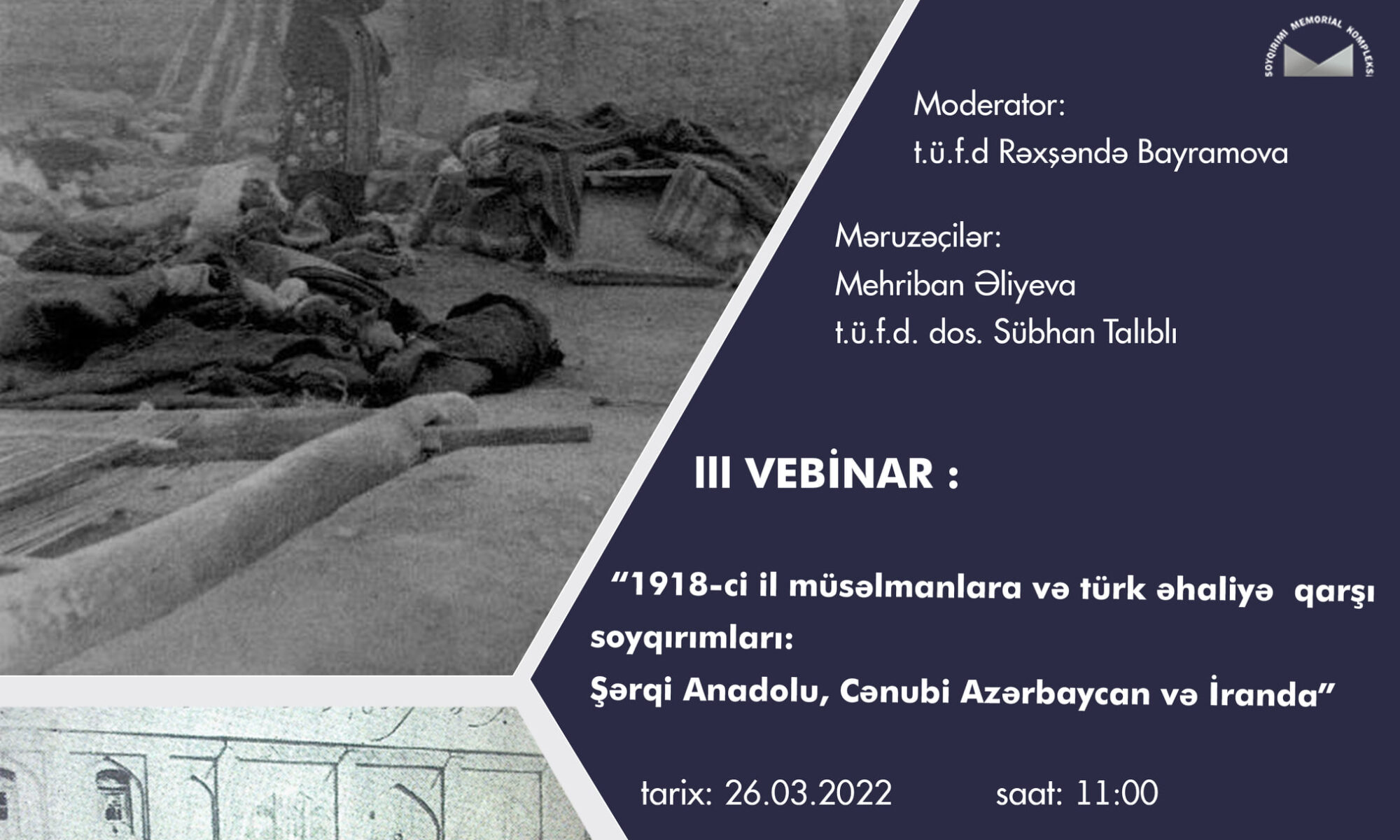
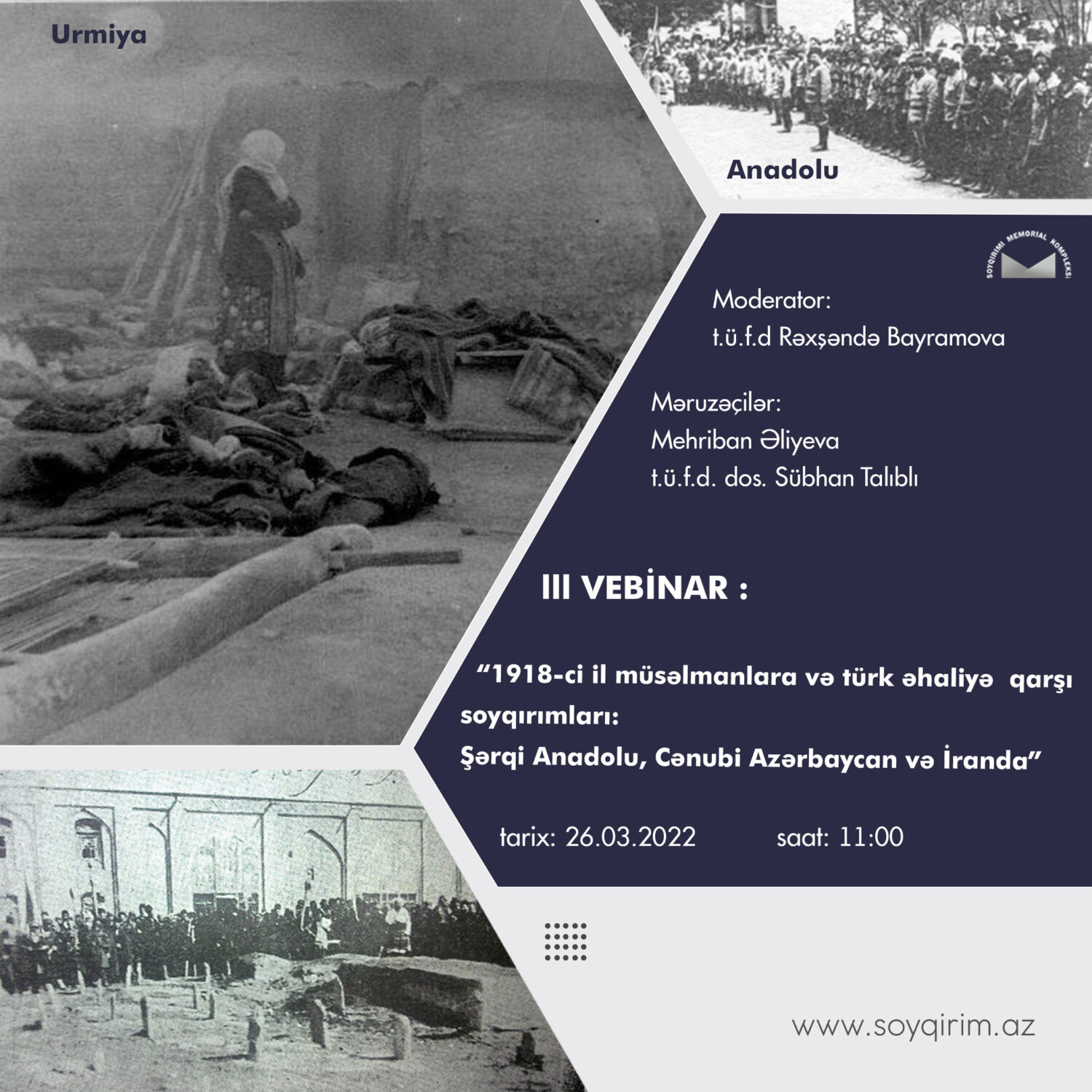
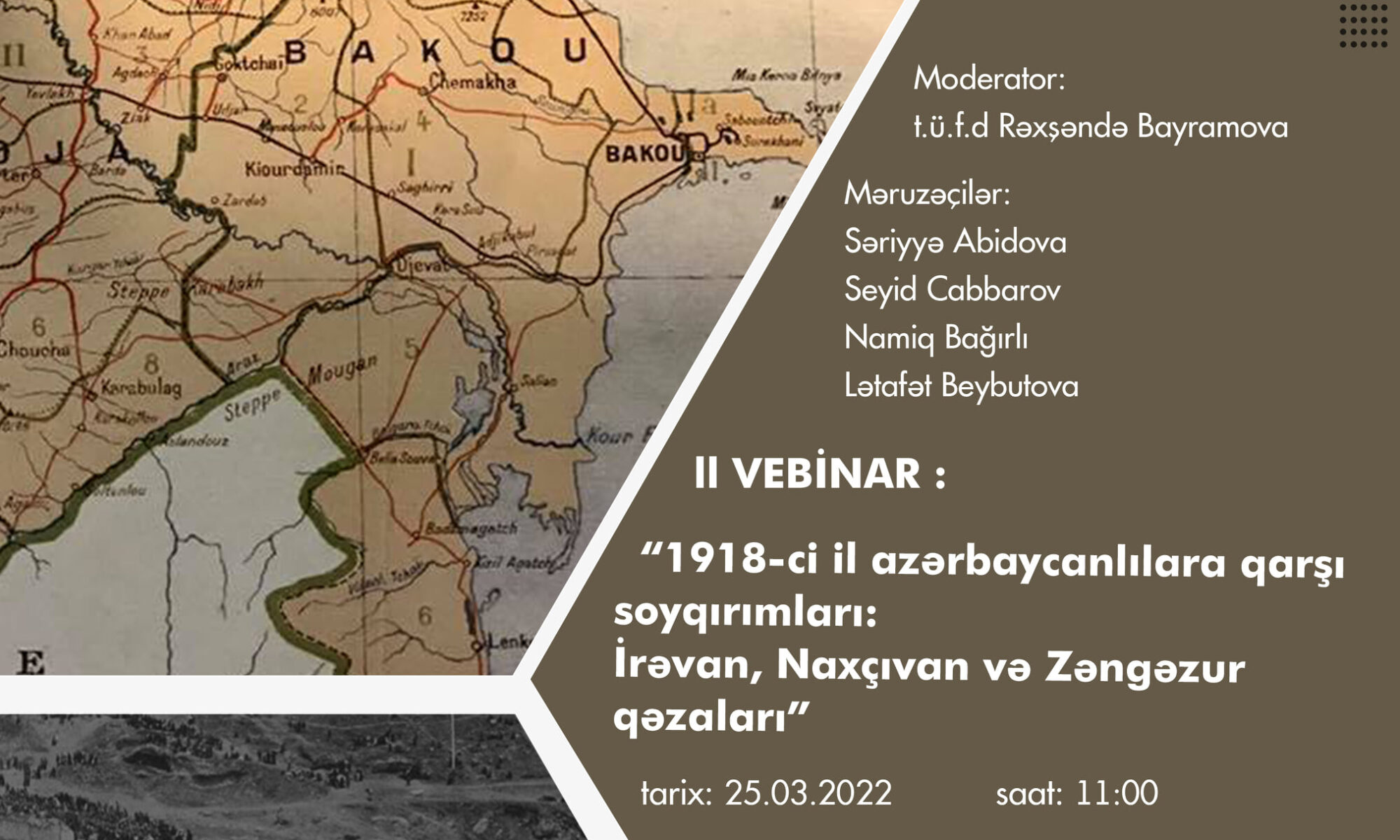
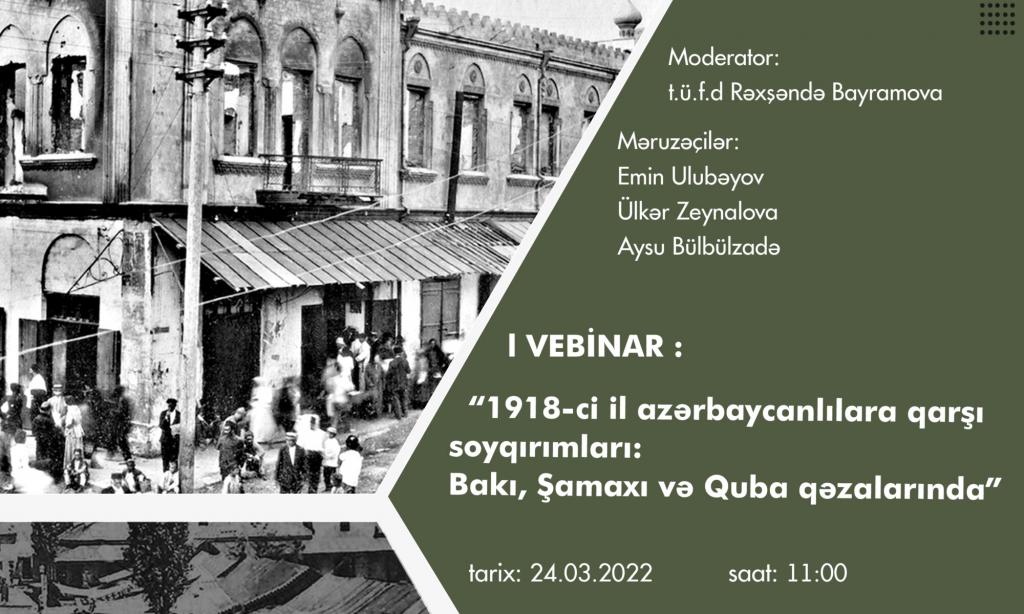
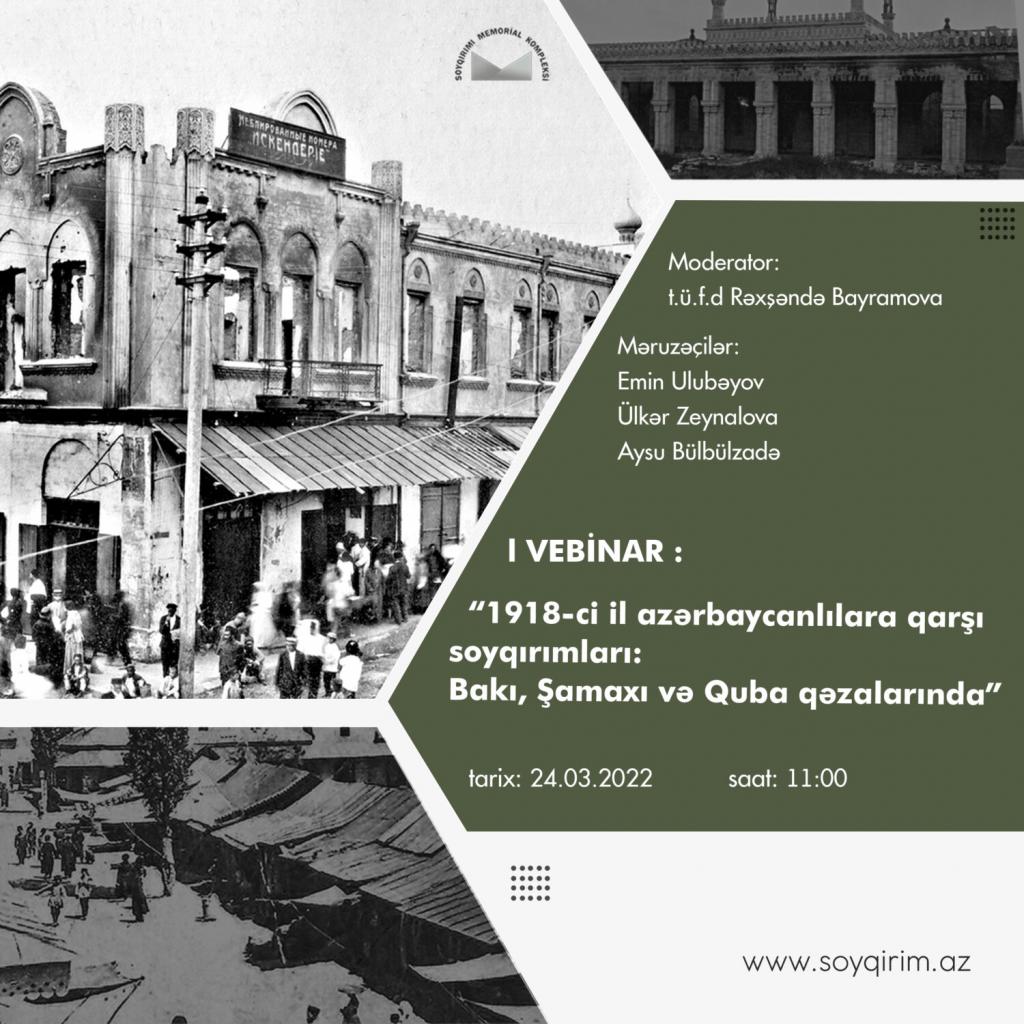
ANNOUNCEMENT: We invite you to the webinar to be held on March 24 at 11:00.

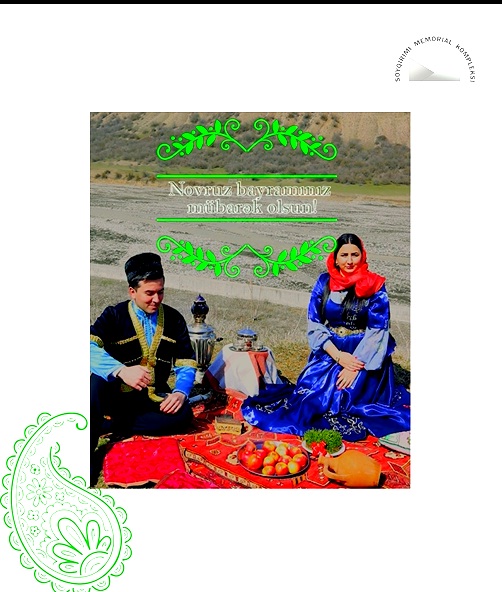
On behalf of the staff of the Genocide Memorial Complex in Guba, we congratulate all our people ,wish this spring to bring a peace, tranquility and happy days in our country!
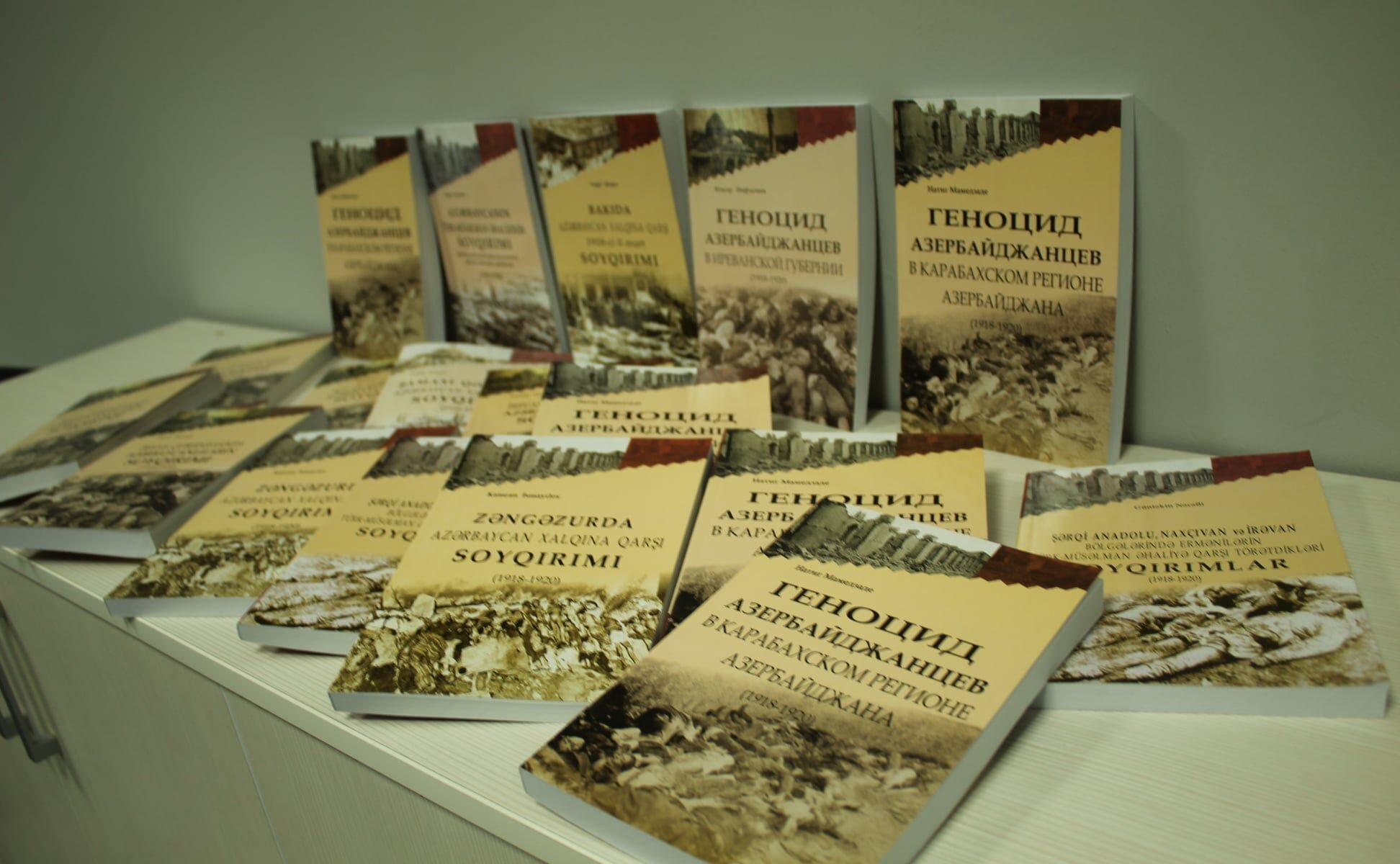
Dear followers! It is gratifying that academician Yagub Mahmudov's tradition of donating books to the "Genocide Memorial Complex" in Guba has been continuing successfully since 2018. So, nowadays, A.A. The Bakikhanov Institute of History donated 100 books on the 1918 Azerbaijani genocide to the Complex's library.
We are grateful to the Institute of History’s director, Doctor of Historical Sciences Professor Karim Sukurova, as well as the other books’ authors, Vagif Abishova, Ilgar Niftaliyeva, Natig Mammadzade, Guntekin Najafli, Nigar Gozalova, and Nazim Mustafa.
We are always willing to work with our highly respected intellectuals who wish to contribute to the enrichment of our library.
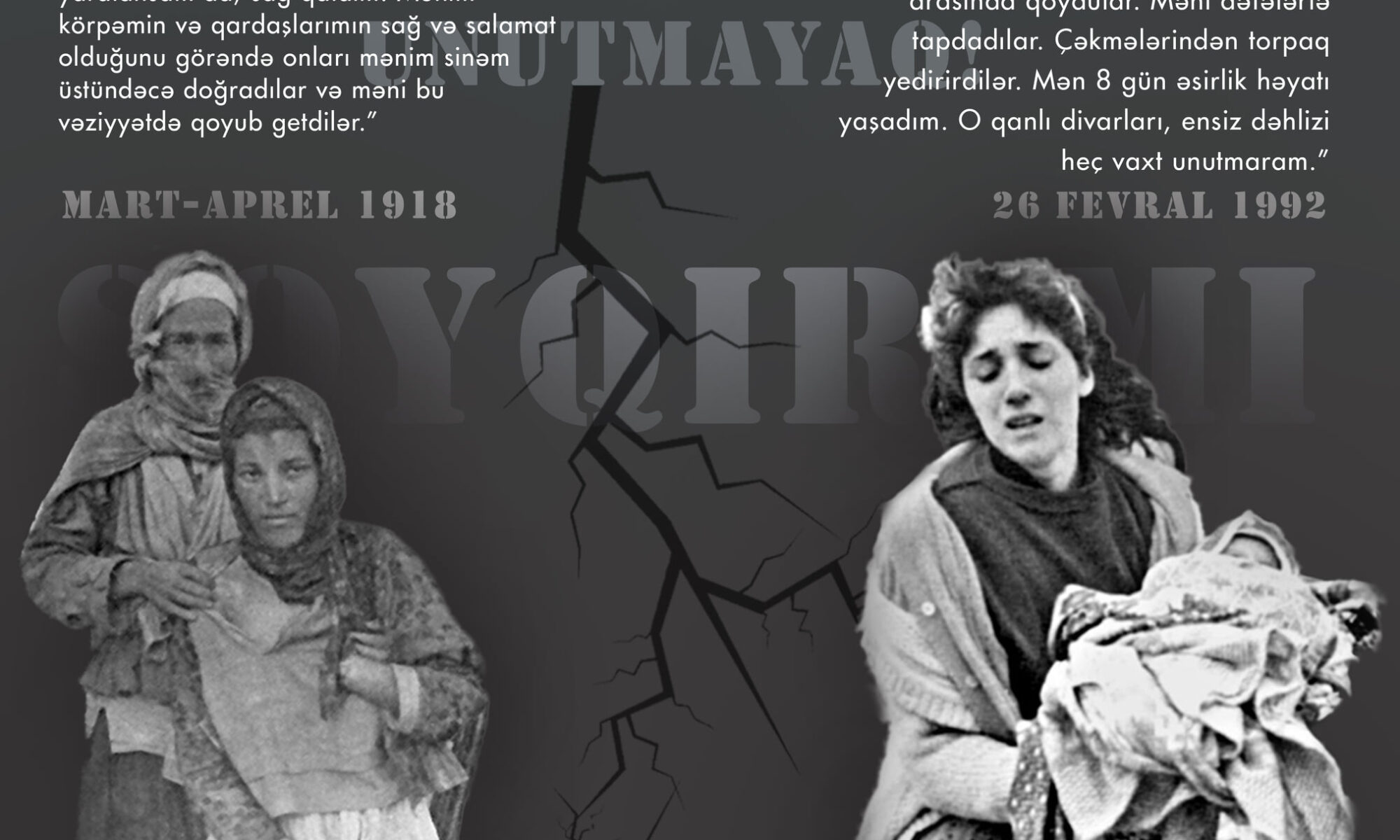
Witness testimony of civilians subjected to Armenian vandalism. The only thing that changes is history...

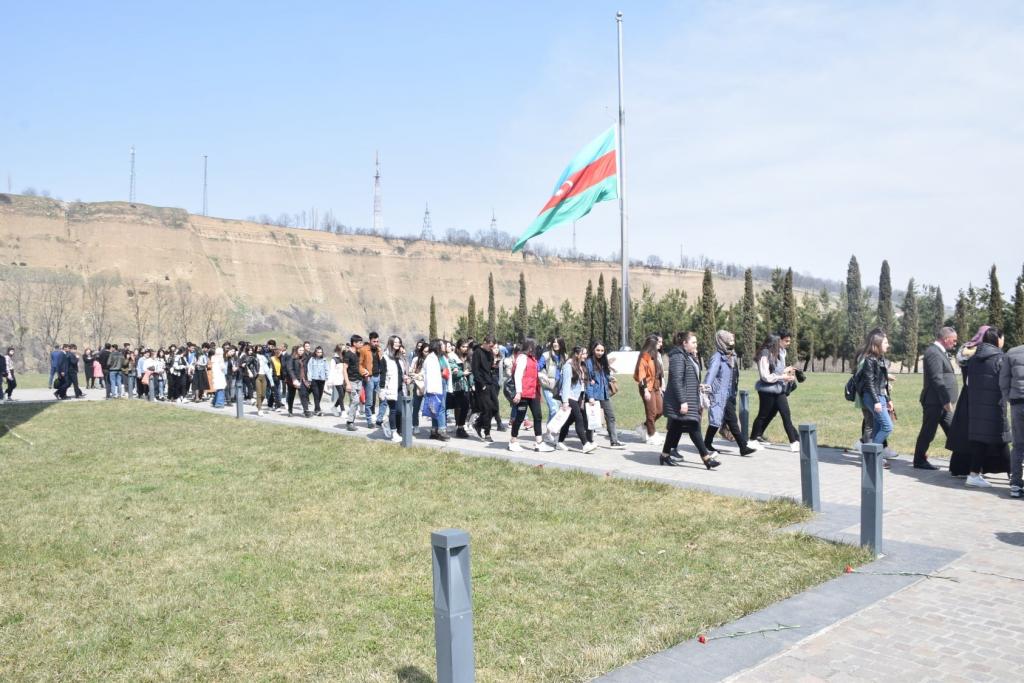
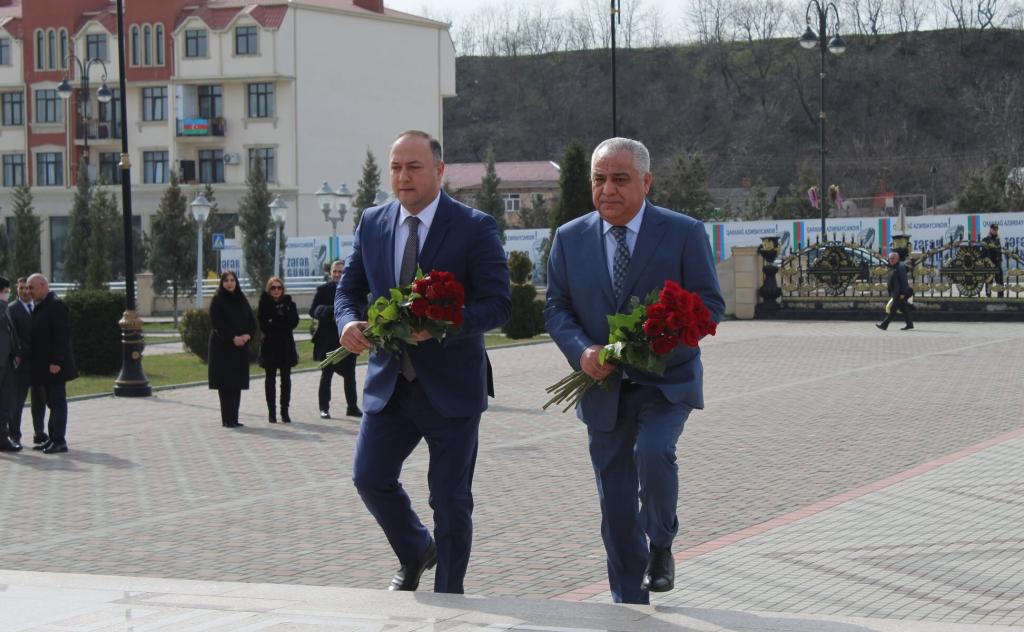
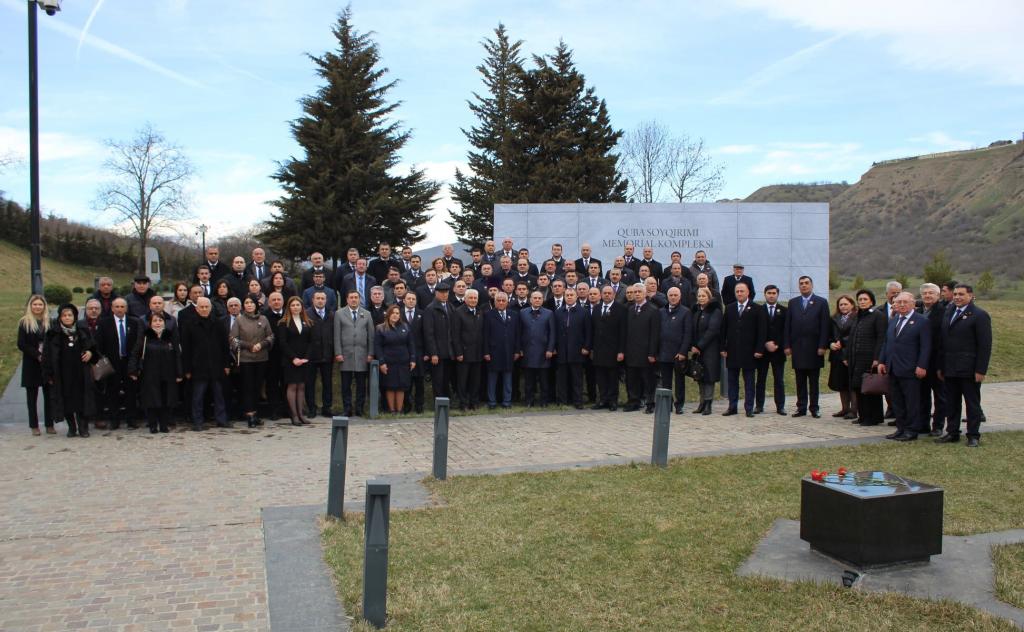
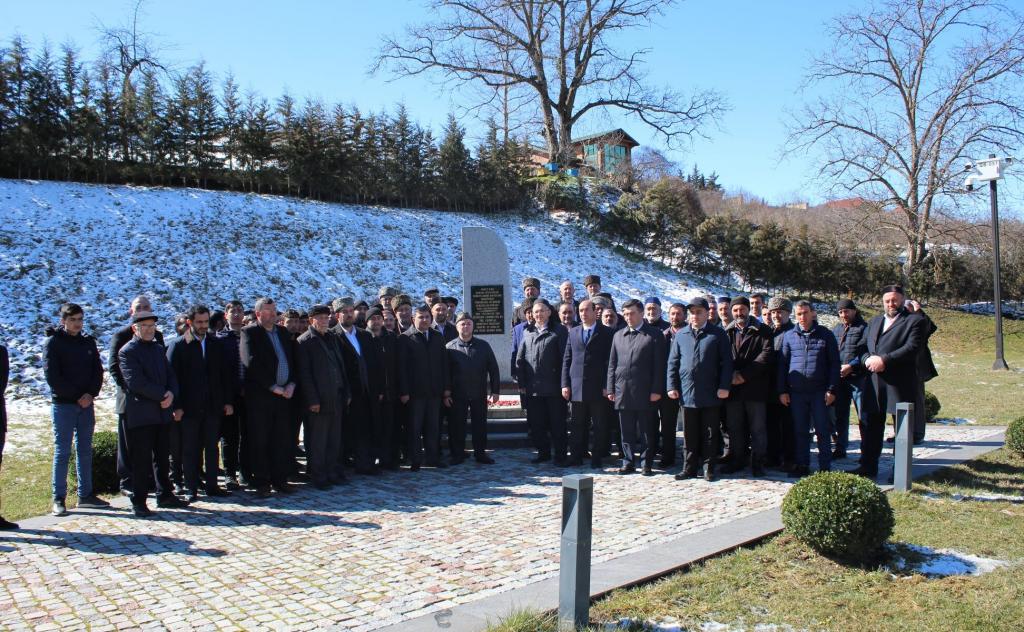
On the occasion of the 30th anniversary of the Khojaly genocide, the staff of the “Genocide Memorial Complex” in Guba visited the Alley of Martyrs in the city of Guba, honored the memory of the martyrs and laid flowers at their graves.
The Turkish Historical and Social Sciences Research Center's Internet news page published an article by Seyid Jabbarov, an employee at the Guba Genocide Memorial Complex, headlined "Guba Genocide Memorial Complex-as a Place of Grief Tourism in Azerbaijan." We present to you the mentioned article.
Today in history. According to a resolution adopted by the United Nations General Assembly on November 1, 2005, January 27 is marked as International Holocaust Remembrance Day each year.

During World War II (1939-1945), millions of European Jews were massacred solely on the basis of their ethnicity.
When Adolf Hitler came to power in 1933, he began to restrict the rights of Jews. The catastrophe, which began with the gradual erosion of Jewish rights, culminated in the November 1938 genocide and the destruction and burning of hundreds of historic synagogues, Jewish shops, homes, and other property. As a result of these genocides, 400 official Jews were killed and 36,000 Jews were relocated to death camps.
The exact number of dead at the Auschwitz-Birkenau concentration camp in Poland, liberated by the Soviet army on January 27, 1945, could not be determined. The majority of the documents relating to those who died in that camp were destroyed. According to the Nuremberg tribunal, Jews made up 90% of the 2.8 million people killed in the camp.
As a country that has been subjected to Armenian vandalism and genocide, Azerbaijan’s state and people feel sorry for the genocides committed against the Jewish people, and various commemorative events are held in our country each year to commemorate the Holocaust victims.
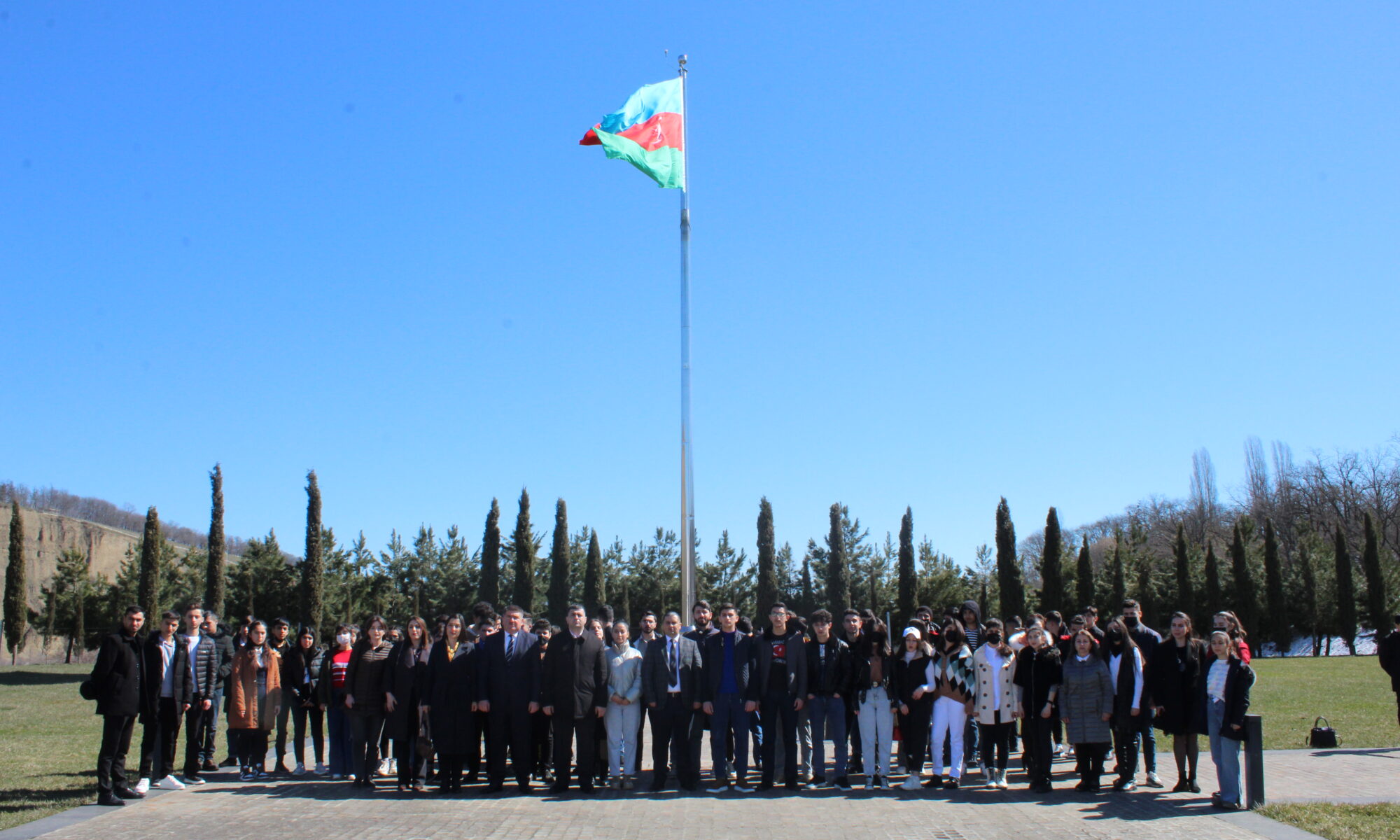
Employees of the complex became members of the editorial board of an international scientific journal.
“Bank and Policy”, the economic and political scientific journal that started operating in 2021, was published in Azerbaijan. IMCRA (International Meetings and Conferences Research Association) is the magazine’s publisher. The company’s purpose, which has achieved a number of successes, is to provide serious scientific support to Azerbaijan’s ongoing reforms and innovations in the political and economic arenas. Ph.D. Rakhshanda Bayramova, director of the “Genocide Memorial Complex” in Guba, and Ph.D. Assoc. Subhan Talibli, a researcher, became members of the magazine’s editorial board.

Subhan Talibli, Ph.D., associate professor at the ANAS Institute of Oriental Studies, spoke today at the online scientific seminar organized by the "Genocide Memorial Complex" in Guba.
He made a speech with the report named “January 20, the Road to Independence.”
In his report, the historian spoke about the glorious history of January 20, 1990, when the people of Azerbaijan, who had been imprisoned for many years in the Soviet empire, raised their voices for freedom and demonstrated courage for their sovereignty.
January 20

January 20 is a glorious date when the people of Azerbaijan, who had spent many years in captivity in the Soviet empire, raised their voices for freedom and demonstrated courage for their sovereignty.
On the night of January 19-20, 1990, Soviet troops entered Baku and took to the streets, firing heavy equipment and various weapons on civilians protesting against the empire. Nonetheless, on a cold winter night, Baku’s streets and squares were filled with only one emotion: freedom and independence. The day people were shot and crushed under tanks was a turning point in our history; the sun rose on the road to freedom. Later, a watershed moment occurred, and Azerbaijan gained independence for the second time in the 20th century.