Goychay Area

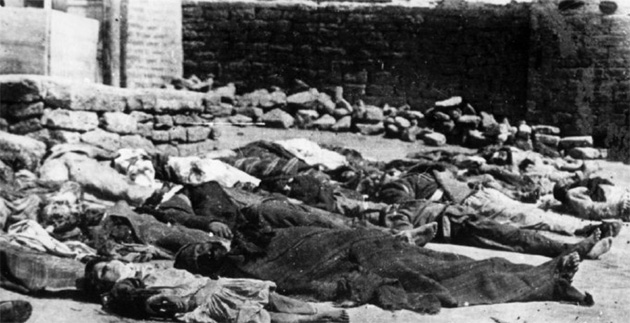
  On June 14, 1918, Goychay was subjected to a strong attack by the Armenian army, acting under the name “Bolshevik army”. The Armenian gangs that broke the resistance of the residents of the village of Kurdamir, Goychay area, committed a brutal massacre here. As a result, 56 houses and shops, 127 properties, 2 mosques were completely burned, all other houses and objects were destroyed and looted. The complete destruction of the station or village of Kurdemir, as well as the destruction of the rest of the population was prevented by the Russians, consisting of the Red Army and Iranian (southern Azerbaijanis) workers, partially cooperating with the Bolsheviks. The EIC documents provide evidence of “relations between the Armenians and the Russian and Azerbaijani Bolsheviks,” local conflicts to put an end to the national killings in Kurdemir, even reports of the execution of several Armenian soldiers. In addition to Kurdamir, Armenian attacks were also carried out on the villages of Jayli, Garavalla, Karabuchak, Mustafali, Khalil-Gasymbay, Arab-Mehdibeyli, Dadali and other villages of Goychay area and were accompanied by the killing of the population. For example, in the village of Arab-Mehdibeyli 84 houses were destroyed and 83 people were killed, including 78 men, 4 women and one boy. The battle between the Baku Soviet Army and the Caucasus Islamic Army in the summer of 1918 in the area of Karamariam village of Geichai County changed for the benefit of the Azeris and laid the foundation for the liberation of Azerbaijani lands from the enemy.  

Javad Area

Since the beginning of April, Armenian vandals under the banner of the Bolsheviks, under the pretext of establishing Soviet power, destroyed and burned Muslim villages in the Javad area, massively killing civilians and plundering property. Armenian armed groups moved from the Hajigabul station along the Kura River and attacked the Azerbaijani villages of Arab-Shahverdi (Zubovka) and Hila-Mirzalikend.
Suddenly, Armenian Dashnaks besieged villages, opened fire with artillery and machine guns, killed many people, burned 44 houses, a village mosque, sacred books and looted all livestock and movable property of villagers.
In addition to these villages, Beidi, Yahshikend, Khojaly, Seyidlar, Harmandaly, Arab Gardashbeili, Pirabba, Gara Imamli, Uzun Babali, Ashaga Sorra and other villages of Javad area were time by time destroyed and burned by Armenians, and the population was subjected to unprecedented atrocities and violence. Among the documents of the Extraordinary Commission for the Investigation of the Javad incident, the testimony of 18-year-old resident of Khojaly village Suraya Dadash kyzy can be considered a vivid example of the brutality of the Armenians. The commission’s investigators, along with medical examinations and testimonies, included in the investigative materials and photographs of Suraya Dadash kizi, a victim and a clear example of Armenian vandalism, whose arm was amputated, mutilated, sick and weak, lost all her relatives and found refuge in another village with strangers.
A number of settlements of Javad area, which had been under siege by Bolshevik, Molokan and Armenian troops for some time, were cleared of the enemy in autumn 1918 as a result of special military operations of the Azerbaijani army.
Although the materials of the investigation of the Extraordinary Investigation Commission, which consisted of 36 toms, established on July 15, 1918, indicated that investigations were also conducted in Goychay and Javad areas, documents about these counties were not left in the republic and were considered lost for a long time. Only after a long search, photographs taken by EIC were found in the archives of Ali Mardan bey Topchubashov in Paris.
Thus, only on the basis of documents on the Goychay and Javad areas sent to Paris – mainly consisting of the testimonies of people who were victims of the genocide and the reports of investigators investigating these areas, it became possible to obtain information on the 1918 genocides in two more areas of Azerbaijan .

Əziz həmvətənlər!

Əziz həmvətənlər!

Ölkəmizdə koronavirus infeksiyasına qarşı preventiv addımlar atılması və mübarizə tədbirlərinin gücləndirilməsi məqsədilə Azərbaycan Respublikasının Prezidenti İlham Əliyevin 19 mart 2020-ci il tarixli Fərmanı ilə yaradılmış Koronavirusla Mübarizəyə Dəstək Fonduna könüllü olaraq ödəmələr həyata keçirən bütün təşkilatlara, şirkətlərə, fiziki və hüquqi şəxslərə dərin minnətdarlığımı bildirirəm.

Bu, şübhəsiz ki, Azərbaycan xalqına xas olan xeyriyyəçilik ənənələrinin davamıdır, eyni zamanda, xalqımızın birliyinin, həmrəyliyinin göstəricisidir. Sizin ölkəmizin üzləşdiyi bu problemə biganə yanaşmamağınız və Azərbaycan Respublikasının Prezidenti İlham Əliyevin çağırışına qoşulmağınız çox yüksək qiymətə layiq addımdır və müasir Azərbaycan cəmiyyətində mərhəmət və şəfqət kimi hisslərin mövcudluğundan xəbər verir.

Azərbaycan vətəndaşının sağlamlığının qorunması naminə mən də bu təşəbbüsə qoşuluram və Azərbaycan Respublikasının Birinci vitse-prezidenti kimi bir illik əməkhaqqı məbləğini Koronavirusla Mübarizəyə Dəstək Fonduna ianə edirəm.

Koronavirusla Mübarizəyə Dəstək Fonduna könüllü olaraq ödəmələr həyata keçirən hər kəsə bir daha təşəkkür edirəm və bütün həmvətənlərimizi həmrəylik, vətəndaş məsuliyyəti nümayiş etdirməyə, Nazirlər Kabineti yanında Operativ Qərargahın tövsiyə və tələblərinə ciddi riayət etməyə çağırıram.

Dərin hörmətlə,
MEHRİBAN