
The event was moderated by Mehriban Aliyeva, Deputy Director of the Complex. Speaking at the webinar, Rana Gojayeva, a researcher at the “Avey” State Historical and Cultural Reserve, emphasized that the reserve—rich in historical, architectural, and archaeological monuments—was named after the “Avey” temple, a relic of the ancient Stone Age. She noted that the reserve primarily focuses on history, culture, architecture, art, ethnography, and folklore studies. The archaeological and architectural monuments, as well as movable and immovable historical and cultural artifacts located within the reserve, constitute its main assets. The area contains hundreds of cultural monuments dating back to the Paleolithic, Mesolithic, Eneolithic, Bronze, and Copper Ages, as well as the medieval and later historical periods.
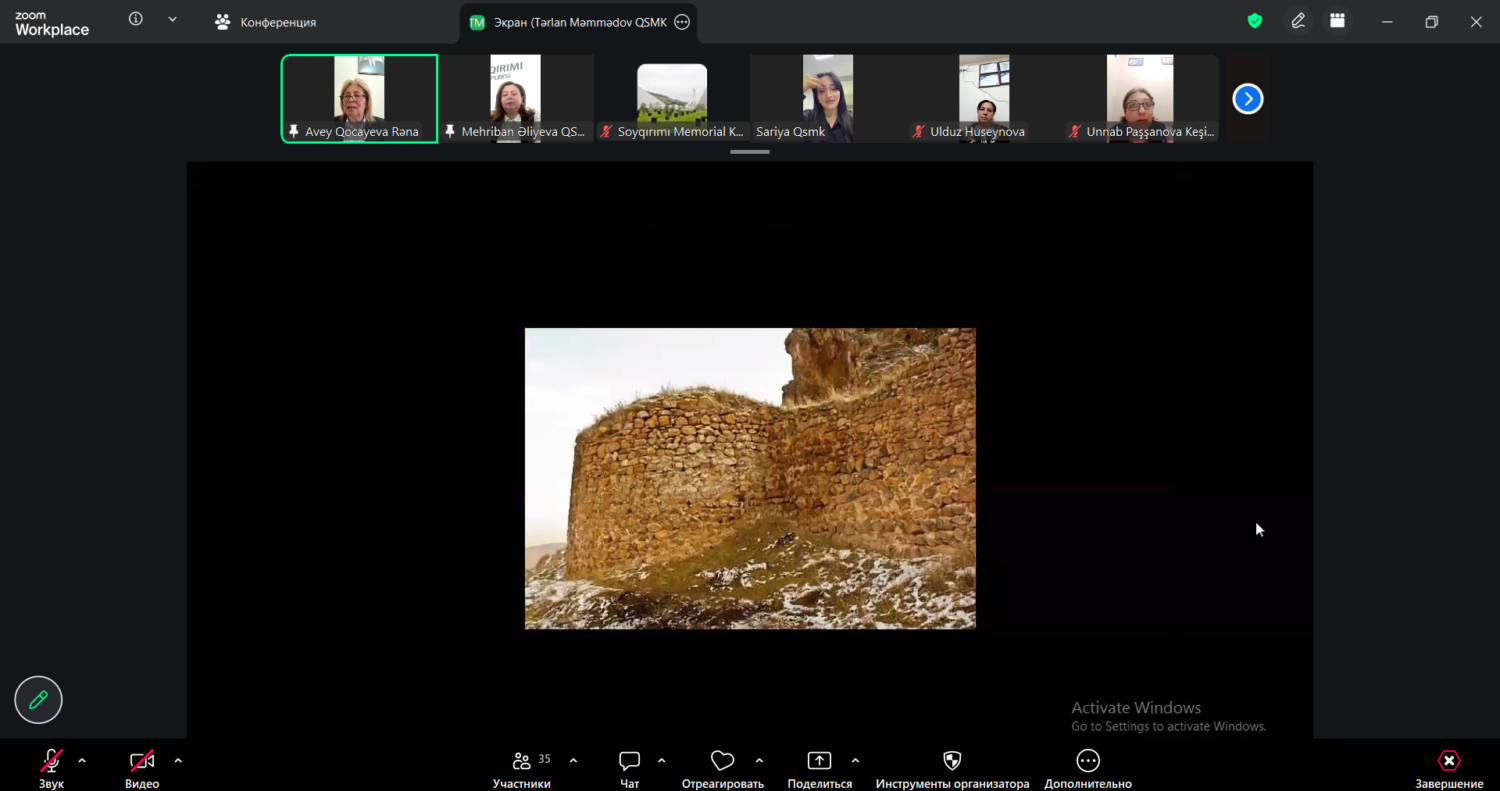
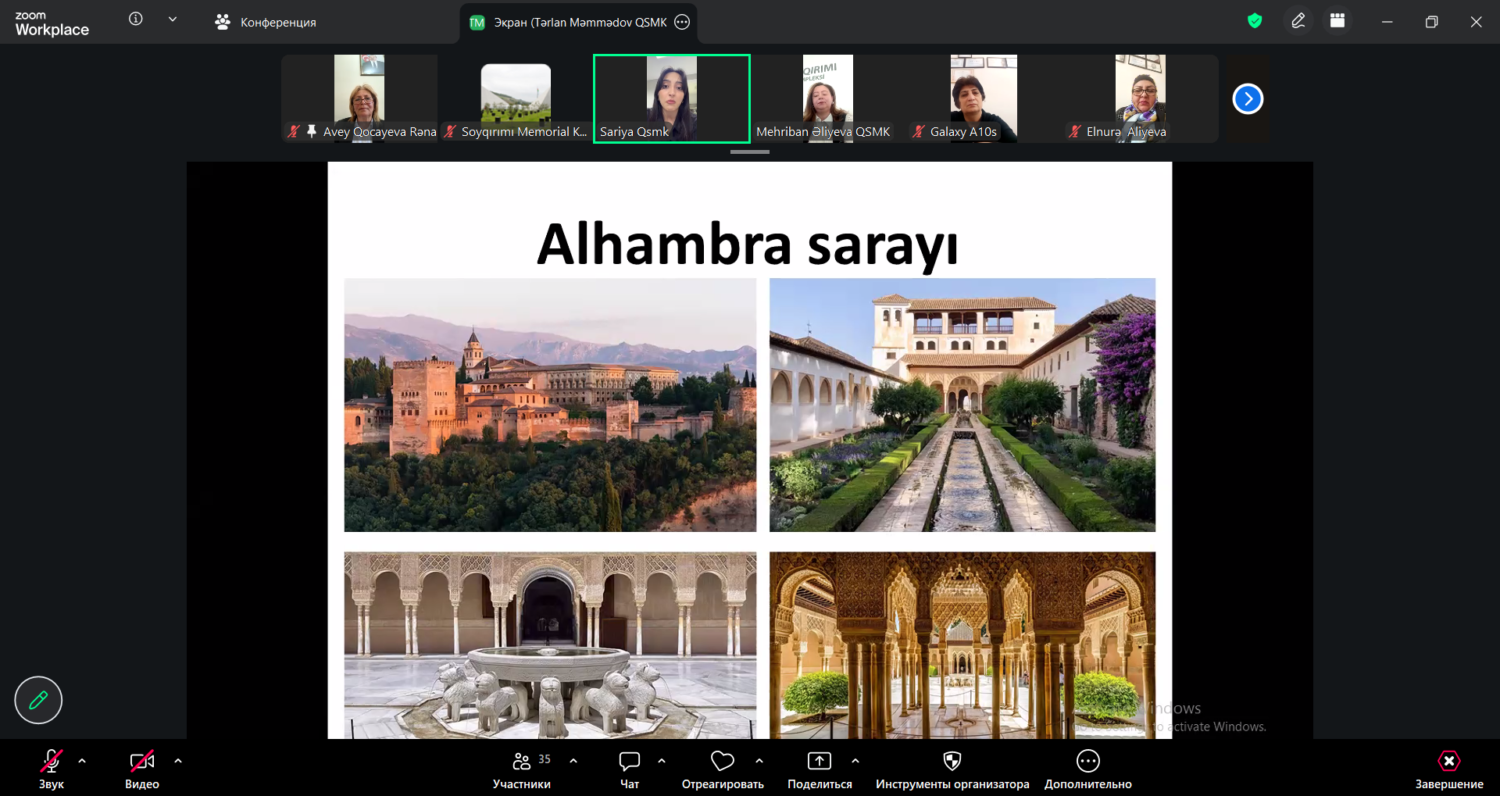
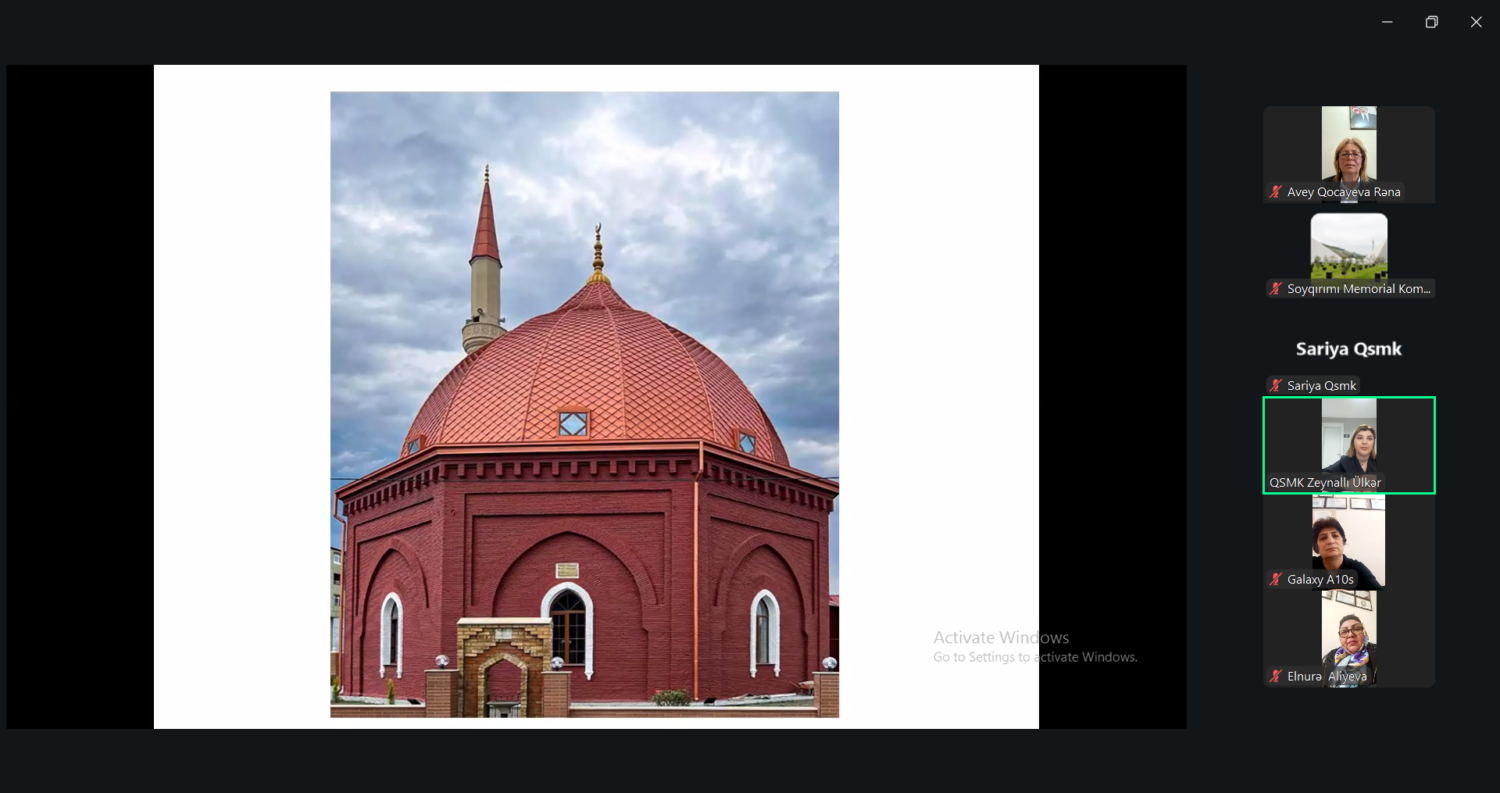
Subsequently, Ulkar Zeynalova and Sariyya Abidova, staff members of the Scientific Research, Exhibition, and Collections Department of the “Genocide Memorial Complex” in Quba, stated that Azerbaijan is one of the regions where human civilization first emerged. Archaeological excavations show that the complex and honorable paths of people who lived in Azerbaijan are reflected in ancient settlements and numerous monuments. These monuments, which have survived to the present day, are preserved as highly valuable examples. Historical monuments spanning centuries and millennia exist throughout the country, serving as unbreakable links connecting the people to their land and ancestors.
They also highlighted that the lower jawbone of an ancient human—known as Azykhantrop—discovered in Azykh Cave proves that Azerbaijan is one of the oldest sites of early human habitation in the world. The settlements discovered in Gobustan confirm that people have lived in this area since ancient times. Thanks to the great attention and care of the Azerbaijani leadership, significant efforts are being made in the country to study, protect, and restore historical monuments, as well as to promote cultural heritage internationally. All of this ensures Azerbaijan’s integration into the global world together with its material and spiritual culture.
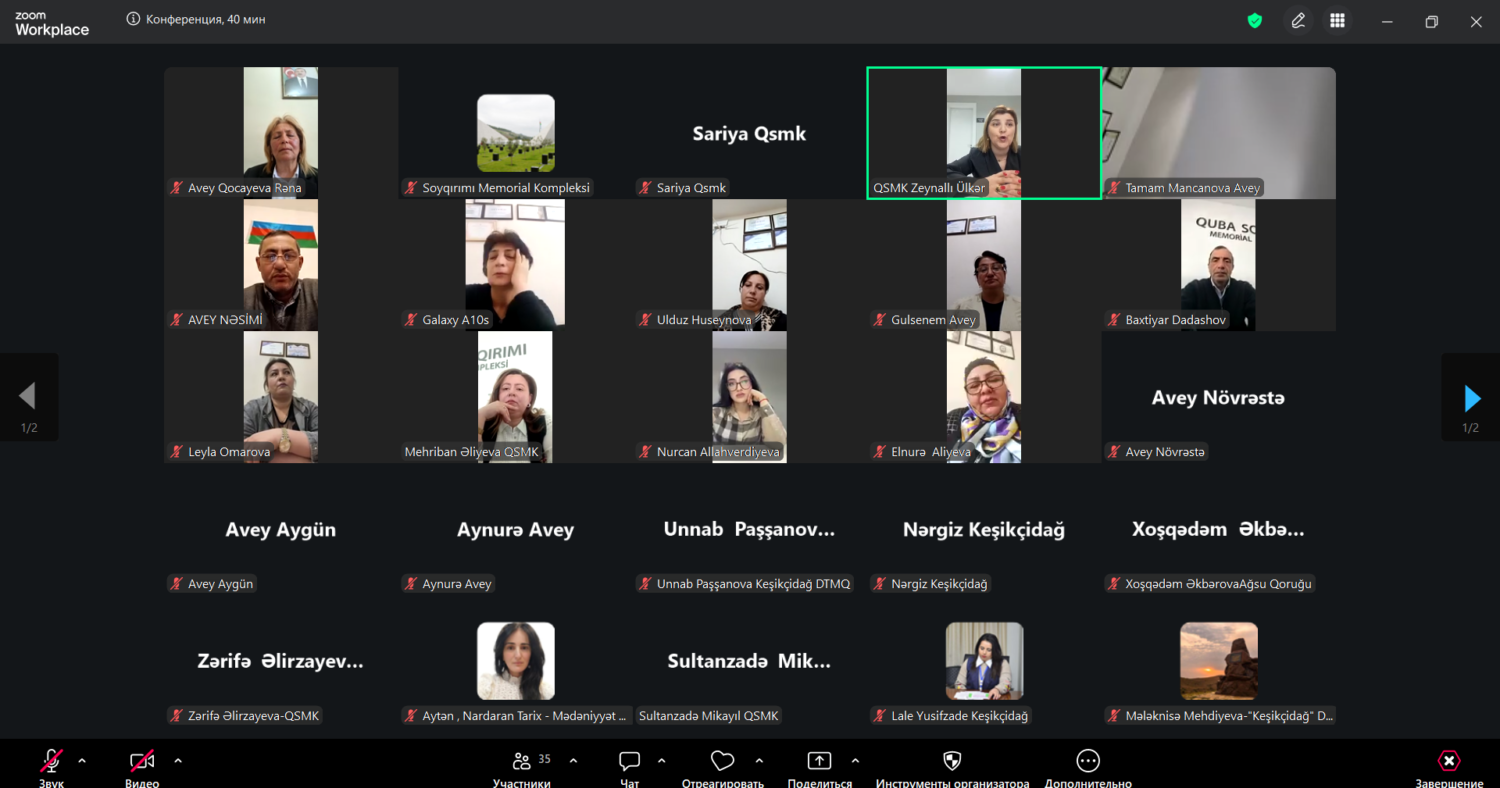
It should be noted that nearly 40 employees from various reserves operating under the State Service for the Protection, Development and Restoration of Cultural Heritage participated in the webinar.