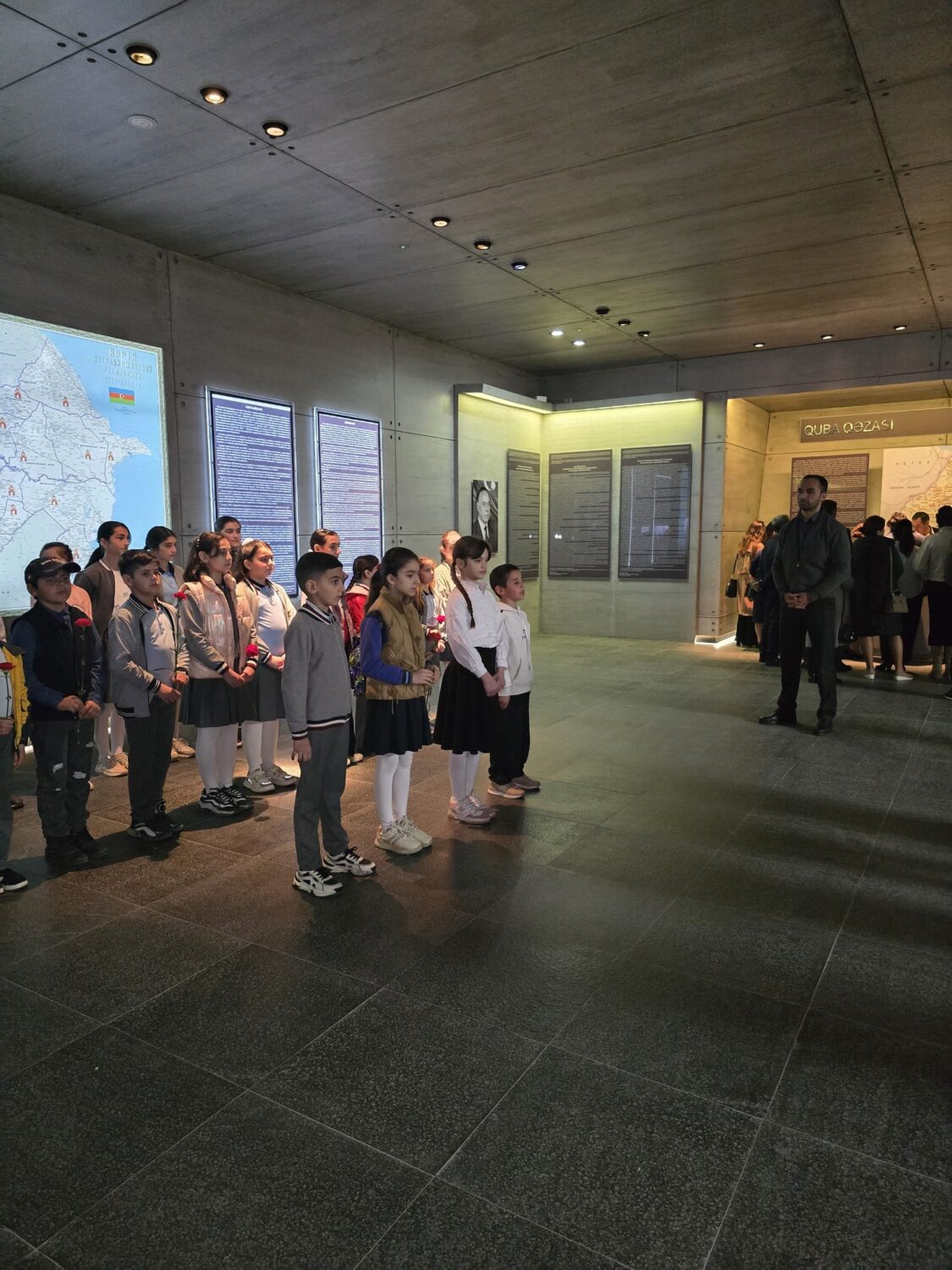
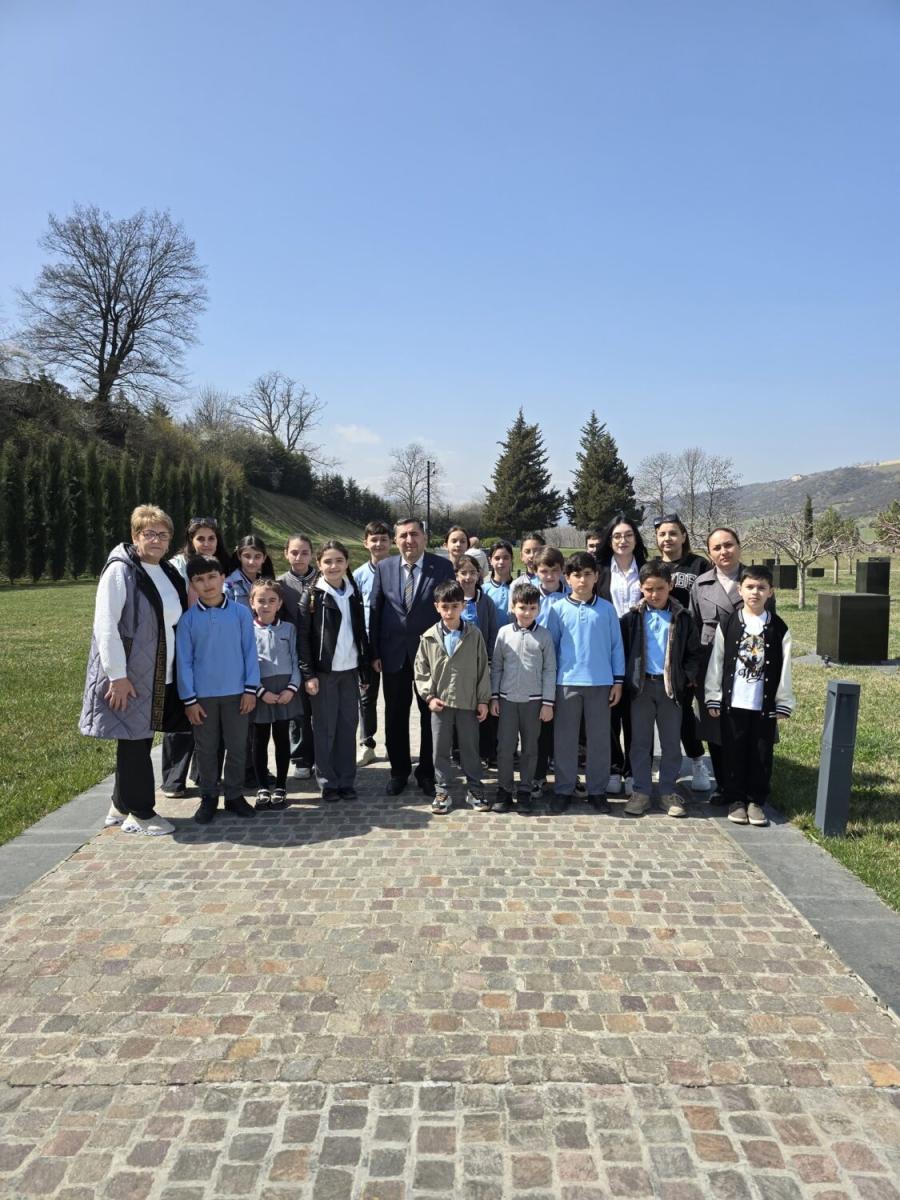
An event was organized at the "Genocide Memorial Complex" in Quba on the occasion of the 107th anniversary of the 1918 genocide of Azerbaijanis, with the joint initiative of the Trade Union Committees of Culture Workers of Khachmaz and Quba districts and the Khachmaz History and Local Lore Museum.


After a minute of silence in memory of our heroic compatriots who sacrificed their lives for the territorial integrity of Azerbaijan, a documentary film depicting the genocides committed against Azerbaijanis was screened.
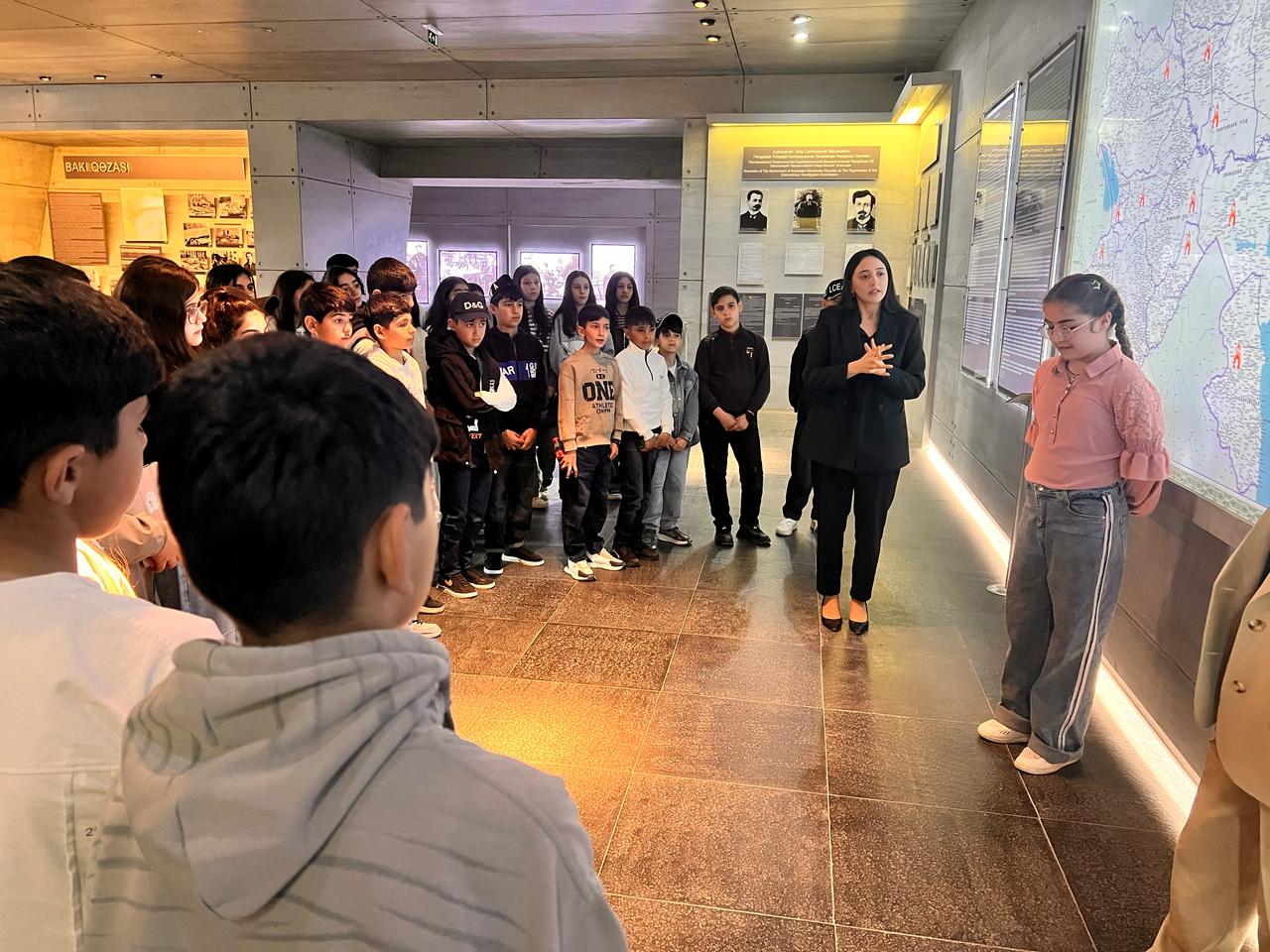
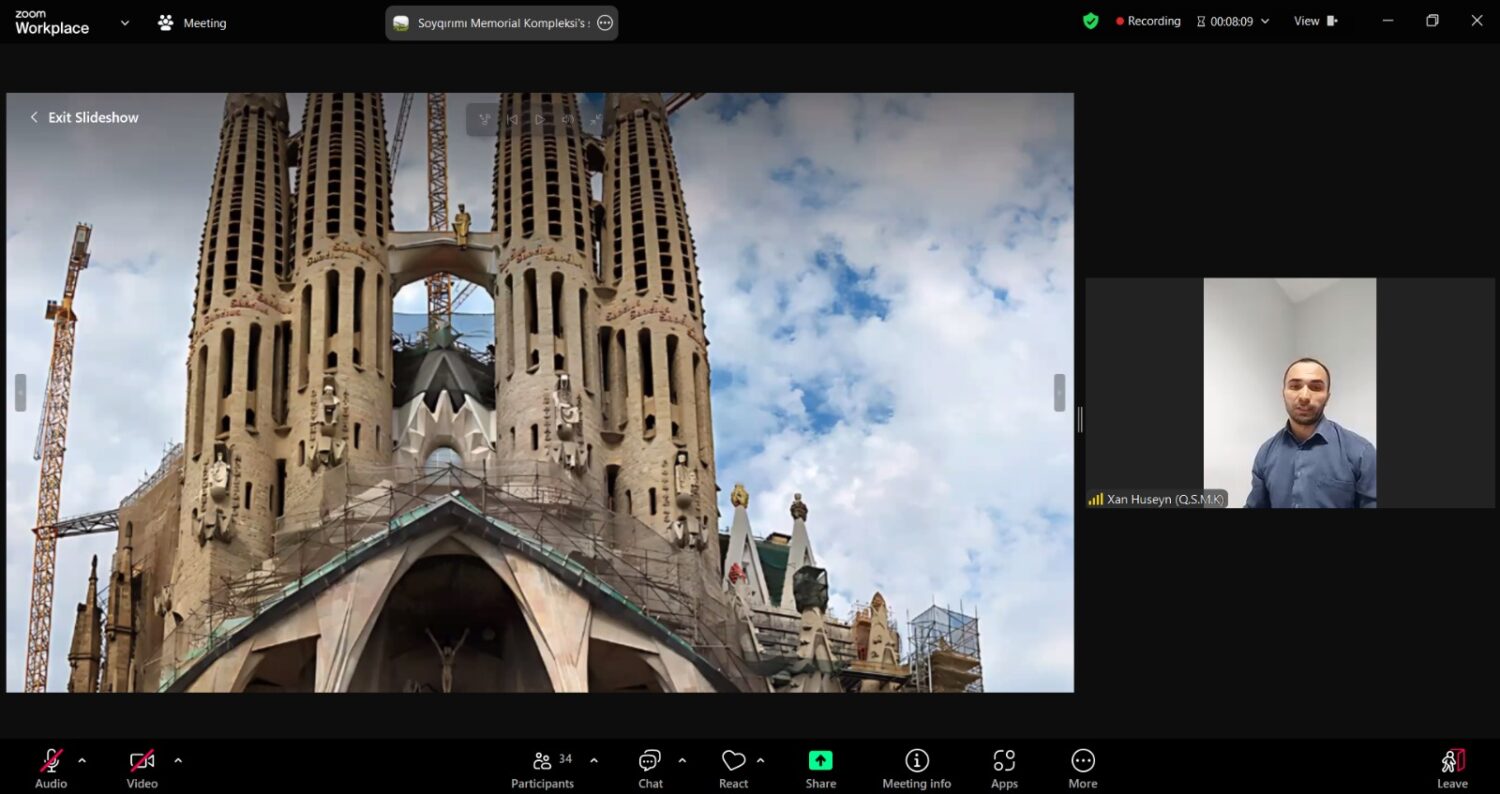
At the event, moderated by Latafat Beybutova, Head of the Scientific Research, Exhibition, and Fund Department of the Complex, the director of the Complex, Dr. Rakhshanda Bayramova, delivered a detailed speech about the genocides committed against Azerbaijanis in the early 20th century, as well as the activities of the Memorial Complex.

The speakers—including Garib Umudov and Maharram Hajiyev, chairmen of the Trade Union Committees of Culture Workers of Khachmaz and Quba districts respectively; Pakize Mehdiyeva, Director of the Khachmaz History and Local Lore Museum; Honored Journalist Azer Hasrat; and Deputy Director of the Complex Mehriban Aliyeva—emphasized the special role of the Genocide Memorial Complex in informing the international community about Armenian vandalism.

They noted that after Azerbaijan restored its independence, it became possible to reveal an objective picture of the nation’s historical past. Truths that had been concealed and forbidden for many years began to emerge one by one.

The decree “On the Genocide of Azerbaijanis,” signed on March 26, 1998, by National Leader Heydar Aliyev, gave a political and legal assessment to the acts of genocide and provided impetus for further research and intensified efforts to uncover the truth.

The event concluded with discussions on the topic

"Kalbajar Battle"

At the end of the First Karabakh War, on March 27, 1993, Armenian forces launched an attack on Kalbajar, a strategically important region located between Armenia and Karabakh. After committing numerous war crimes, the Armenians fully occupied the region in April 1993. Due to the harsh winter conditions, the limited number of Azerbaijani forces defending Kalbajar, the injuries sustained by soldiers, and a shortage of military equipment, the defense operations were unsuccessful. The Armenians attacked from four directions, including the already captured Lachin corridor, and established control over the area. On March 29, Armenian armed groups cut off the supply routes for the defenders of Kelbajar and captured several key heights, including the highest peak, the strategic Murovdag Mountain.
On the night of April 1 to 2, thousands of civilians were forced to leave their homes and cross mountain passes despite harsh weather conditions. The Armenians’ cruelty in Kalbajar resulted in numerous war crimes, including the forced displacement of the civilian population, killings, and kidnappings. By April 3, Armenian forces had fully established control over Kalbajar city and the entire region.
The capture of Kalbajar caused a strong international reaction. On April 30, 1993, the UN Security Council adopted Resolution 822, demanding the immediate withdrawal of Armenian forces from the occupied territories. However, the occupation of Kalbajar continued until November 2020, when Azerbaijan regained control of the area as a result of the Second Karabakh War.
The Kalbajar battle became one of the key episodes of the First Karabakh War and influenced the further course of the conflict. This tragic chapter in history has become a symbol of the heavy trials faced by Azerbaijan, leaving a deep mark on the memories of thousands of people.

On the occasion of the 107th anniversary of the genocide committed against Azerbaijanis in 1918, a commemorative event entitled "Armenian barbarity - Guba genocide" was held in the city of Guba, jointly organized by the "Genocide Memorial Complex" and the Guba Centralized Library System.


Opening the event with an introductory speech, Director of the Centralized Library System Sameddin Nasirov noted that the massacres committed by Armenian Dashnak groups against Azerbaijanis in Guba and other districts in 1918 left an indelible mark on the memory of our people. Noting the importance of not forgetting historical truths, the speaker said that such events are of great importance in terms of conveying the truths of the genocide to future generations.Then, Deputy Director of the “Genocide Memorial Complex” Mehriban Aliyeva gave a speech and provided detailed information about the mass grave discovered during archaeological excavations in the Guba cemetery. She noted that the human remains found here once again prove the tragedy of innocent people who were killed with particular cruelty by Armenian armed groups in 1918. Mehriban Aliyeva emphasized that conveying such acts of genocide to the world community and promoting historical truths is one of the important tasks for Azerbaijan.A total of about 40 people attended the memorial event, including students from institutions under the Guba-Khachmaz Regional Department of Culture, Guba State Socio-Economic College, and active readers.

A tree planting campaign was jointly organized by the "Genocide Memorial Complex" and the Guba Regional Forestry Center of the Ministry of Ecology and Natural Resources of the Republic of Azerbaijan in Guba city to commemorate the 107th anniversary of the 1918 genocide against Azerbaijanis and to contribute to a greener world.

The event was organized on March 17, 2025 in the village of Khujbala, Guba region.As part of the campaign, 200 pine trees suitable for the climate were planted by the Complex employees.It should be noted that the Genocide Memorial Complex is also conducting an online tree planting campaign. To join the campaign, you can visit the following link:

A series of webinars on the topic "Let's not forget historical truths" were organized in Guba on the initiative of the "Genocide Memorial Complex" on March 7-12, 2025. The goal of the project is to investigate the events of the genocide committed against Azerbaijanis in 1918 based on witness testimonies and to convey historical facts to the public.

Each of the three-part webinars discussed the genocides that occurred in the Guba, Shamakhi, Baku, Karabakh, Javad, Lankaran and Zangezur regions. Scientific analyses based on the notes of British journalists and documents of the Extraordinary Commission of Inquiry were presented.

About 100 employees of the reserves under the jurisdiction of the State Service for the Protection, Development and Restoration of Cultural Heritage participated in the series of webinars.

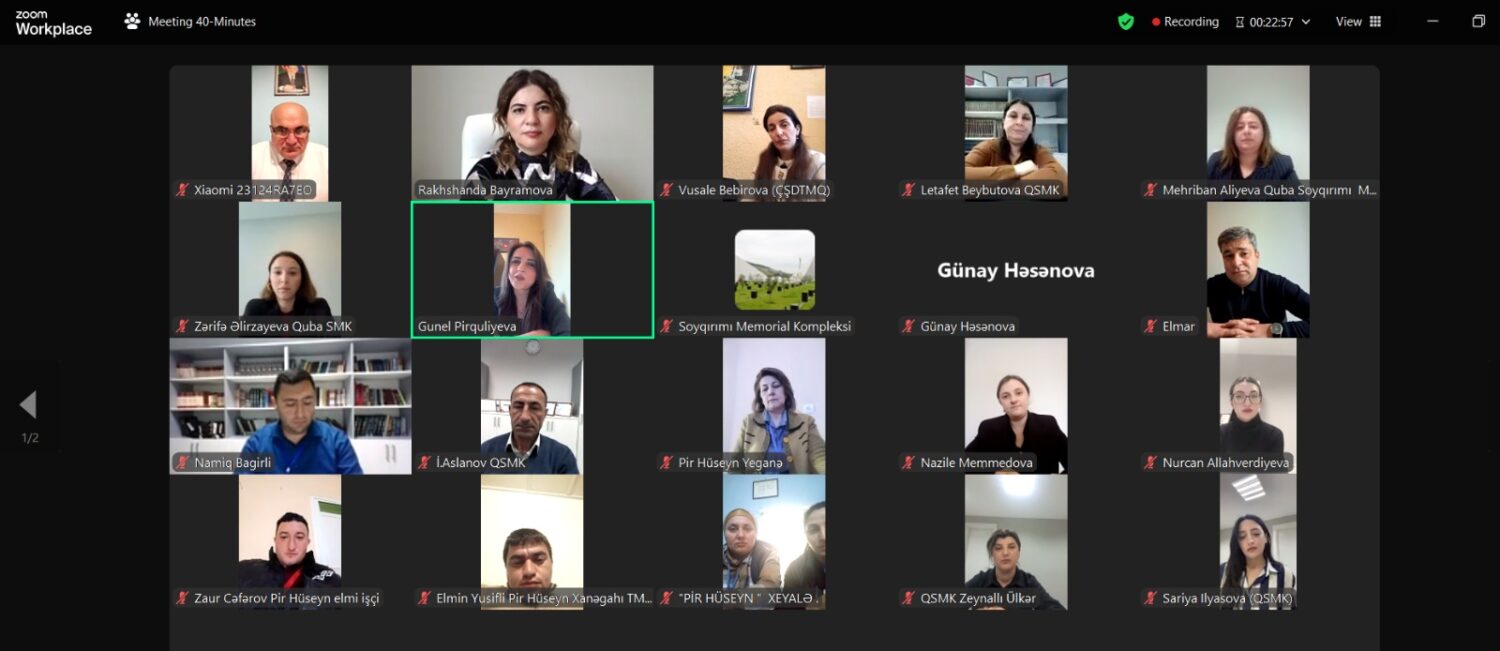
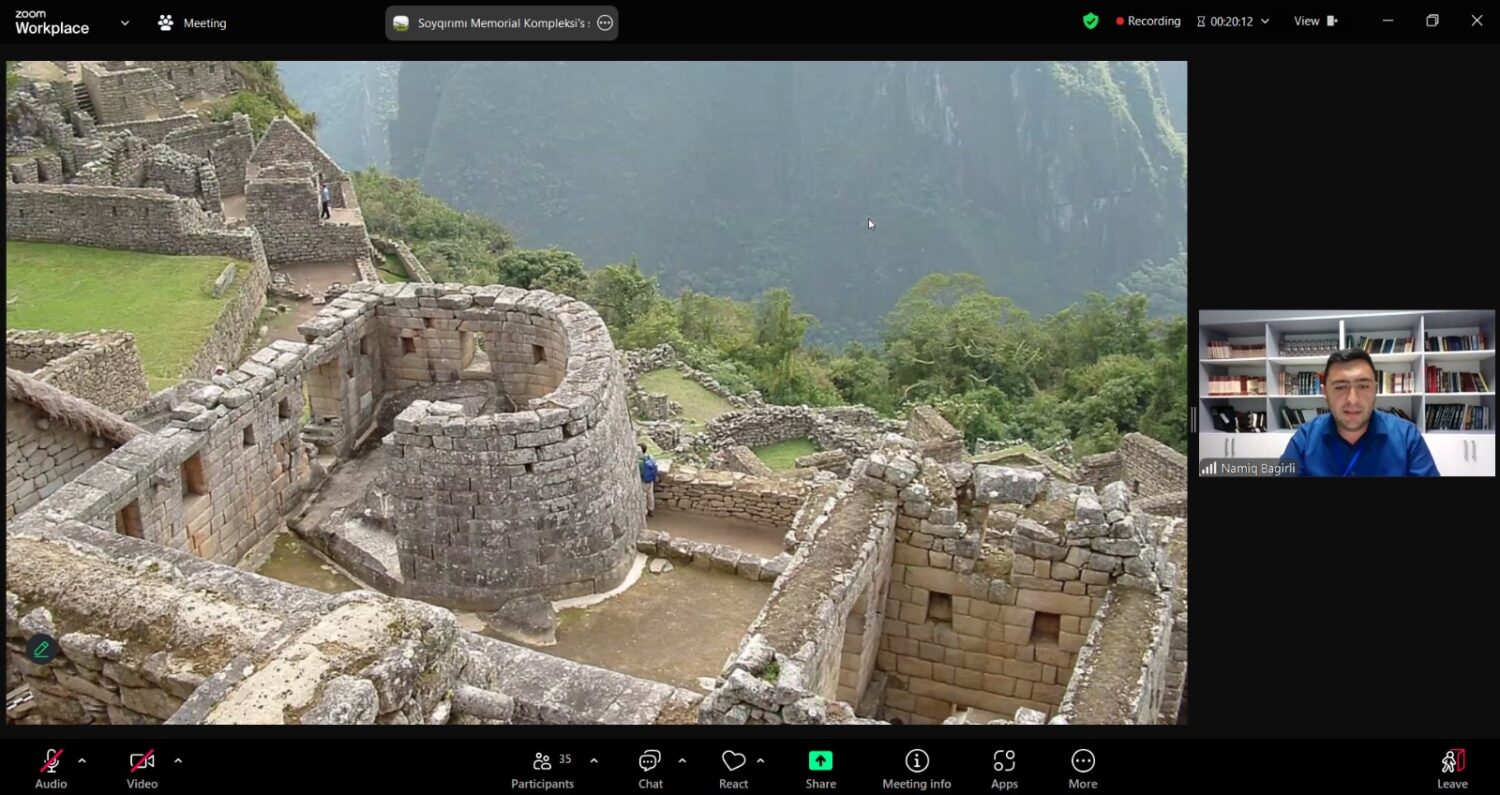
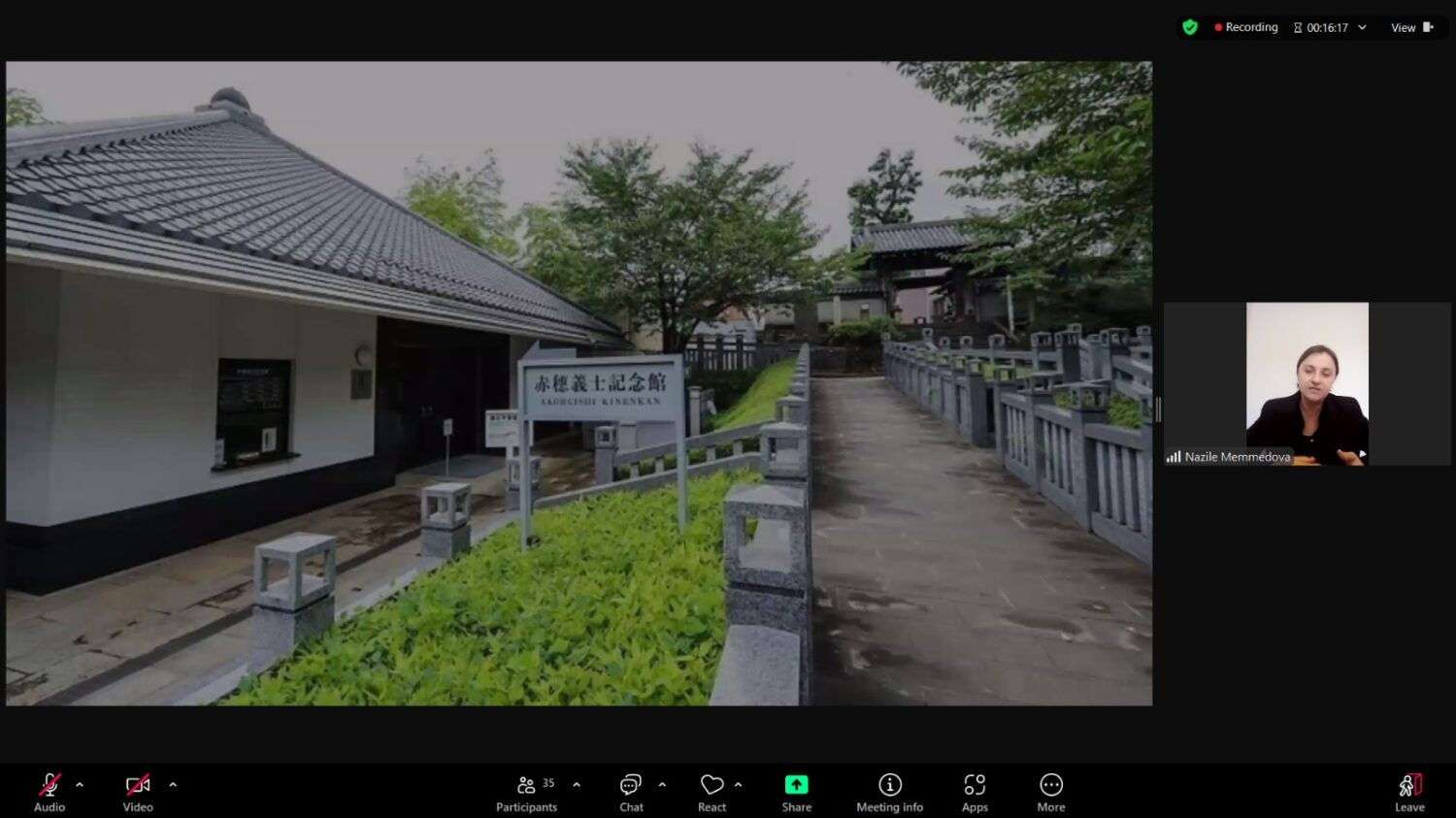
The next part of the webinar series "Let's not forget historical truths" was organized at the initiative of the Genocide Memorial Complex. At the webinar, employees of the "Pir Huseyn Khanegah" Historical and Architectural Reserve and the Genocide Memorial Complex presented articles prepared based on archival documents.

Speakers Latafat Beybutova spoke on the topics of “The events of the 1918 genocide in the eyewitness testimonies of the Baku region – based on the documents of the Extraordinary Investigation Commission”, Naiba Mammadova on “Damage to the Pir-Huseyn Khanate during the 1918 genocide”, Sariyya Abidova on “Testimonies of ethnic groups who witnessed the 1918 genocide in Guba”, and Orkhan Huseynov on “The struggle of patriotic groups of Baku herders against Armenian armed formations during the 1918 genocide”.

The webinar discussed the massacres committed by Armenian armed groups in various regions of Azerbaijan, the facts of these events confirmed by eyewitness accounts and historical documents. The speakers scientifically analyzed the facts based on the documents of the Extraordinary Investigative Commission, eyewitness accounts and archival materials, and put forward new approaches for a deeper study of this painful page of Azerbaijani history.

About 30 employees of the reserves subordinate to the State Service for the Protection, Development and Restoration of Cultural Heritage participated in the webinar.

A project entitled “The events of the 1918 Genocide against Azerbaijanis in Witness Testimonies” is being implemented in Guba city at the initiative of the “Genocide Memorial Complex”. As a result of the research conducted by the employees of the Scientific Research, Exposition and Fund Department of the Complex, scientific articles were prepared within the framework of the project, and a series of webinars entitled “Let's not forget historical truths” were organized on the Zoom platform on March 7-12, 2025.

The main goal of the project is to investigate the events of the genocide committed against Azerbaijanis based on eyewitness testimonies, study historical facts and communicate them to the public. During the speeches based on scientific research, the employees of the Complex analyzed the events that took place in 1918 in the Guba, Shamakhi, Baku and Karabakh regions based on eyewitness testimonies and presented new historical information.

The first part of the series of webinars took place on March 7, 2025. In the first webinar, moderated by Mehriban Aliyeva, Deputy Director of the Genocide Memorial Complex, speakers Mehriban Aliyeva (“The events of the 1918 genocide in Guba region in eyewitness testimonies”, Ulker Zeynalova “The events of the 1918 genocide in Shamakhi region in eyewitness testimonies”, and Nurjan Allahverdiyeva “The 1918 genocide in eyewitness testimonies of residents of Baku city and Baku villages” made speeches. The speeches provided information about the massacres committed by Armenian armed forces in Guba, Shamakhi and Baku regions, the testimonies of people who witnessed the events that occurred during that period, and the historical significance of these testimonies.

The webinar was attended by about 40 employees of reserves under the jurisdiction of the State Service for the Protection, Development and Restoration of Cultural Heritage.

Ilham Aliyev and First Lady Mehriban Aliyeva visited Khojaly Genocide Memorial

On February 26, President of the Republic of Azerbaijan Ilham Aliyev and First Lady Mehriban Aliyeva visited the Khojaly Genocide Memorial in Baku’s Khatai district to commemorate the 33rd anniversary of the genocide, which remains a dark chapter in human history of the XX century.

President Ilham Aliyev laid a wreath at the memorial, paying tribute to the victims of the genocide with deep respect.

First Lady Mehriban Aliyeva placed flowers at the monument, honoring the memory of those who perished in the genocide.

The Day of Human Rights Violation: Khojaly Genocide

On February 26, 2025, a hybrid format event entitled “Human Rights Violation Day: Khojaly Genocide” was organized on the occasion of the 33rd anniversary of the Khojaly Genocide. First, the memory of the martyrs who sacrificed their lives for the sovereignty of Azerbaijan was commemorated with a minute of silence. Opening the event with an introductory speech, the Director of the Genocide Memorial Complex, Rakhshenda Bayramova, spoke about the historical significance of the Khojaly genocide and the importance of evaluating it in terms of human rights violations at the international legal level. She said that the Khojaly incident is a tragedy not only for Azerbaijan, but for humanity in general, and those who committed this crime must be held accountable before justice. Rakhshenda Bayramova also provided information about the educational activities carried out by the Complex and emphasized the importance of strengthening propaganda work on an international scale so that this tragedy is not forgotten. Later, Irada Alili, a doctor of philosophy in history and a member of the Azerbaijan Writers’ Union, noted that the Khojaly tragedy was not just an overnight event, but was part of a long-term political and military aggression. Explaining the terrible massacres that occurred during the tragedy with historical facts, she said that this was not just a military operation, but a planned act of genocide against the civilian population. Irada Alili also noted that literary and scientific works written about the genocides that occurred in the historical territories of Azerbaijan played an important role in conveying these tragedies to future generations. Speaking at the event, Fuad Mammadov, Head of the Department of Law, Human Resources and Documentation of the State Service for the Protection, Development and Restoration of Cultural Heritage under the Ministry of Culture of the Republic of Azerbaijan, analyzed the legal aspects of the Khojaly genocide and noted the importance of assessing this event as an act of genocide from the point of view of international law. He spoke about the work done by the Azerbaijani state to promote the Khojaly tragedy at the international level and noted that the recognition of the Khojaly genocide by the parliaments of various countries is an important step in this direction. It should be noted that the event was attended by about 85 heads and employees of reserves subordinate to the State Service for the Protection, Development and Restoration of Cultural Heritage under the Ministry of Culture of the Republic of Azerbaijan.