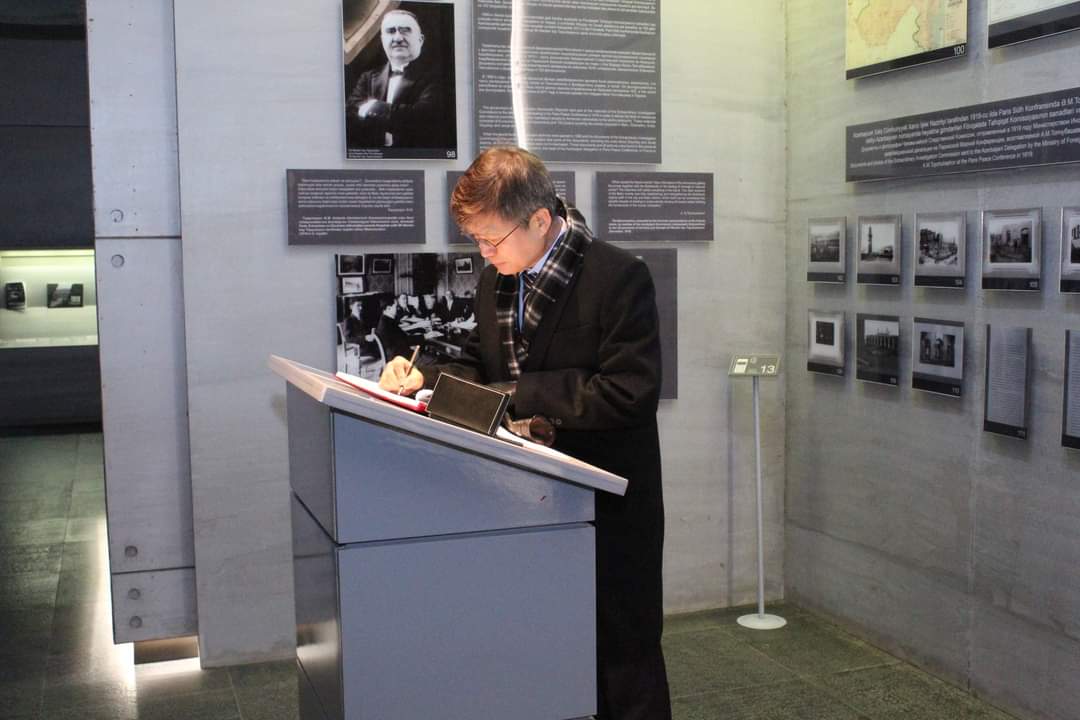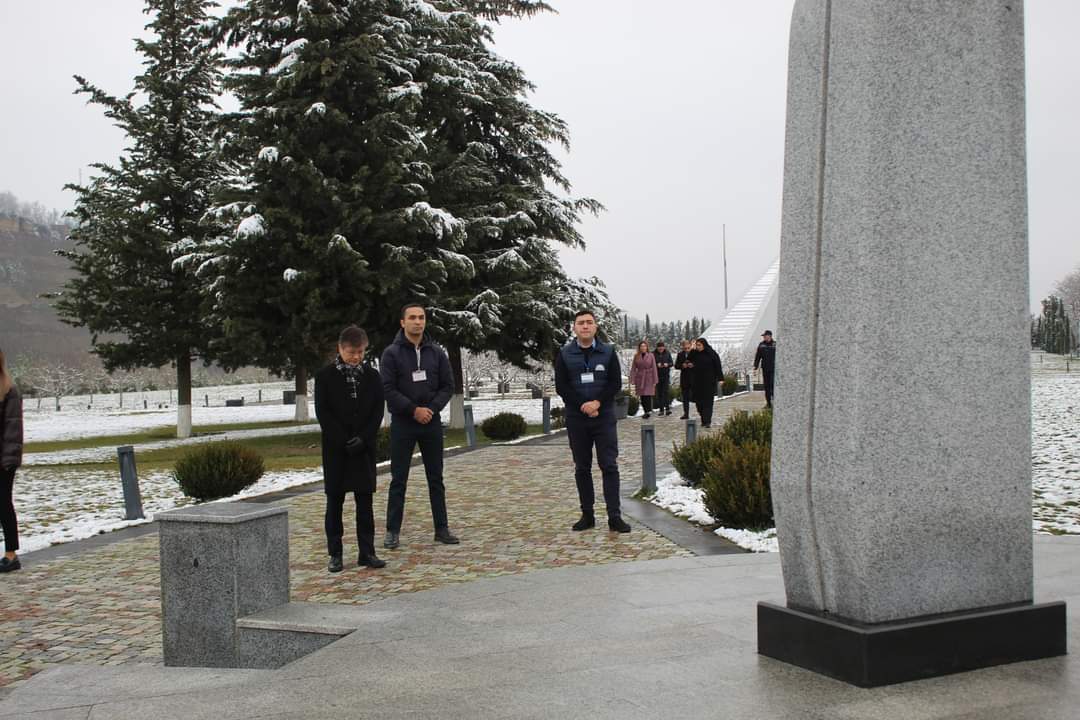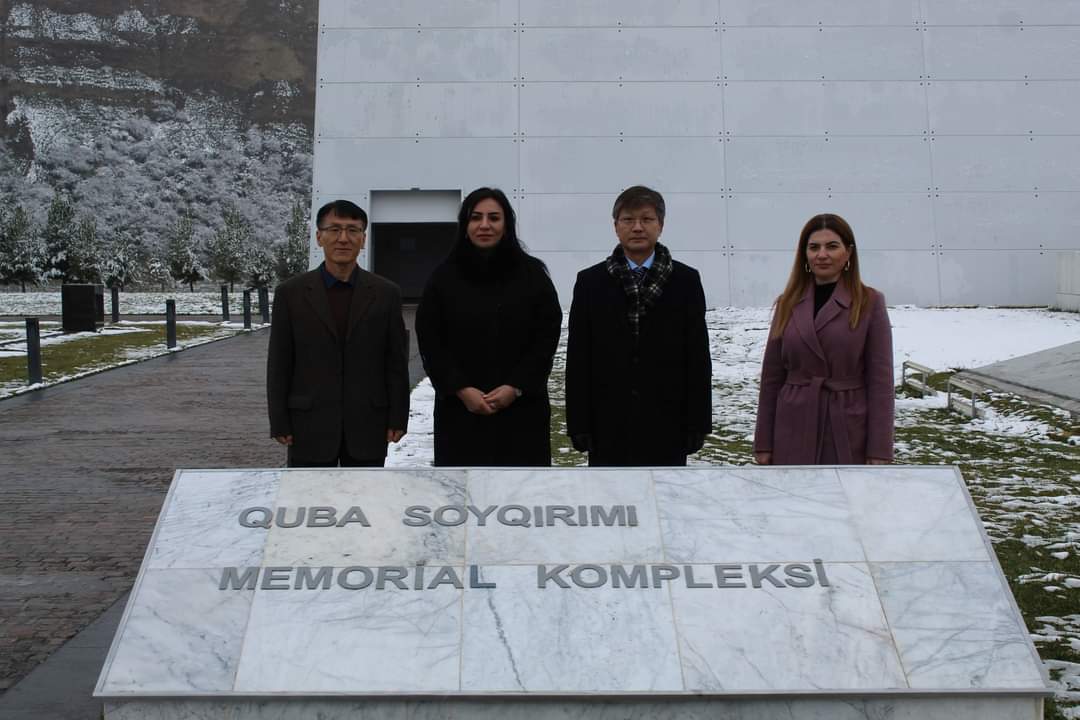
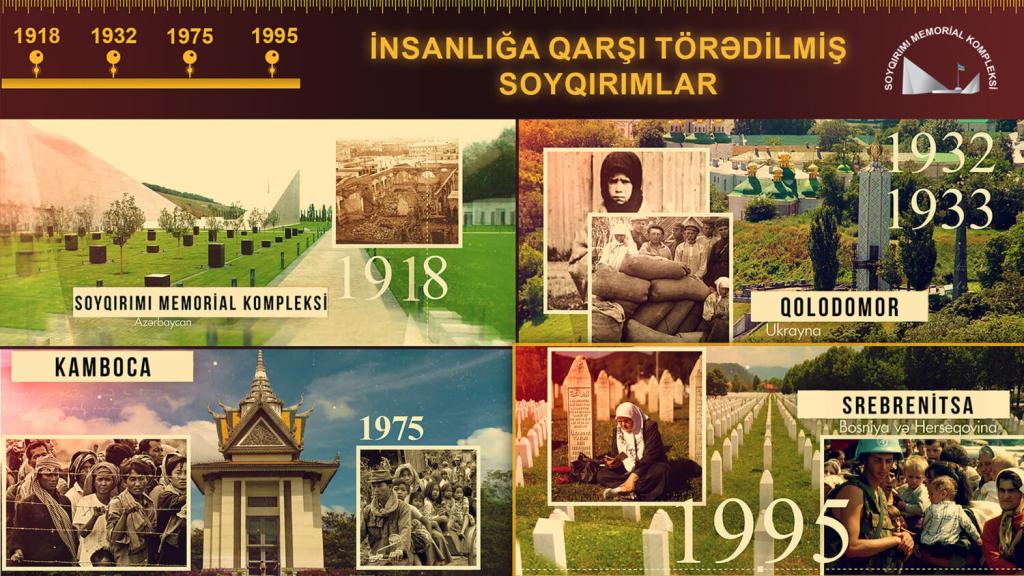
Today is the 104th anniversary of the establishment of the Azerbaijan Democratic Republic.

On May 28, 1918, Azerbaijan declared its independence with the adoption of the “Declaration of Independence.”
The Azerbaijan Democratic Republic, as it is known, was the first parliamentary republic in the Muslim East. The Azerbaijan Democratic Republic emerged as a logical result of our people’s national awakening process. The names of statesmen, patriotic intellectuals, and professional servicemen will live on in the hearts of our people. It should be noted that the Azerbaijan Democratic Republic has become an example of a new state and society that combines European democratic values with Eastern cultural elements. Granting suffrage, declaring the Azerbaijani language the state language, focusing special attention on the development of education and culture, establishing a regular national army, and other activities fully characterize the scale and significance of the Democratic Republic’s domestic policy. The decision of the Versailles Peace Conference on January 11, 1920 to recognize the de facto recognition of the Azerbaijan Democratic Republic was Azerbaijan’s greatest foreign policy success. The modern Republic of Azerbaijan, which has entered a new stage of independence after 71 years of Soviet occupation, is now carrying on the honorable work of the Popular Front.

An event called “Our independence is eternal”

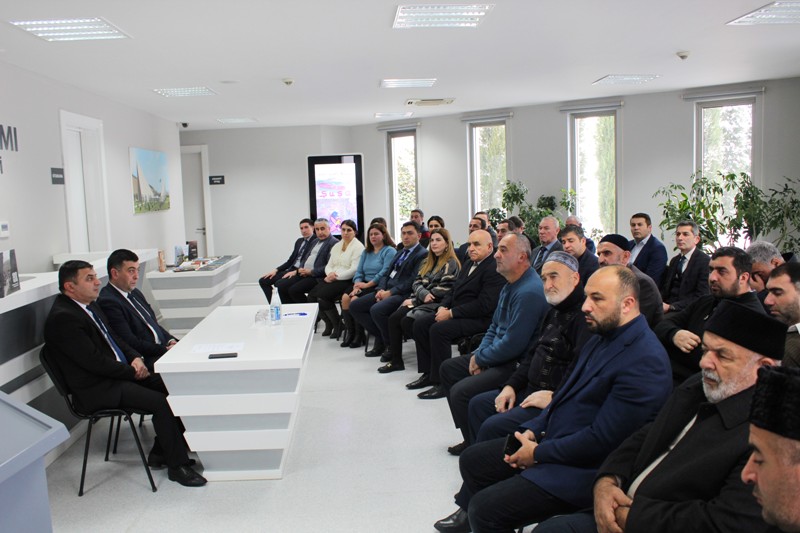
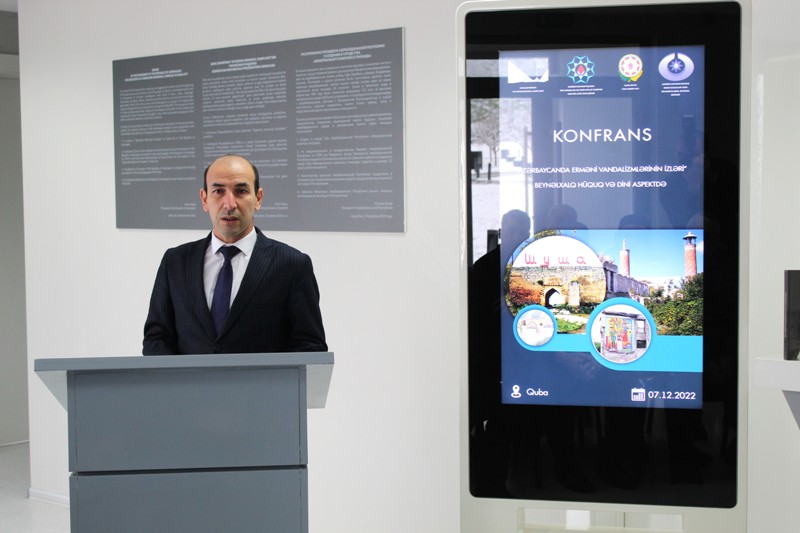
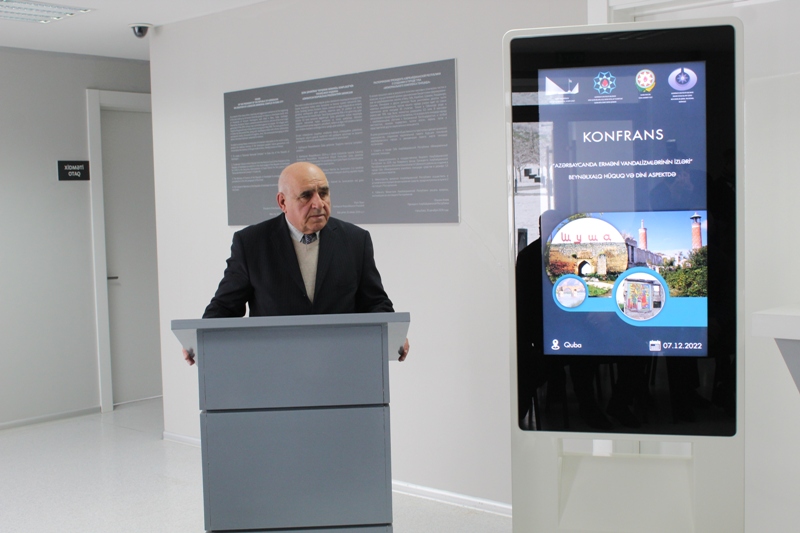
In connection with the 104th anniversary of “May 28 Independence Day”, an event called “Our independence is eternal” was organized by the joint organization of the “Genocide Memorial Complex” in the city of Guba and the State Gymnasium for the Humanities named after Seyid Jafar Pishaveri. At the event, the director of the complex, doctor historical sciences in philosophy Rakhshanda Bayramova and researcher, doctor historical sciences in philosophy Subkhan Talibly lectured on the creation of the firstdemocratic state in the Muslim East, as well as on the achievement of great successes and victories of the independent Azerbaijan Democratic Republic in a short time. In conclusion, the head of the gymnasium and active students were awarded certificates.

REPUBLICAN SCIENTIFIC CONFERENCE in the subject of “The First Democratic Republic in the the East: The scientific-practical foundation of National State and Its Direction” was held in Baku State University on the occasion of 28 May – Independence Day.

The employees of the scientific department of “Genocide Memorial Complex” in Guba – Letafet Beybutova, Ulker Zeynalova, Abutalib Turabov, Namig Baghirli made a speech with their scientific articles in the conference. At last the employees of the complex paid a visit to the book fair which was organized in front of the university.
 

March 31 The "Azerbaijani Genocide" project continues successfully.

Within the framework of the “March 31 – Genocide of Azerbaijanis” project, “Genocide Memorial Complex” in Guba, in assosiation with the secondary schools No. 90 named after Richard Zorge in Baku, No. 275 named after Alakbar Eyvazov and Gubadli region I. Ashagi Molla village secondary school named after Mammadov jointly organized propaganda events in May 2022. At the events, which were attended by more than 700 students and teachers, the director of the complex, doctor historical sciences in philosophy Rakhshanda Bayramova and researcher Subhan Talibly lectured on the events of the 1918 genocide in Azerbaijan. In conclusion, school leaders and active students were awarded certificates.

Icheri Sheher Museum Center

On December 22, 2018, the “Icheri Sheher” Museum Center was established as a structural unit of the “Icheri Sheher” State Historical-Architectural Reserve. The Maiden Tower, which dates from the 8th-7th centuries BC, the Shirvanshahs’ Palace Complex, which dates from the 12th-15th centuries, the Beylar Mosque, famous for its Sacred Treasures exposition, and the Siratagli religious-architectural museum are all part of the Icheri Sheher Museum Center. The Gala State Historical and Ethnographic Reserve Museum, which preserves ancient traditions, and the Baku House of Photography, which unites time and people, are part of the complex.
The newly established Museum Center, which combines museum expositions, introduces the world to Azerbaijan’s rich history and multifaceted culture. 54,000 exhibits are preserved in the Museum Center’s fund.
Icheri Sheher, along with the Maiden Tower and the Palace of Shirvanshahs, was inscribed on the UNESCO World Heritage List in 2000.

MUSEUM OF CARPETS

The first museum specimens were discovered in Crete in the sixteenth century BC, and in ancient Rome and Greece in the third century. Museums were first established in Azerbaijan in the 1920s. In Azerbaijan, there are 212 museums. The Azerbaijan National Carpet Museum, founded on March 13, 1967, is one of these museums. This is the world’s first carpet museum, and it houses the most extensive collection of Azerbaijani carpets.
The exhibit is already stored in the museum fund, which includes seven collections such as “Pile”, “Pileless” carpets, “Carpet products”, “Art metal”, “Ceramics, glass, wood, paper”, “Fabric, clothing, embroidery” and “Jewelry”.
The museum houses rare items from the Bronze and Antiquity periods, as well as the early Middle Ages. The majority of his collections date from the XVII-XX centuries.
In 2017, the International Documentation Committee (CIDOC) of the International Council of Museums awarded the Azerbaijan National Carpet Museum the “Best Practice” award, as well as the “Best Museum in Europe – 2018” competition for “application of innovations in museum work with the public.”


The next Memorandum of Understanding was signed with Baku State University.

The “Genocide Memorial Complex” in Guba, which aims to convey the truth about the genocide to the world, is constantly cooperating with higher education institutions, according to the new strategy of future propaganda and agitation. The next Memorandum of Understanding was signed between the Guba Genocide Memorial Complex and the Baku State University Faculty of History.
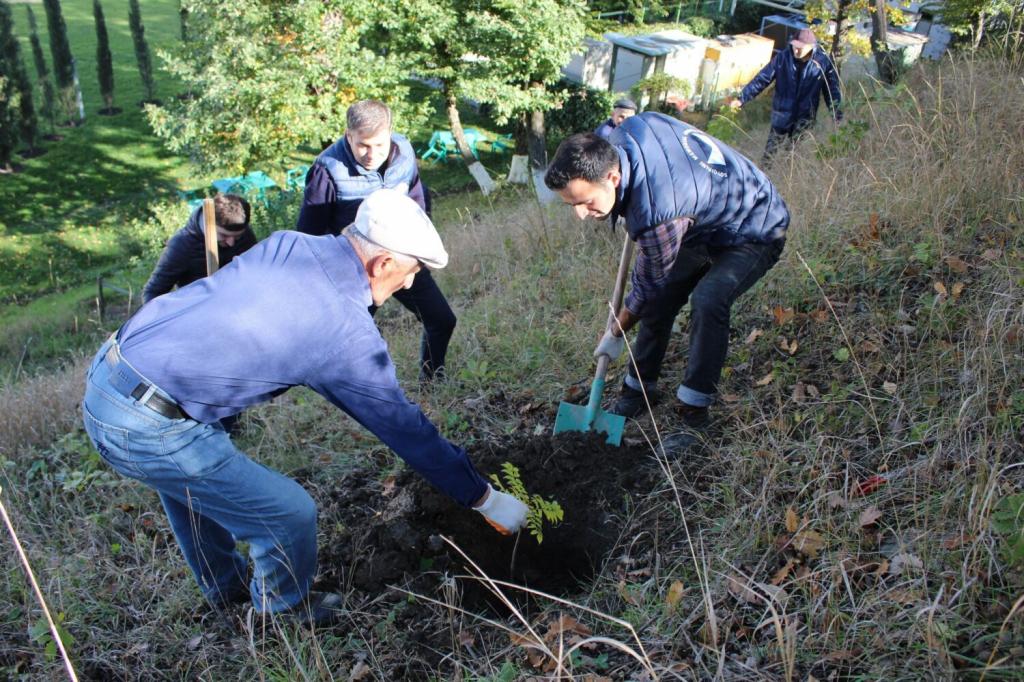
The memorandum calls for closer cooperation between the two institutions, including international and national symposiums, conferences, and similar events, scientific and cultural exchange, summer school organization, and joint propaganda work in the media and social networking platforms.
It should be noted that Baku State University has ten departments, 31 doctors of sciences, professors, 61 candidates of sciences, associate professors, 11 researchers, and 36 teaching assistants, and the Faculty of History has over 2,000 students.

Genocides committed by Hamazasp in Guba district. (May 1-9)

In 1918, on the instructions of the head of the Baku soviet dashnak bolshevik Stepan Shaumyan, a group of 3000 dashnak Hamazasp and Armenians, sent to Guba district committed unprecedented genocides against the civilian population in order to suppress the national movement and establish for their planning government. Historical documents show that Hamazasp made a threatening appeal to the population of the city after the invasion of Guba, which consisted of about 20000 people and about 10000 houses. Hamazasp in the Ancient Guba Square, around the Jhuma Mosque, clearly states the purpose of his visit to Guba:
“I am a hero of the Armenian people and a defender of its interests. I did not come here to establish law and order, to establish the Soviet government. My aim is to destroy all muslims living in the area from the shores of the caspian sea to Shah mountain, to destroy your homeland to reveal to you what we did in Shamakhi”.
Witness statements and archival documents of the time show that Armenians beheaded the family of 14 people of Karbala Mammad Taghi oqhlu, 5 families of Mohammad Rasul oqlu in Guba, Bibikhanim, wife of Haji Dadashbala Gasim oghlu and his son Abdul Gasimi, burned them alive in Karbalai Abba. He tore his son and two daughters, Hokuma and Bustan, together with the child in his arms, and mashadi Ganbar, the son of mullah Mohammad Saleh, his wife and five infants.
Haji Ismail Orujov, a resident of Guba, wrote in his explanation that according to the cleric who buried the dead in the city, he himself believed that the bodies of 2800 people had been buried. During the events, more than 2153 houses were destroyed and burned, more than 24 mosques, 5 caravanserais, 152 warehouses, 166 haystacks, 68 stables, 312 shops, 17 mills, 4 workshops, 4 teahouses and 284 other buildings and historical and religious monuments were destroyed or burned. According to the stuff of 3 volumes and 451 pages of investigative materials collected by the Emergency Commission of Inquiry gangs of the Baku Soviet under the command of dashnak Hamazasp, consisting mainly of Armenians, killed more than 16000 Azerbaijan’s Turks in Guba district in 9 days was burned and destroyed 167 villages.
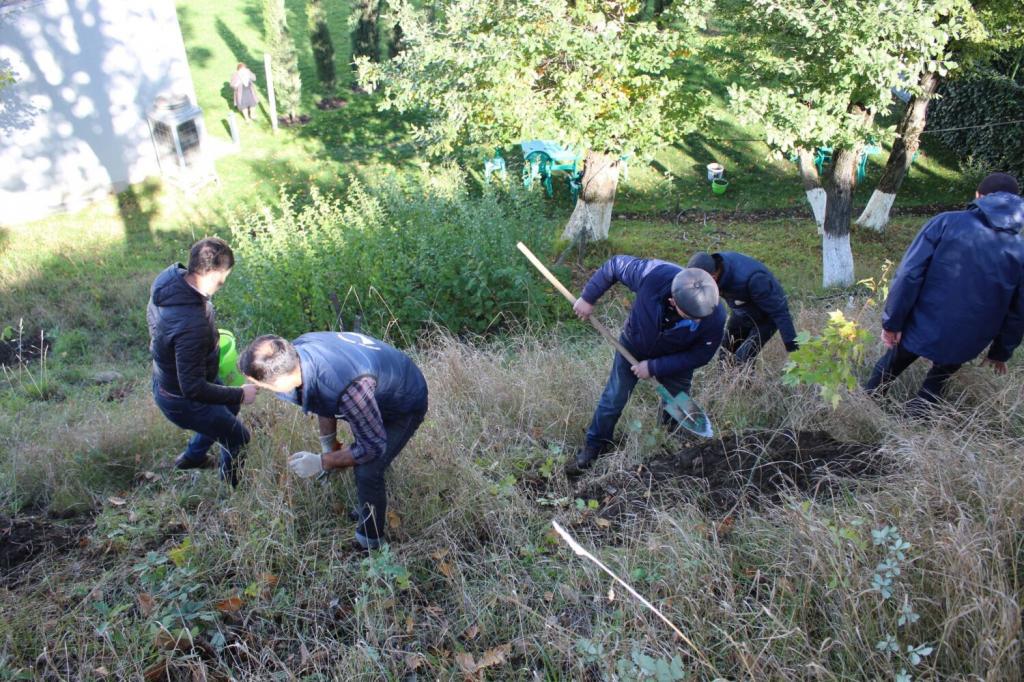
A Memorandum of Understanding was signed.
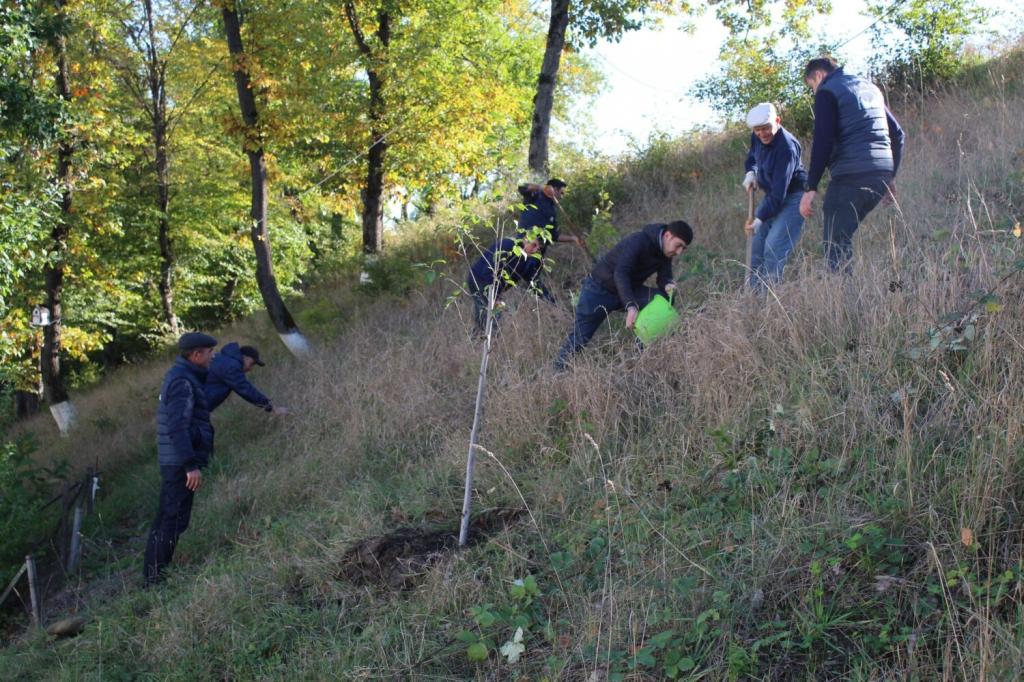
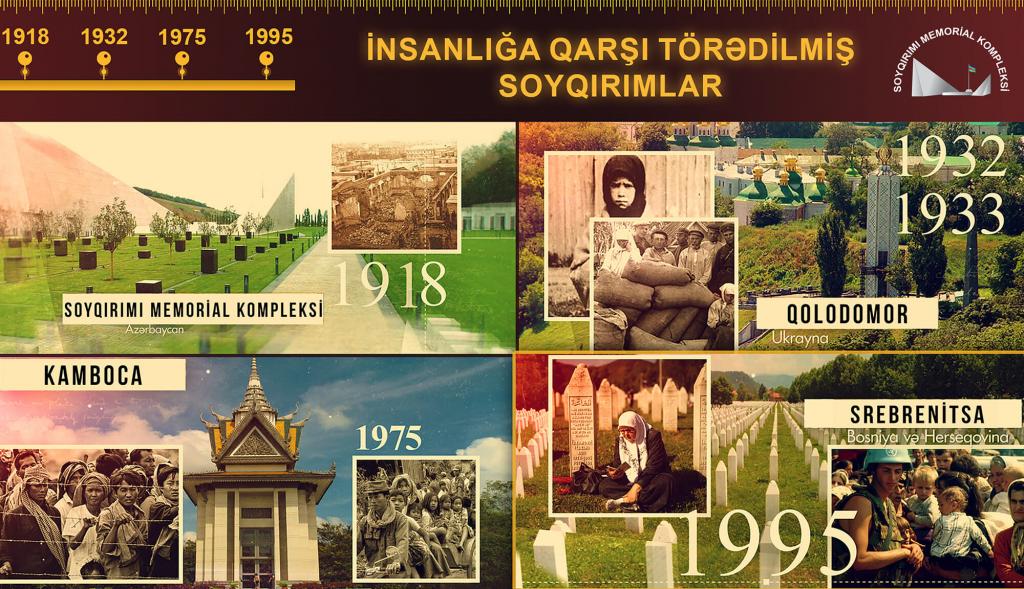
The Genocide Memorial Complex in Guba, which has been operating since 2013, is the only ideological center that promotes Armenian vandalism against the Turkish-Muslim population. The process of establishing cooperation in the international arena and within the country in order to convey the truth about the genocide to the world is being successfully continued, according to the complex’s new strategy for future propaganda and agitation. On May 5, 2022, a Memorandum of Understanding was signed between the Shamakhi branch of the Azerbaijan State Pedagogical University and the Genocide Memorial Complex as a continuation of this tradition. Priorities identified during the official meeting included the establishment of closer cooperation between the two institutions, the implementation of projects in the fields of science and culture, the organization of various exhibitions and excursions, and joint propaganda and advocacy work in the media and social networks.
It should be noted that the Shamakhi branch of the Azerbaijan State Pedagogical University, one of the country’s leading universities, is celebrating its 30th anniversary this year, and has made significant contributions to the development