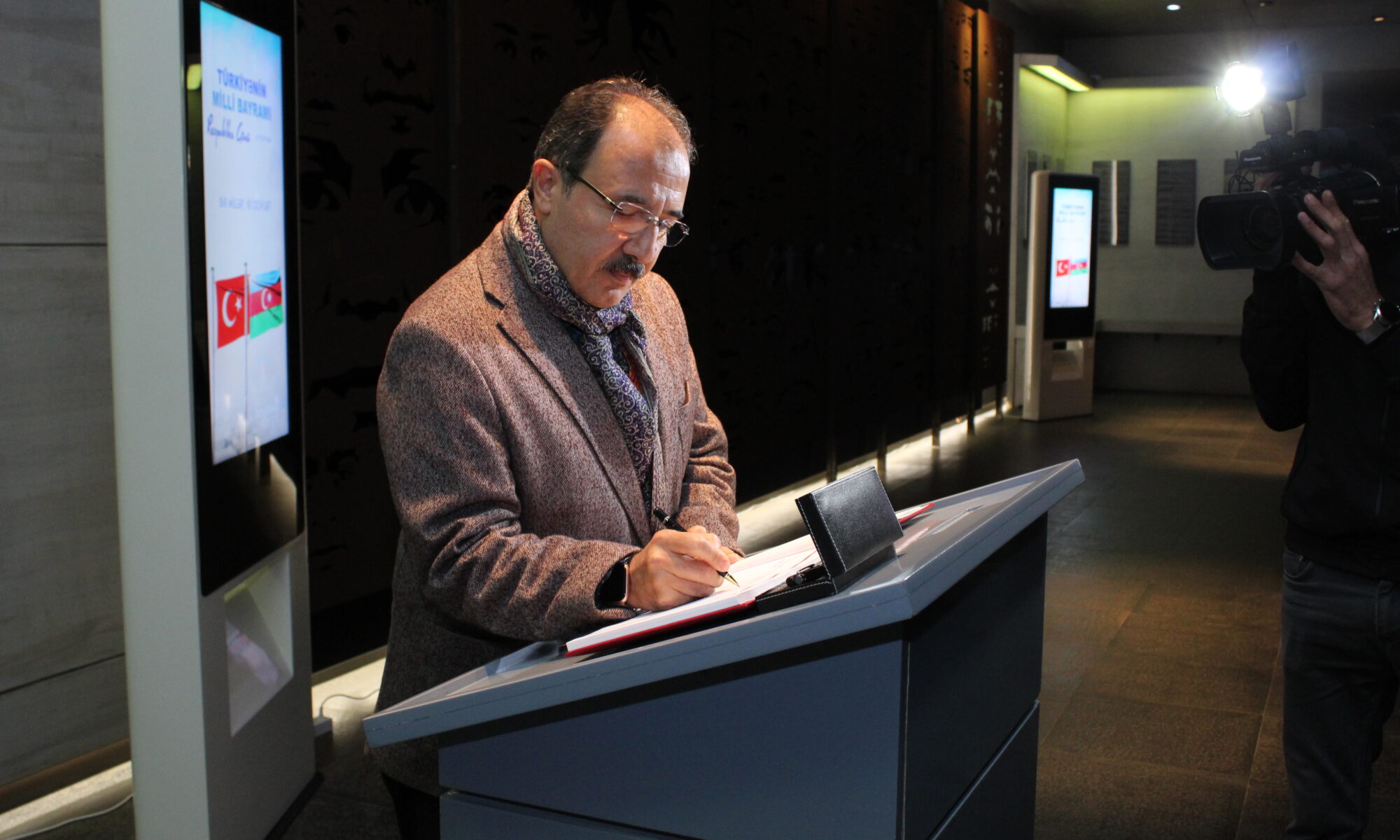
August 30 is celebrated as one of the most glorious days in the Republic of Turkey - Victory Day.

Having emerged from the First World War with defeat and having lost most of its lands, the Ottoman Empire was in danger of being erased from the political map of the world.
As a result of the fierce struggle of Gazi Mustafa Kemal Atatürk and his supporters, who did not accept defeat, the foundation of the modern Turkish Republic was laid, which became one of the strong, comprehensively developed and global players in the international arena.
Congratulations to fraternal Turkey and the Turkish people on this special day!

Today is the birthday of the first vice-president of the Republic of Azerbaijan, the president of the Heydar Aliyev Foundation, Mehriban Aliyeva. Created in 2009 by the order of the President of the Republic of Azerbaijan Ilham Aliyev, the Genocide Memorial Complex in the city of Guba was created with the support of the Heydar Aliyev Foundation, headed by Mrs. Mehriban.

In this sphere of support, today the staff of the Genocide Memorial Complex is relentlessly working to bring to the world community the Azerbaijani realities, the policy of genocide pursued by the Armenian invaders against our country.
The Genocide Memorial Complex, created with the support of the Heydar Aliyev Foundation, has already been visited by more than 1 million people, of which 250,000 are foreign citizens.
Mehriban Aliyeva, as in many other areas, was very sensitive to the history and culture of Azerbaijan.
We congratulate Mehriban Aliyeva on her birthday and wish her good luck.
Sincerely, the staff of the Genocide Memorial Complex in the city of Guba.
Heydar Aliyev Foundation Mahabbat Mehdiyeva Signature:

Let's get to know our monuments: PANAHALI KHAN'S PALACE

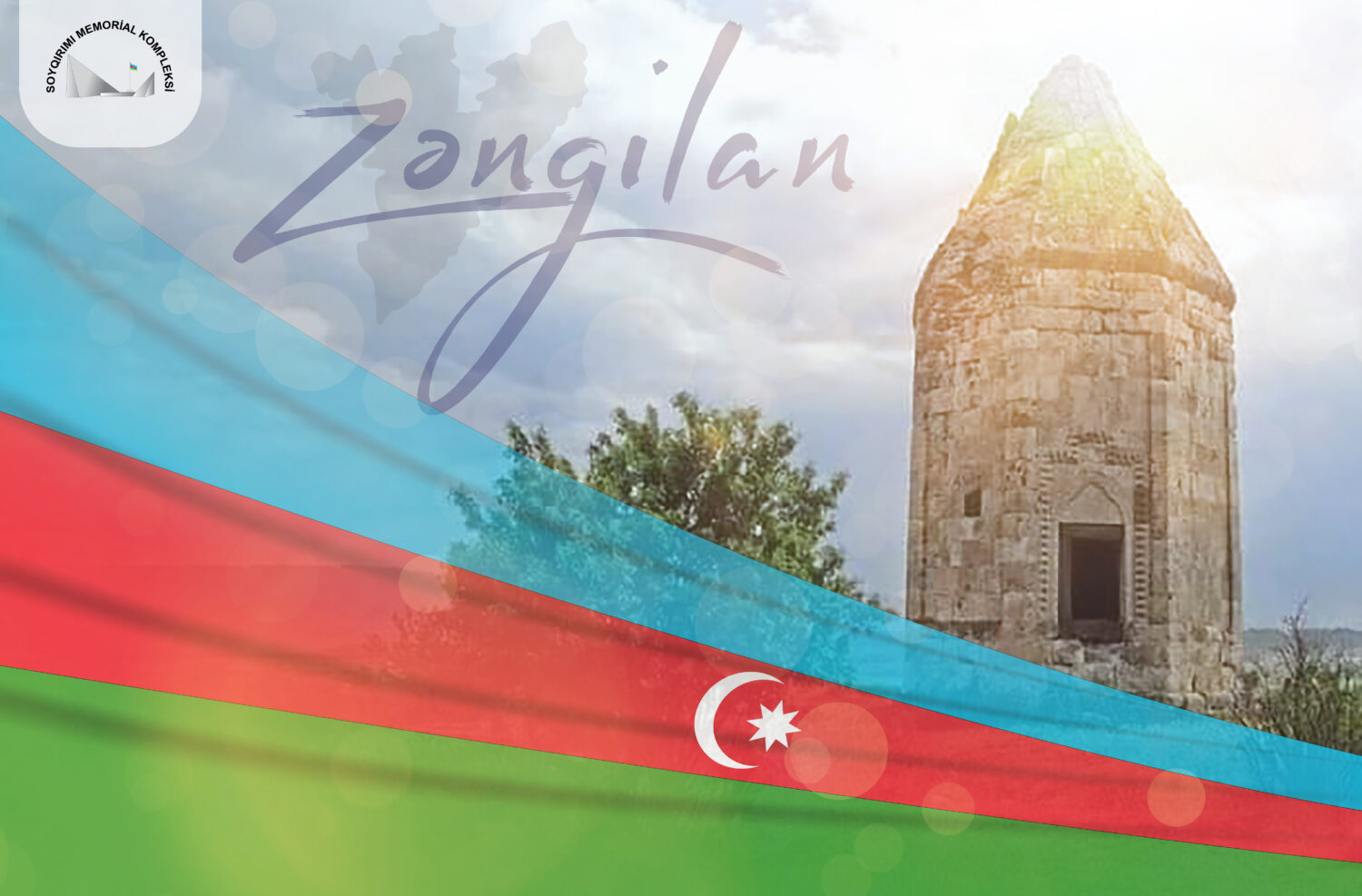
One of the historical-architectural examples of Armenian vandalism in Aghdam region is the mansion of Panahali Khan, the founder of the Karabakh Khanate.This historical-architectural monument of the 18th century is one of the first estates of the Khan dynasty, consists of two buildings.Probably more buildings were included in the complex built in the first years when Panahali Khan started building the khanate in Karabakh.The Khan’s palace consists of two buildings placed perpendicular to each other. The main body has rooms grouped around a central domed hall. This one-story home features a lounge with a balcony and a spacious, luxurious balcony. The vaulted hall had the character of a divan and Panahali Khan received guests here.In general, the balcony plays the role of the entrance to the building. The second building of the building has an elongated rectangular shape and consists of two rooms. These rooms, whose entrance doors and windows face the courtyard, are also covered with stone architraves.The palace, unlike other khan palaces spread over the territory of Azerbaijan, did not have parade features, but only a luxurious residence. Therefore, it is also called the building of Panahali Khan.
Among the historical, religious and cultural monuments in the territories occupied by the Armenian Dashnaks, the building of Panahali Khan was insulted. Cows and pigs were kept in the Khan’s palace, which was used as a stable.
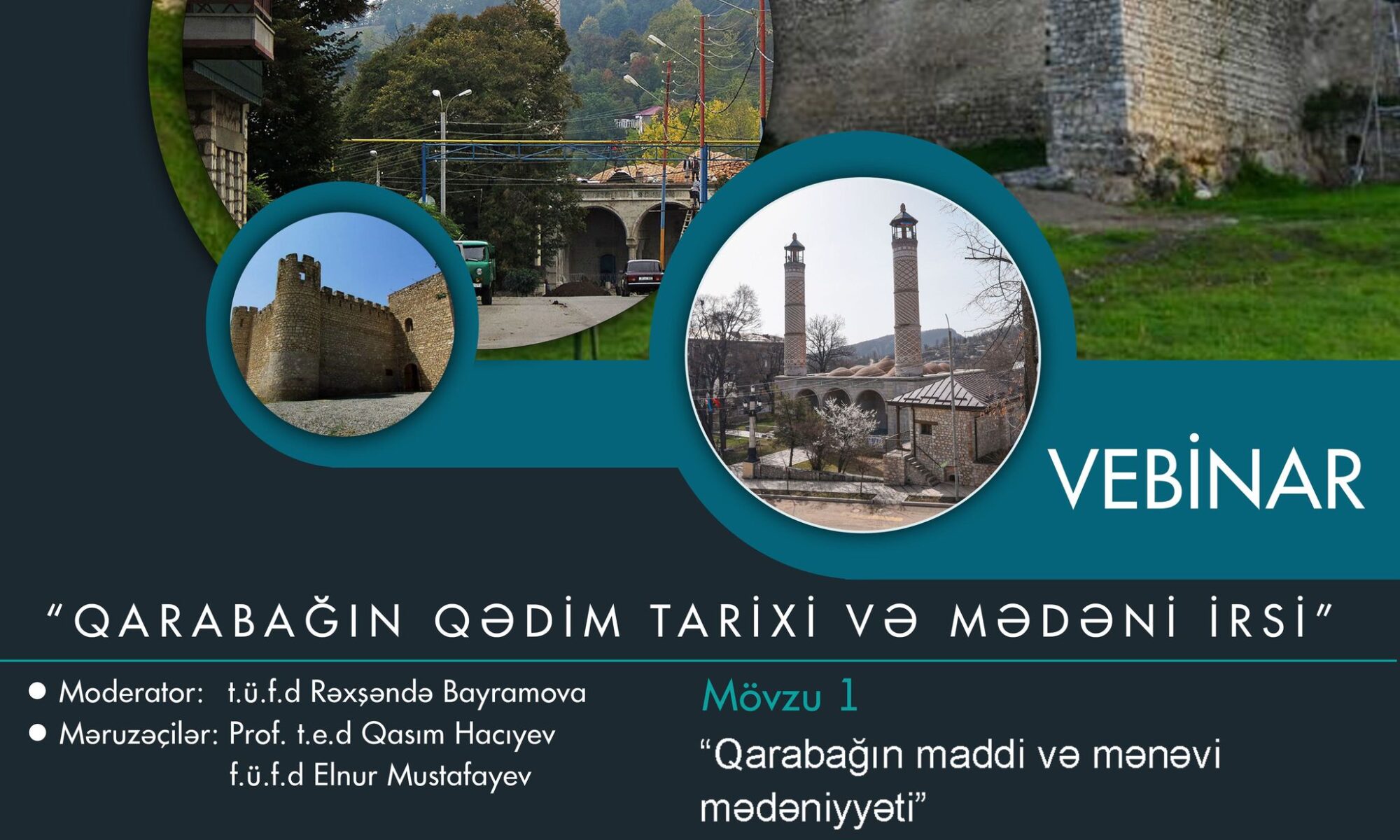
Destruction of mosques, historical and architectural monuments, desecration of livestock are clear examples of Armenian vandalism, and this fact should be strongly condemned by the international community as a barbaric attitude to the cultural heritage of not only Azerbaijan, but the world as a whole.

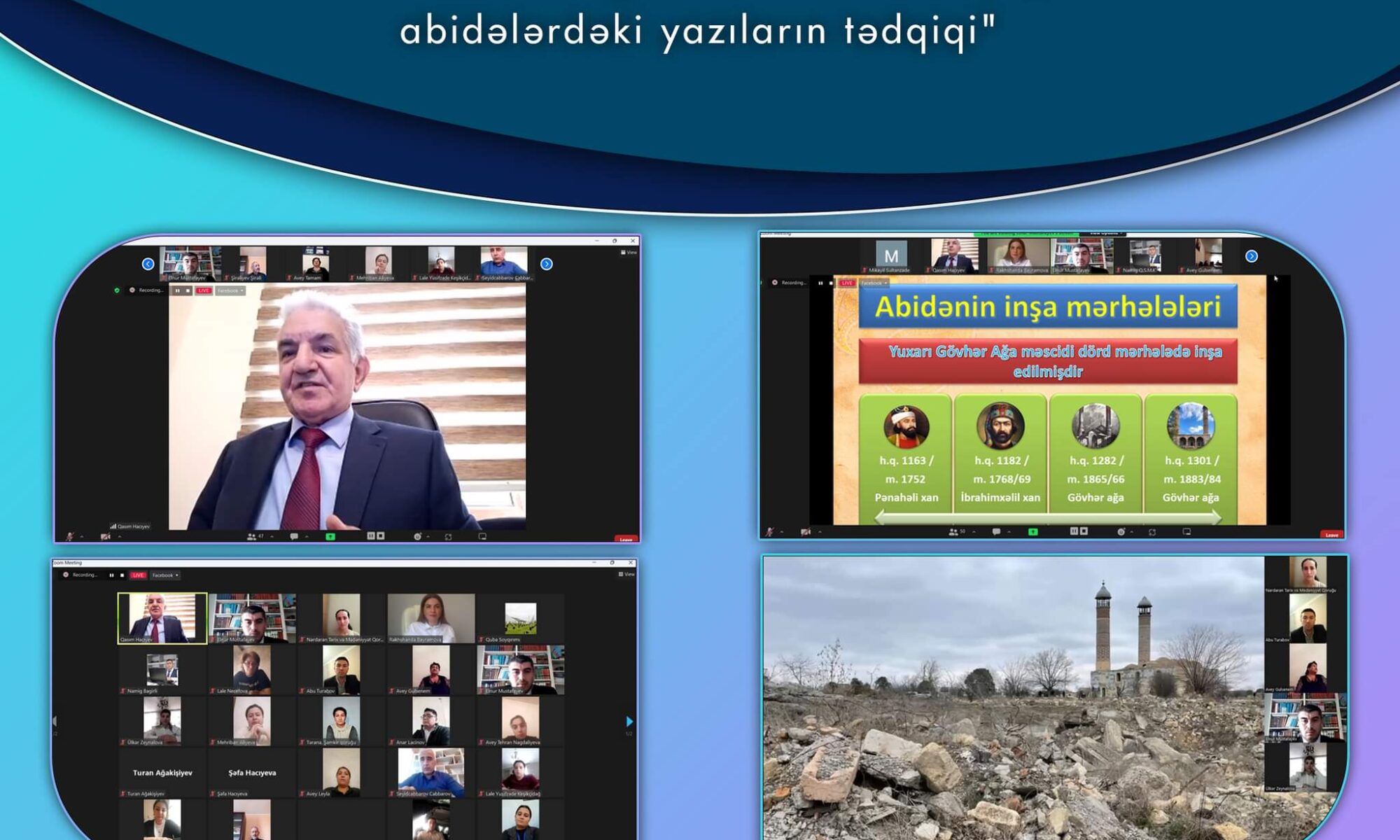
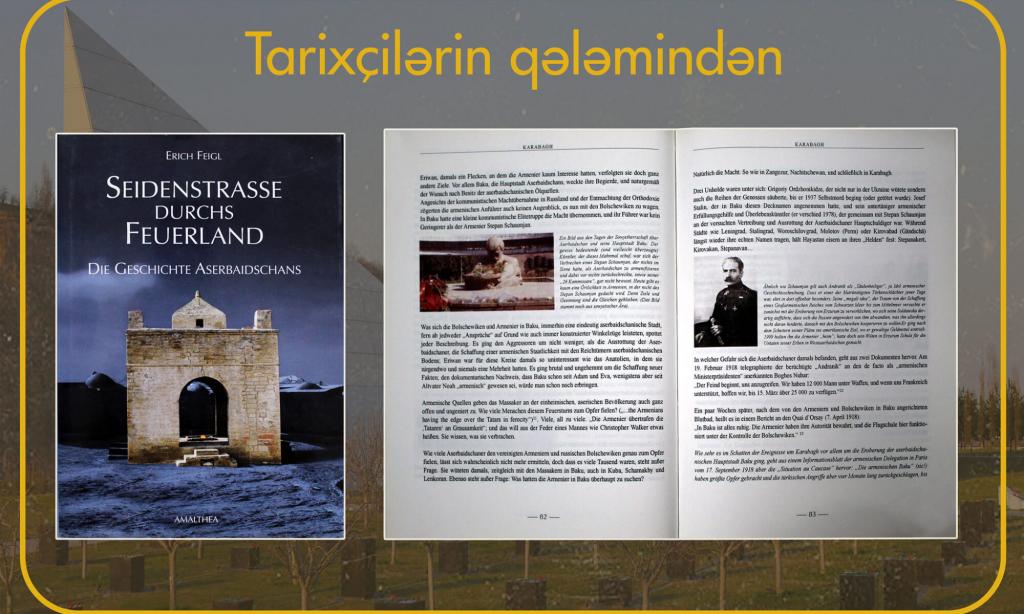
Historians' opinions: A look at the 1918 genocide committed by Armenian Dashnaks against Azerbaijanis.

Doctor of Historical Sciences, Professor Musa Gasimli: Azerbaijani sources, reflecting the interests of various political movements, also provided numerous information about the dead. For example, from the point of view of party affiliation, the Bolshevik N. Narimanov in February 1919 wrote in his articles “With what slogan we are going to the Caucasus” and “A look at the occupation of the Caucasus”, that the Dashnaks, under the slogans of Bolshevism, oppressed the Muslim population. Under such conditions, the Soviet government decided to start a civil war in Baku. Bloody incidents were committed in Baku under the pretext of a civil war.
It also follows from the documents of the Extraordinary
Investigation Commission that during the March events in Baku, the Armenians mercilessly destroyed the peaceful Muslim population. According to other sources, more than 10, 12 and 15 thousand Azerbaijanis were killed in Baku. As a result of the policy of genocide pursued by the Armenians on the territory of Azerbaijan in 1918, more than 50,000 civilians were killed in total.

The presentation of the Government of the Republic of Azerbaijan's periodic report on the International Convention on the Elimination of All Forms of Racial Discrimination took place in Geneva on August 15-16, 2022, as part of the 107th session of the UN Committee on the Elimination of Racial Discrimination.

Azerbaijan was represented at the event by a delegation of representatives from relevant state institutions led by Deputy Foreign Minister Elnur Mammadov. A delegation from the Republic of Azerbaijan’s relevant state institutions, led by Deputy Minister of Foreign Affairs Elnur Mammadov, attended the event. Azad Jafarli, head of the State Service for the Protection, Development, and Restoration of Cultural Heritage under the Ministry of Culture of the Republic of Azerbaijan, responded to the Committee members’ questions during the interactive dialogue, which was held in a constructive and mutual understanding. The members of the committee positively evaluated the successive measures taken in Azerbaijan to preserve the values of multiculturalism, tolerance, and religious tolerance.

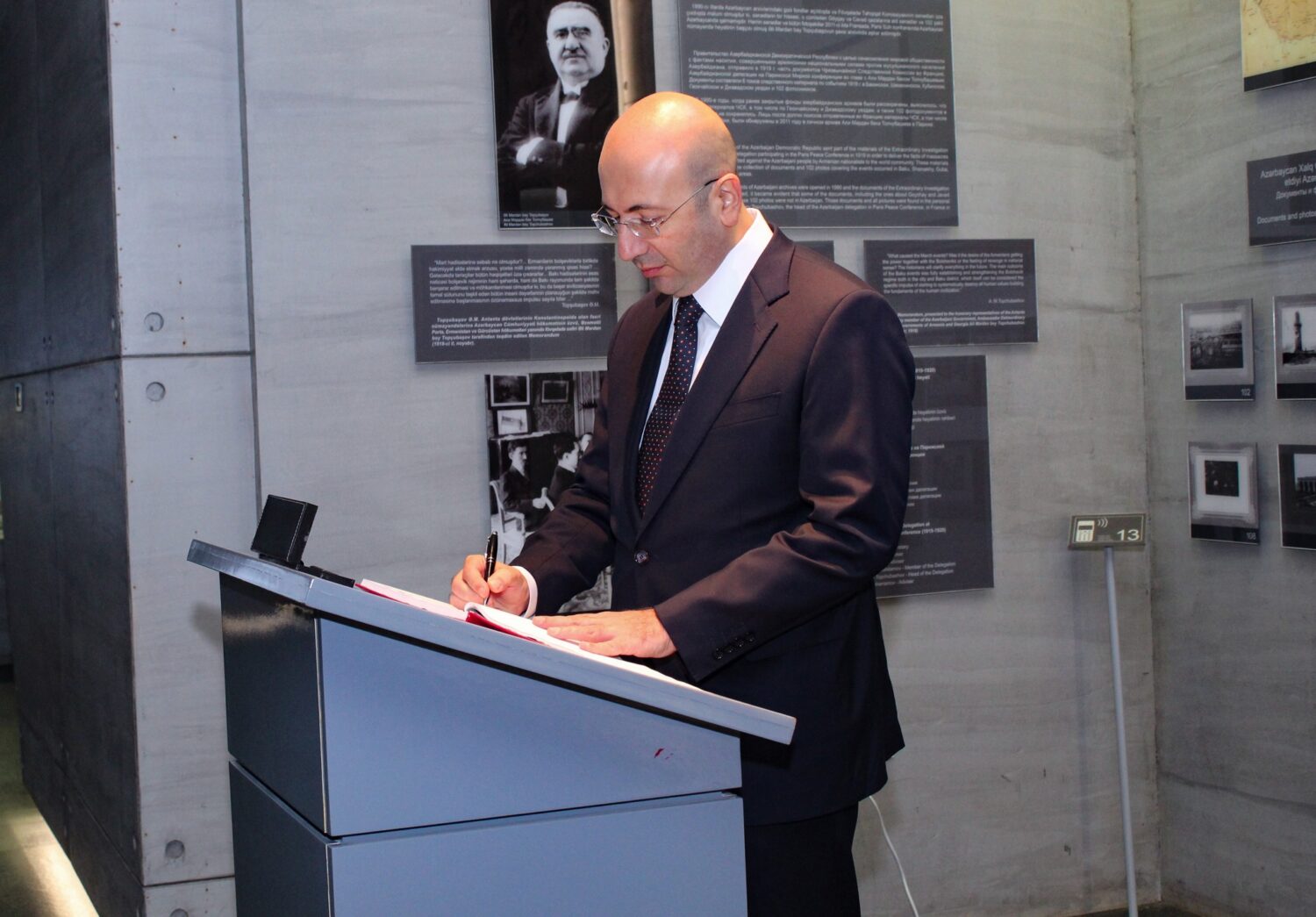
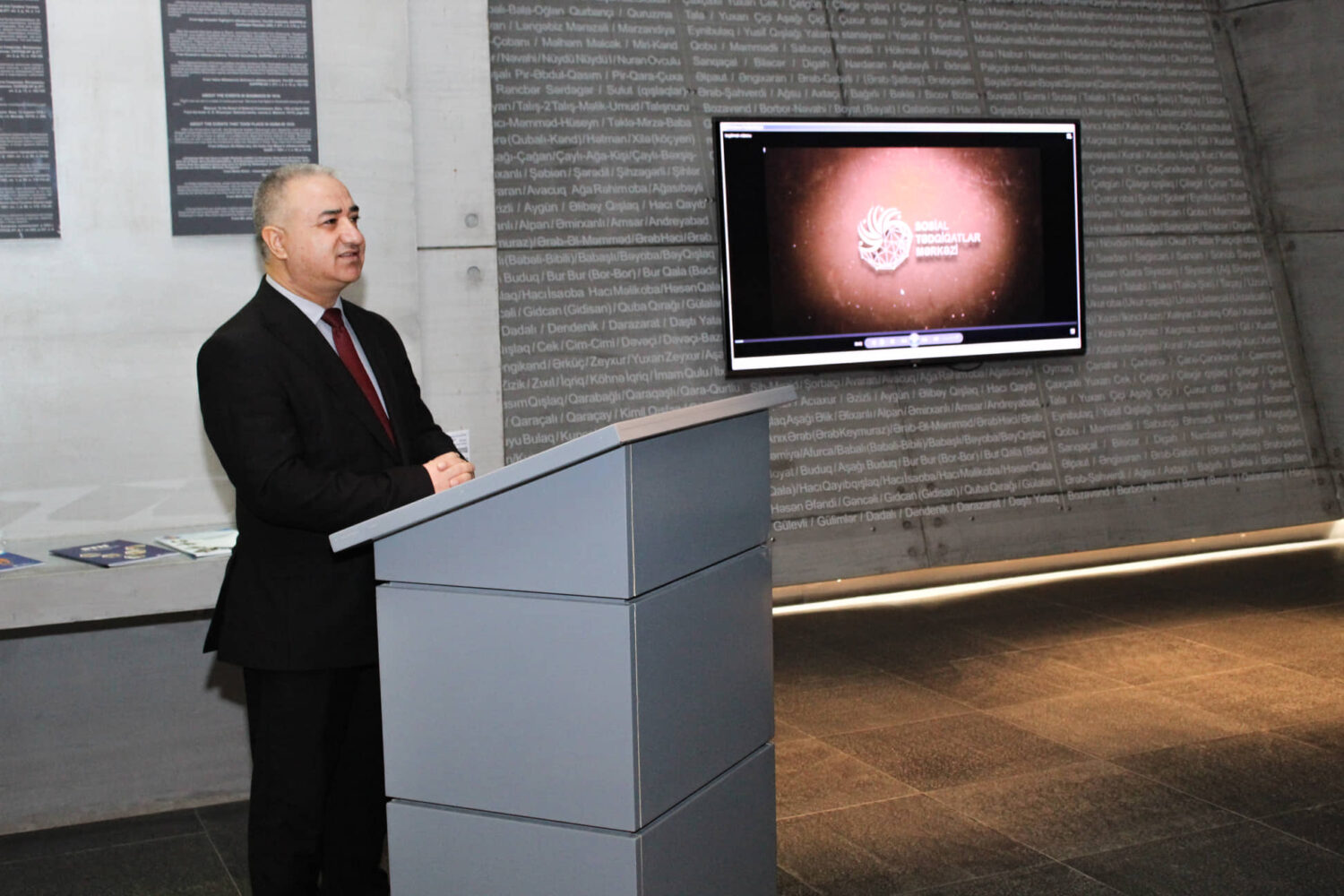
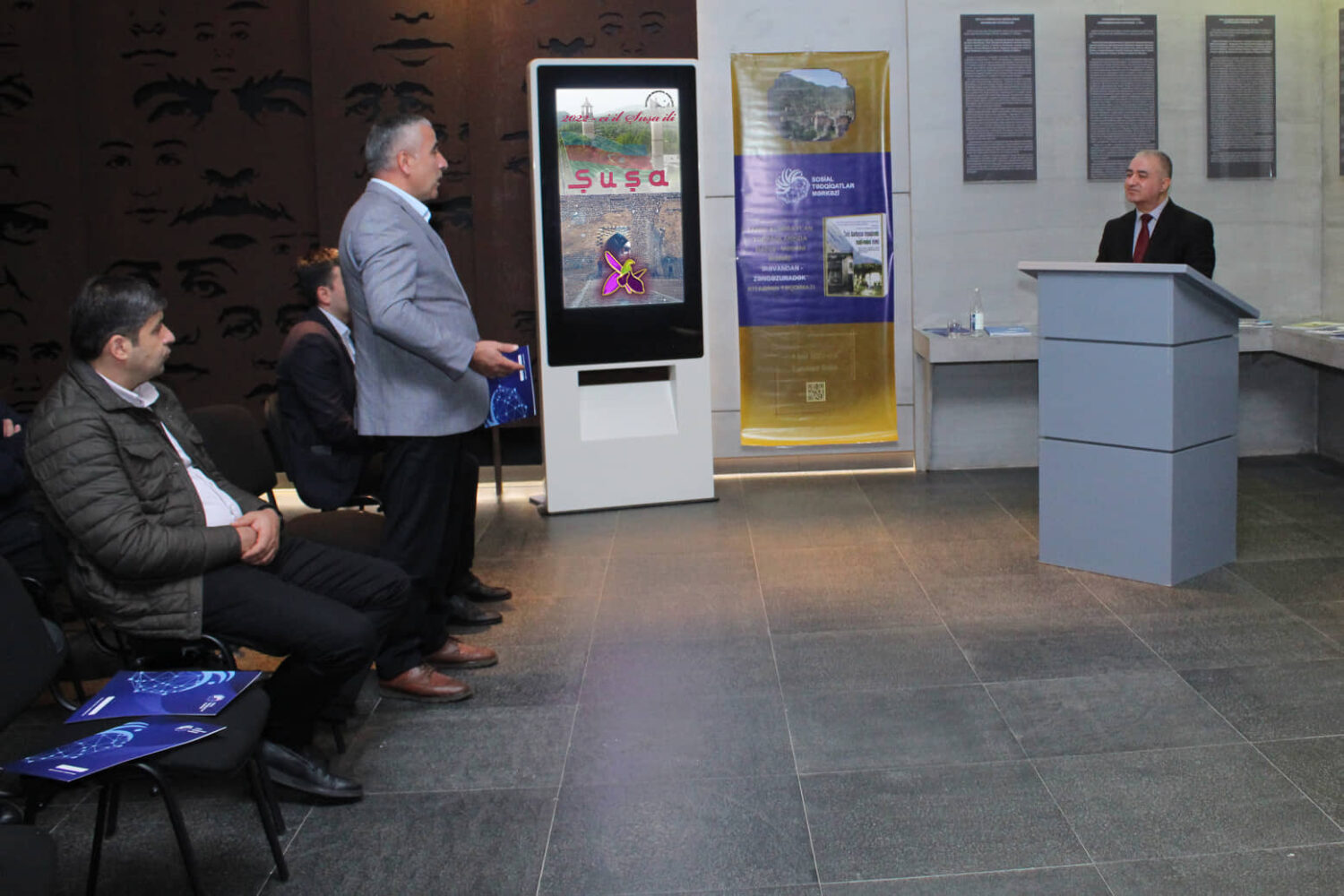
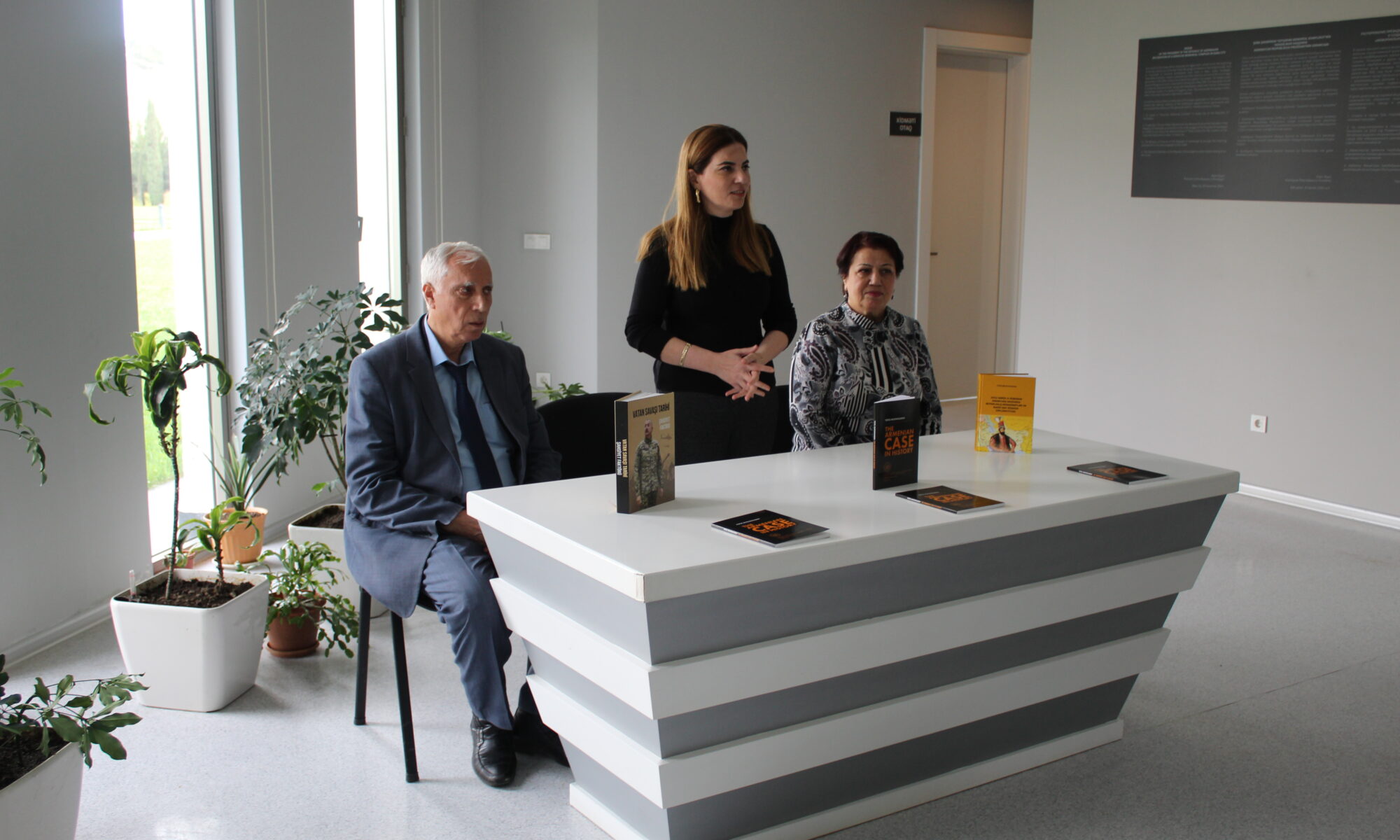
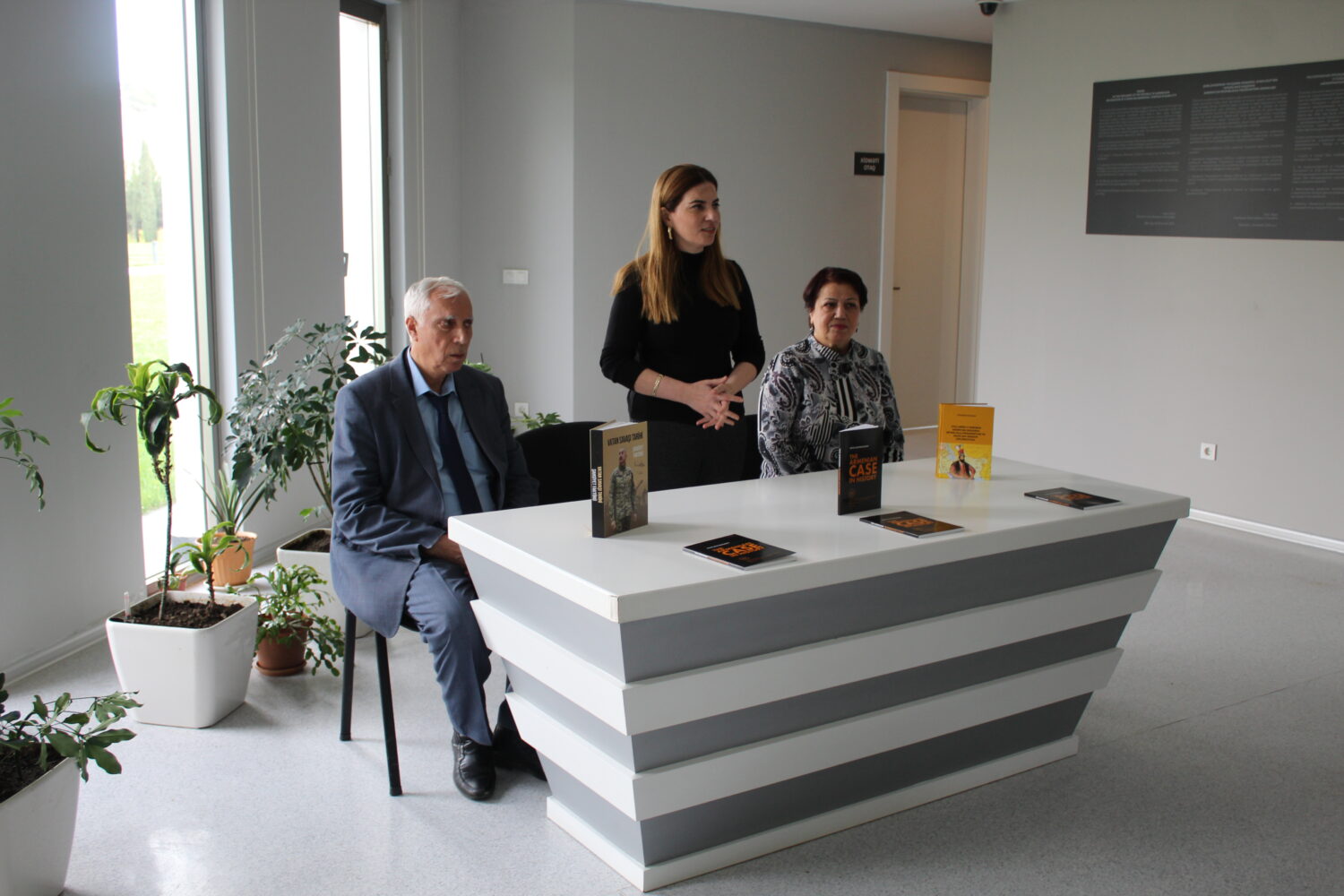
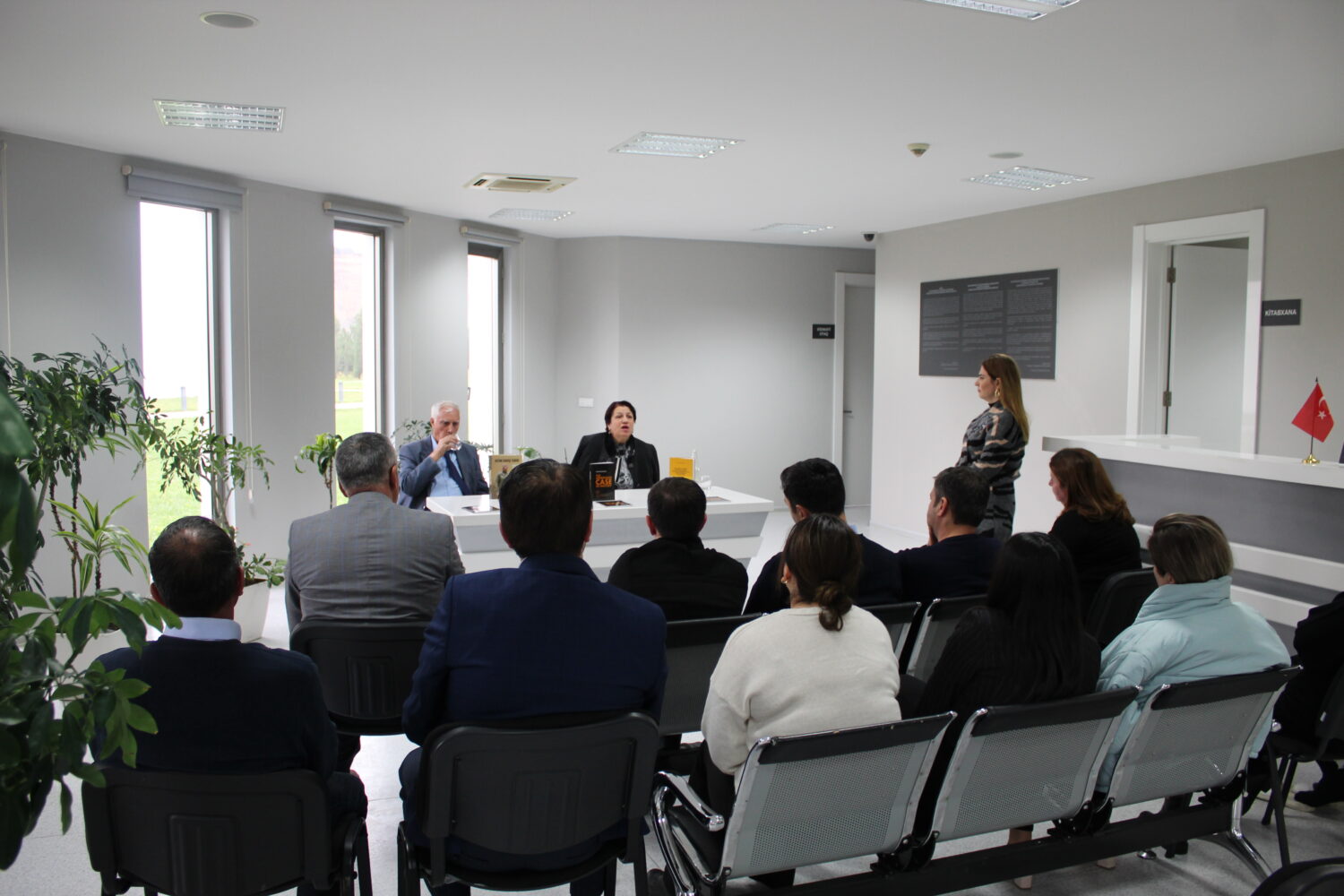
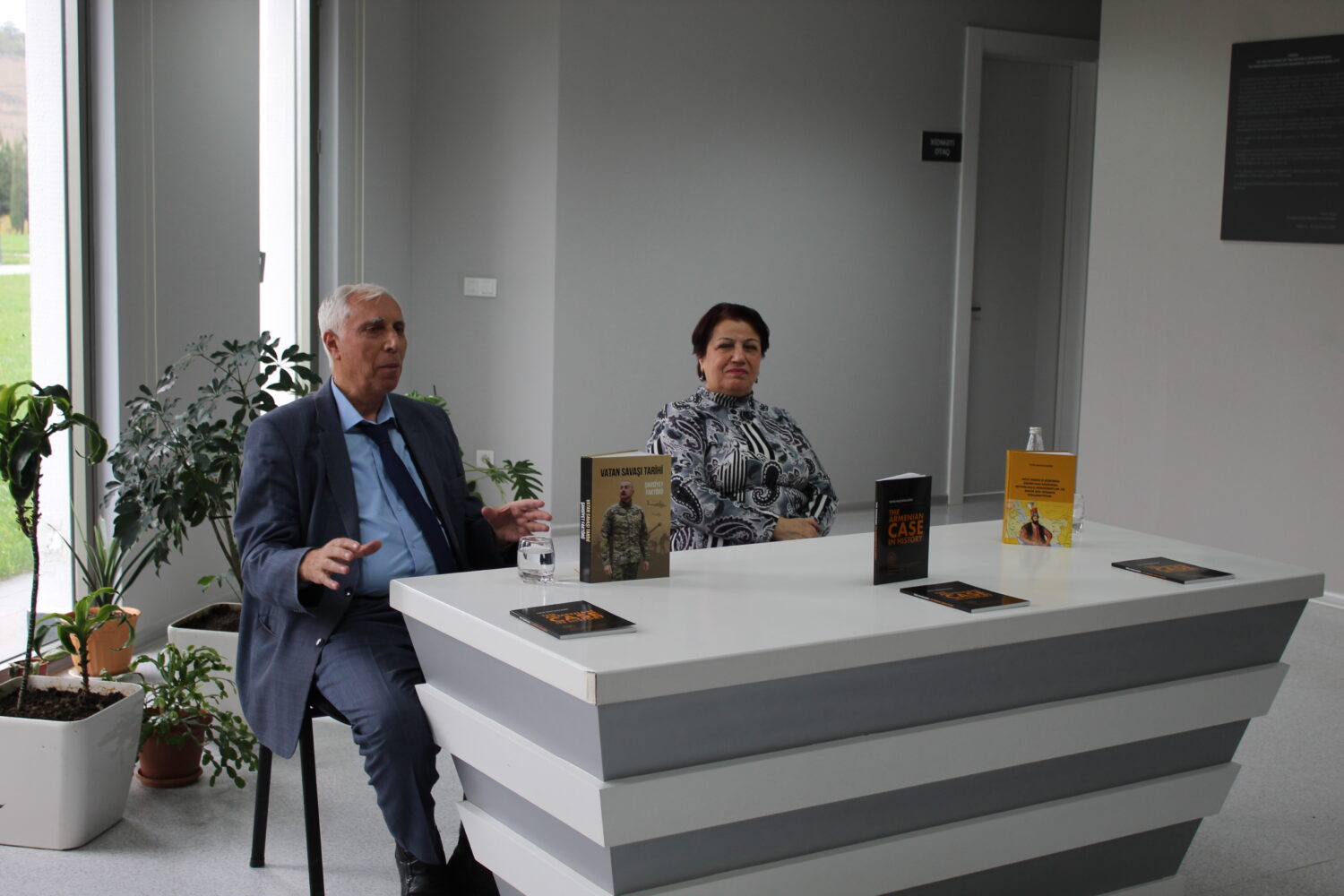
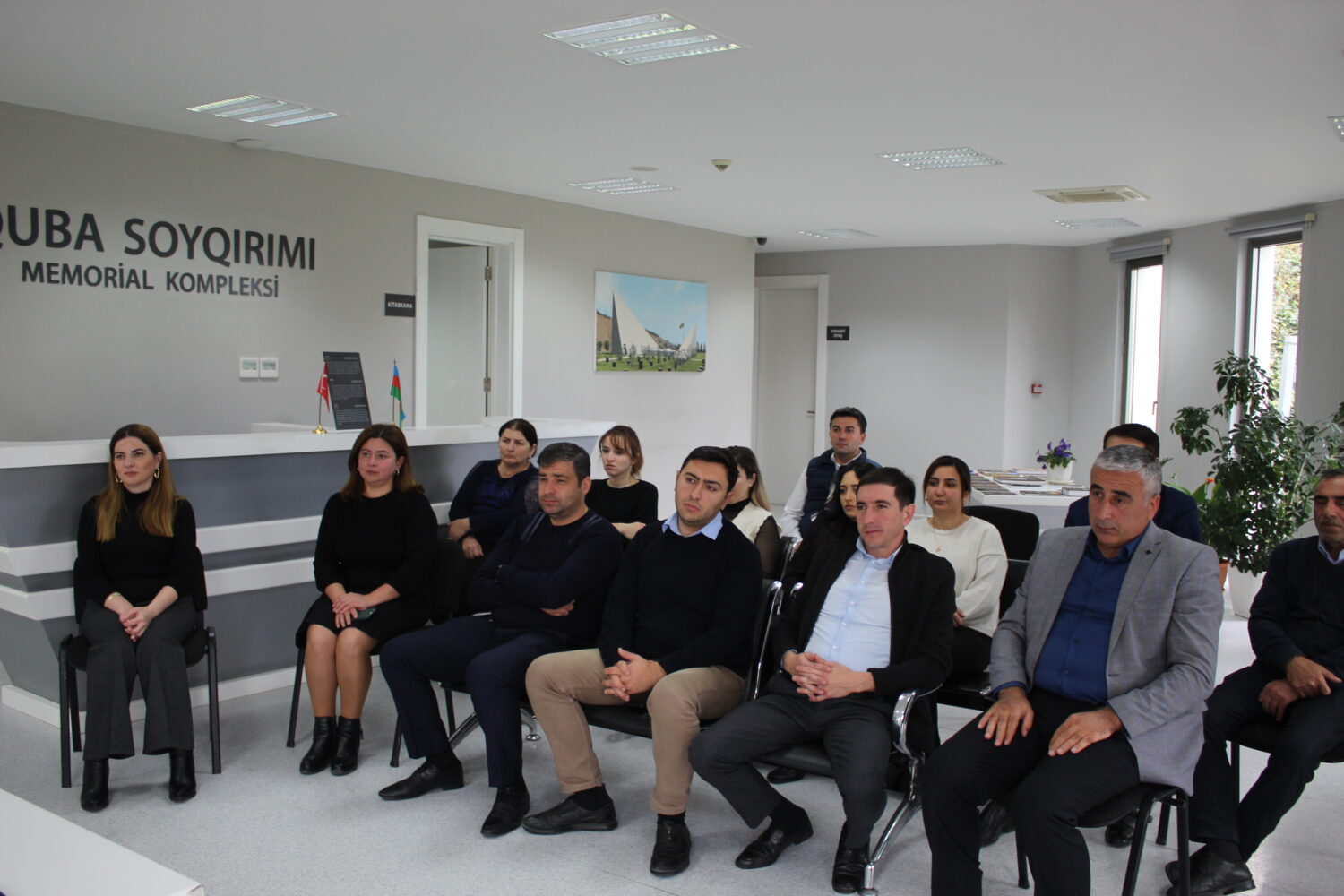
On 17.08.2022, a meeting was held with poet, orientalist, translator, head of the source studies and historiography department of the Institute of History named after A.A. Bakikhanov, member of the Azerbaijan Writers' Union, doctor of science in history, professor Sahin Fazil, at the "Genocide Memorial Complex" in Guba.

At the meeting, poet Ramiz Gusarchayli, the author of the poem “Vatan”, Dr. Rakhshanda Bayramova, director of the Complex and employees of the Complex participated. At the event, Sh. Fazil delivered a lecture dedicated to the history of Guba and conveyed to the participants the important points of the development stages of Guba from ancient times to modern times in chronological order. Speaking later, the poet Ramiz Gusarchayli spoke about the work of Sahin Fazil and wished success to the intelligent scientist. In the end, Doctor of History, Professor Sahin Fazil expressed his gratitude for the organized event and gave his last divan to the library of the Complex as a gift.

Armenian vandalism on the pages of "Hummat" newspaper

“Hummet” newspaper is one of the press agencies that played a role in the comprehensive investigation of various articles, witness statements, and the investigation of this tragedy published during the Republic period – 1918-1920.
Muhammad Amin Rasulzadeh, M.A. Azizbeyov, N. Narimanov, S.M. Efendiyev, and P.A.Chaparidze began organizing the publication of the “Hummat” newspaper in 1904. “Hummat” was the first social-democratic press organ not only in Azerbaijan, but throughout the Muslim East among Turkic-speaking peoples. Despite the fact that Bolshevism was promoted in the newspaper’s political viewpoint, the newspaper published articles about the genocide of Azerbaijanis during the events of March 1918. The vast majority of the Armenian population living in Shamakhi joined the Red Army of the Bolsheviks, according to the article “Shamakhi mood” of the “Hummat” newspaper, which provides information about the genocides committed in Shamakhi. The tragedy of Shamakhi’s peaceful population, which was destroyed by the Armenian Dashnaks, was expressed in the June 6, 1918 issue of “”The poor people of Shamakhi left their hearths and left their fathers, sons, mothers, and daughters in these deserts under the rain and rain,” Hummat writes. They wanted to know his age.”
Investigation materials consisting of 7 volumes and 925 pages were collected by the Extraordinary Commission of Inquiry on the terrible looting and atrocities committed by the Armenian-Dashnak forces in the Shamakhi district in March 1918.