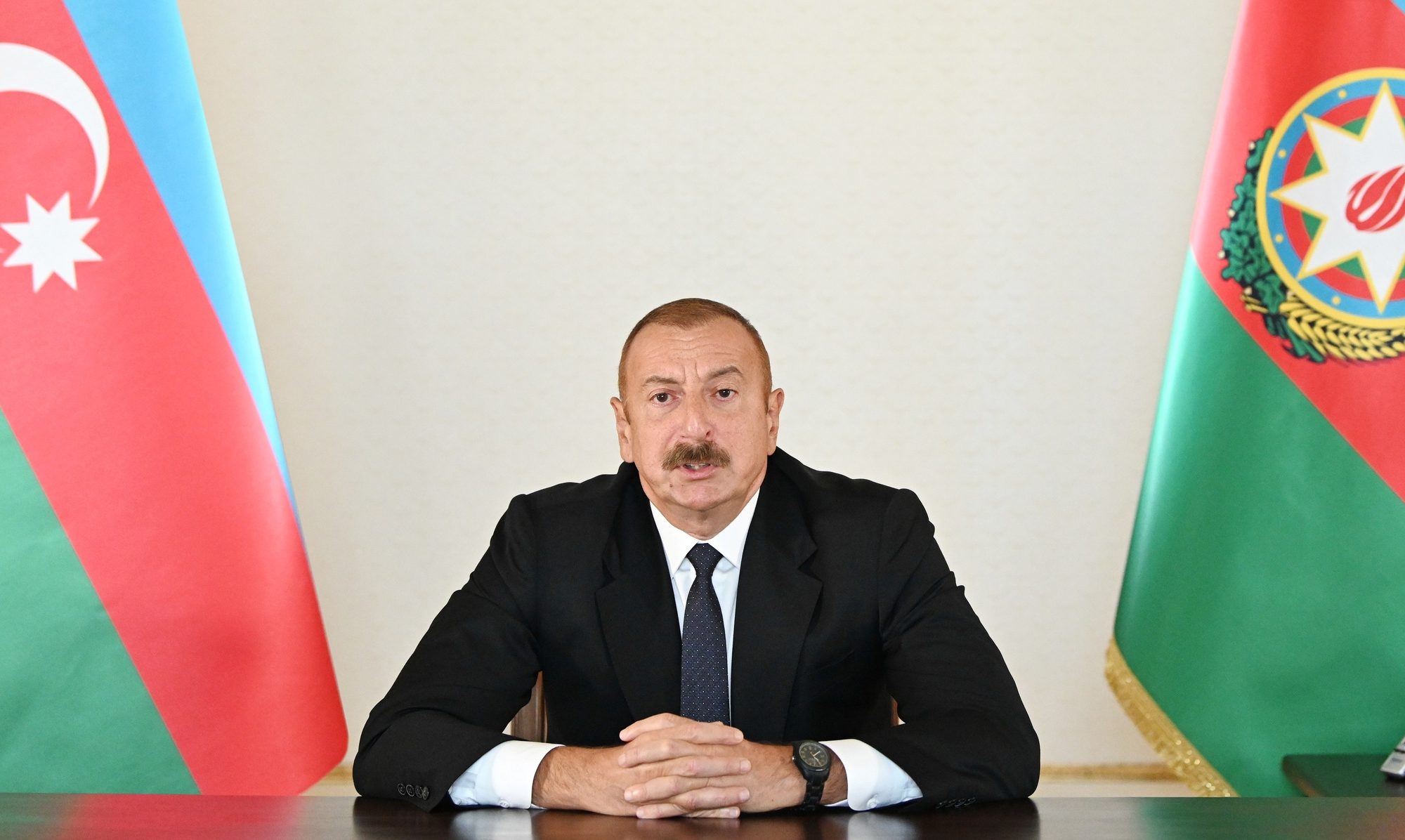
Remarks by the President Ilham Aliyev
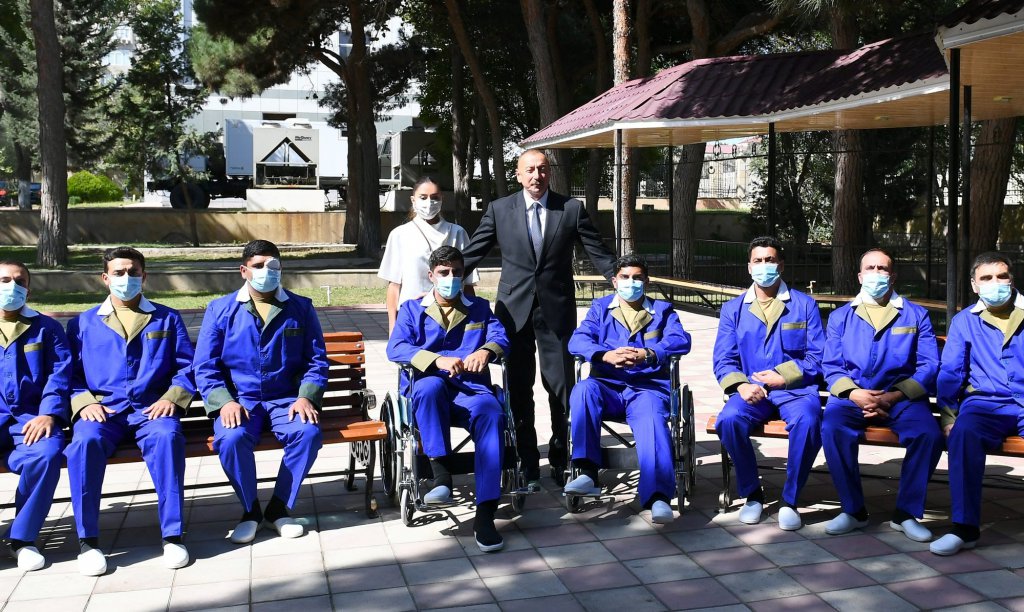
As you know, early this morning, Armenian armed forces committed yet another military provocation against Azerbaijan. We have losses as a result of this provocation, both among the civilian population and servicemen. It again shows that Armenia’s policy of aggression against Azerbaijan continues, and this policy shows the fascist essence of Armenia to the whole world.
As soon as I received the information in the morning, I contacted the Minister of Defense and the heads of other relevant agencies, gave appropriate instructions, and, based on those instructions, Azerbaijan’s Army launched a large-scale counter-offensive.
I must say that Armenia’s military provocation was pre-planned. They have been preparing for this provocation for a long time, and the intelligence we have shows that Armenia intends to start a new war against us. Last week, I repeatedly talked about this issue in my TV interview and from the UN platform. I said that the aggressor state must be stopped. They are preparing for a new war.
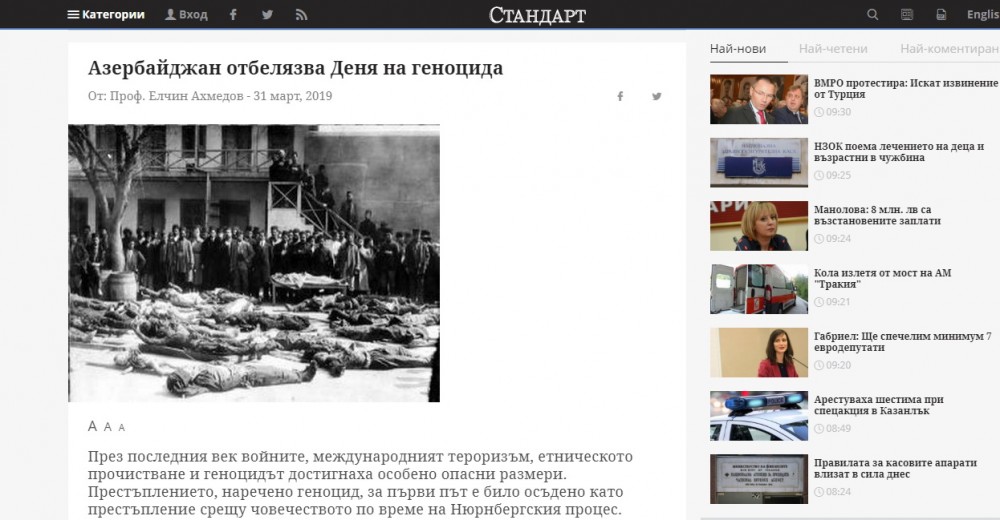
I addressed the people of Azerbaijan today. In my address, I gave detailed information about the reasons for this provocation and the sordid steps Armenia has been taking in recently. I have shared my views, so I do not want to repeat them. I want to reiterate that the military attack on us early this morning was a pre-planned military provocation. Our positions were fired on from various directions using different weaponry, including heavy artillery. Simultaneously, our settlements and villages were fired upon. As I said, we have losses among the civilian population. It once again shows the ugly face of Armenian fascism. Because such atrocities against the civilian population can only be attributed to fascist states, and this is not the first time – the events in Tovuz and others. Armenian savages committed the Khojaly genocide against the civilian population.
This time too, Armenia’s primary target is our residential areas. By opening fire, they want to create panic among the Azerbaijani public, among the Azerbaijan citizens, in the villages and towns along the frontline. This morning, I received information from all frontline regions. I can say with full confidence that the citizens of Azerbaijan are showing courage. They are standing their ground and are ready to support our army and state at any time, and they are doing that.
Azerbaijan’s army is currently conducting a counter-offensive in response to military provocation. I can say that the operation has been successful. The Presidential Administration and the Ministry of Defense have been instructed to regularly keep the population informed about the events. I can say that thanks to a successful counter-offensive, a severe blow has been inflicted upon the enemy’s military manpower and military equipment. Several occupied Azerbaijani settlements have been liberated. I congratulate all the people of Azerbaijan on this occasion!
I am confident that our successful counter-offensive will end the occupation! It will put an end to injustice! It will end the occupation that has lasted for nearly 30 years! The people of Azerbaijan want to live on their lands – Azerbaijani citizens longed for their homeland. People who were forcibly driven out of their ancestral lands by Armenians – by Armenia’s leadership want to return to their native lands even though savages have already destroyed their homes. Look at the ruins of Aghdam. Look at the ruins of Fizuli. Look at the state of our mosques in the occupied territories, the state of our cemeteries. Armenian executioners committed all this, and we are right in our position.
Our struggle is a struggle for justice, and the citizens of Azerbaijan fully support the government today. We always feel this support. A citizen of Azerbaijan is with Azerbaijan’s army, and I turn to our compatriots who have not been able to return to their native lands for almost 30 years and say that we will do our best to ensure your return to native lands.
I warned Armenia. After the events in Tovuz, I warned them several times that they would regret it if they did not give up their sordid deeds. We taught them a lesson in 2016, in 2018, in July of this year. But it did not seem to be a lesson for them. This time we are teaching them another lesson and will continue to do that. Today, Azerbaijan’s glorious army is conducting a counter-offensive with great success, and this operation continues.
I must also say that morale is high across all our military units and formations. At the same time, the number of volunteers enlisted in our army has reached tens of thousands. It shows the commitment of our people to their state.
The settlement of the Nagorno-Karabakh issue is our historical mission. I have said this many times and I want to reiterate today that we must resolve this issue to satisfy the people of Azerbaijan. We must resolve this so that historical justice can be restored. We must do so to restore the territorial integrity of Azerbaijan.
In different countries, I have said that we do not need an incomplete solution to this issue – to this conflict. We are on our lands; we have claimed no lands of other countries. But we will not give our lands to anyone either. We will never allow for the creation of a second so-called Armenian state on Azerbaijani soil. We will never allow that, and today’s events are showing that again.
Nagorno-Karabakh is our ancient and historical land. I have repeatedly spoken at various international events on the history and the past of Nagorno-Karabakh. I have shared the historical truth with the international community. Thanks to our focused and tireless effort, the world has a broad picture of the Nagorno-Karabakh conflict today. But in the first years of the conflict, this was not the case. In the early years of the conflict, Armenians of the world portrayed Azerbaijan as an aggressor.
Unfortunately, those who were in the leadership of Azerbaijan at the time could not speak out against this propaganda. Azerbaijan was in such a difficult situation: our lands were being lost, but the world thought that Azerbaijan was an aggressor. The cause of Karabakh lands’ loss is the Popular Front Party and the Musavat Party of Azerbaijan. It was during their time that our lands fell under occupation. Due to their treacherous and incompetent actions, we lost those lands. I always said that the loss has been temporary and that we must return to these lands.
The sale of Shusha took place only as a result of a power struggle at that time. The occupation of Kalbajar and Lachin is the direct responsibility of the Popular Front government of Azerbaijan. After this occupation, the next phase became inevitable because Lachin, Kalbajar and Shusha created a geographical link between Nagorno-Karabakh and Armenia. Thus, the supply of weapons to those regions, to Nagorno-Karabakh, and then the supply of other material resources became easier.
Today, we are wiping out the Popular Front Party of Azerbaijan and the Musavat Party’s incompetent actions, this stain on Azerbaijan. Today we are regaining our lands. In 2016, part of Aghdara, Fizuli and Jabrayil districts were liberated from the occupiers. Today, in 2020, I want to emphasize that several of our settlements were liberated from the occupiers; several strategic heights came under the control of Azerbaijan. Azerbaijan’s powerful army is backed by strong political will.
Army building has always been the top priority of my presidency. Both the military and the Azerbaijani people know this. I have always said that we will do whatever is necessary for our army. We have created a powerful and strong-willed army. Our armed forces meet modern standards and carry out combat missions with dignity, conscience and courage. Today, our various armed units are involved in the counter-offensive, and the counter-offensive is going well under the single command. There is full coordination between all branches of armed forces. I am confident that this counter-offensive will continue successfully.
By providing this information to the Azerbaijani people, I want to say once again that we are on the righteous path. We are defending ourselves. We do not lay claim to anyone else’s lands. Azerbaijan’s armed forces have no objectives on anyone else’s lands, in Armenia’s territory. But we will defend ourselves on our soil and rid our lands of occupiers.
Now Defense Minister Zakir Hasanov has the floor.
Defense Minister Zakir Hasanov said:
Dear President, Mr. Commander-in-Chief. Let me report that a few minutes to 06:00 hours, Armenia’s armed forces bombarded the villages of Fizuli, Jabrayil, Terter and Aghdam districts. There were casualties and wounded among the civilian population. The frontline of the vanguard military units was also fired upon. Simultaneously, a concentration of the enemy’s armed forces in the direction of Aghdam, Fizuli and Jabrayil district was registered – as evidence of an imminent attack. First of all, it was reported to you and, guided by the operational situation, Azerbaijan’s army launched a counter-offensive. Following the counter-offensive, the enemy’s frontline was breached. I have now been given additional information that seven villages have been liberated. Should I go on and mention their names here?
President Ilham Aliyev: Go ahead.
Minister Zakir Hasanov: Garakhanbayli, Nuzgar, Yukhari Abdurrahmanli, Boyuk Marjanli, Kand Horadiz and Garvand villages liberated. Our army is conducting a successful counter-offensive in other directions, and the enemy is retreating with heavy losses. I want to emphasize that Azerbaijan’s army strikes are carried out both on the frontline and deep within the enemy territory. As you mentioned, most modern weapons are being used, and we do not encounter much resistance from the enemy. The enemy is entirely retreating. Minister of Defense Colonel-General Hasanov, reporting.
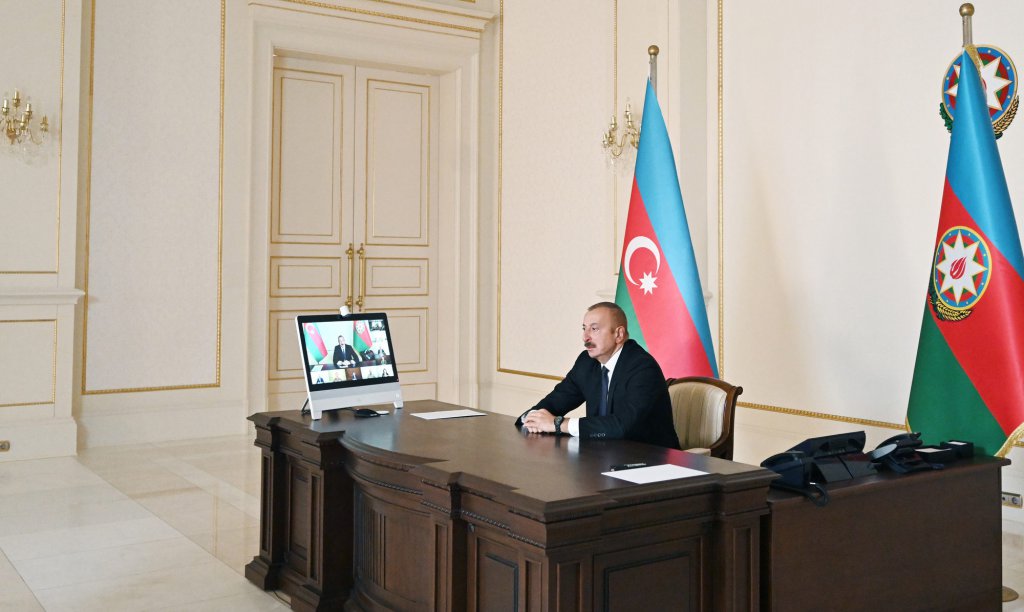
President Ilham Aliyev: Clear! We will hold the rest of the Security Council behind closed doors. I am confident that the citizens of Azerbaijan will understand this decision. Many of the issues to be discussed are military secrets. But I want to say again that the people of Azerbaijan are regularly informed by both the Presidential Administration and the Ministry of Defense. We will share operational information with the citizens of Azerbaijan.
I congratulate the people of Azerbaijan and our army on their first successes. Long live the Azerbaijani Army! Long live Azerbaijan!
x x x
Other members of the Security Council took part in the discussion.