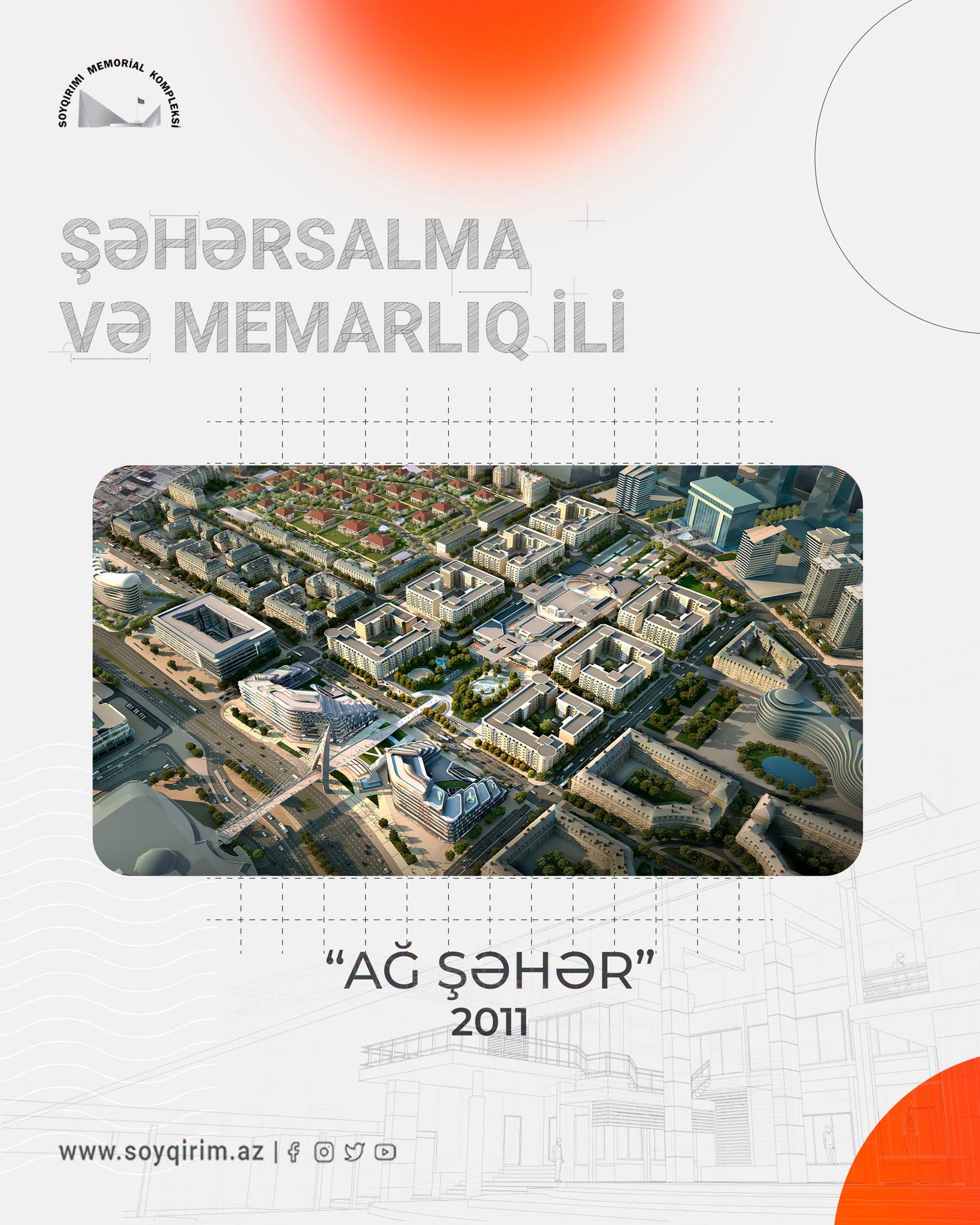
Baku White City is one of the largest-scale projects in Azerbaijan’s modern urban development history. The project is being implemented within the framework of the “Comprehensive Action Plan for Improving the Environmental Situation in the Republic of Azerbaijan for 2006–2010,” approved by President of the Republic of Azerbaijan Ilham Aliyev, and pursuant to an order issued by the Baku City Executive Authority on 11 June 2007. Its main objective is to transform the area known for many years as the Black City industrial zone into a modern and environmentally sustainable urban space. Covering 1,650 hectares, the project aims to establish the eastern part of Baku as a new centre of development. In accordance with the Master Plan, ten urban-style districts combining residential, business, recreational, and social infrastructure are being developed here. Azerbaijani specialists were involved in preparing the project alongside Atkins, Foster + Partners, and F+A Architects.
The area where Baku White City is located has been developed on the historical legacy of Black City, which emerged in the late nineteenth century. Once known for oil refining, storage, and transportation, the area played an important role in Baku’s industrial development. Today, it is being redeveloped based on modern architecture, green spaces, and environmental standards. By applying contemporary urban-planning approaches, the project also creates favourable opportunities for investment and business.
The groundbreaking ceremony for Baku White City was held on 24 December 2011 with the participation of President Ilham Aliyev and First Lady Mehriban Aliyeva. The first residential neighbourhood, the Green Island district, was inaugurated on 24 December 2016. The Office Building, regarded as Baku White City’s first landmark structure, opened on 24 December 2014. Designed by Atkins, it was the first building in the region to receive BREEAM environmental certification. With its contemporary architectural style, high environmental standards, and functional infrastructure, Baku White City is considered one of the capital’s new symbols of development. By preserving its historical heritage while looking towards the future, the project represents a successful example of Baku’s sustainable development strategy.
Urbanism and Architecture Year