
"The Government House"
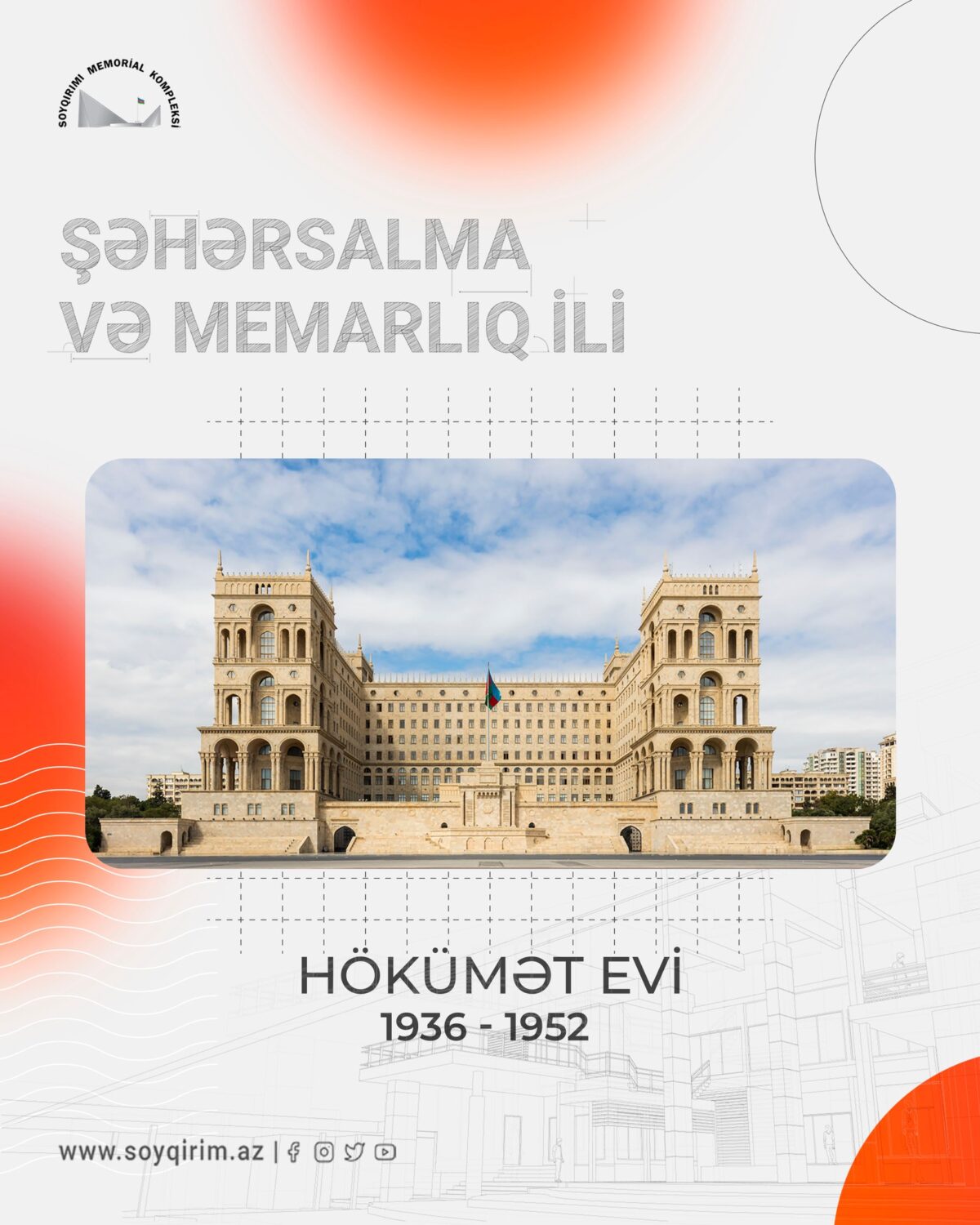
Located in the center of Baku, the capital of Azerbaijan, on the shores of Freedom Square, the Government House stands out not only for its monumental appearance but also for its historical significance. This grand building is one of the key centers of the country’s state administration and is considered one of the rarest examples of Azerbaijan’s architectural heritage.
The Government House holds a special place in the magnificent architectural ensemble and has a rich and interesting history. In 1924, the idea of building a new building for government members in Baku was proposed, and this process continued until the early 1930s. A competition for the design of the building was announced in 1932, and the winners were selected in 1934. Although the project by Mikayıl Hüseynov and Sadıq Dadaşov was of a high level, it was not approved. The jury awarded first place to Moscow architect Lev Rudnev. It was decided that the building would be constructed in the city center, at the current Freedom Square, with 13 floors planned. However, due to the lack of national architectural elements in the project, changes were made. Arches in the alleys facing the sea were added as a result of these modifications. Although construction began in 1934, it was left unfinished due to World War II and was only completed in 1952. Today, the Government House is preserved as a national historical monument, reflecting the architectural elements of the Shirvanshahs’ Palace.
The Government House is not only an administrative building but also a living witness to the history of Azerbaijan’s statehood, a gem of architectural art, and a symbol of national pride. It has witnessed significant events in Azerbaijan’s history. For example, during the January 20, 1990, events, the mourning rally held in Freedom Square took place in front of the Government House. This event is a reflection of both the people’s will for freedom and the symbolic significance of the building in the national memory.
The grandeur and history of the building create a bridge between the past and present of the Azerbaijani people, reminding future generations that the country’s statehood traditions have been preserved.


