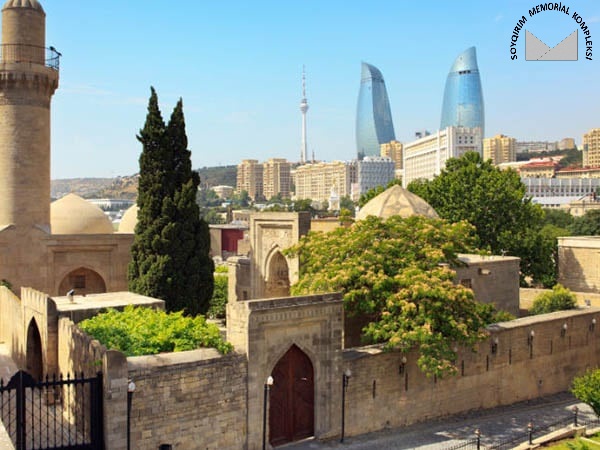
Provided within the framework of the project "We study and teach the monuments of Karabakh!" Historical and architectural monuments of Shushi

Yukhari Govhar Agha Mosque is the oldest mosque located in the central square of Shusha. The construction of the Upper Govhar Agha Mosque was carried out in four stages. The first mosque in the area was built of reeds in about 1750, parallel to the Karabakh khan’s palace, by the order of Panahali khan, the founder of the Karabakh khanate and Shusha fortress. In 1768-1769, a new stone mosque was built on the site of that mosque. In the first half of the 19th century, a third mosque with a double minaret was built on the site of the dilapidated mosque, and in 1883, the fourth and last Juma mosque in Shusha was built on the site of the third mosque at the expense of Govhar agha.
Ashagi Govhar aga mosque is a Juma mosque located in Gapan Square of Shusha city. It is considered to be the first mosque built in Shusha by Ibrahim khan’s daughter Govhar aga. The architect of the mosque was Karabaghli Karbalai Safikhan . After the construction of the Yukhari (Upper) Govhar Agha Mosque, this mosque became known as theAshagi (Lower) Govhar Agha Mosque among the people of Shusha. The construction date of the mosque dates back to 1874-1875. The Yukhari and Ashagi Govhar Agha mosques were considered to be one of the great and rare pearls of the Muslim East in the true sense of the word.
With the occupation of Shusha on May 8, 1992, like all architectural monuments in the city, these mosques became victims of Armenian vandalism, and over the past 28 years, these monuments have been extensively destroyed. As a result of the Second Karabakh War, Shusha was liberated from occupation and our historical and architectural monuments there were liberated from Armenian captivity.

To the attention of visitors:

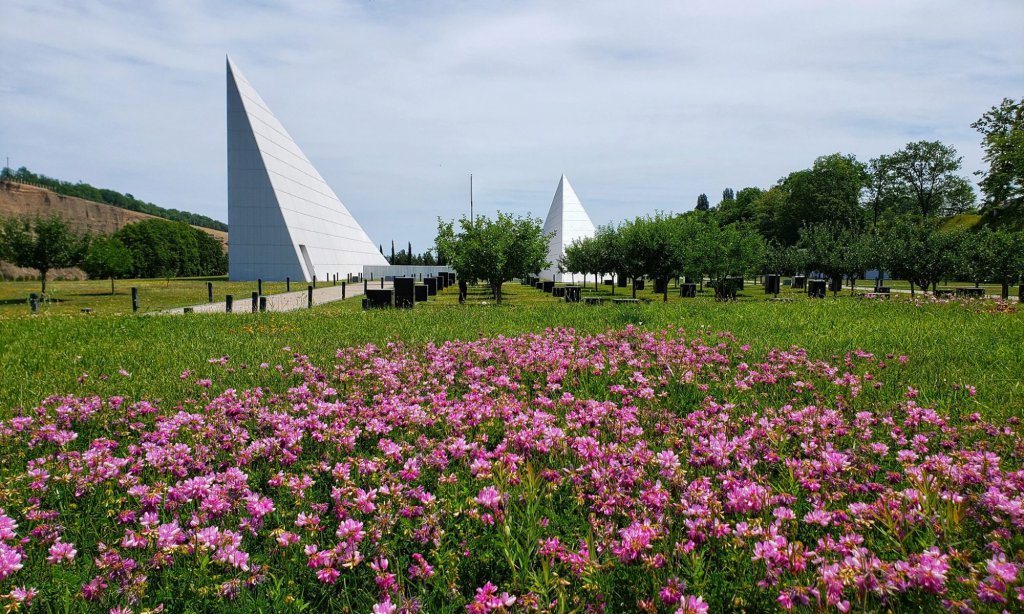
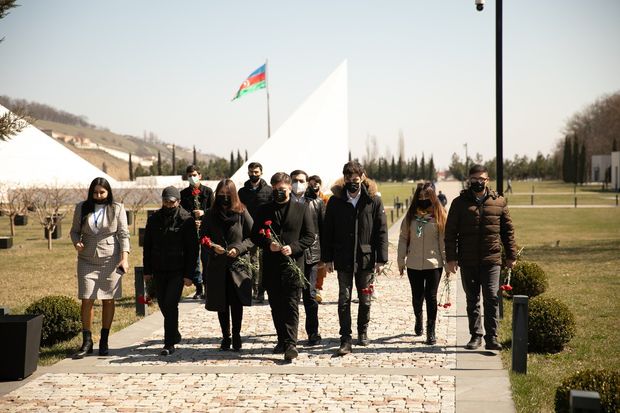
According to the relevant order of the Ministry of Culture of the Republic of Azerbaijan, each Monday until April 1, 2021, a non-working day for reserves, including in the Genocide Memorial Complex for disinfection.
We remind you that the Complex receives visitors 6 days a week from 10:00 to 17:00, and the services provided are free.
Rakhshanda Bayramova/Director of the Genocide Memorial Complex in Guba

Ambassador Extraordinary and Plenipotentiary of the Kingdom of Saudi Arabia to Azerbaijan Hamad bin Abdullah bin Khudeyri made an official visit to Guba region on February 12


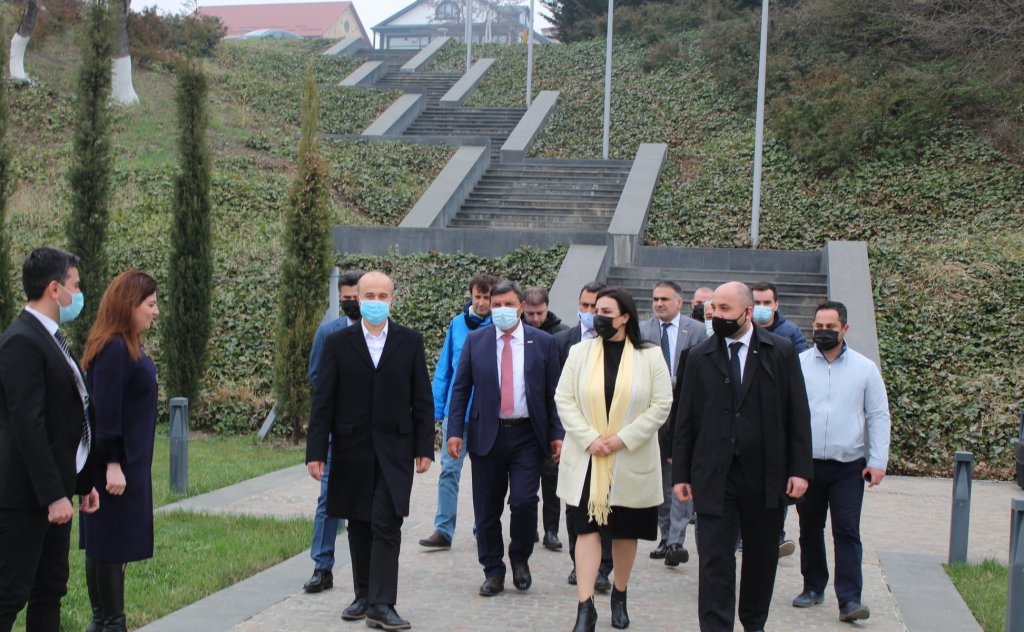
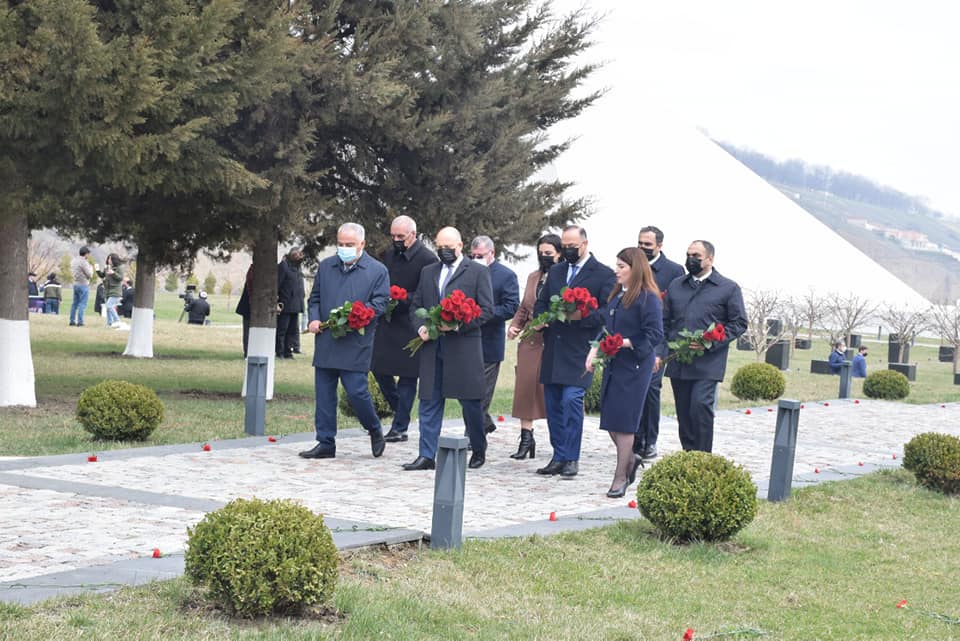
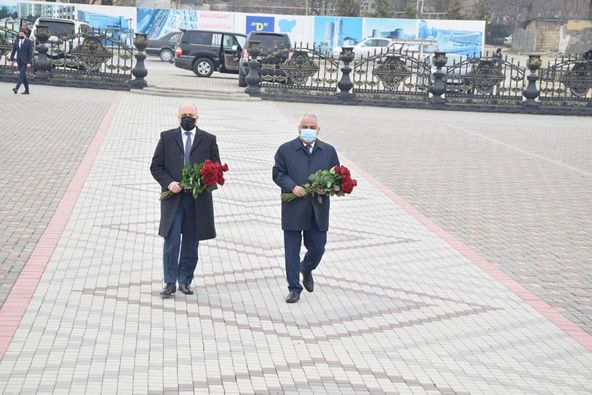
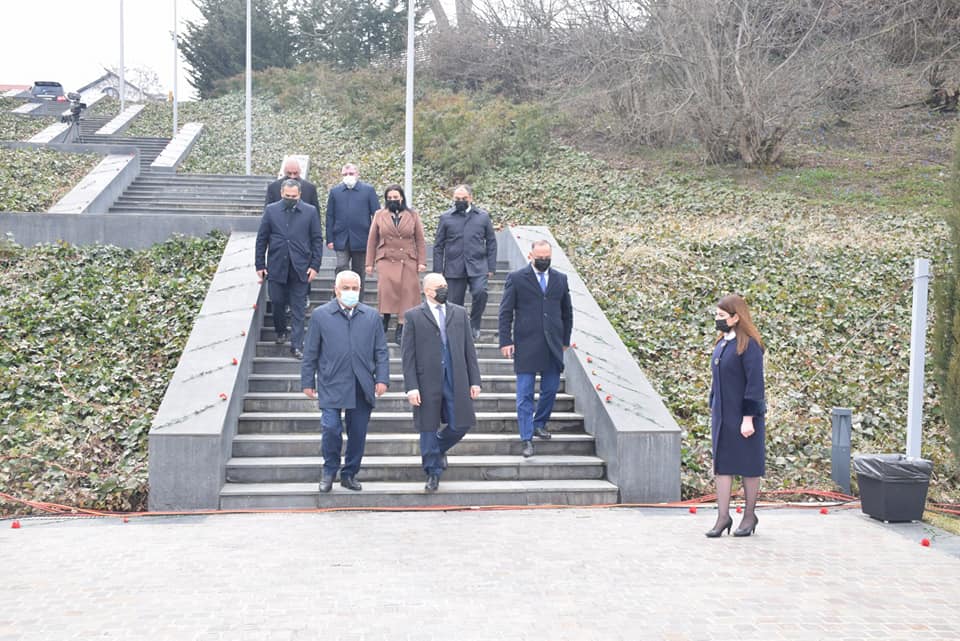
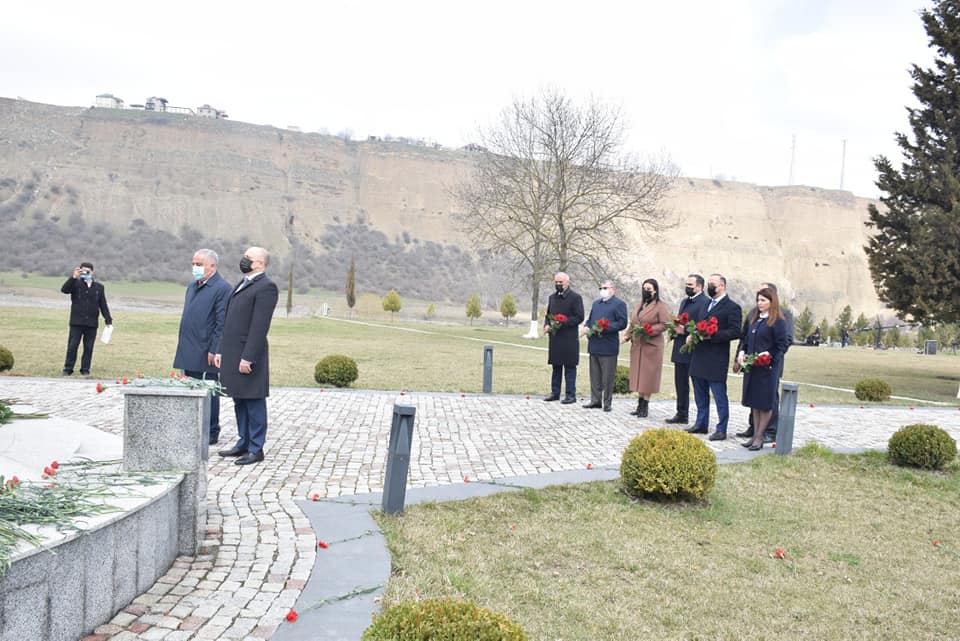
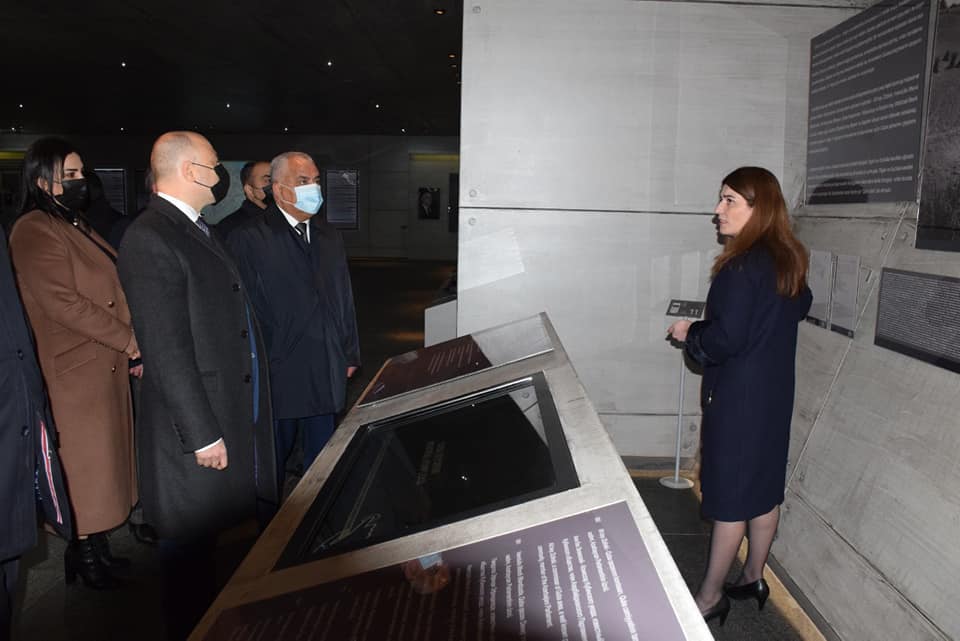
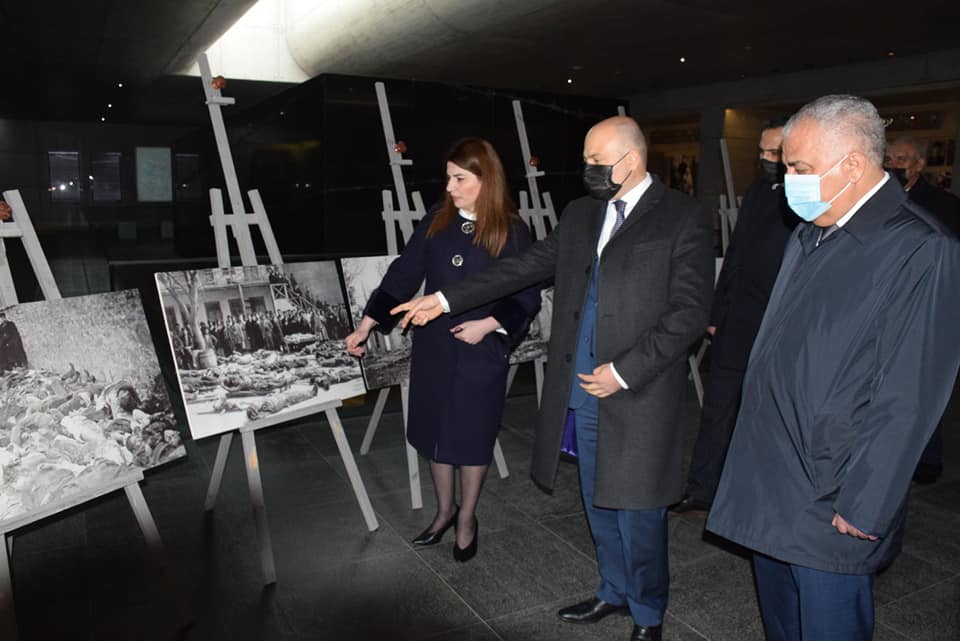
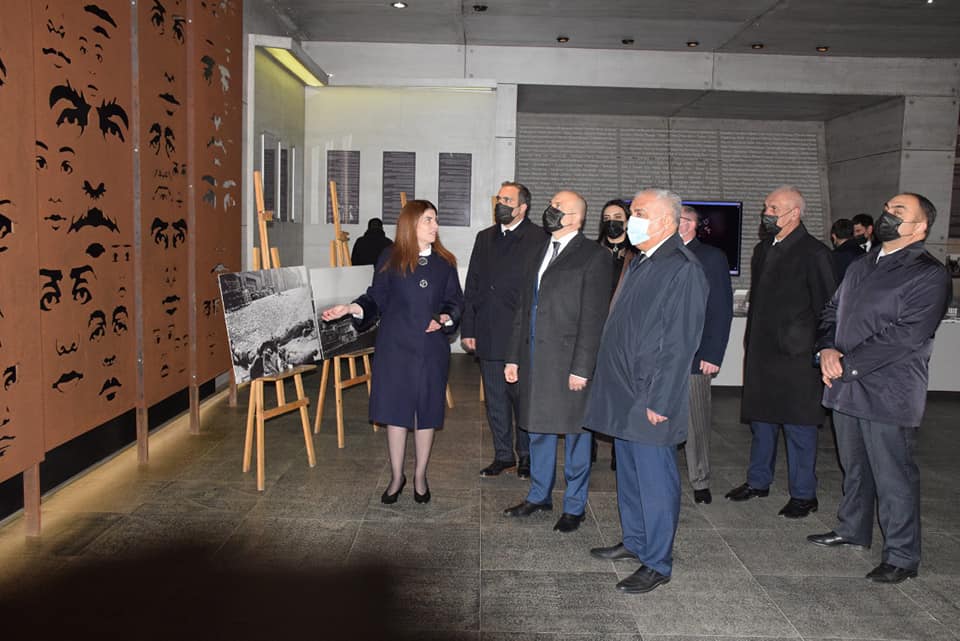
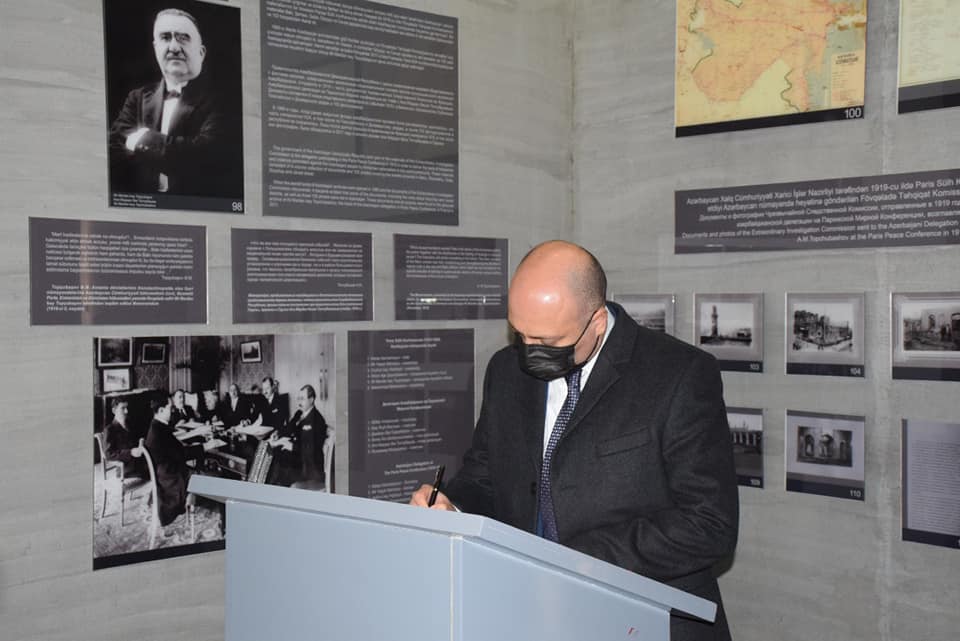
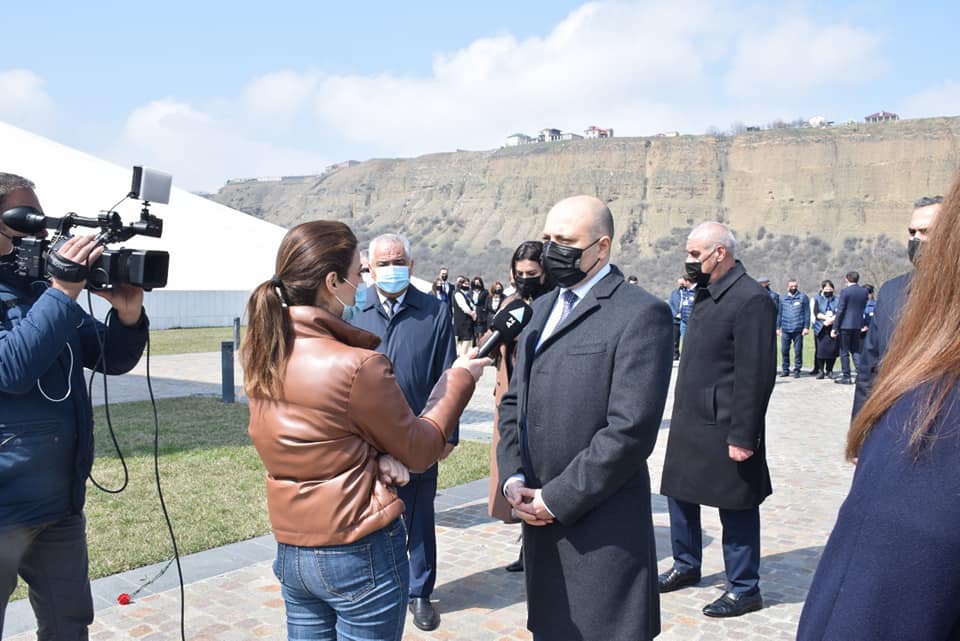
Ambassador Extraordinary and Plenipotentiary of the Kingdom of Saudi Arabia to Azerbaijan Hamad bin Abdullah bin Khudeyri made an official visit to Guba region on February 12. During the visit, the Ambassador visited the Genocide Memorial Complex in Guba. The ambassador was informed in detail about the genocide committed by Armenian vandals in Azerbaijan in 1918, including Guba. He said that he was horrified by what he saw in the museum. Ambassador Hamad bin Abdullah bin Khudeyri wrote his impressions in the museum’s memory book and condemned the inhumane actions of Armenian Dashnaks. At the end, the guest was presented with various booklets dedicated to the genocide by the director of the Complex Rakhshanda Bayramova, as well as a promotional booklet in Arabic.

En Today in history: Turkmenchay Peace Agreement - February 10, 1828

At the end of the 18th century, the Gajars, an Azerbaijani-Turkish dynasty (1796-1925), came to power in Iran and began a policy of re-subordinating all territories under Safavid rule, including the Azerbaijani khanates and sultanates, to the central government. Thus began a period of war between the Gajars and the Russian Empire, which was trying to occupy the South Caucasus, including Azerbaijan. As a result, an agreement was signed near the village of Turkmenchay. According to the Agreement of Turkmenchay (1828), the existence of independent Azerbaijani states – khanates and sultanates was terminated. The country was divided between two empires: northern Azerbaijan (Northern Azerbaijan) joined Russia, and southern (Southern Azerbaijan) joined the Iranian kingdom ruled by the Azerbaijani-Turkish origin Gajar dynasty. Wanting to move further east, Russia relied on the Christian population in the South Caucasus, pursuing a policy of forcible Christianization of the Muslim population and the mass relocation of the Christian population from Russia to the Caucasus. Armenians were relocated en masse from neighboring countries to the mountainous regions of occupied Karabakh in the name of the Christian population, as well as to the territory of the former Iravan and Nakhchivan khanates. Theere was established “Armenian province” in Western Azerbaijan – in the territory of the former Yerevan and Nakhchivan khanates. Thus, the foundation of the future Armenian state was laid in the territory of Azerbaijan. Thus, conditions were created for new territorial claims of Armenians against Azerbaijanis. The royal regime of Iran pursued a similar policy in the southern lands of Azerbaijan. Thus, with the Turkmenchay Agreement, the unified state of Azerbaijan was divided between the two empires and the foundation for future disasters was laid.

Provided within the framework of the project «Let’s study the monuments of Karabakh!"

Khudaferin bridges
Khudaferin bridges are located in the Jabrayil region and considered one of the most majestic and famous bridges in the Middle East. They are one of the unique monuments of the history and culture of Azerbaijan.
In 1027, by order of Fazl ibn Muhammad, the head of the Shaddadid state with the capital in Ganja were constructed 11 arched bridges on the Araz River, which connected North and South Azerbaijan, then in the 13th century there were built 15-arched Khudaferin bridges.
The Khudaferin bridges located in the Jabrayil region, which was occupied by the Armenian armed forces in 1993, were returned to their owners exactly 27 years later thanks to our victorious army, which achieved brilliant victories in the Second Karabakh War. Thus, October 18, 2020 is another day of glory for our history.

Today in history

On February 6, 1905, massacres of the Muslim population by the Armenian-Dashnak armed groups began in Baku. Clashes provoked by Tsarist Russia’s ruling circles to divert attention from the wave of revolutions in the country lasted until February 9, when Armenian armed groups killed more than a thousand Muslim Turks. A martial law was declared in Baku for some time, but the attacks of the Armenian armed forces against the Muslim population continued intermittently (until 1907).