The Panah Ali Khan Palace is one of the principal monuments of the historic Imarat Complex located in the city of Aghdam. The palace was constructed in the eighteenth century, approximately between 1751 and 1752, by Panah Ali Khan Javanshir, the founder of the Karabakh Khanate. It served as the residence of the Karabakh khans and was regarded as one of the important political centres of its time. With its distinctive architectural style, the palace reflects the rich cultural heritage of Karabakh.
During the occupation of the Aghdam District on 23 July 1993, the palace sustained severe damage. Throughout the occupation, many parts of the monument were destroyed, and it was left in a state of neglect. Following the liberation of the Aghdam District from occupation on 20 November 2020, extensive restoration and reconstruction work was carried out to restore the palace. The official opening of the restored Imarat Complex and the Panah Ali Khan Palace took place on 19 September 2024. Today, the palace is preserved as one of the most valuable examples of Karabakh’s historical and cultural heritage and is open to visitors.

Located in Dubai, United Arab Emirates, the Museum of the Future has been operating since 2022. It is considered one of the world’s most innovative and futuristic buildings. The structure is ring-shaped and features inscriptions of quotes in Arabic calligraphy on its exterior. The architectural design of the building was created by the firm “Killa Design.”The museum, built to modern standards, hosts exhibitions related to artificial intelligence, robotics, space exploration, biotechnology, and environmental issues. The Museum of the Future serves both as a space for interactive exhibitions and as a platform for presenting scientific and technological innovations. It aims to contribute to the development of scientific knowledge in the region.Visitors to the museum can experience what the future might look like and learn how technology could impact human life. The museum also serves as a platform for researchers, scientists, and tourists.
The Metropolitan Museum of Art is one of the world’s largest and most famous art museums. Located in the heart of New York City, this museum is a unique place that collects pearls of world culture from ancient times to the modern era.
The Metropolitan Museum of Art was founded on April 13, 1870 by a group of American patrons, businessmen, artists and intellectuals. The museum’s collection includes more than two million works of art. The collections cover a period of more than 5,000 years.
The Metropolitan Museum of Art is not just a museum, but an art world where the culture, history and creativity of mankind converge. Its collections make the museum a universal source of knowledge and inspiration, accessible to everyone – both physically and online.

The Polish History Museum is located in Warsaw, within the complex of the historic Warsaw Citadel. The museum was opened on September 28, 2023, and with an area of approximately 44,000 m², it is the largest museum in Poland. The building was designed by a Warsaw-based architectural studio called WXCA and consists of three sections: the main museum building and two additional buildings belonging to the Polish Army Museum.
The museum has been recognized as one of the most beautiful museums in the world. In 2024, it was awarded the prestigious Prix Versailles architecture prize for its outstanding achievements in museum design. The project was highly praised for its “excellence across all fields” — architecture, sustainable development, and cultural impact
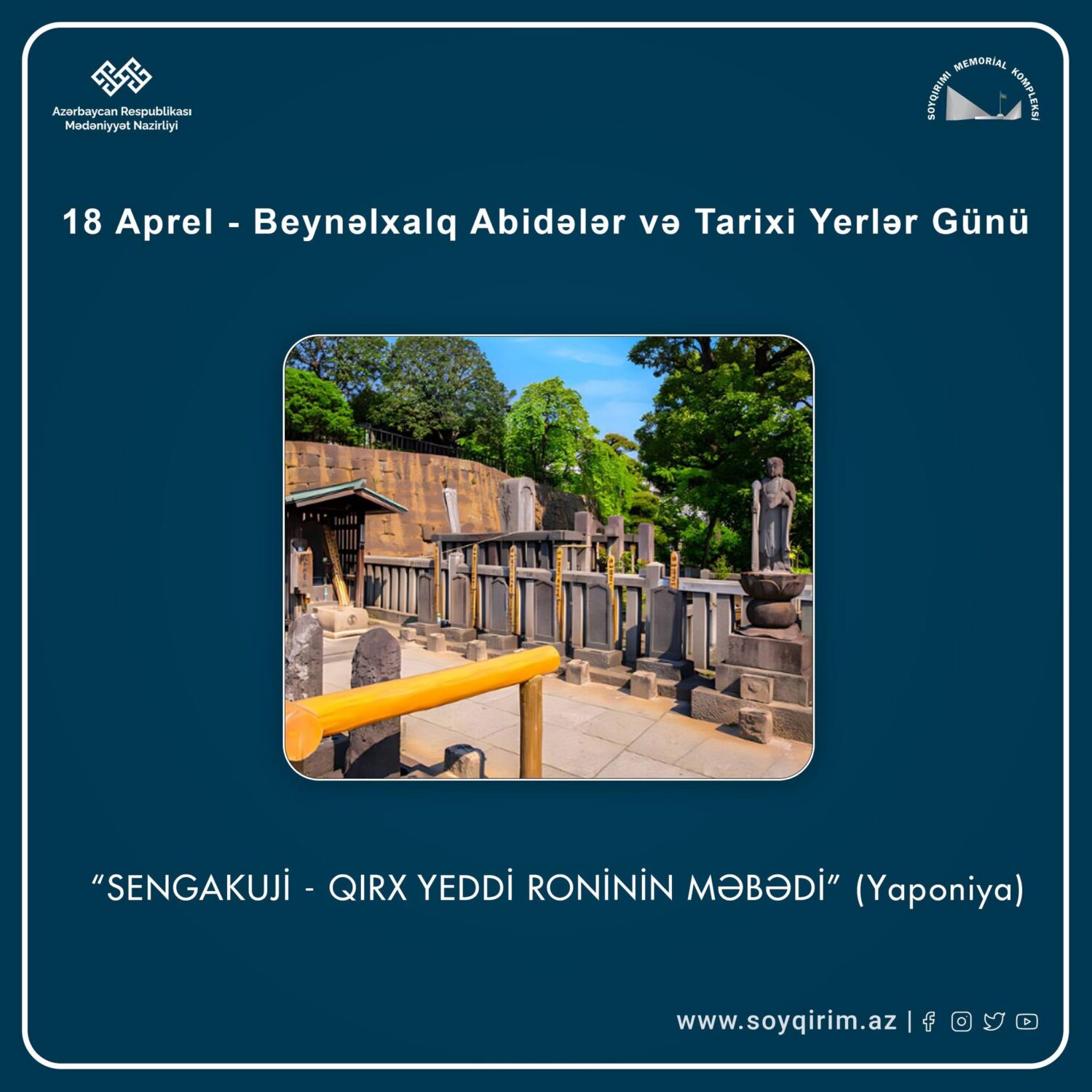
The monument built to commemorate the heroism of Lord Asano and the 47 samurais (later known as ronin after losing their master) is located inside the Sengakuji Temple in Tokyo, Japan. The story of the 47 Ronin is one of the most famous samurai legends in Japanese history. This event took place in the early 19th century and embodies the highest values of the samurai code, “Bushido.”
The story of the monument begins with the insult of a feudal lord named Asano Naganori by a court official, Kira Yoshinaka, who schemed to seize Asano’s position. Unable to tolerate the insult, Asano slashed Kira with his sword. However, since he violated the laws of the court, Asano was sentenced to death, and Kira achieved his goal by taking Asano’s position as the feudal lord.
Asano’s loyal samurai (ronin) decide to take revenge on their lord’s behalf. They realize that regardless of whether they win against Kira or lose, they will be sentenced to death under the current laws.
In December 1702, following a carefully planned attack, the 47 Ronin successfully kill Kira and restore justice. The Ronin were to be executed, but the government, acknowledging their loyalty to their master, granted them an honorable death – seppuku (ritual suicide). One of the Ronin is pardoned, while the remaining 46 commit seppuku.
The monument stands as a symbol of loyalty, honor, and sacrifice for the Japanese people. Every year on December 14th, the anniversary of their revenge, a memorial ceremony is held, and thousands of people visit Sengakuji Temple to pay their respects.
The 47 Ronin Monument is a relic of a historical event that left a profound mark in history. This monument is an important symbol emphasizing the significance of the samurai code, honor, and loyalty. Both historically and culturally, the tale of the 47 Ronin continues to inspire people today.

One of the most famous architectural landmarks in Barcelona, the Sagrada Familia, holds a special place in the history of Spanish architecture and in global architectural history. This extraordinary and magnificent temple was designed by the world-renowned Catalan architect Antoni Gaudí. He regarded the “Sagrada Familia” as the greatest and most spiritual project of his life, dedicating the last 15 years of his life entirely to this endeavor.
Construction of the temple began in 1882, and it remains unfinished to this day. After Gaudí’s death, the construction process continued based on his original sketches. Interestingly, the temple’s construction is still funded by donations and charitable contributions. The main goal is to complete the temple by 2026, marking the 100th anniversary of Gaudí’s death.
From an architectural perspective, the Sagrada Familia is entirely unique. Gaudí drew inspiration from nature, combining sculpture, mathematics, and religious symbols. The temple has three main façades: the Nativity Façade, the Passion Façade, and the Glory Façade. Each depicts certain stages in the life of Jesus Christ. The temple is planned to have 18 towers, of which 12 represent the apostles, 4 represent the Gospel writers, one represents the Virgin Mary, and the tallest one symbolizes Jesus Christ.
The interior is equally stunning. Gaudí designed the columns to resemble tree trunks, creating an interior that feels like a forest. Sunlight filters through the stained-glass windows, creating a colorful and mystical atmosphere inside.
In 2010, Pope Benedict XVI declared the Sagrada Familia a basilica, making it a sacred place of worship. Since 2005, it has been listed as a UNESCO World Heritage site. The Sagrada Familia is not only a symbol of religious faith and craftsmanship but also proof of what the human spirit can achieve. This magnificent structure attracts millions of tourists every year and has become a symbol of Barcelona.

The Terracotta statues were buried with the first Chinese emperor, Qin Shi Huang, who unified the Chinese empire and connected all parts of the Great Wall of China, in the 3rd century BC. According to Sima Qian, after ascending the throne in 246 BC, the 13-year-old Ying Zheng (later known as Qin Shi Huang) began constructing his tomb. His idea was that the statues should accompany him after his death and, likely, he wished to ensure his ambitions for power in the afterlife, just as he had in life.
The statues were discovered in March 1974 by a local farmer while digging an artesian well to the east of Lishan Mountain. Lishan Mountain is an artificially created necropolis for the first emperor of China. The material for some of the statues was taken from this mountain. Qin Shi Huang was buried in 210 BC. According to the great Chinese historian Sima Qian, many precious jewels and examples of craftsmanship were buried with the emperor. Additionally, his 48 concubines were buried alive with him. Over 8,000 terracotta statues of infantrymen, archers, and cavalry were hidden underground. The details of these statues are astonishing! Interestingly, every soldier statue is unique. Each has its own distinct features, height, clothing, face, and even different facial expressions. Scholars believe that the statues were modeled after real people.
The warrior and horse statues of the Terracotta Army were made in different regions of China and then transported to the outskirts of Xi’an city. The Institute of Botany of the Chinese Academy of Sciences compared samples from the statues and their origins, leading to the conclusion that the horse statues were made directly near the necropolis, likely for easier transportation (the horse figures weigh about 200 kilograms). The warrior statues are lighter, averaging 135 kilograms, though their exact production location remains undetermined.
The warrior figures are considered masterpieces of art because they were handmade individually using various techniques. After being formed, the statues were fired, their faces covered with a special coating material, and then painted. The warriors are distinguished by their ranks (officers, regular soldiers) and weapons (spear or sword).
It is believed that the discovered group of soldiers was positioned to protect the emperor from the east. Similar military units may have been placed in the western and southern parts of the pyramid.
In 1987, during UNESCO’s 11th session, the Terracotta Army was included in the World Heritage List as part of the “Mausoleum of the First Qin Emperor.” The tomb complex of Qin Shi Huang became one of the first monuments in China to be added to this list. Visiting the Terracotta Army is often included in the official visit programs of foreign heads of state to China.

International Monuments Day is a day dedicated to preserving cultural and historical heritage. It reminds us of the importance of monuments and cultural heritage that carry traces of humanity’s past. Every monument is not only a relic of the past but also a treasure carrying valuable information that must be passed on to future generations. The observance of this day helps each of us realize our responsibility to protect this heritage and pass it on to future generations. These monuments are valuable traces reflecting the lifestyle, belief systems, arts, and cultures of the past.
One such monument that carries the traces of history is the Machu Picchu site in Peru. Machu Picchu, also known as the “Lost City of the Incas,” is located in the mountainous region of Peru at an altitude of 2,430 meters above sea level. Built in the 1450s by Pachacuti, this city was constructed far from the center of the Inca Empire, as a sacred place. The city remained hidden for a long time and was rediscovered after 400 years in 1911 by Hiram Bingham, following the Spanish conquest of the Inca Empire in 1532.
Machu Picchu is a complex consisting of over 200 parts, including temples, residences, and storage buildings. The population of the city, mainly engaged in agriculture and worshipping the Sun God Inti, numbered around 1,200 people. The city was built in the mountains and is noted for its excellent stonework techniques. The stones were carefully fitted together and connected by stairways, showcasing the high level of Inca construction technology and architecture.
The city is also home to numerous religious and culturally significant monuments. One of the most famous monuments is the Temple dedicated to the Sun God and the “Temple of the Three Windows.” Around the city, there are also perfectly constructed stone fortresses and buildings with windows. All of these structures demonstrate the advanced architectural and construction skills of the Incas.
Since 1983, Machu Picchu has been included in UNESCO’s World Heritage List. When added to this list, it was recognized not only as an archaeological and architectural monument but also as an important symbol of the culture, history, and beliefs of the Incas.
Machu Picchu is also famous for its natural beauty and spectacular panoramic views. The city was recognized as one of the New Seven Wonders of the World in 2007 and today remains one of the most important tourist destinations in the world.

There are several magnificent churches around the world that stand out both for their architectural style and historical significance. Among these religious monuments, the Cologne Cathedral holds a special place. As one of the most prominent examples of Gothic architecture, this cathedral is not only a religious center but also an important historical and architectural heritage.
The Cologne Cathedral (Kölner Dom) is located in the city of Cologne, Germany, and is considered one of the most magnificent churches in the world. Construction began in 1248 and continued intermittently for a total of 632 years, with its completion in 1880. With a height of 157 meters, it was the tallest building in the world for a long period and held this record until the Washington Monument was built in 1884.
The architectural style of the cathedral is Gothic, with intricate stone carvings, stained glass windows, massive arches, and two magnificent towers that draw attention. The stained glass windows are particularly fascinating—some windows consist of ancient glass from the 13th century, while modern mosaic windows created by the famous German artist Gerhard Richter were added in 2007. These modern windows are made up of approximately 11,000 different colored square glasses, adding a magnificent lighting effect to the interior space.
The Cologne Cathedral is not only an architectural wonder but also holds significant religious importance. One of its most valuable artifacts is the “Sarcophagus of the Three Wise Men.” This golden-covered tomb is believed to contain the remains of the three wise men who witnessed the birth of Jesus. It is one of the most important Christian relics, attracting thousands of visitors every year.
Despite the heavy bombardment of the city of Cologne during World War II, the cathedral miraculously survived the massive destruction and continued to stand, maintaining its towering silhouette amidst the ruined cityscape.
The cathedral also houses one of the largest church bells in the world. The “Petersglocke” (Peter Bell) weighs 24 tons and is one of the largest freely swinging church bells in the world. Beneath the cathedral, there are various tunnels and secret passages built during different historical periods. Some researchers believe these passages have not yet been fully explored.
Due to the characteristics of the stones used in its construction, the building has darkened over time, which enhances its ancient and mystical appearance. Interestingly, while the cathedral is considered to be fully completed, some experts argue that the construction of the Cologne Cathedral is never truly finished, as the building constantly requires restoration and renewal work.
Visitors who climb the 533 steps to reach the cathedral’s towers are rewarded with a breathtaking panoramic view of the city of Cologne. Every year, millions of tourists visit this historically and religiously significant monument to experience its awe-inspiring atmosphere.

The Great Wall of China is one of the most significant ancient architectural structures in the world. It is a chain of fortifications in the north of the country, built to protect against warlike nomads and to mark the state’s border. Nowadays, the focus has shifted—the Great Wall itself has become a protected national monument and has been included in the list of the New Seven Wonders of the World.
Construction of the Great Wall began in the 3rd century BCE and continued for nearly two thousand years, until 1644. Initially, small, disjointed kingdoms built defensive barriers along their borders. However, when Emperor Qin Shi Huang unified these principalities into a single empire between 230 and 221 BCE, he ordered the construction of a continuous wall along the empire’s northern border. One million people—20% of China’s population at the time—were involved in the construction. The main challenge was that the wall had to be built across uneven terrain, following the natural landscape, including all its hills and valleys. On the other hand, this very feature made the Great Wall of China a truly unique structure.
First and foremost, its scale is truly astonishing: the wall stretches nearly 9,000 kilometers, and with all its branches, it exceeds 21,000 kilometers. The width varies across different sections, reaching 5 to 7 meters, while the height ranges from 6 to 16 meters. The structure consists of towers, garrison posts, and fortresses connected by continuous walls. It also has 12 gates for border control and trade. At various times, the wall had up to 25,000 signal towers.
The oldest segments were built using a compacted mixture of earth, clay, straw, reeds, and stones. Later, stone slabs were laid atop compacted embankments. By the 14th–17th centuries, baked bricks became the primary building material.
However, it is important to note that the Great Wall of China is not just a symbol of imperial power but also a monument to human sacrifice. According to some estimates, around one million people perished during its construction. This number is shocking, especially considering that all the work was done manually, without modern equipment. Thousands of workers died from exhaustion, starvation, disease, and harsh labor conditions. A simple calculation reveals that for every 30 meters of the wall, one worker lost their life.
Legend has it that many of them were buried directly in or near the wall, which led to its grim nickname: “the largest cemetery in the world.” Some even believe that the wall became a giant tombstone, with every stone preserving the memory of the fallen.
The Great Wall of China is not only an extraordinary architectural achievement but also a symbol of an entire era’s grandeur and sacrifice. It showcases the incredible engineering skills of ancient China while serving as a solemn reminder of the high cost of its construction. Today, the wall stands as a UNESCO World Heritage Site, preserving the history of many generations. It attracts millions of tourists, remaining an eternal monument to human labor, resilience, and the determination to protect one’s land.

The Louvre Museum is one of the most famous and largest art museums in the world. It is located in the center of Paris, on the right bank of the Seine River. The Louvre was originally built in 1190 by King Philip II of France as a fortress. Its purpose was to protect against attacks from the north. Later, after Louis XIV moved to the Palace of Versailles, the building began to be used primarily for storing art collections.
The museum opened in 1793. That same year, as a result of the French bourgeois revolution, the Bourbon dynasty was overthrown, and King Louis XVI was executed. It was decided that a museum would be established in one of the grand royal palace buildings in Paris. The Louvre Palace was built in the 12th century. For a time, it served as a fortress and prison. From the 15th to the 16th centuries, it became a place for storing rare art collections of French kings. The museum was opened to the public and became one of the centers where the most important works of world art were exhibited. Officially operating as a museum, the Louvre Museum houses more than 35,000 works of art.
Among the most interesting parts of the Louvre Palace are the Caryatid Hall and the Apollo Gallery. The Caryatid Hall, which connects to the Lescot wing of the palace, is considered the oldest hall of the Louvre. The graceful female figures carved in the hall signify the development of high craftsmanship, and the lines of female charm and beauty are skillfully celebrated.
The paintings in the museum are selected according to the period in which they were created. A valuable collection of personal belongings and art pieces once owned by many kings, as well as numerous works bought by individuals who collected art in France using their personal funds, are kept here. Additionally, during the Renaissance period, countless sculptures and objects belonging to estates were brought into the museum.
The Apollo Gallery reflects the court life of the 17th century. After a fire in 1661, the gallery was restored by Levo, and the interior was rearranged by Charles Le Brun, the court painter and a renowned master of the time.
Currently, the Louvre’s collections number over 250,000 items. Among the world’s most famous museums, the Louvre is the only one that provides a complete and comprehensive view of the development of Western European and Eastern art. The Louvre consists mainly of six departments.
One of the most famous architectural elements of the Louvre Museum is its glass pyramid. Designed by Chinese-American architect Ieoh Ming Pei in 1989, this pyramid serves as the main entrance to the museum. Today, the Louvre Museum remains one of humanity’s greatest cultural centers.

Located in the south of Spain, in the city of Granada, the Alhambra Palace is one of the most magnificent examples of Islamic architecture, holding an irreplaceable place in world cultural heritage due to its rich history, unique architecture, and cultural significance. The name Alhambra translates from Arabic as “Red Castle,” because the palace is mainly constructed from red bricks, which is reflected in the visual features of the palace. The palace was built in the 13th and 14th centuries by the rulers of the Nasrid dynasty and became the cultural, religious, and political symbol of the last center of the Andalusian Muslim state. The history of the Alhambra Palace dates back to the 9th century. Initially built as a simple fortress, this site gradually transformed into a larger complex. During the Nasrid dynasty period (1238–1492), which marked the peak of Islamic culture in Andalusia, the palace was particularly developed. During this period, the architecture, art, and connection with nature reached a new level, with scenic gardens, wide courtyards, and high-level architectural examples decorated with impressive and intricate patterns. The main purpose of this monumental complex, located around the city of Granada, was to function as both a fortress and the residence of the ruling family. Alhambra was also constructed as a defensive fortress and a strategic location. The various sections within the fortresses and the palace symbolized the peak of Andalusian culture and created a cultural heritage for future generations.
The main part of the palace complex is divided into three sections: the Alcazaba fortress, the royal residence, and the Generalife gardens. The Alcazaba is the oldest part of the palace, built for military purposes. This fortress aimed to control and defend the entire area of Granada.
The royal residence is the main palace where the rulers of the Nasrid dynasty lived, and it houses the highest examples of architecture. The most magnificent part of the palace is the Generalife, a place for the sultans to relax, famous for its magnificent gardens, fountains, and water channels. The Generalife gardens are also rich in various water sources, such as the “Pool of Dawn,” which highlights the beautiful and symbolic significance of the area.
The interior design of the Alhambra Palace is extraordinarily rich. Its walls and arches are adorned with magnificent geometric patterns and enriched with Arabic calligraphy and carvings. The palace’s Court of the Lions is particularly famous, featuring a fountain made up of 12 marble lion statues, symbolizing the refreshing power of water in life. The Hall of the Two Sisters draws attention with its unique design, with verses from the Quran engraved and various patterns and weavings incorporated. The palace’s architecture also boasts a rich water supply system, with fountains, pools, and water channels decorated with intricate patterns and ornaments throughout the entire palace.
After the conquest of Granada in 1492, the Alhambra became the residence of King Ferdinand and Queen Isabella of Spain. Although several changes were made during this period, the palace’s primary architecture was preserved. During the reign of King Charles V, a new European-style palace was built inside the complex, but these changes mainly affected the exterior sections, and Alhambra preserved all the characteristics of original Islamic architecture.
In the 19th century, restoration work on the palace began, and it once again became a cultural center. In 1984, the Alhambra Palace was included in UNESCO’s World Heritage List. The palace is one of the most visited and best-preserved historical monuments in the world. Every year, millions of tourists visit this magnificent palace, experiencing the pinnacle of Andalusian Islamic architecture. Alhambra holds a special place not only in terms of architecture but also for its historical and cultural significance. This palace continues to maintain its position in history as a magnificent monument where the past, culture, and art converge.