




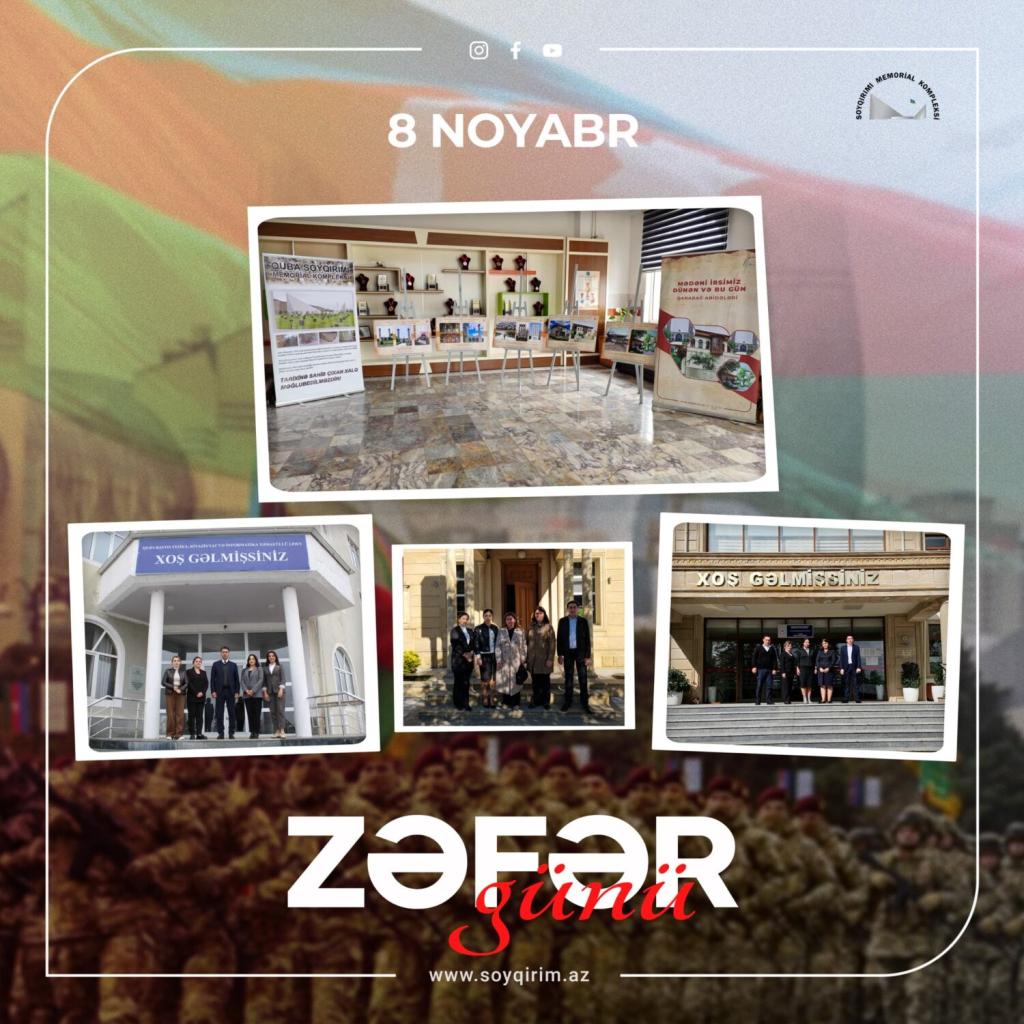
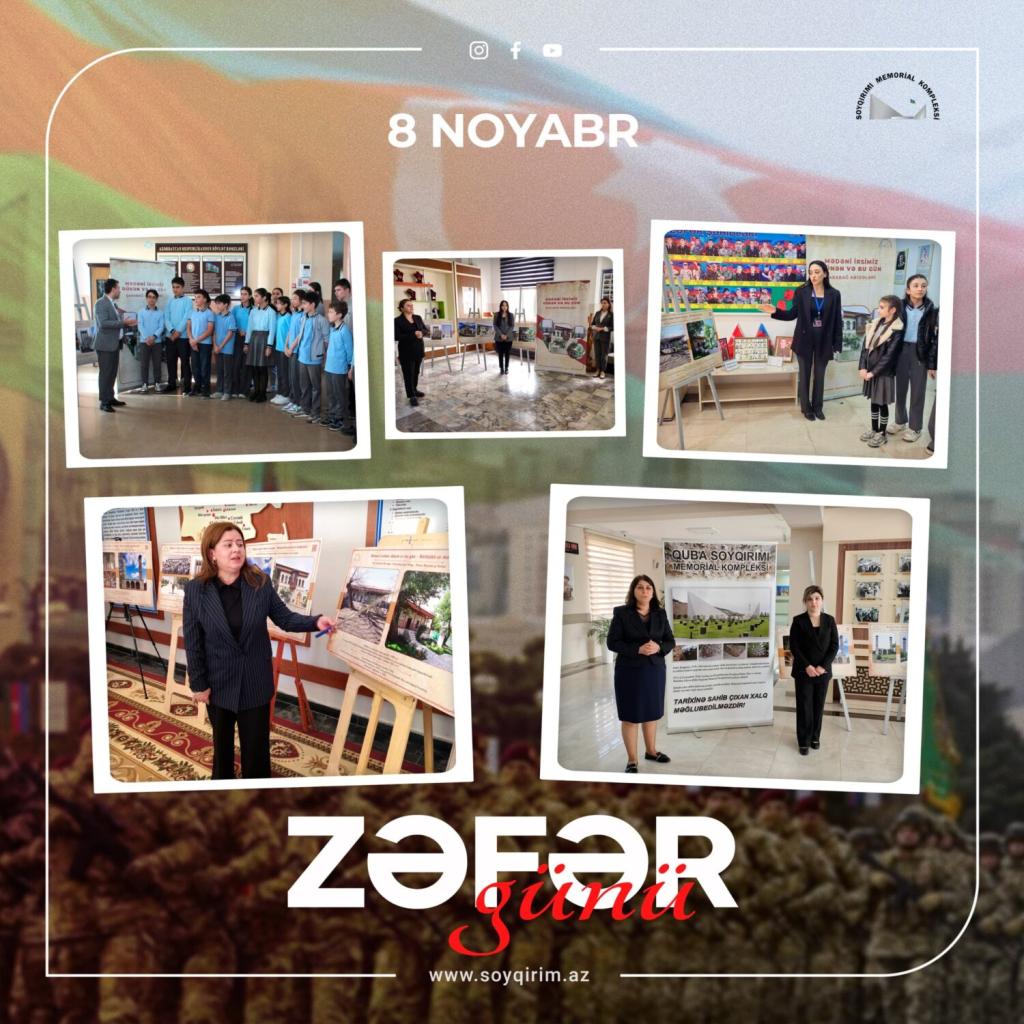
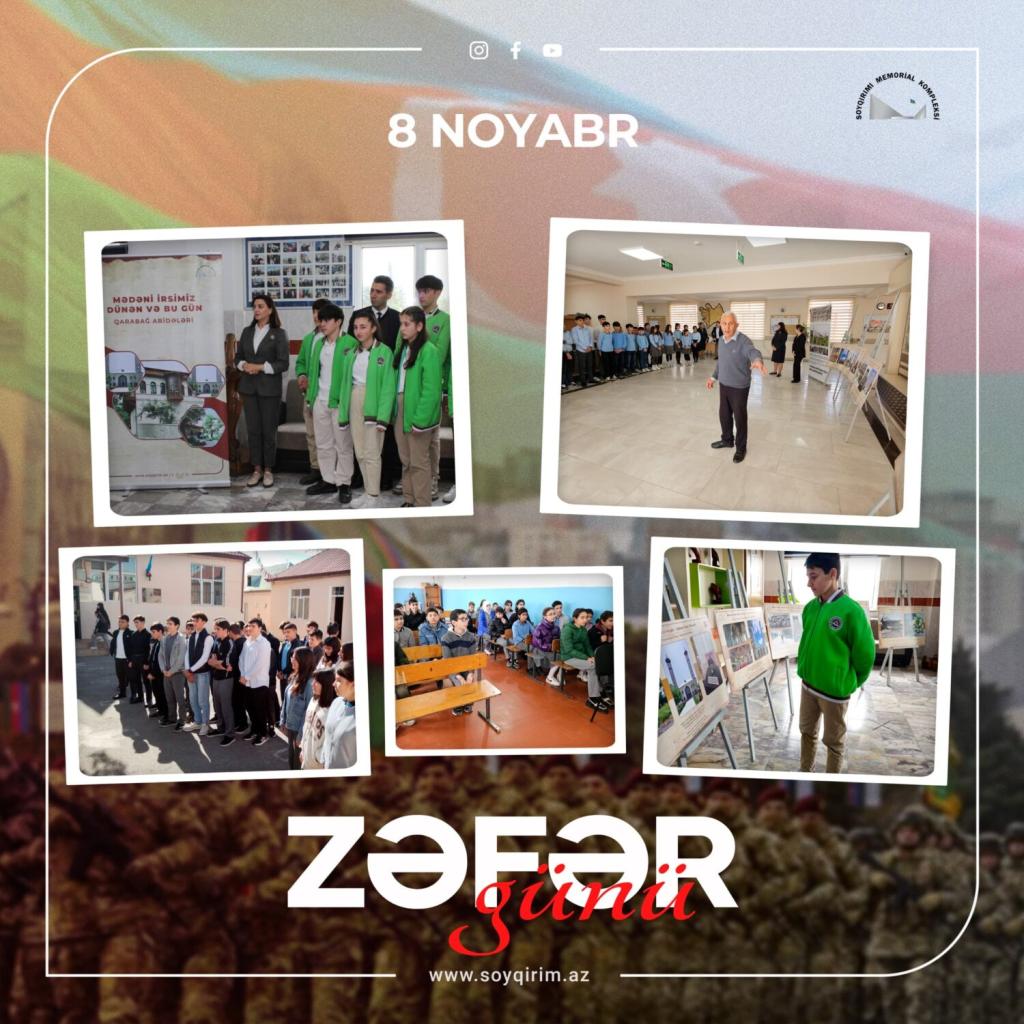
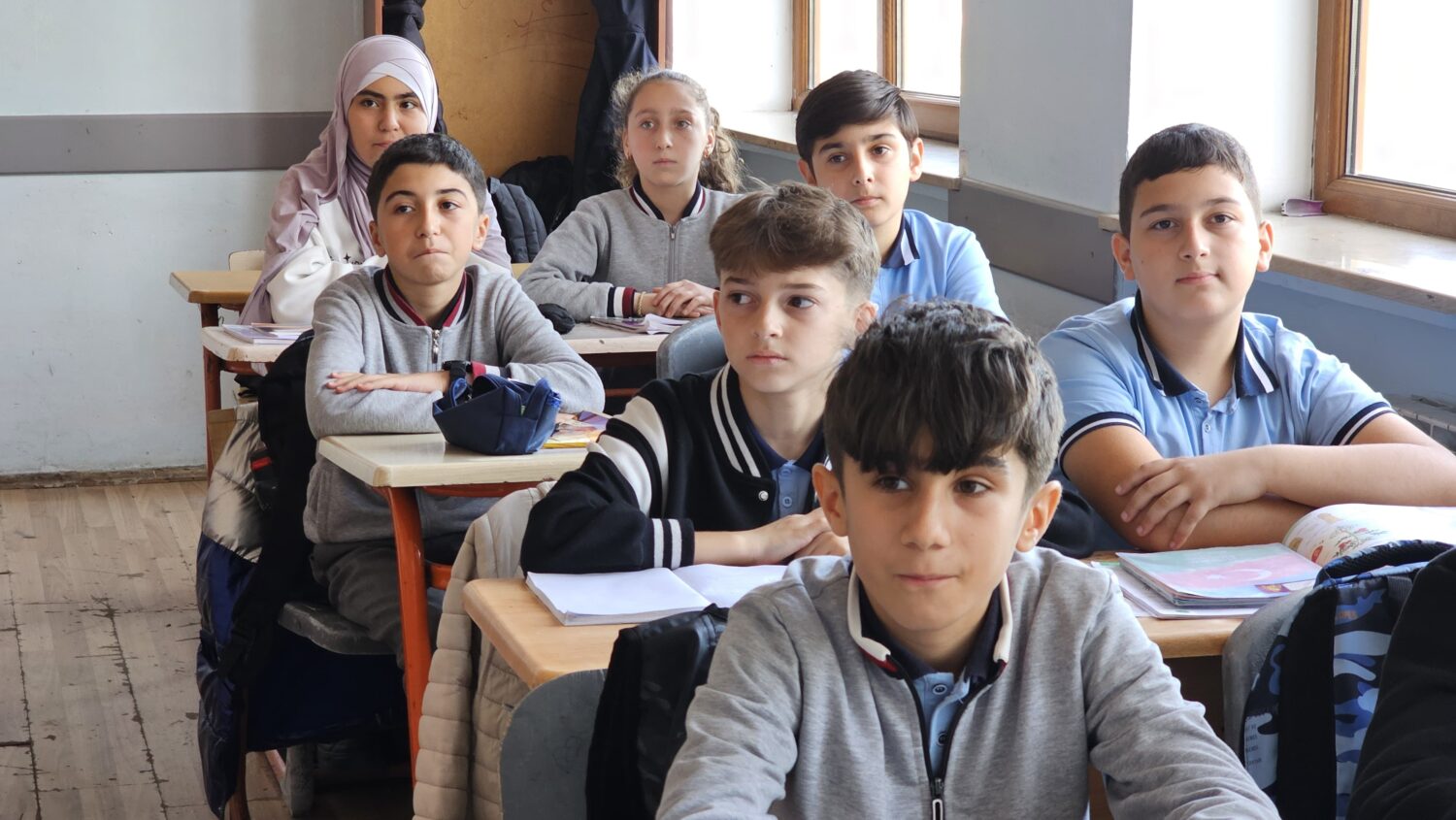
As part of the project, guides from the memorial complex provided detailed information about these historical monuments to the students attending the exhibition. More than 1,500 students were educated through this initiative. The exhibition aimed to promote the preservation of cultural heritage, draw young people’s attention to the reconstruction process in Karabakh following the Patriotic War, foster a sense of national spirit among the younger generation, and acquaint them with historical truths. It should be noted that the exhibition, held in general education schools, ran from October 20 to November 7.
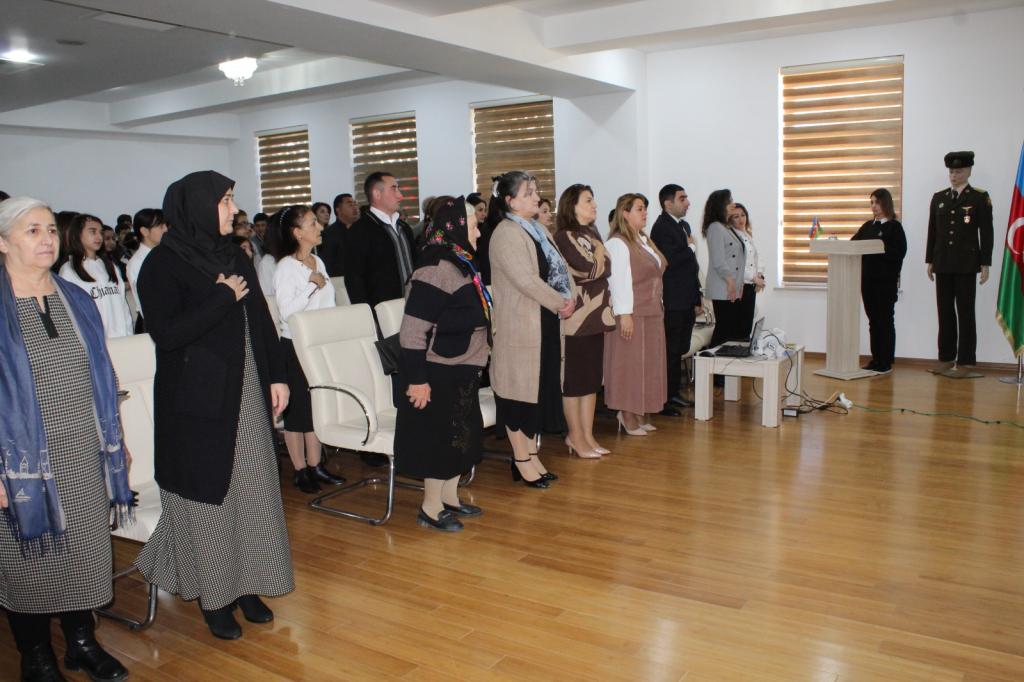


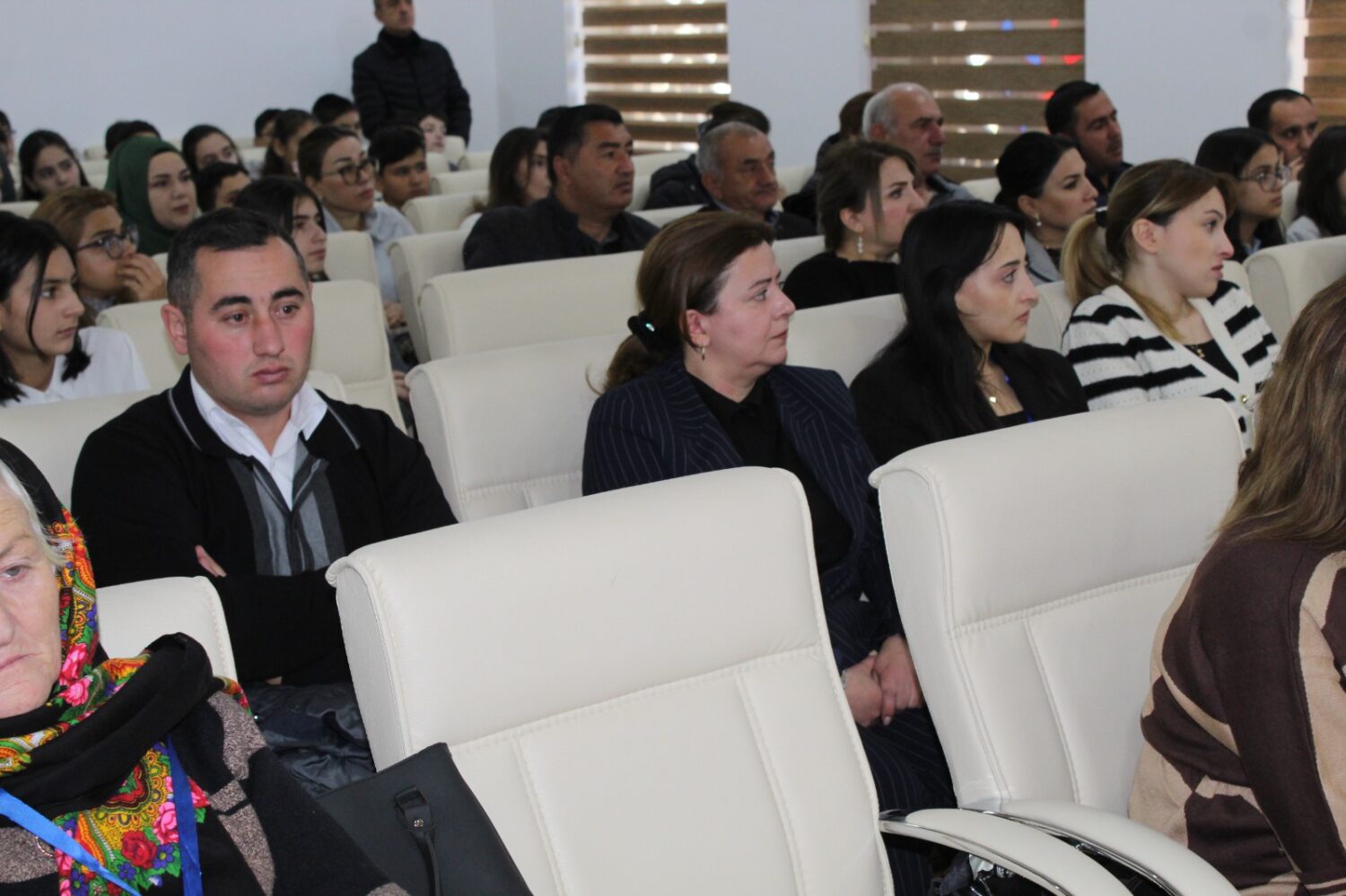
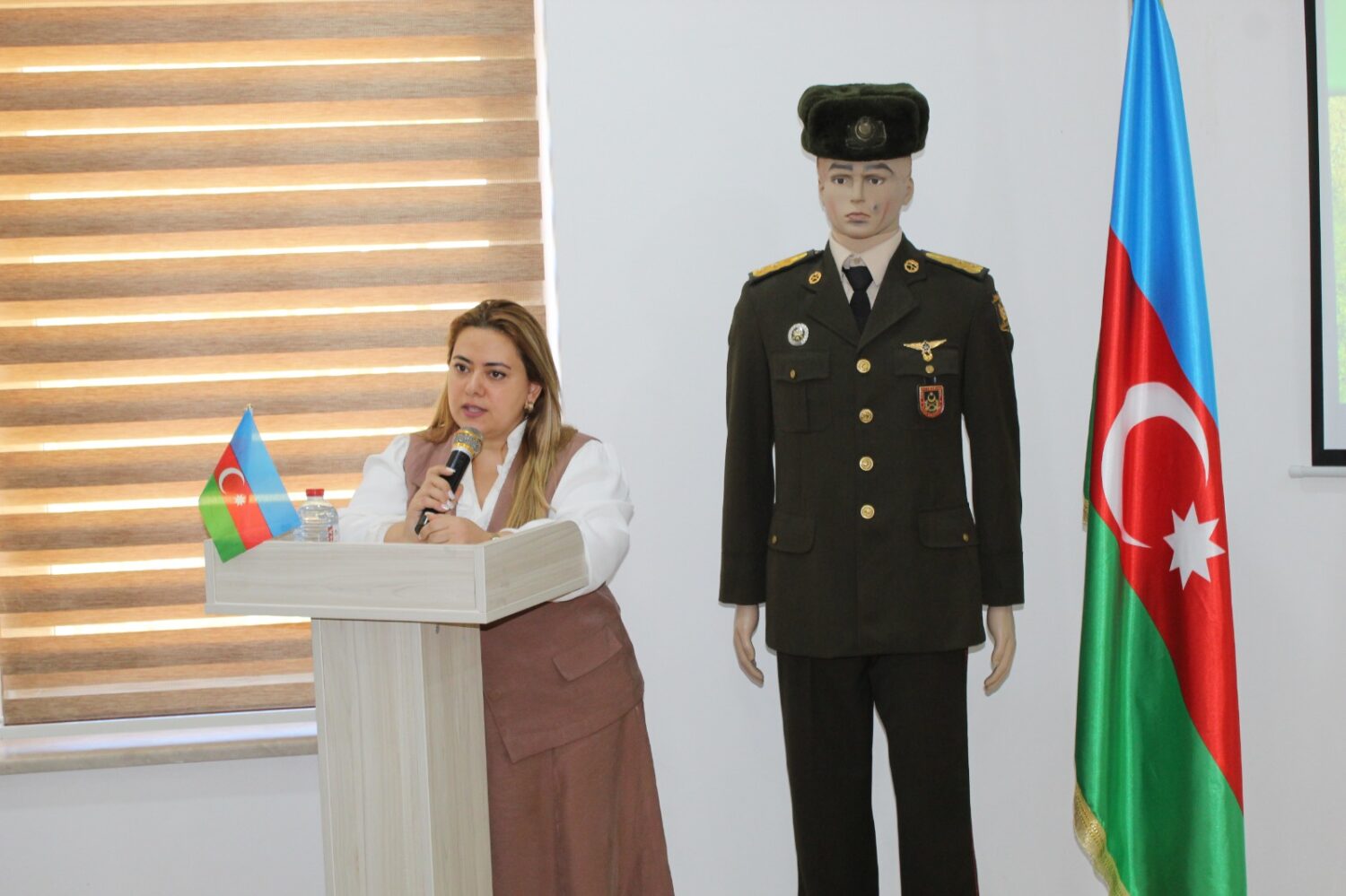
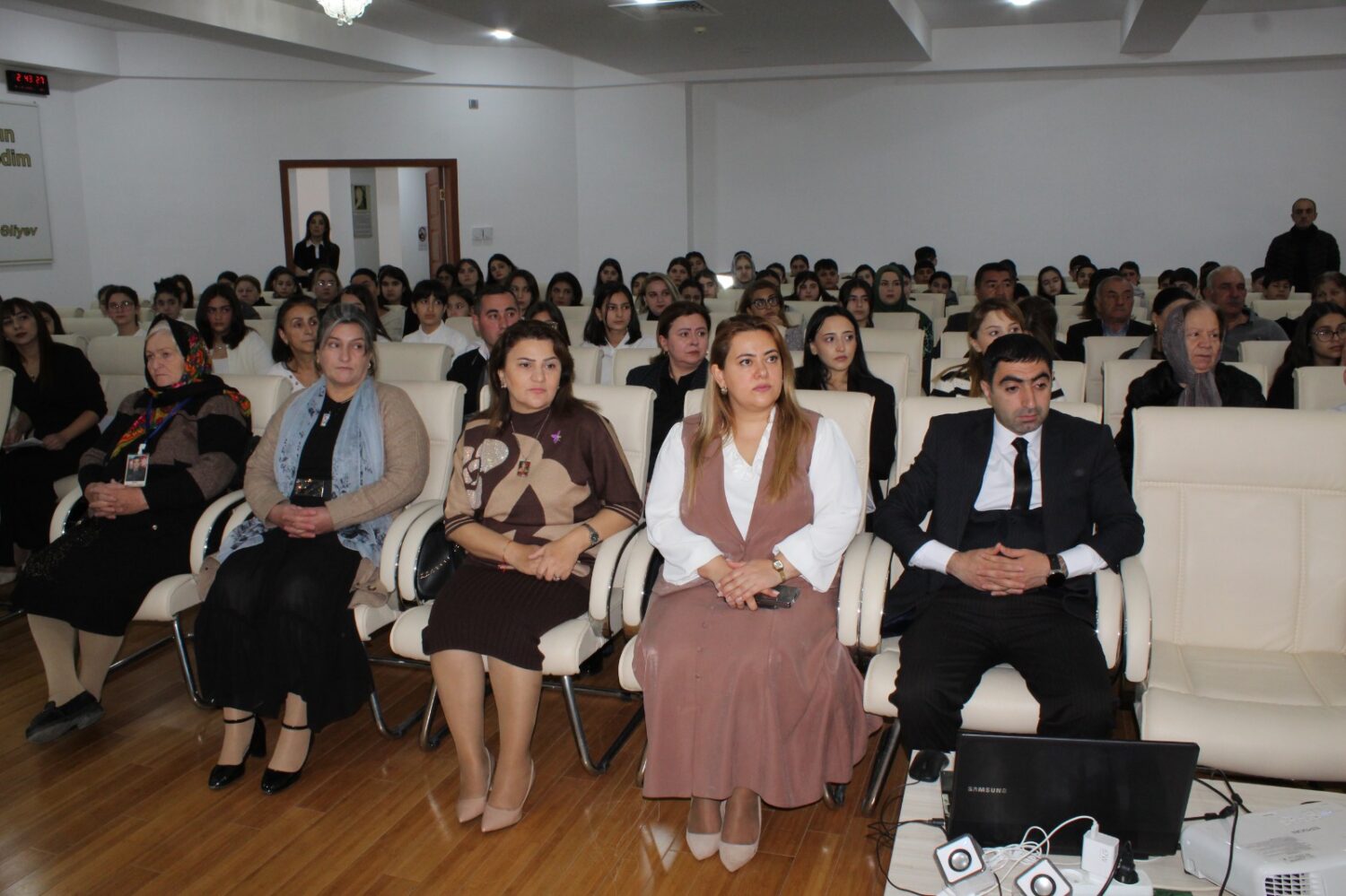
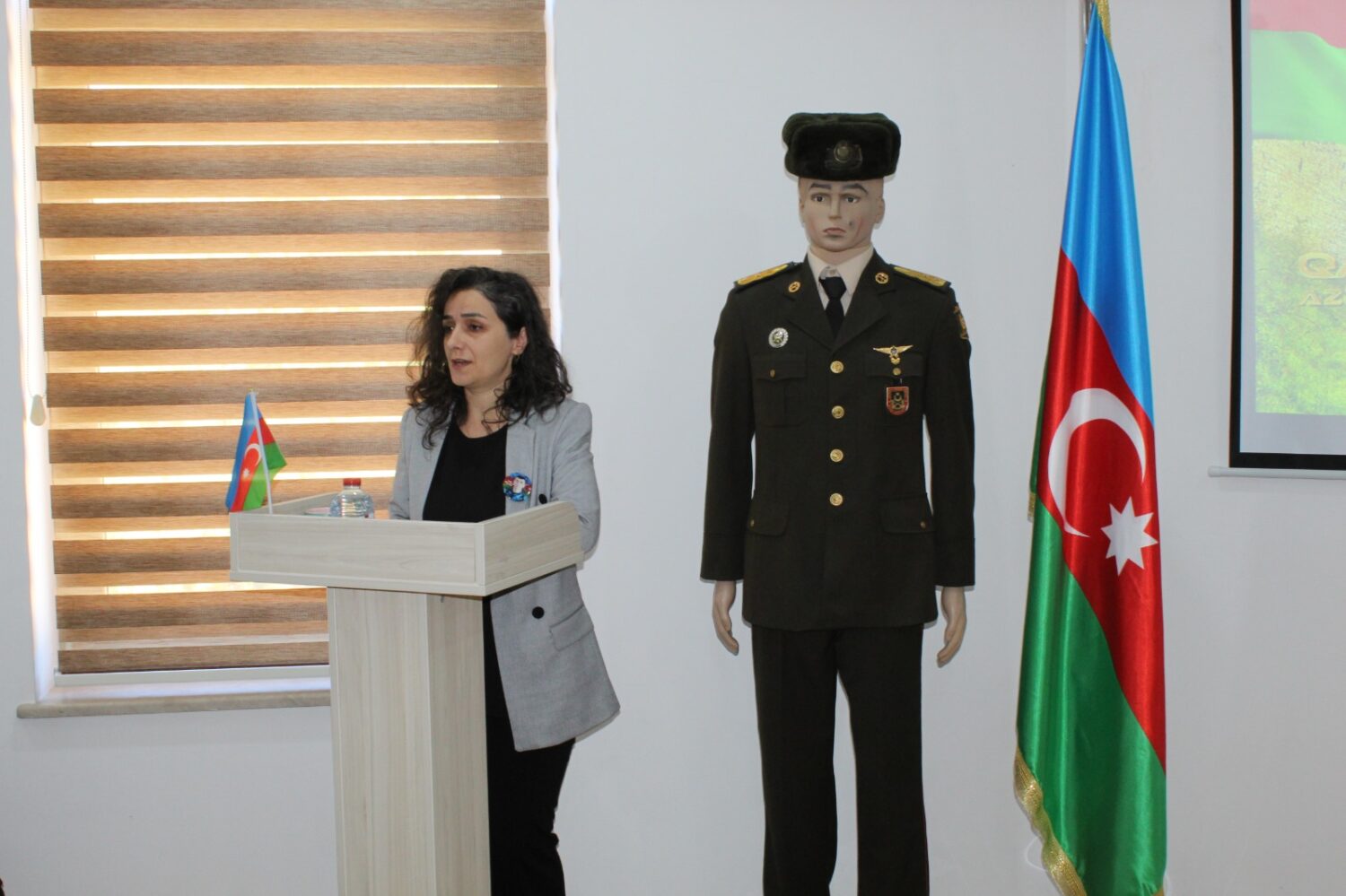

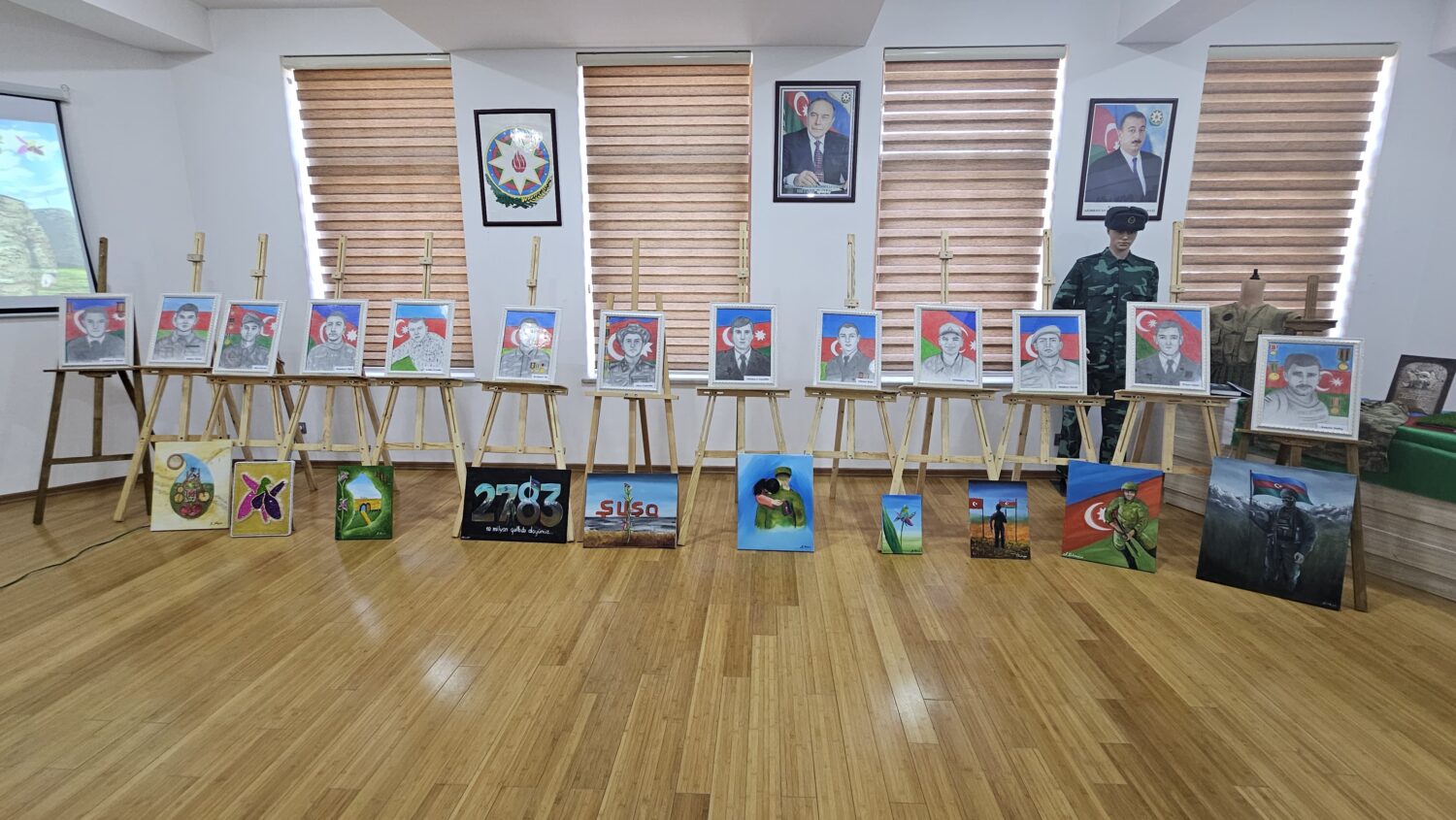
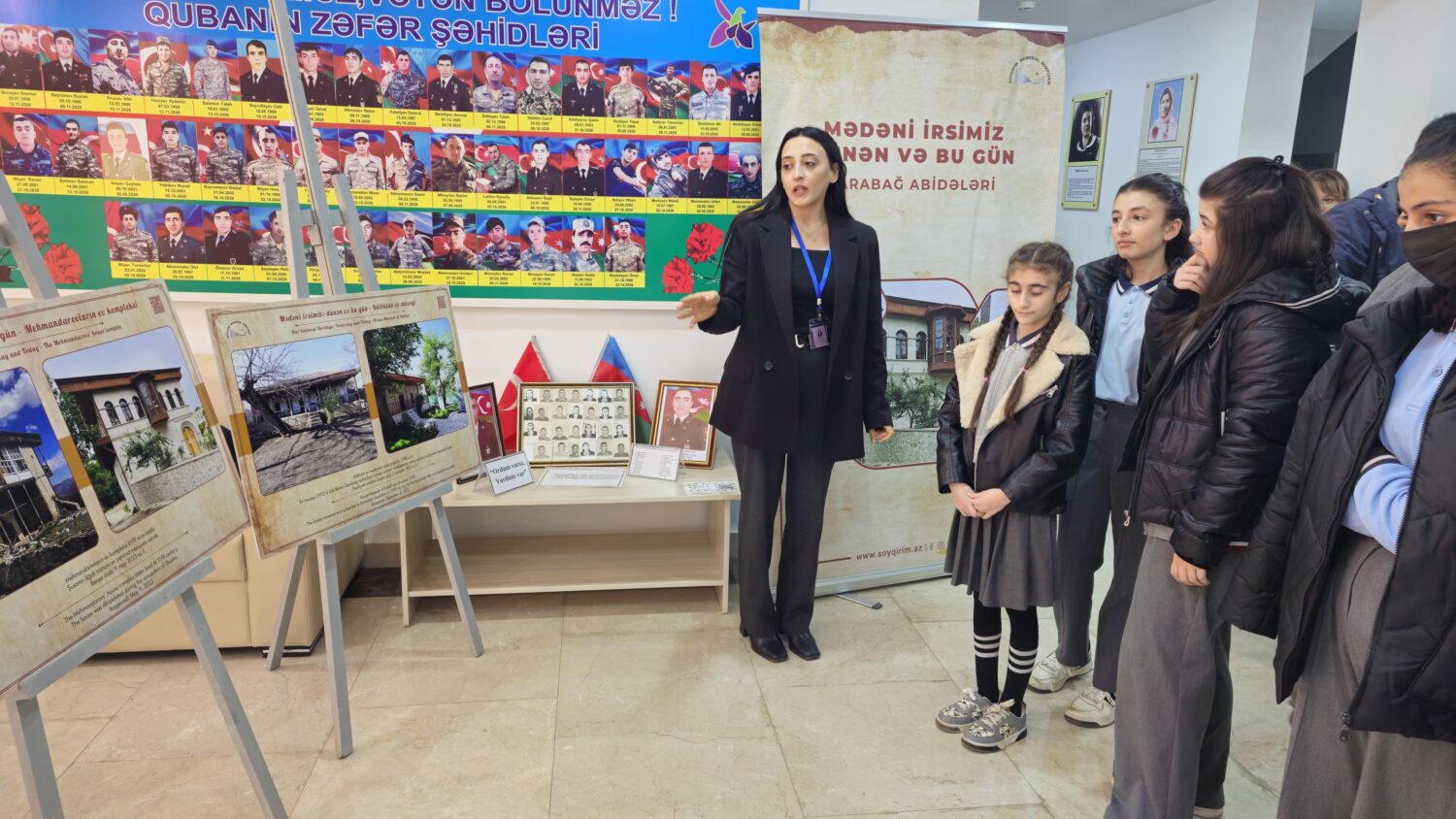
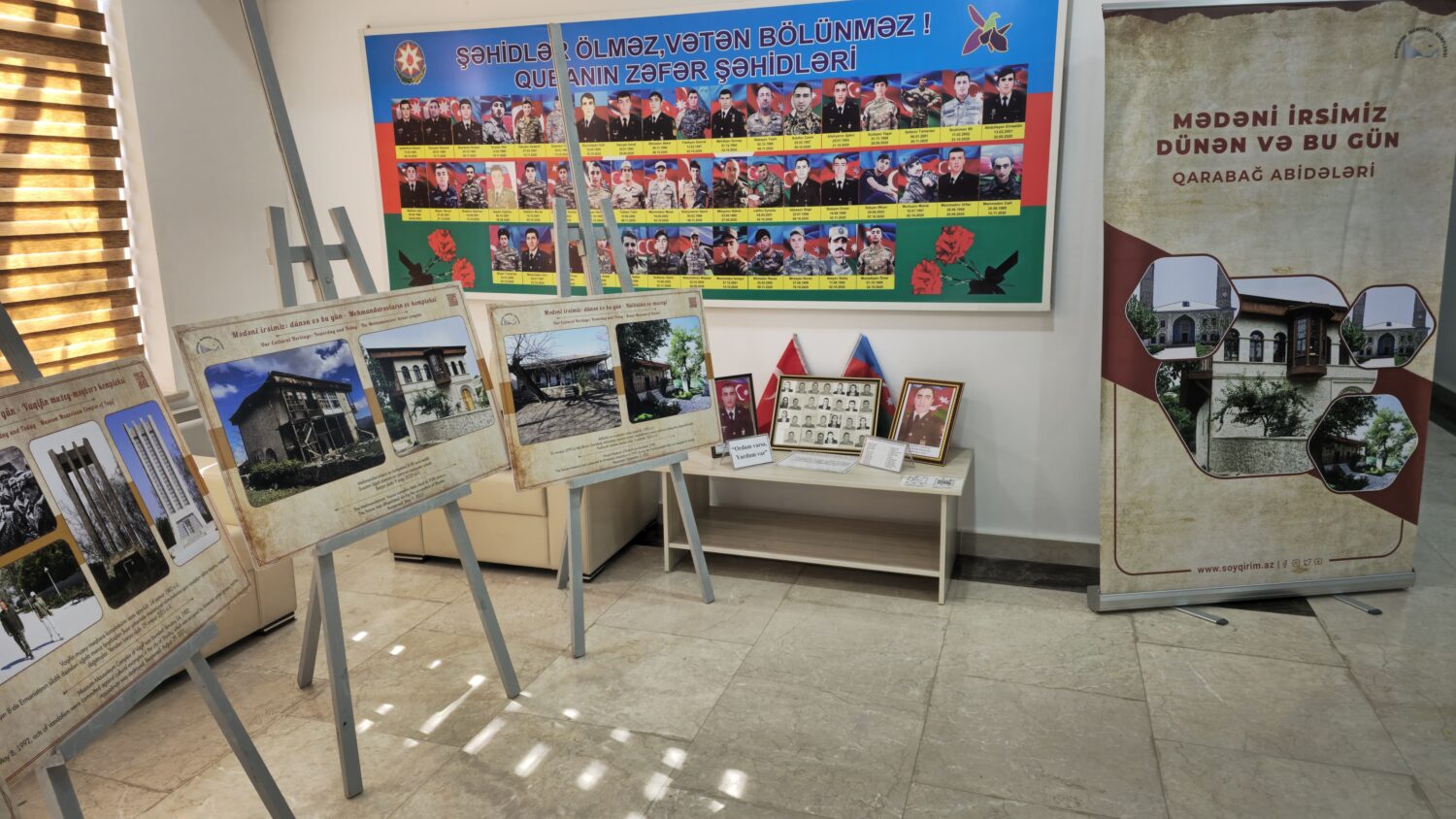
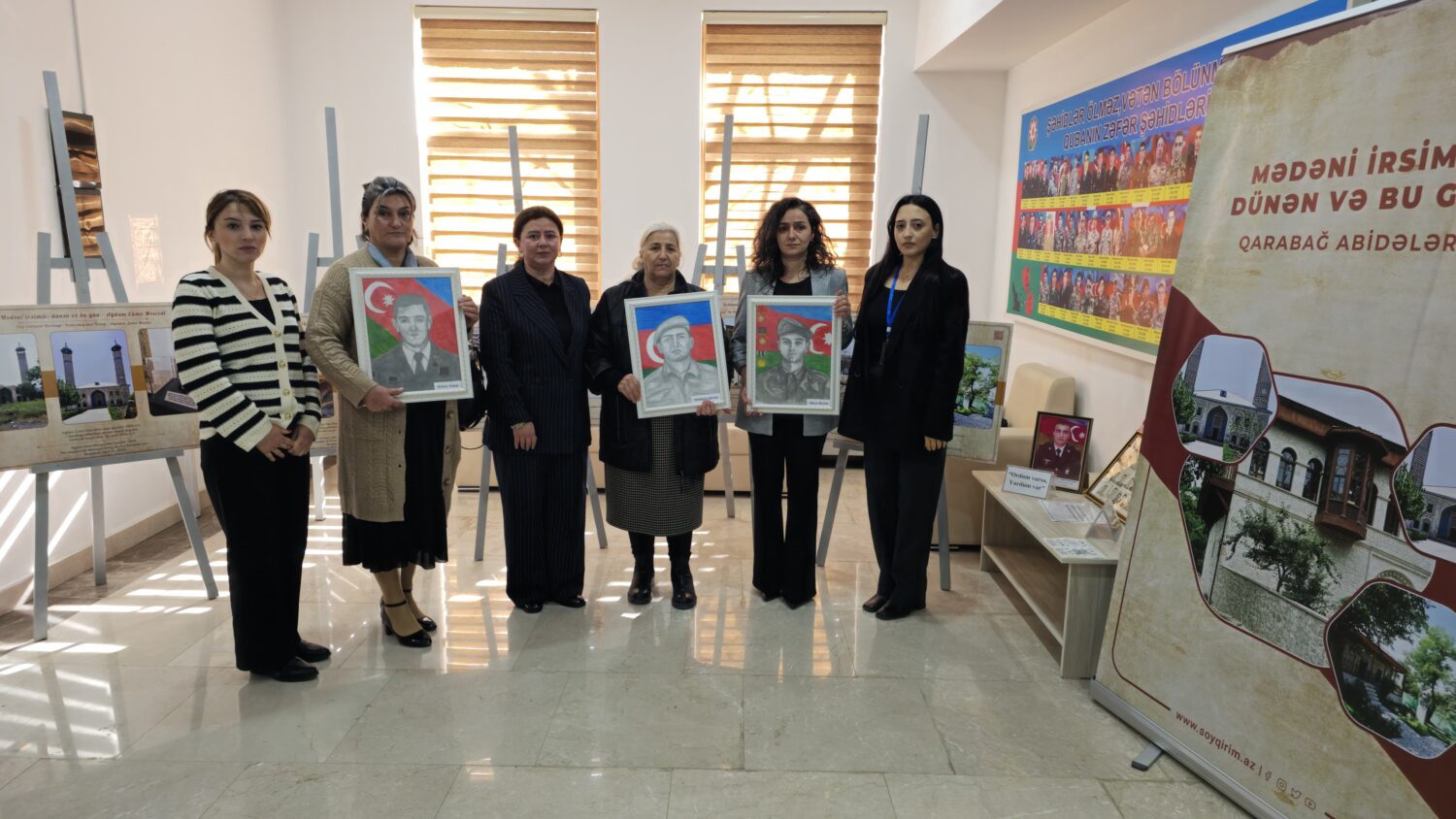
The event began with a moment of silence in memory of the martyrs who sacrificed their lives for the territorial integrity of Azerbaijan. Following this, the director of the Guba History and Ethnography Museum, Mehriban Aliyeva, emphasized that this victory marked a major turning point in Azerbaijan’s modern history. She noted that Victory Day reflects the national pride of the Azerbaijani people and will live on as a symbol of heroism for future generations. Mehriban Aliyeva, the deputy director of the “Genocide Memorial Complex” in Guba, also spoke at the event, underlining that the 44-day war restored historical justice for Azerbaijan. She highlighted the political and strategic advantages the country gained on the international stage as a result of this struggle for the homeland. Fidan Huseynova, the chair of the New Azerbaijan Party’s Guba district organization, remarked that the “Iron Fist” operation, which initiated the 44-day Second Karabakh War, liberated Azerbaijan’s occupied territories from enemy control. She emphasized that, thanks to the unparalleled bravery of our heroic soldiers and martyrs under the command of our victorious Supreme Commander-in-Chief, the long-standing wound of Karabakh, once a mere dream and aspiration, has been healed. Family members of martyrs also spoke during the event, stating that with the liberation of Karabakh from occupation, Azerbaijan has become a key player in ensuring stability and peace in the region. They acknowledged the military and political outcomes of this victory, as well as the role of strong leadership in achieving this success. The event concluded with an exhibition held as part of the project “Our Cultural Heritage: Yesterday and Today.” The exhibition showcased monuments in Karabakh that were destroyed during the occupation and later restored after the Patriotic War. It highlighted the importance of restoring Karabakh’s historical heritage and stressed the necessity of preserving Azerbaijan’s cultural legacy.

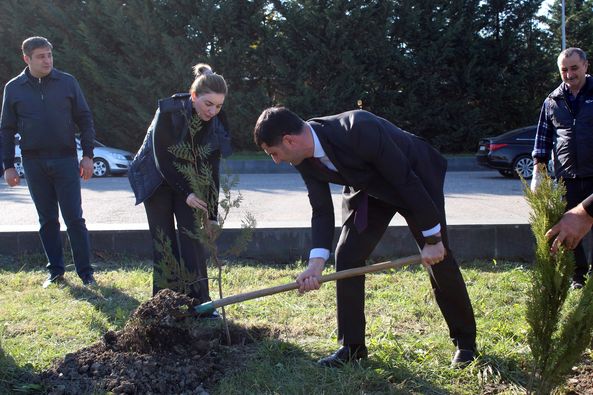
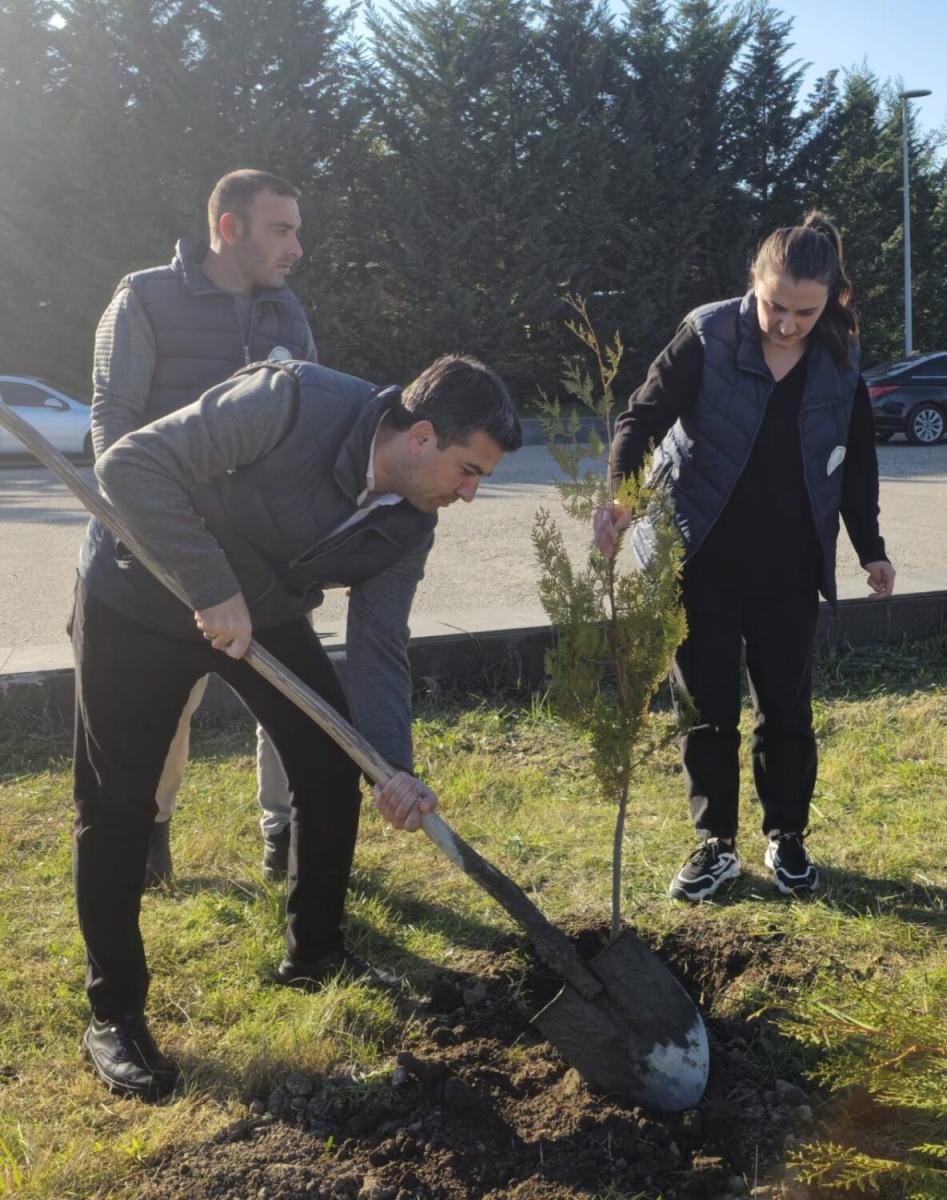
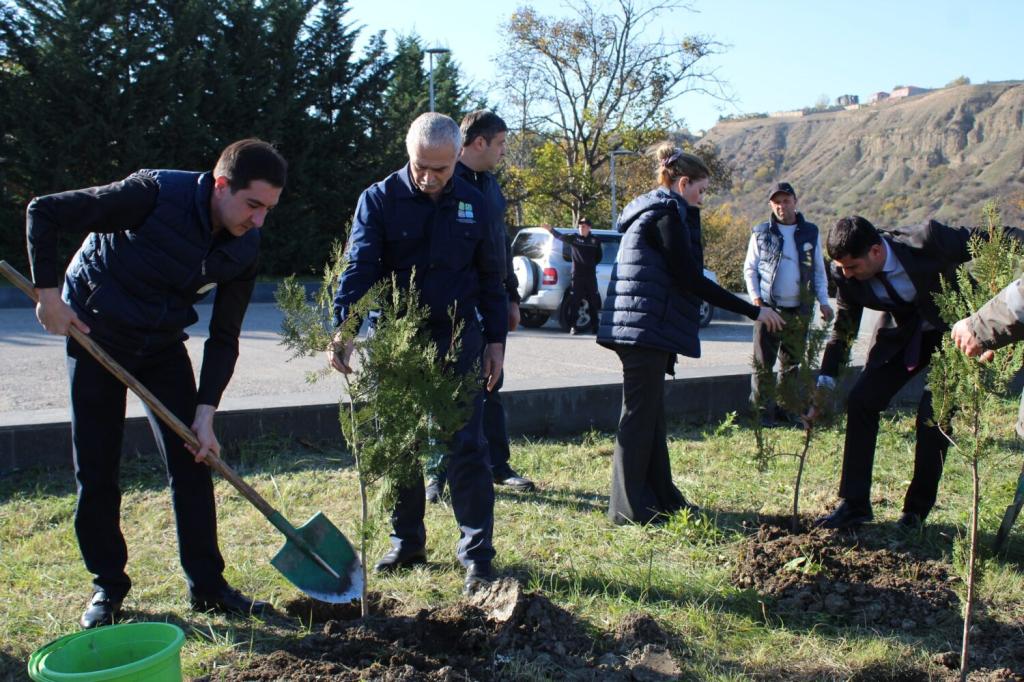
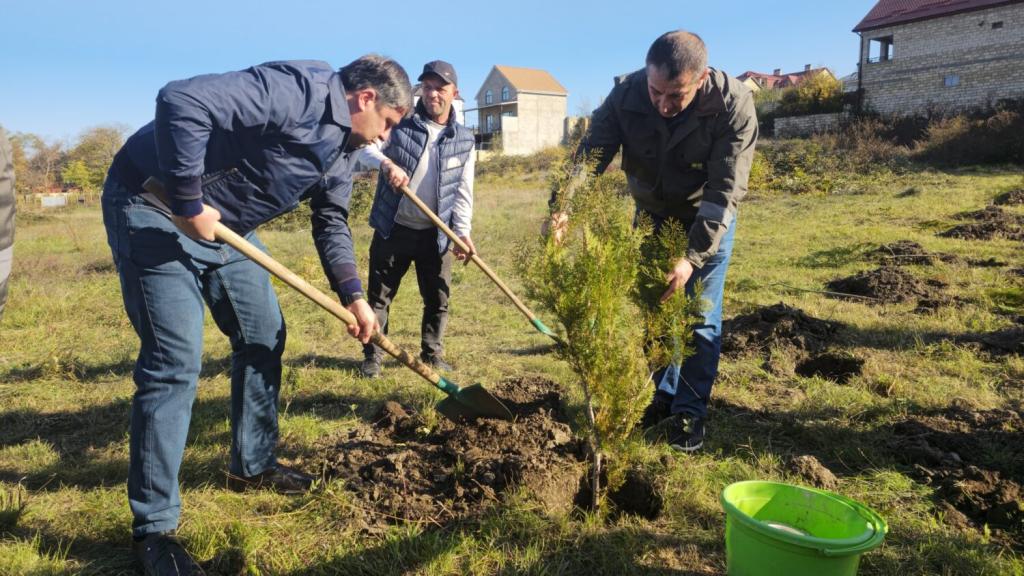
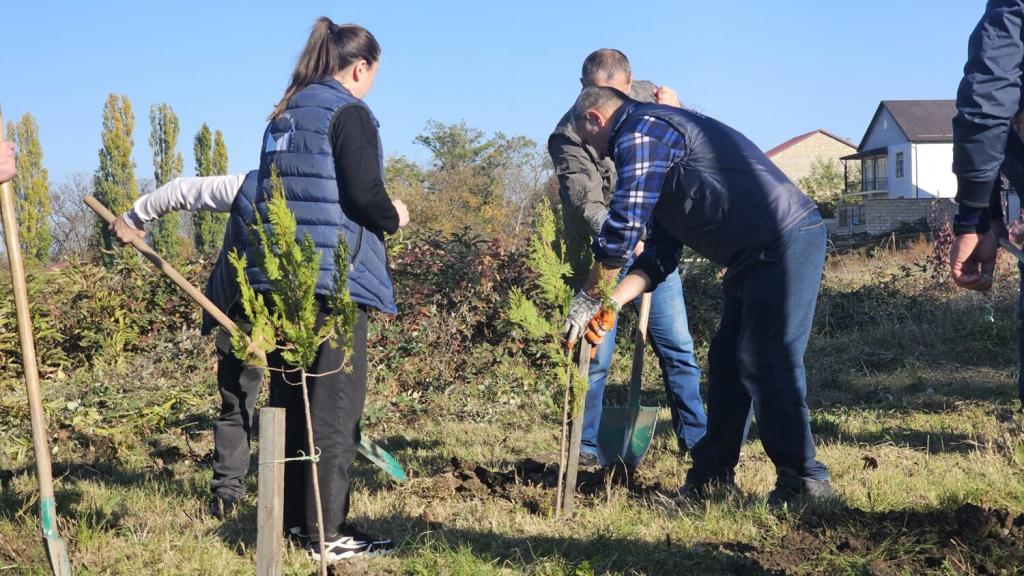
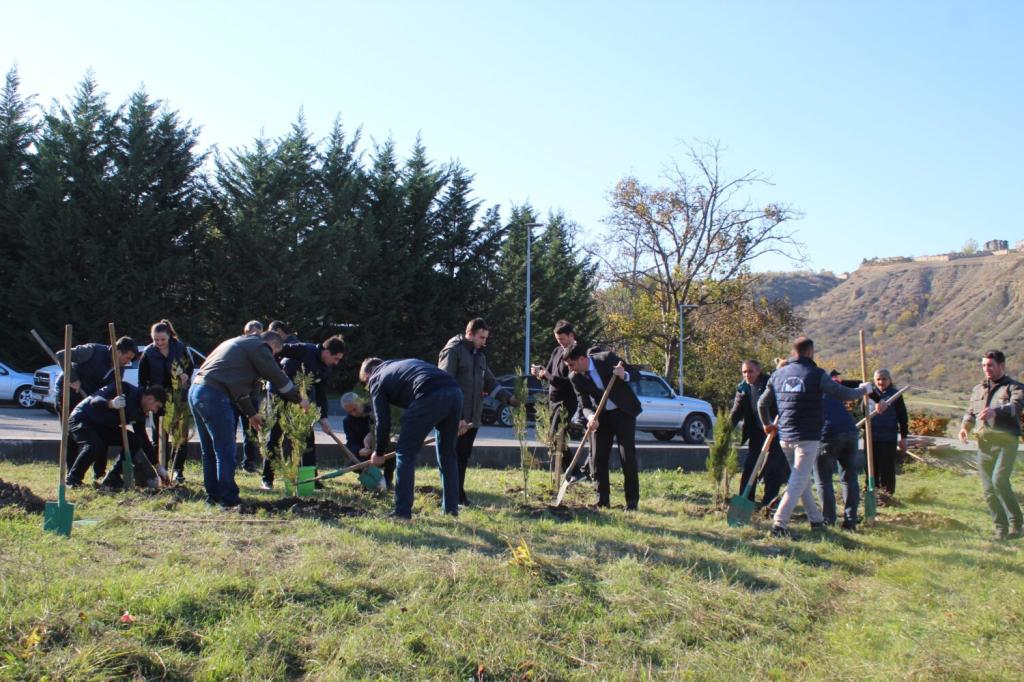
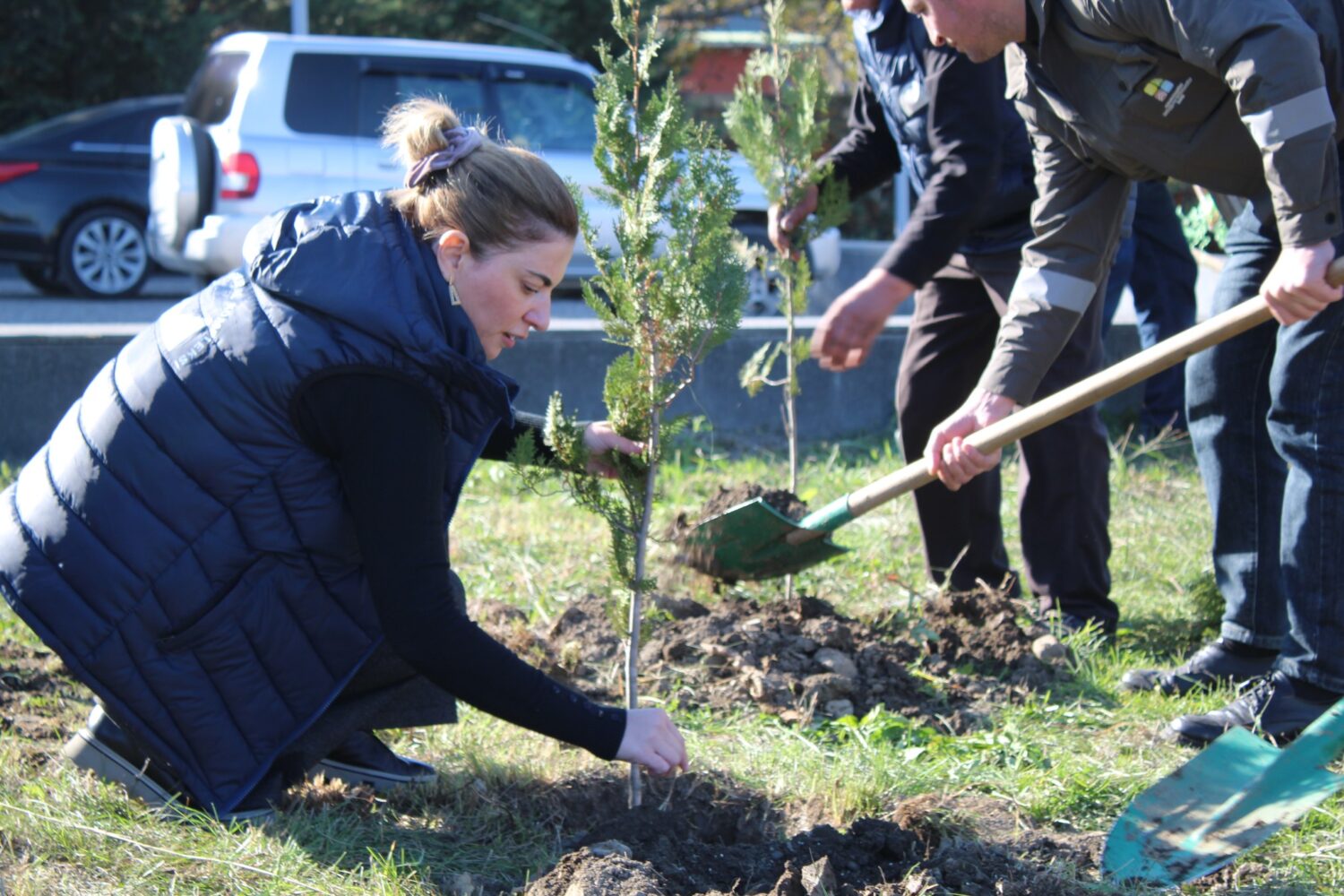
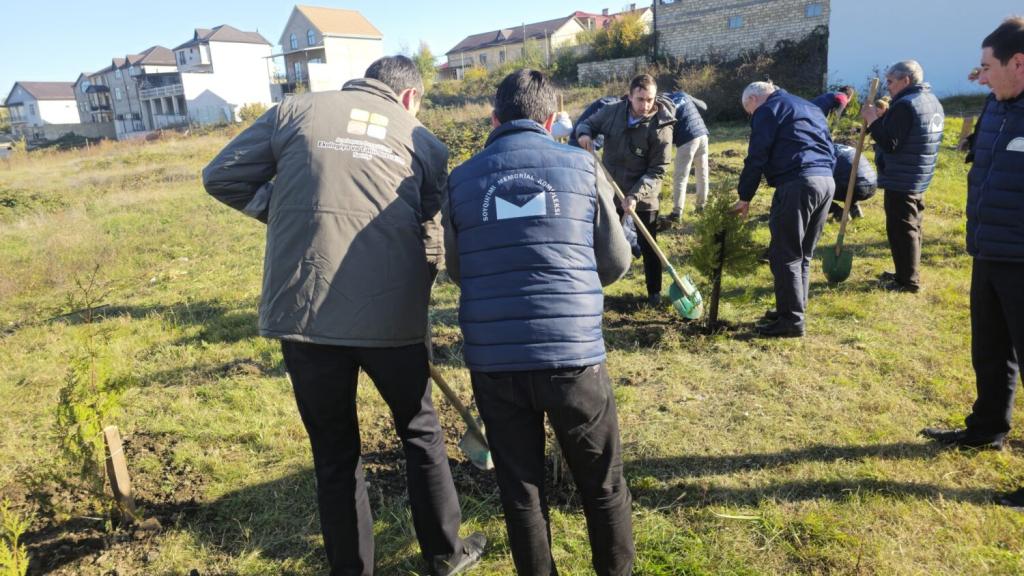
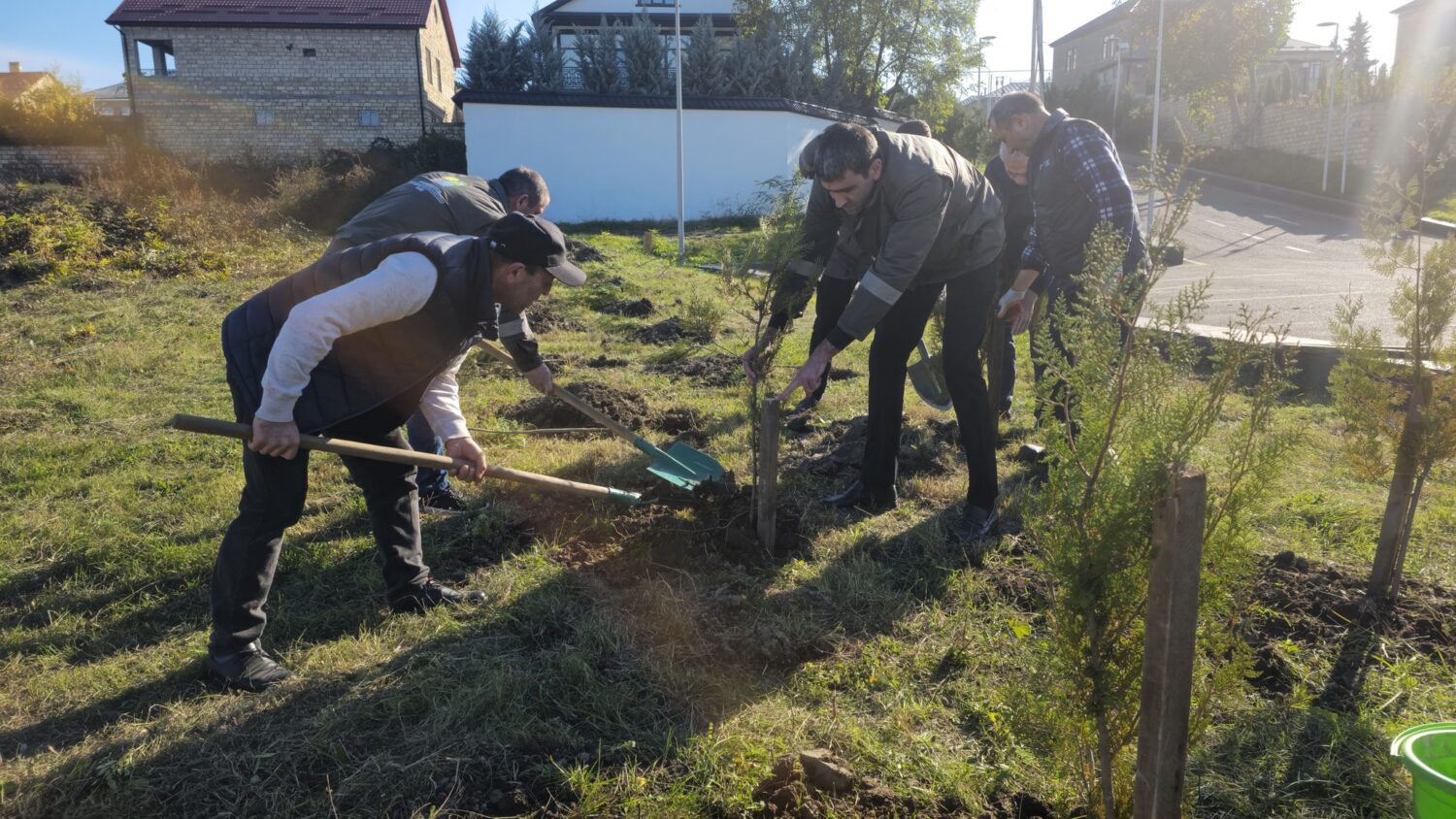
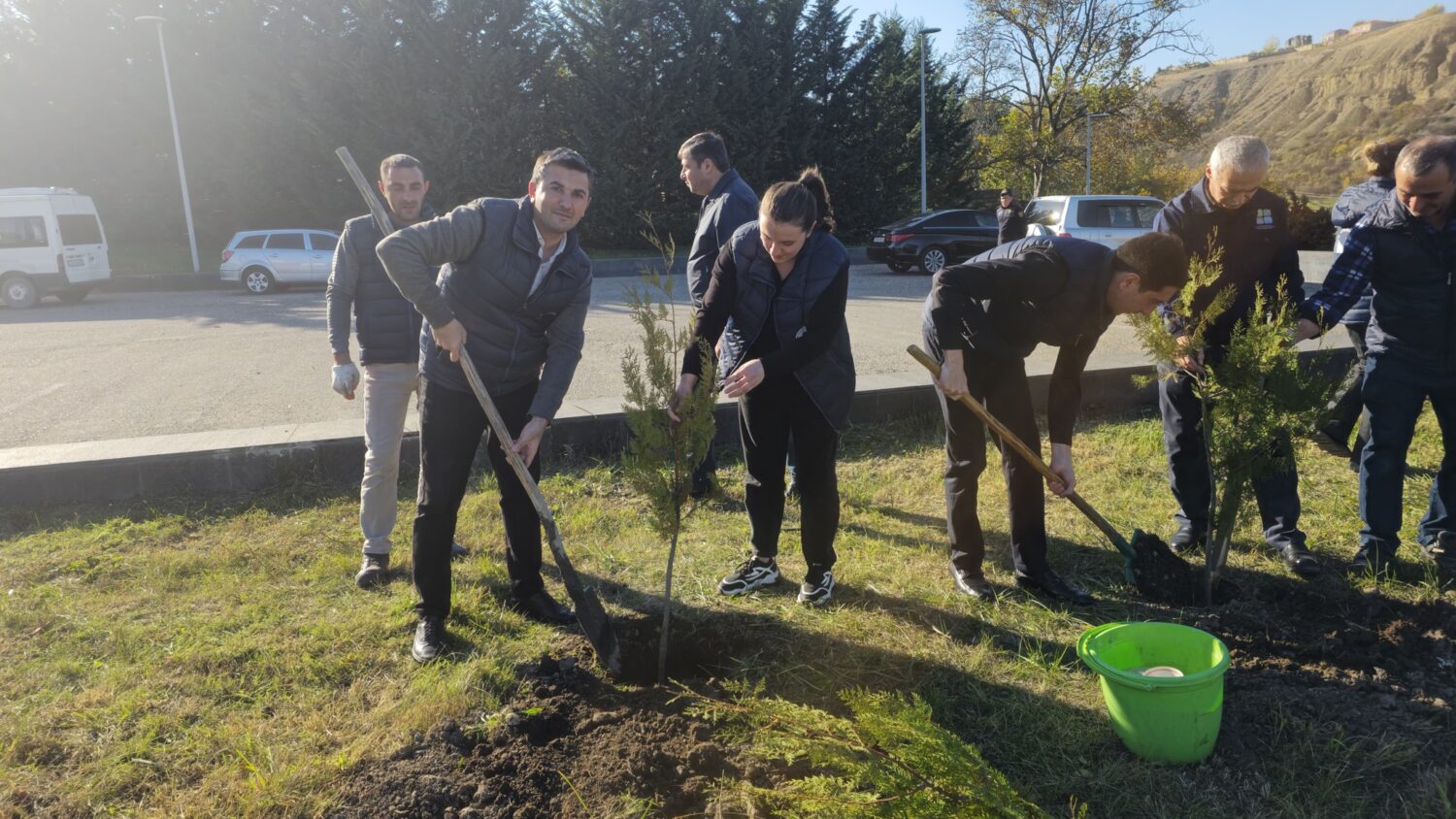
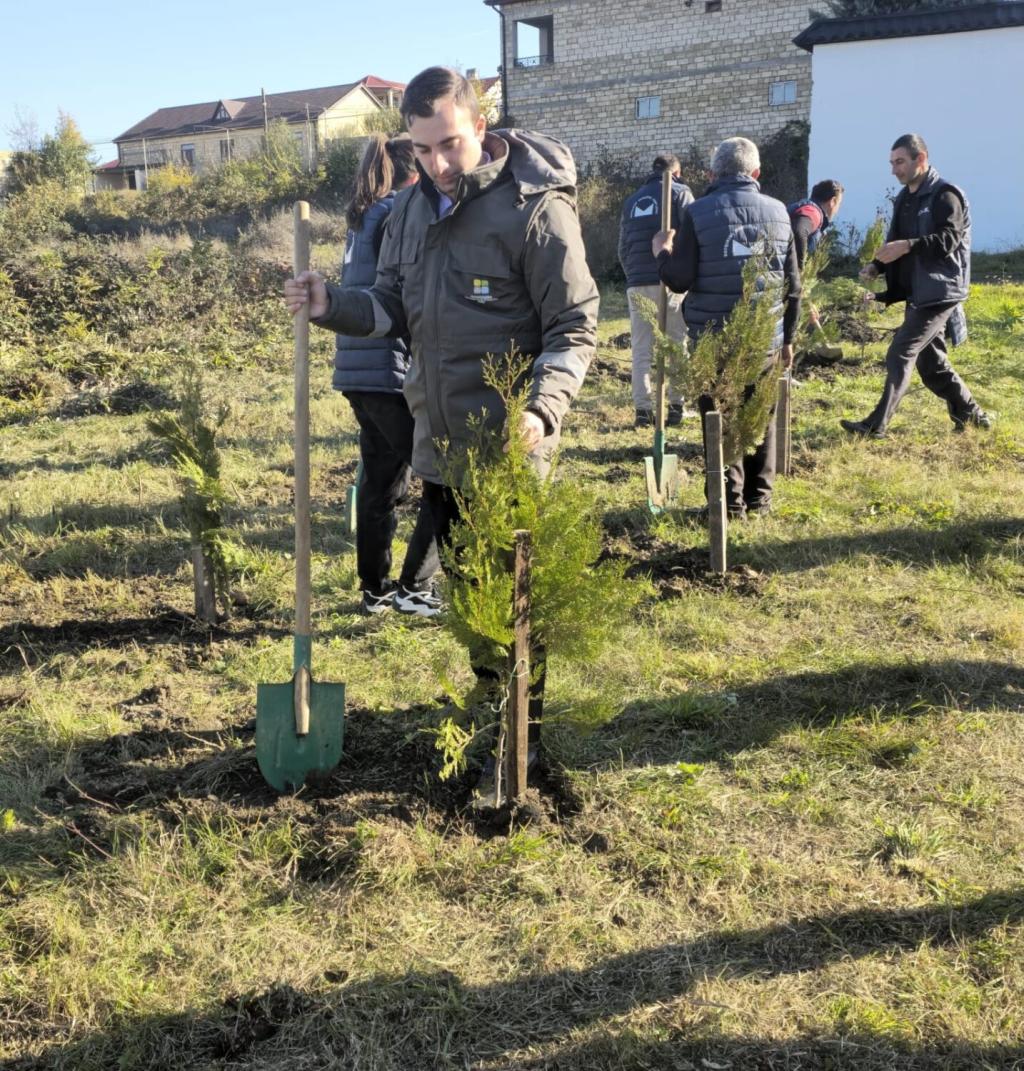
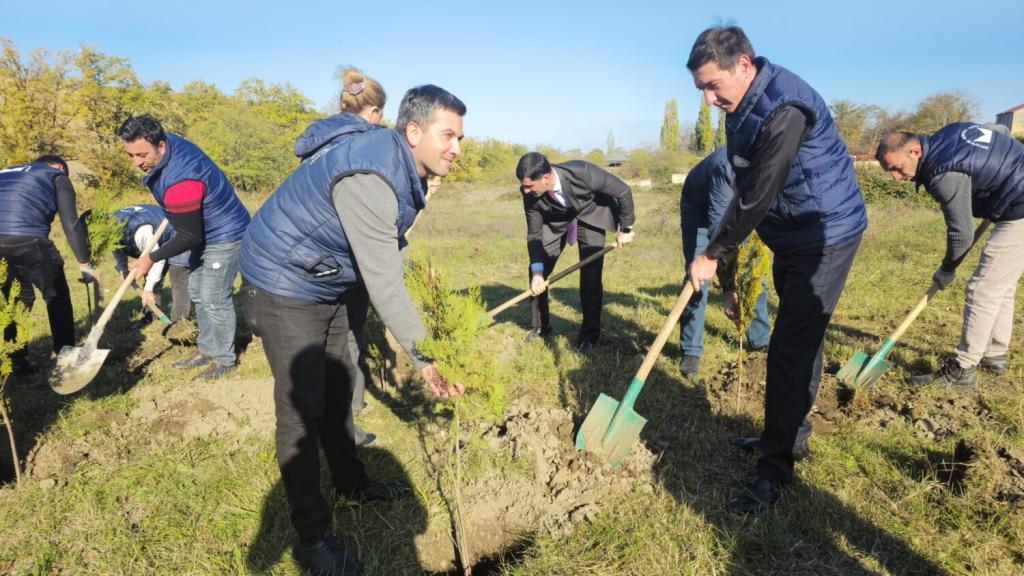
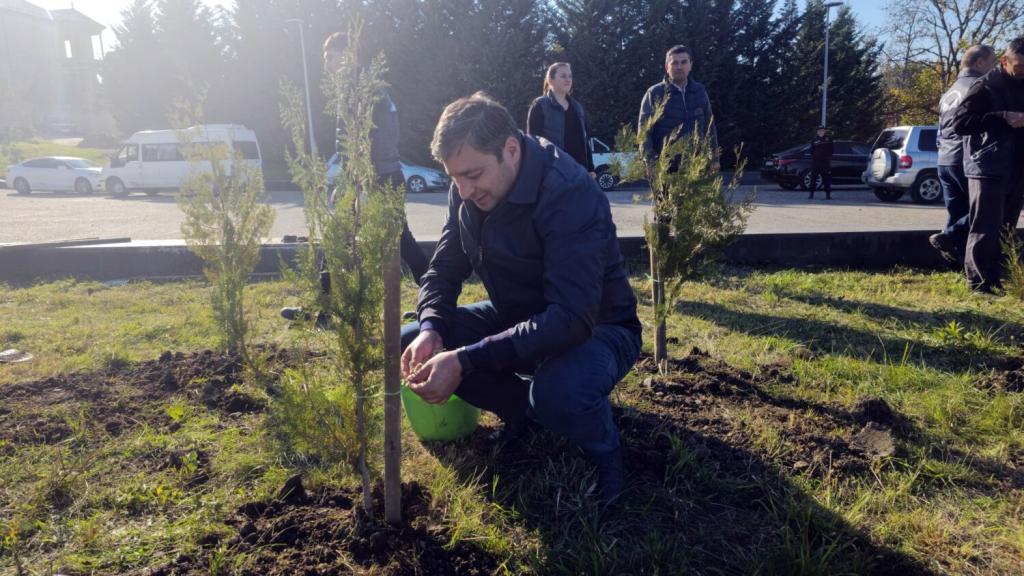
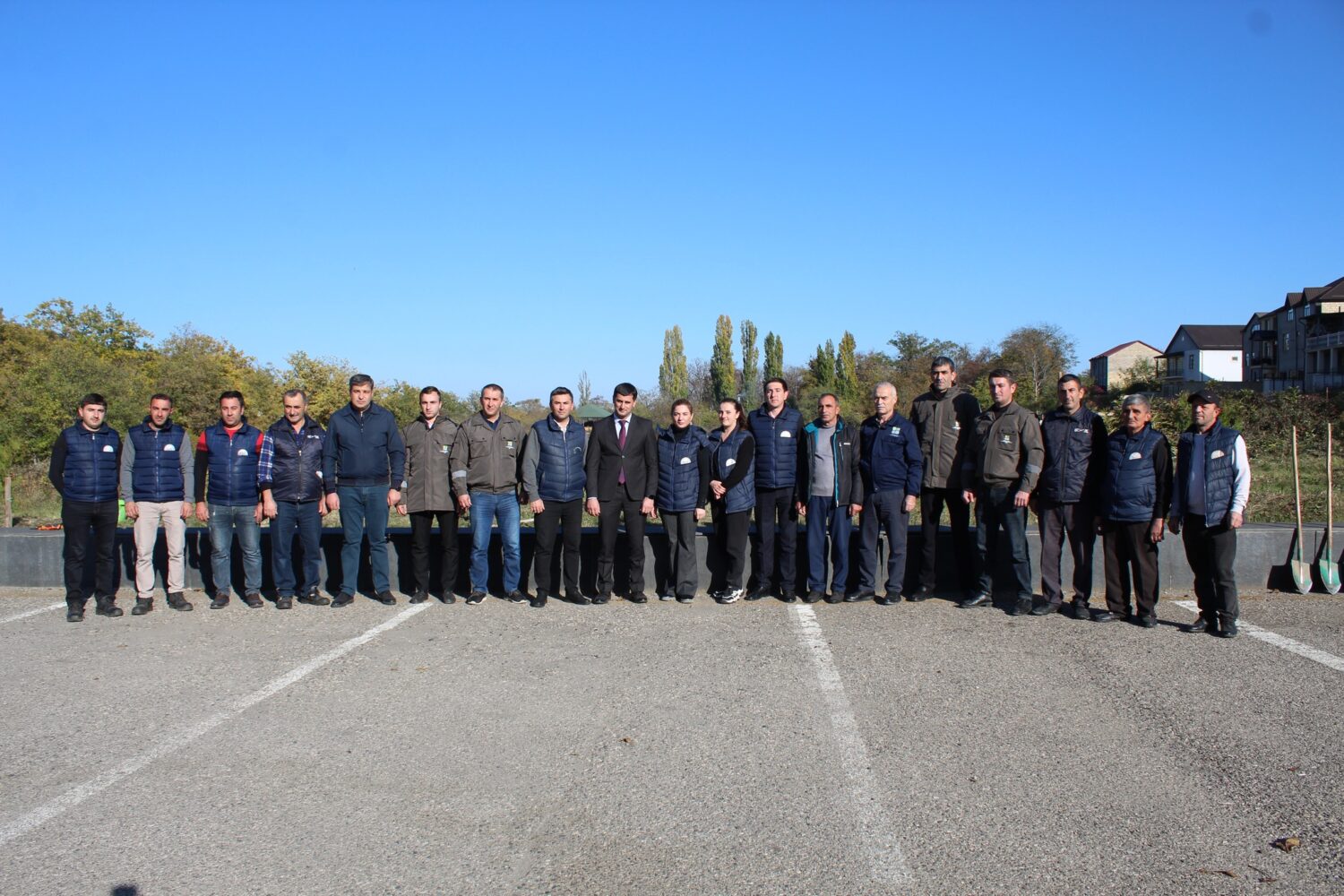
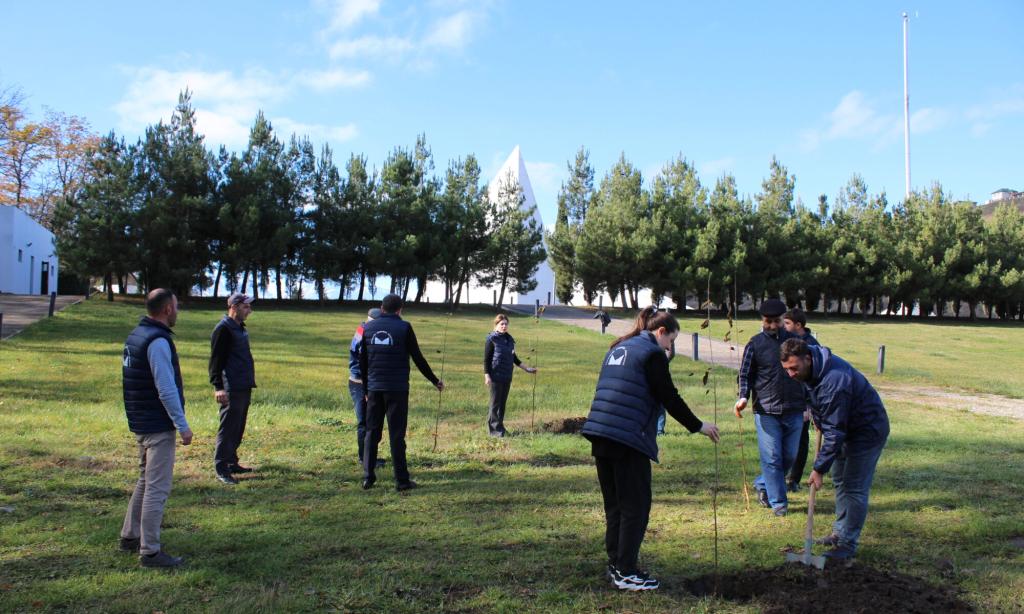
This initiative aligns with the 2024 declaration by the President of the Republic of Azerbaijan, Ilham Aliyev, designating the year as the “Year of Solidarity for a Green World,” as well as the upcoming COP-29 international event hosted in Azerbaijan. The campaign was jointly organized by the Forestry Development Service of the Ministry of Ecology and Natural Resources – Regional Forestry Center No. 5 and the Genocide Memorial Complex in Guba. During the event, over 25 employees from both organizations planted approximately 40 evergreen trees, specifically of the Thuja variety.


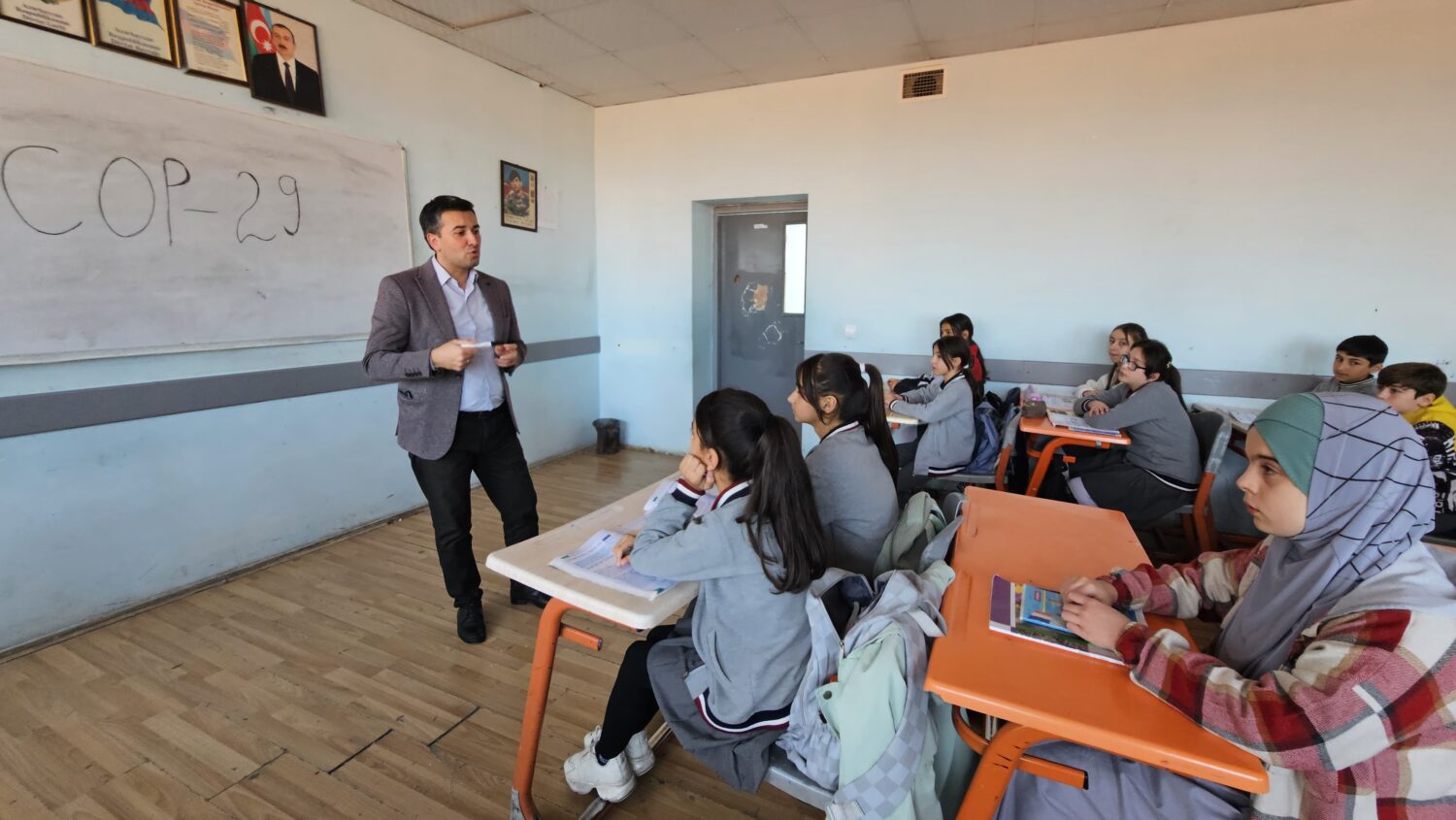
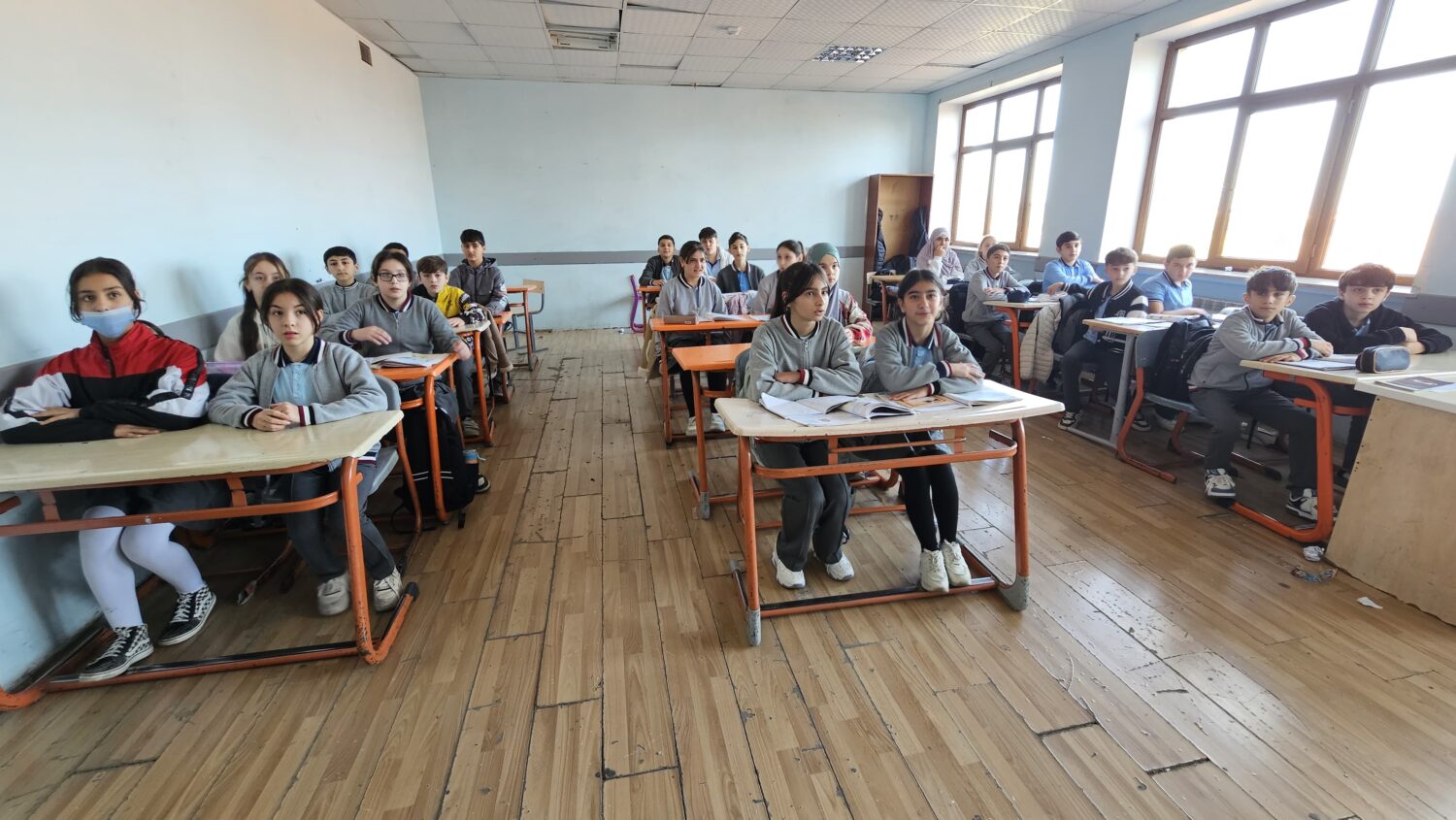
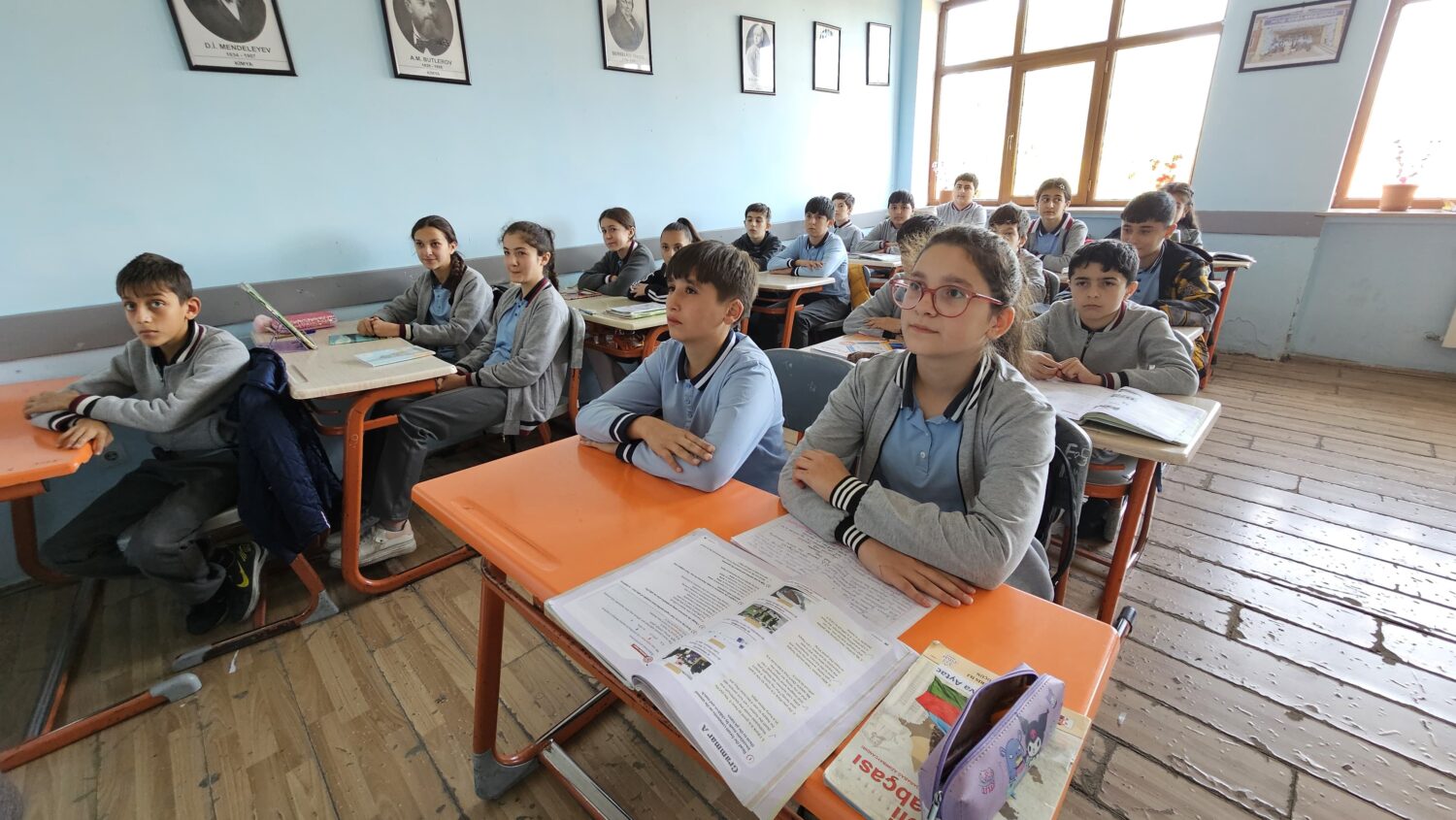
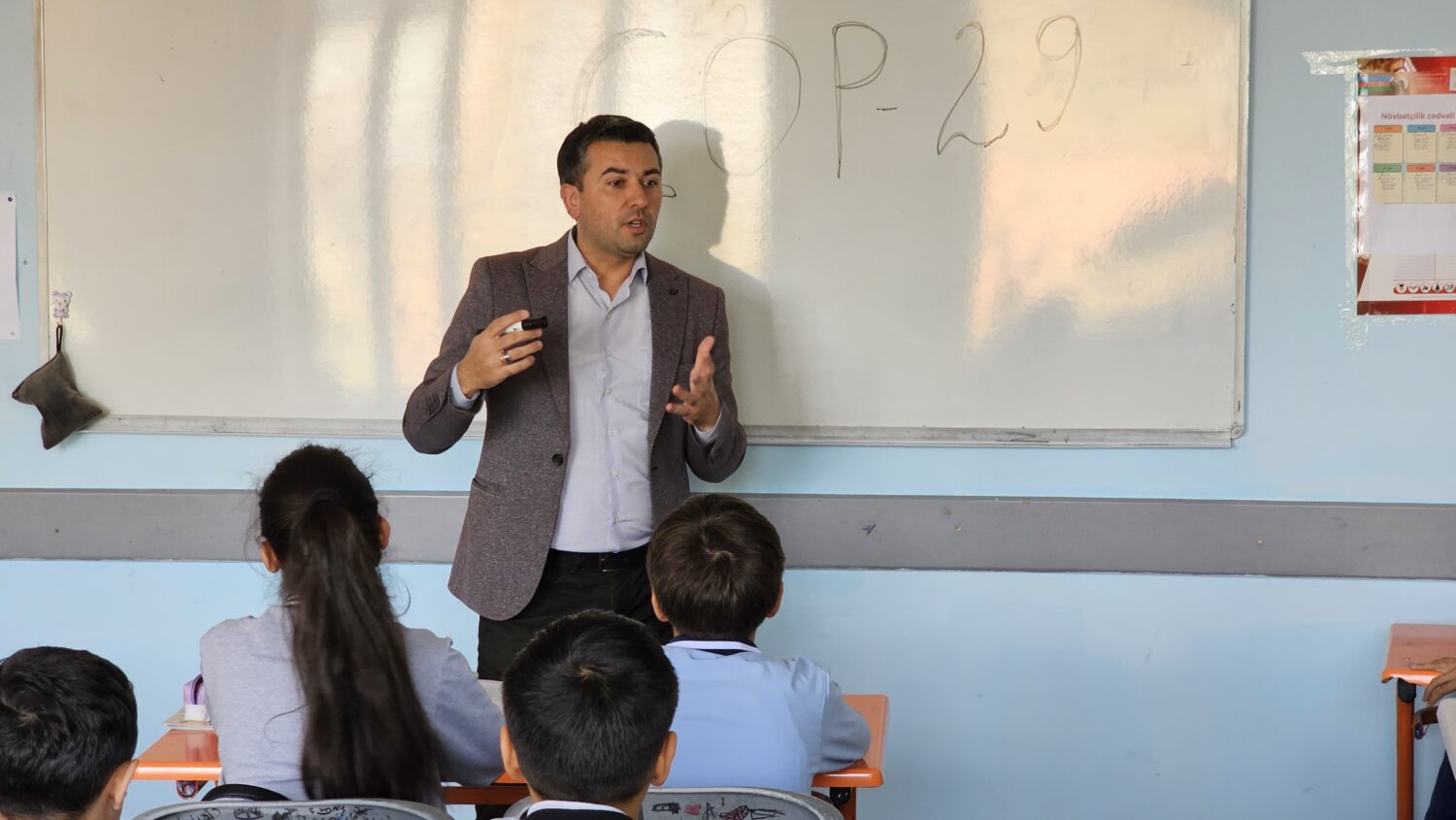
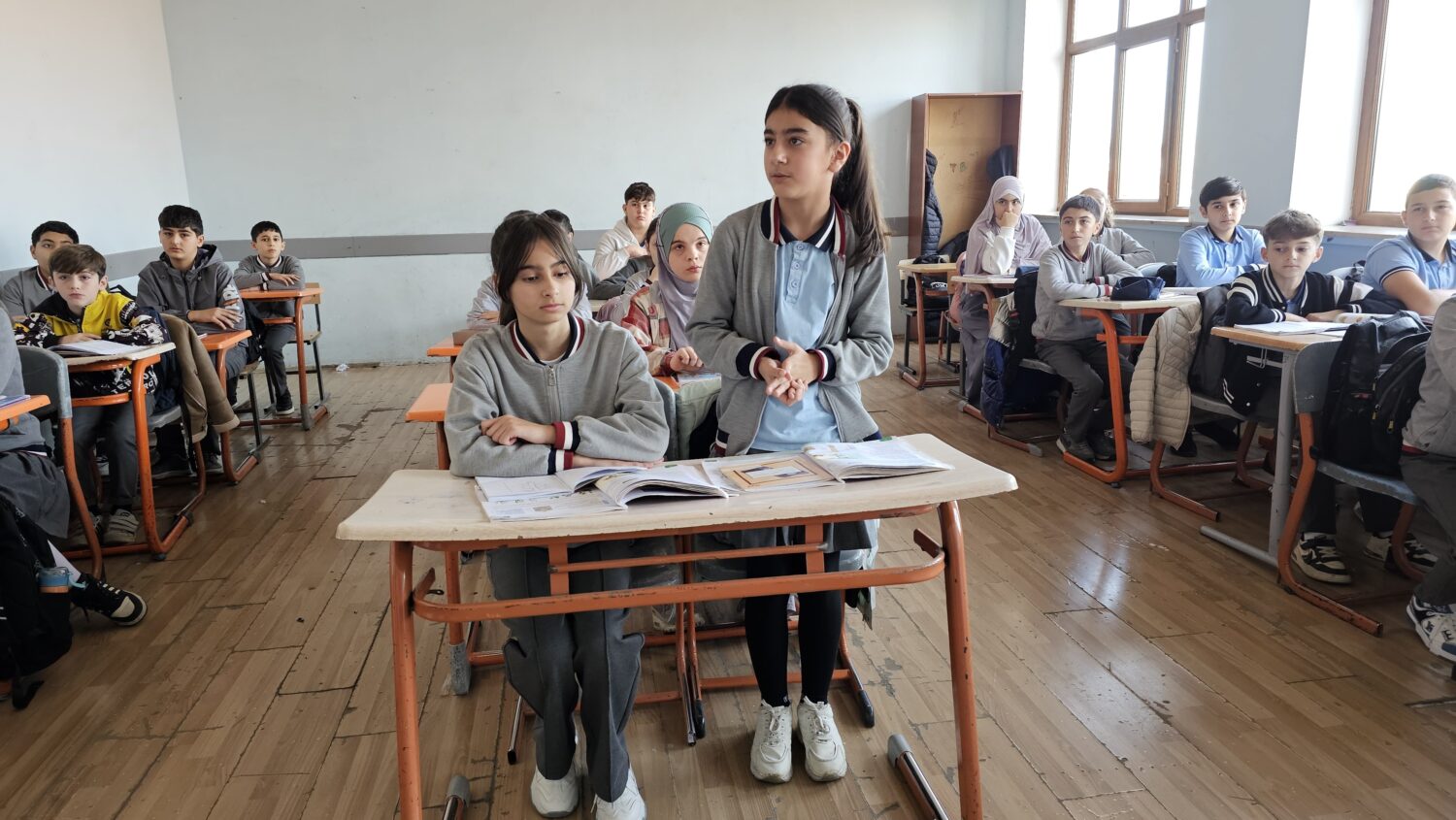
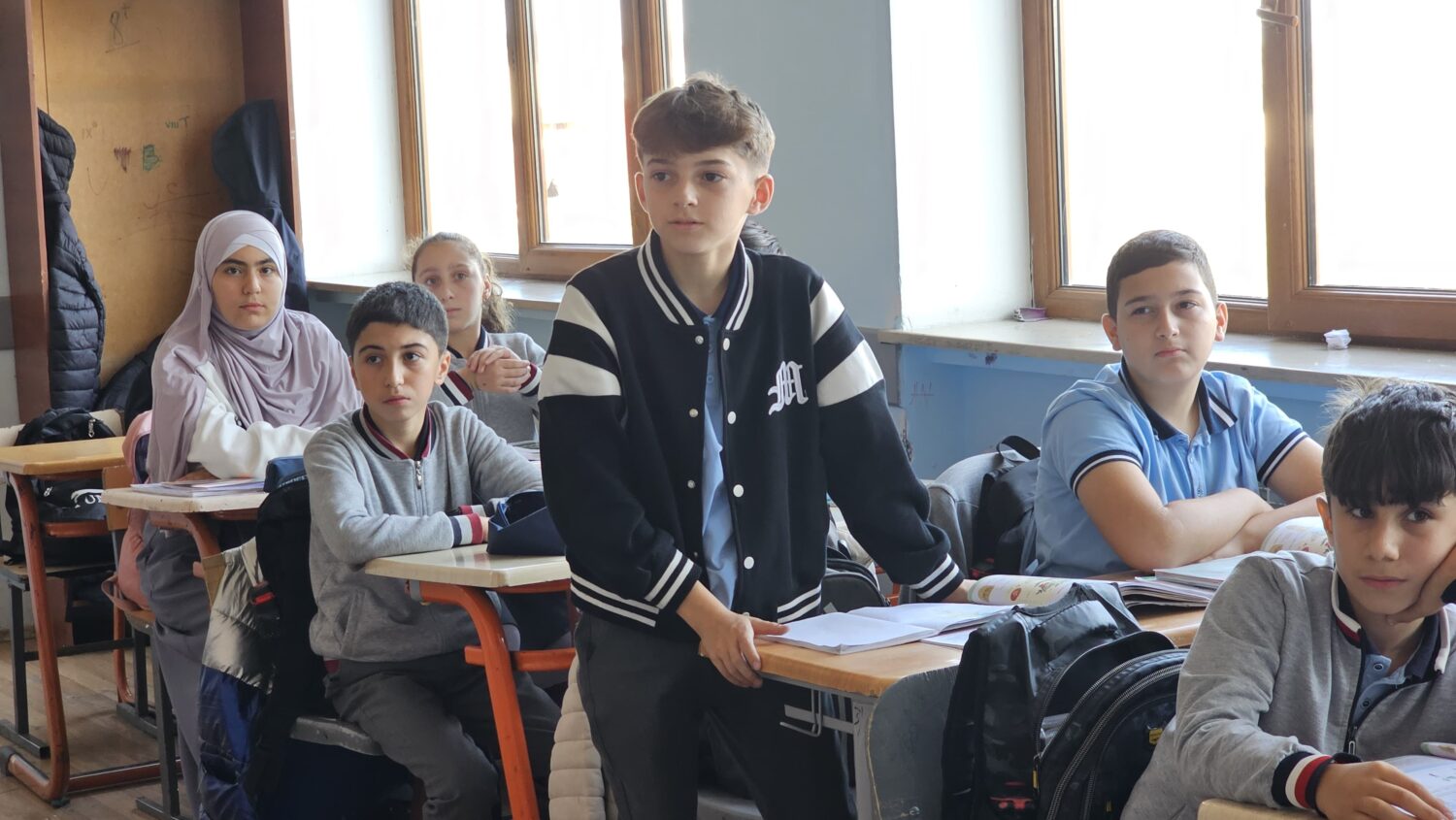
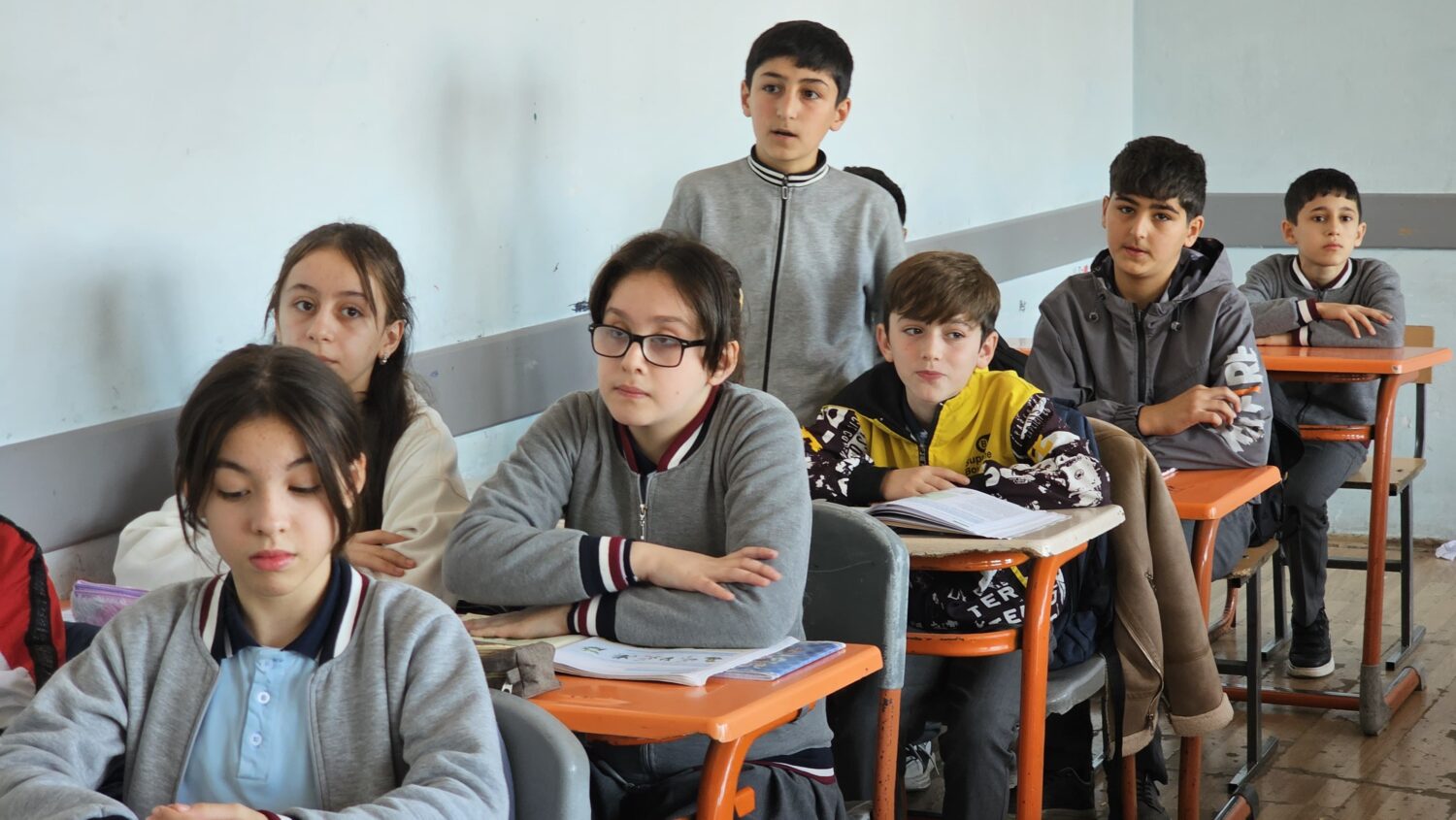
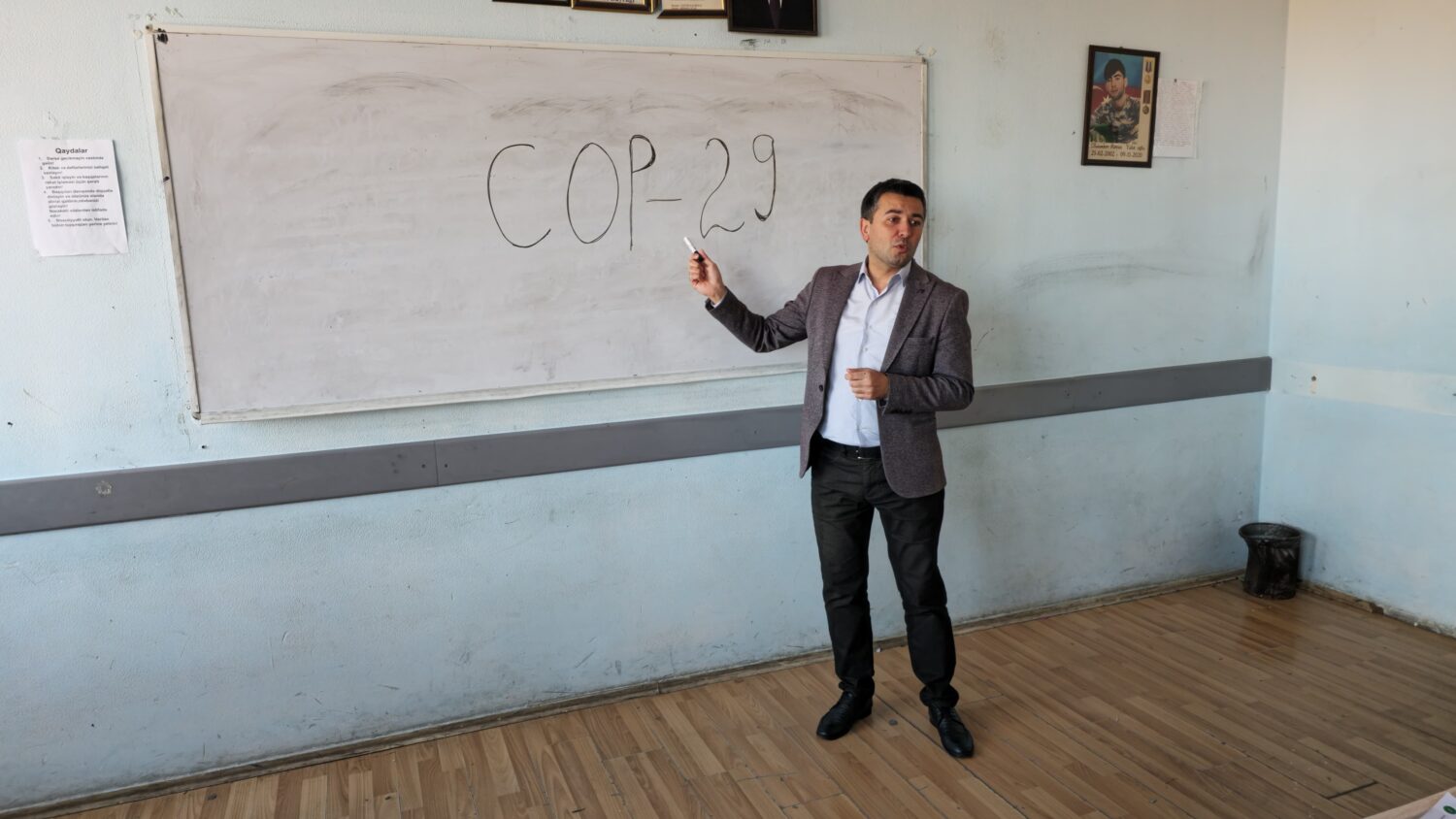
The discussion also explored the significance of the designation of 2024 as the “Year of Solidarity for a Green World,” as decreed by the President of Azerbaijan, Ilham Aliyev. Speakers provided information on the illegal activities, exploitation of natural resources, and environmental terrorism that occurred in the areas under Armenian occupation for nearly 30 years. The event, organized by the Complex, was attended by approximately 100 teachers and students.
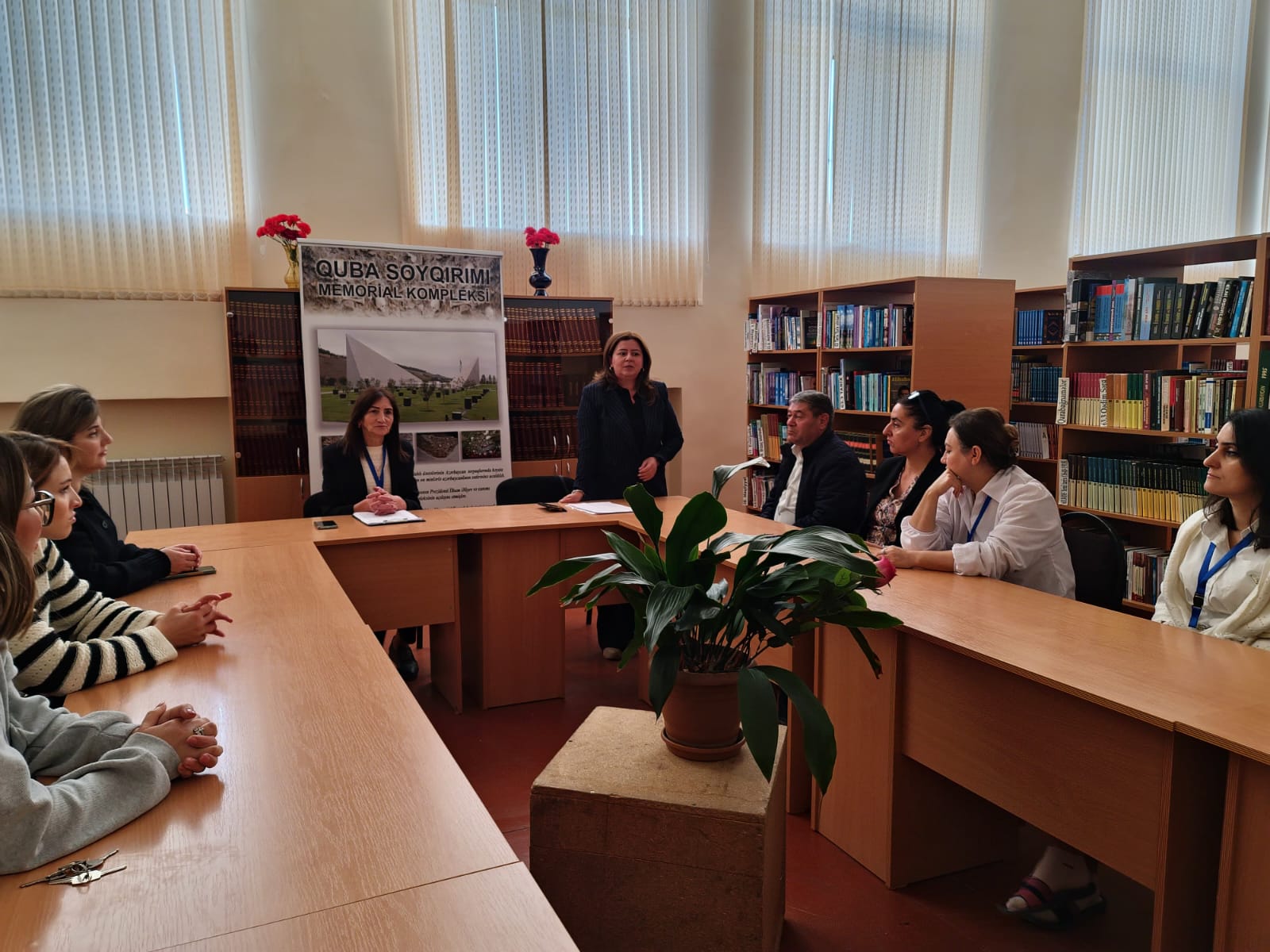
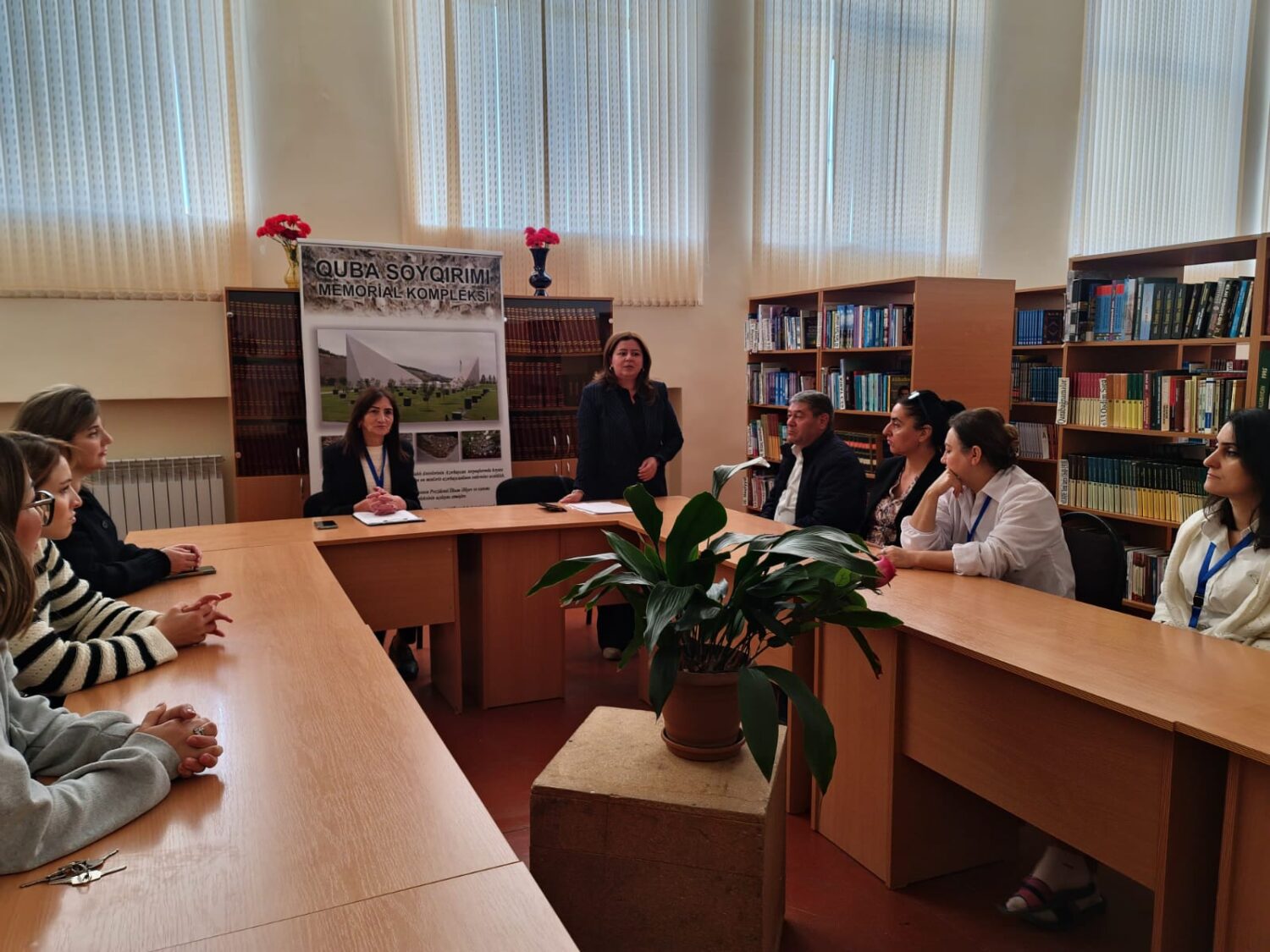
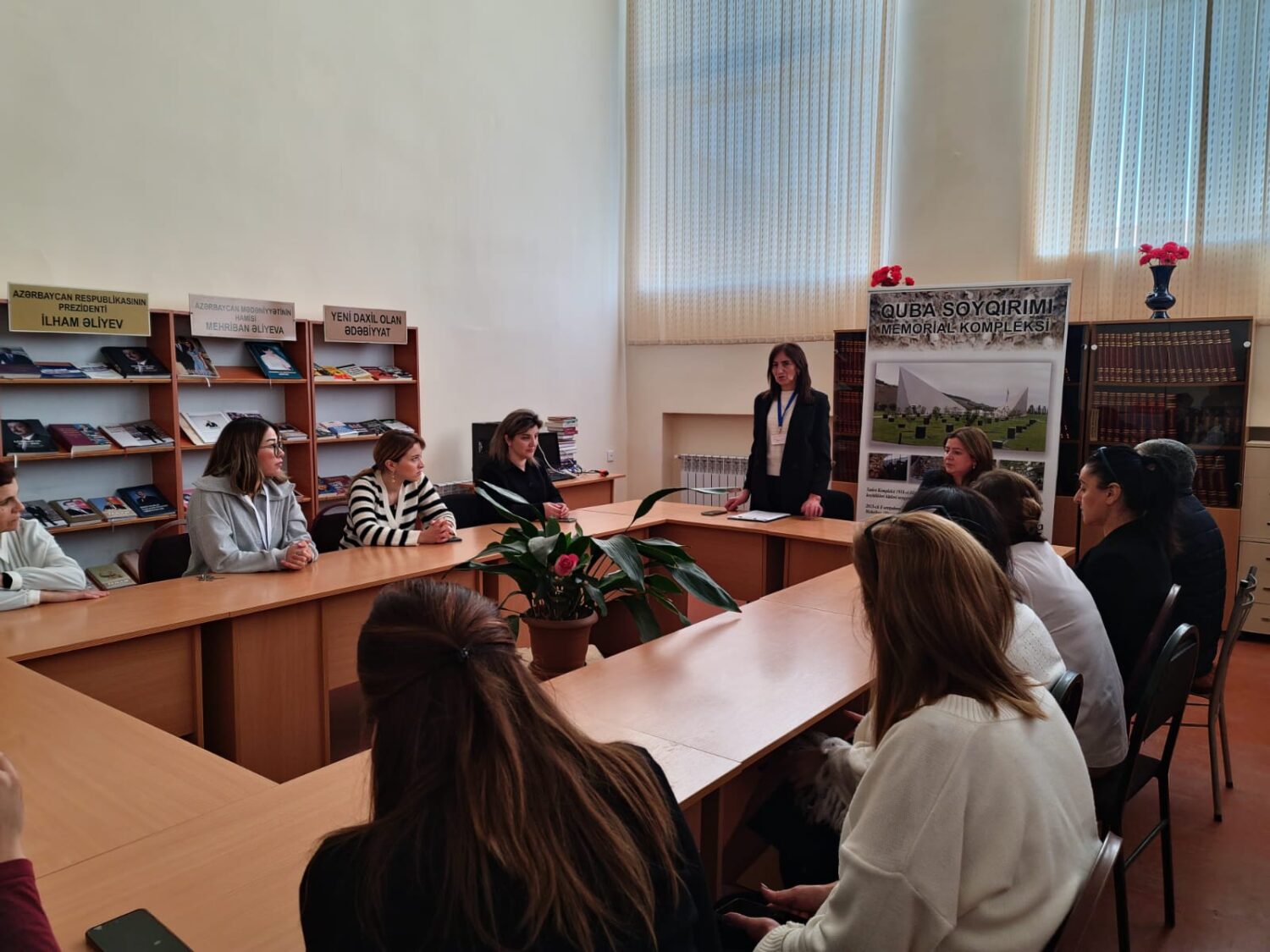
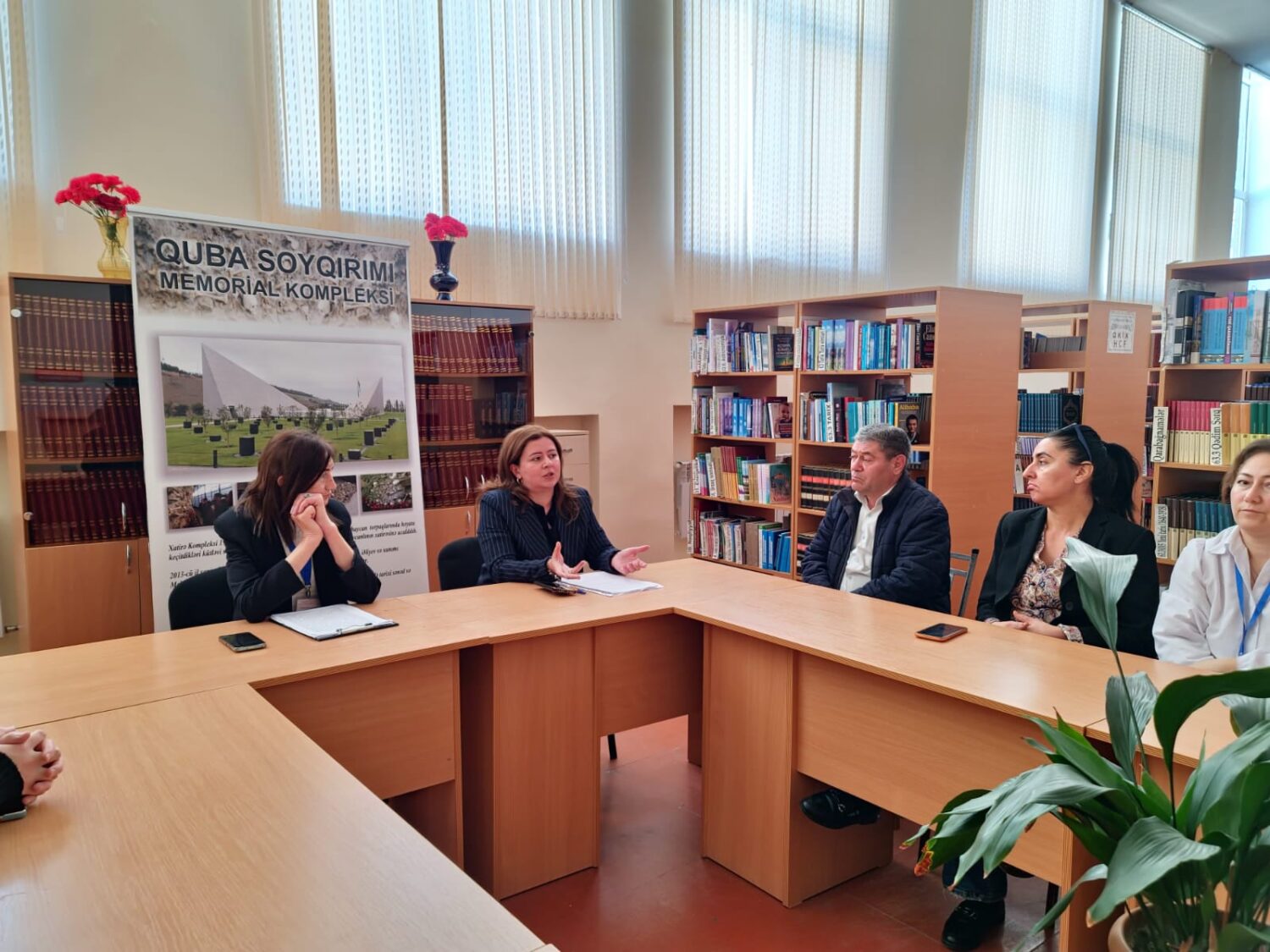
The event focused on discussing the negative impact of corruption on society, ways to combat this issue, and the importance of legal reforms. Mehriban Mammadova, Head of the Reader Services Department at the central library of Guba CLS, spoke about how corruption undermines public administration and social justice, emphasizing that combating it is a responsibility for every individual. Following her, Mehriban Aliyeva, Deputy Director of the Complex, highlighted that promoting transparency and strengthening cooperation with law enforcement agencies are fundamental in the fight against corruption. Other speakers addressed the ways in which corruption hinders economic development, fosters social injustice, and leads to inefficient use of state resources. They also underscored the crucial role of civil society and youth participation in tackling this issue.


The campaign aimed to contribute to environmental protection and promote ecological awareness.
During the environmental cleanup, waste was collected and removed from the area, and landscaping efforts were undertaken to enhance its appearance.


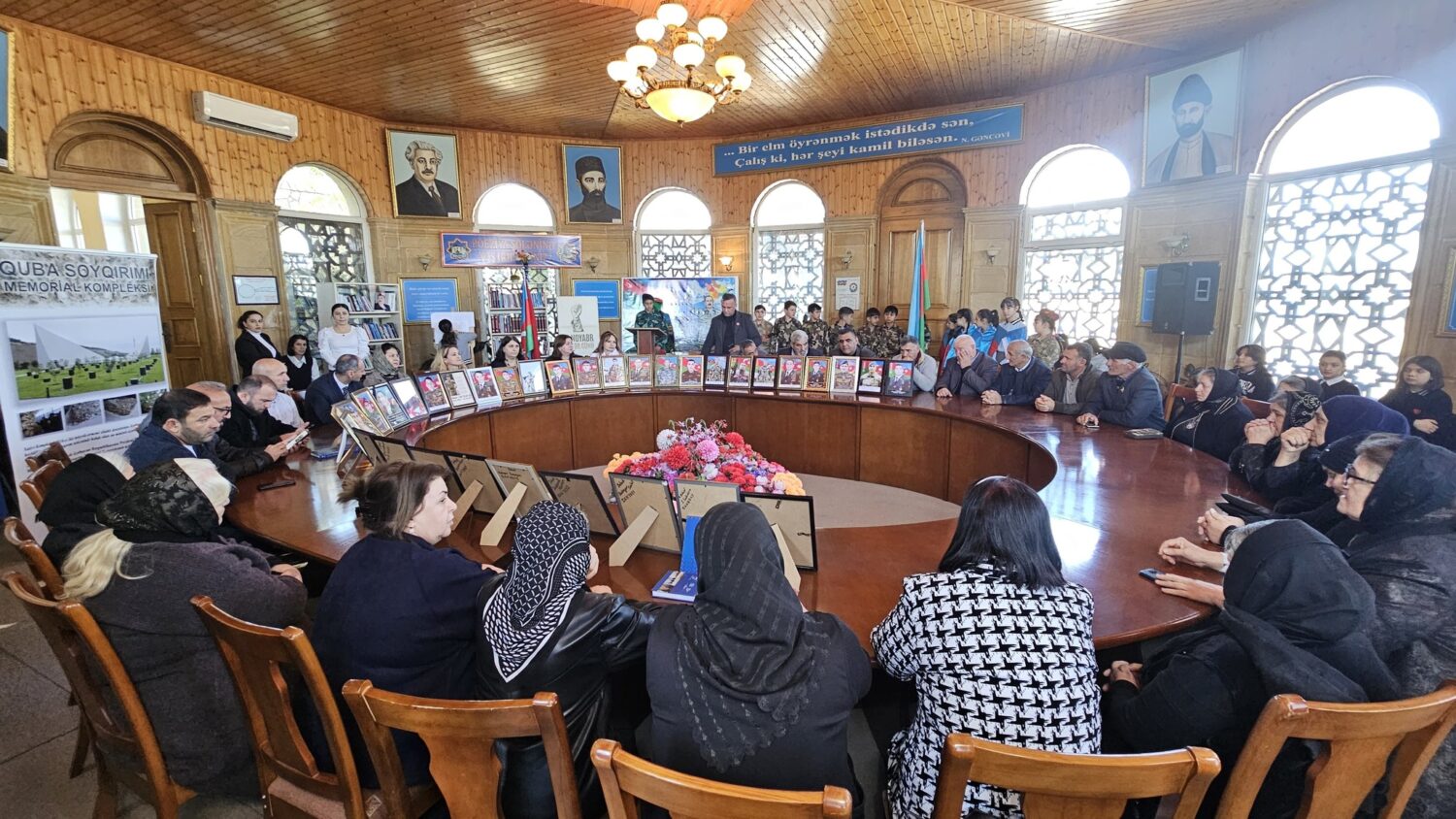

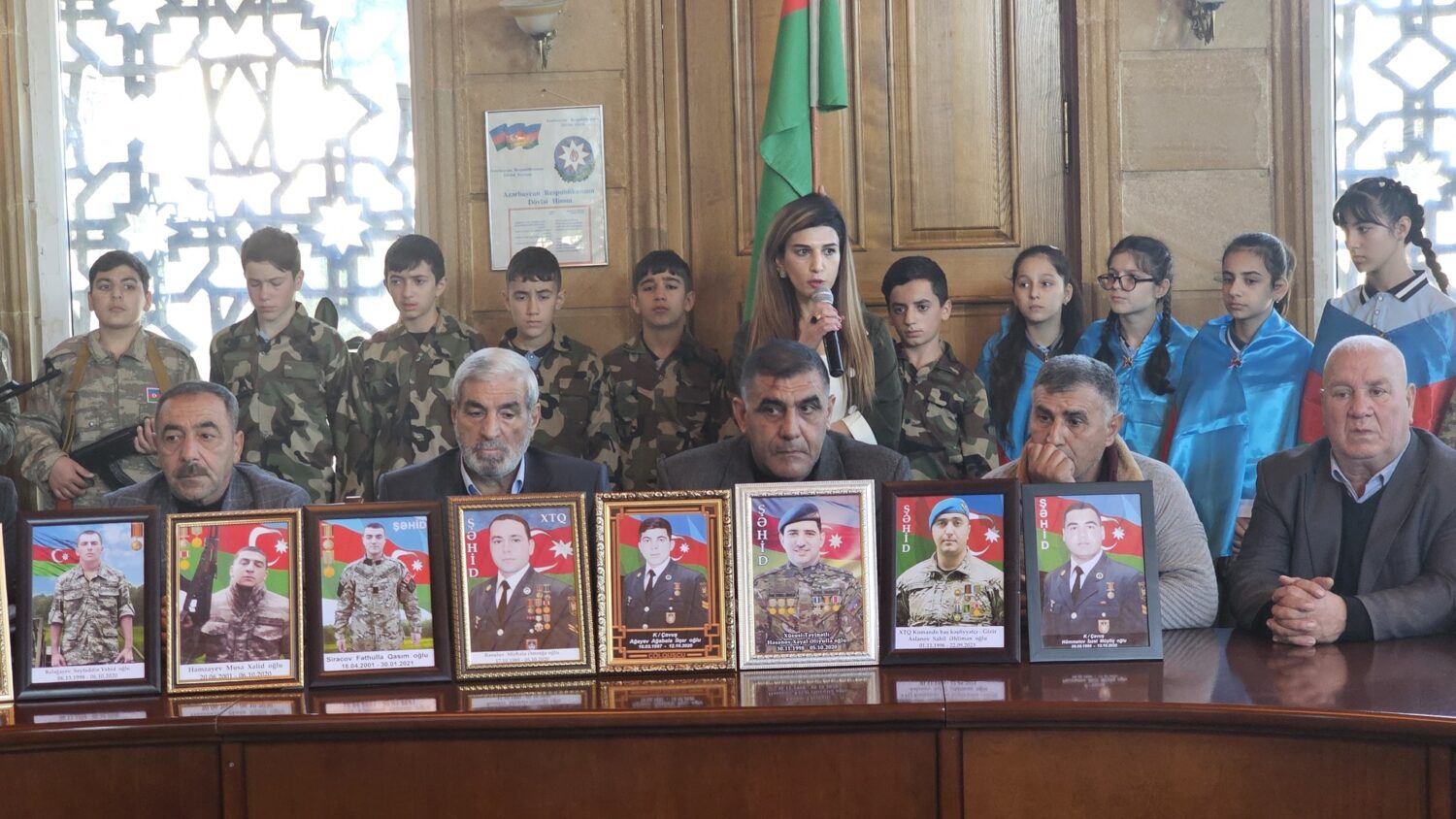
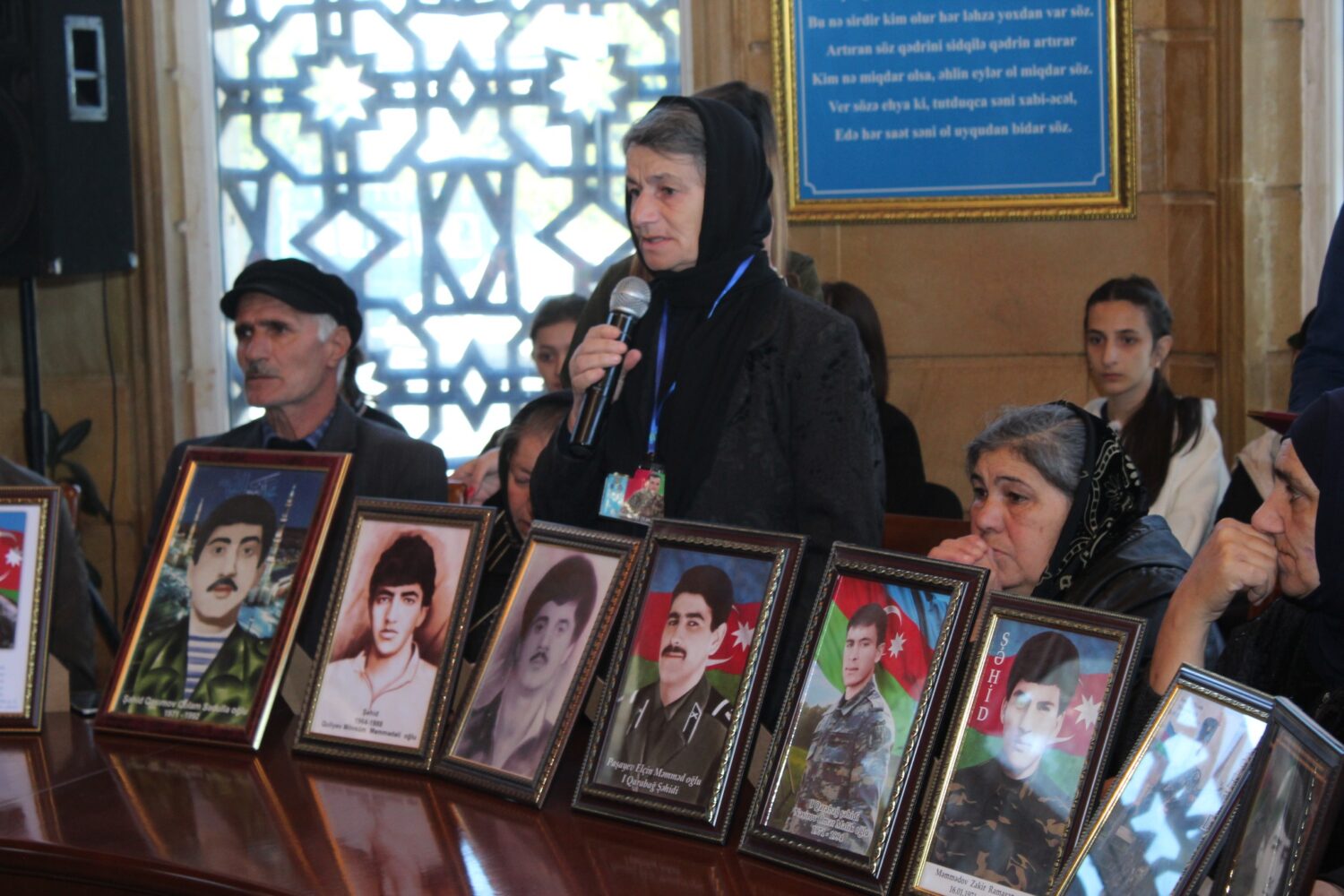


The primary goal of the event was to highlight the significance of the historic Victory achieved during the Patriotic War and to honor the heroes who fought for Azerbaijan’s independence. In her opening remarks, Basti Mammadova, Director of the Shabran Museum of History and Local Lore, emphasized that the victory in the Patriotic War marked a pivotal turning point in Azerbaijan’s modern history. She stressed that Victory Day would become an enduring symbol of the national pride and resilience of the Azerbaijani people. Mammadova also noted that this victory serves as an example of heroism and patriotism for future generations.
Mehriban Aliyeva, Deputy Director of the “Genocide Memorial Complex” in Guba, highlighted in her speech that the Patriotic War was a just cause and restored historical justice for the country. She discussed the political and strategic advantages Azerbaijan gained on the international stage as a result of the 44-day war. Mehriban Aliyeva further emphasized that Victory Day is not only a day of remembrance for the martyrs but also a testament to Azerbaijan’s powerful and capable military.
Tavakkul Aliyev, Director of the Heydar Aliyev Center, spoke about how Victory Day has strengthened Azerbaijan’s position both domestically and internationally, and how the liberation of Karabakh has transformed Azerbaijan into a key force for peace and stability in the region. He highlighted the military-political achievements of the victory and credited Azerbaijan’s strong leadership for securing this outcome.
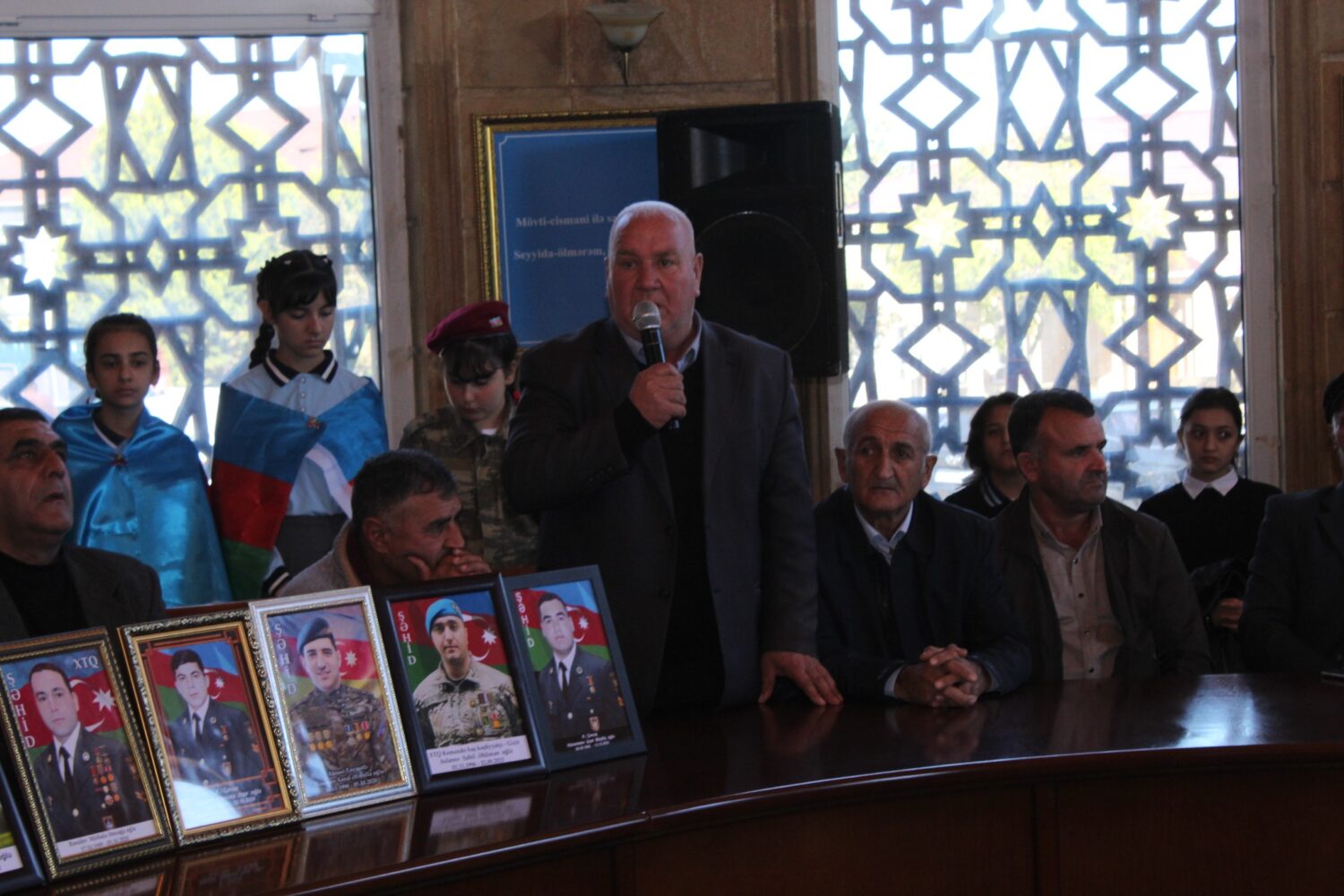
Families of martyrs also spoke at the event, recounting the heroism of their loved ones who sacrificed their lives for the homeland and stating that their devotion will remain unforgettable for the nation.
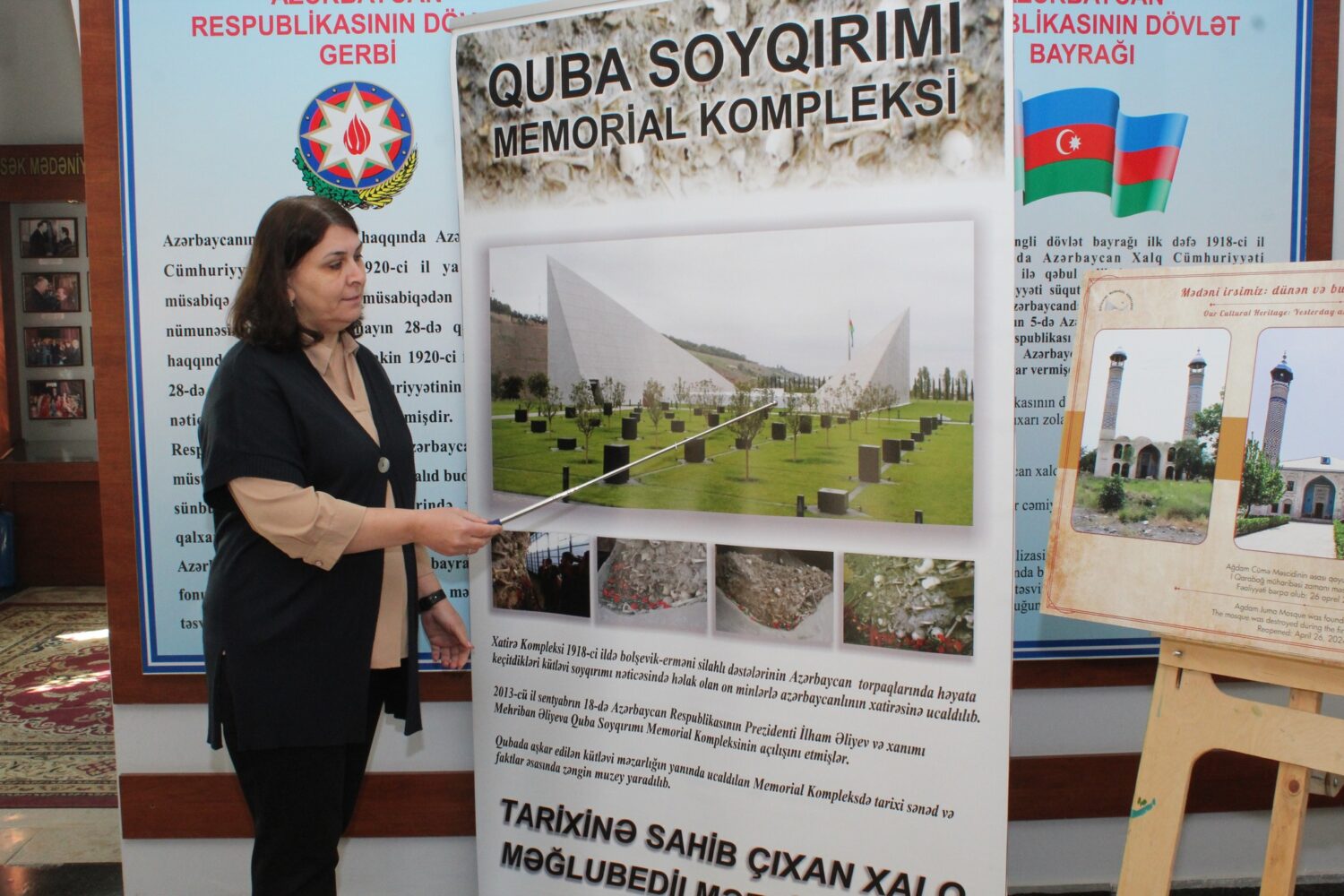
At the conclusion of the event, an exhibition was presented as part of the “Our Cultural Heritage: Yesterday and Today” project, featuring monuments in Karabakh that were destroyed during the occupation and have since been restored after the Patriotic War. The exhibition underscored the significance of preserving Azerbaijan’s cultural heritage, the restoration of Karabakh’s historical legacy, and ongoing reconstruction efforts.

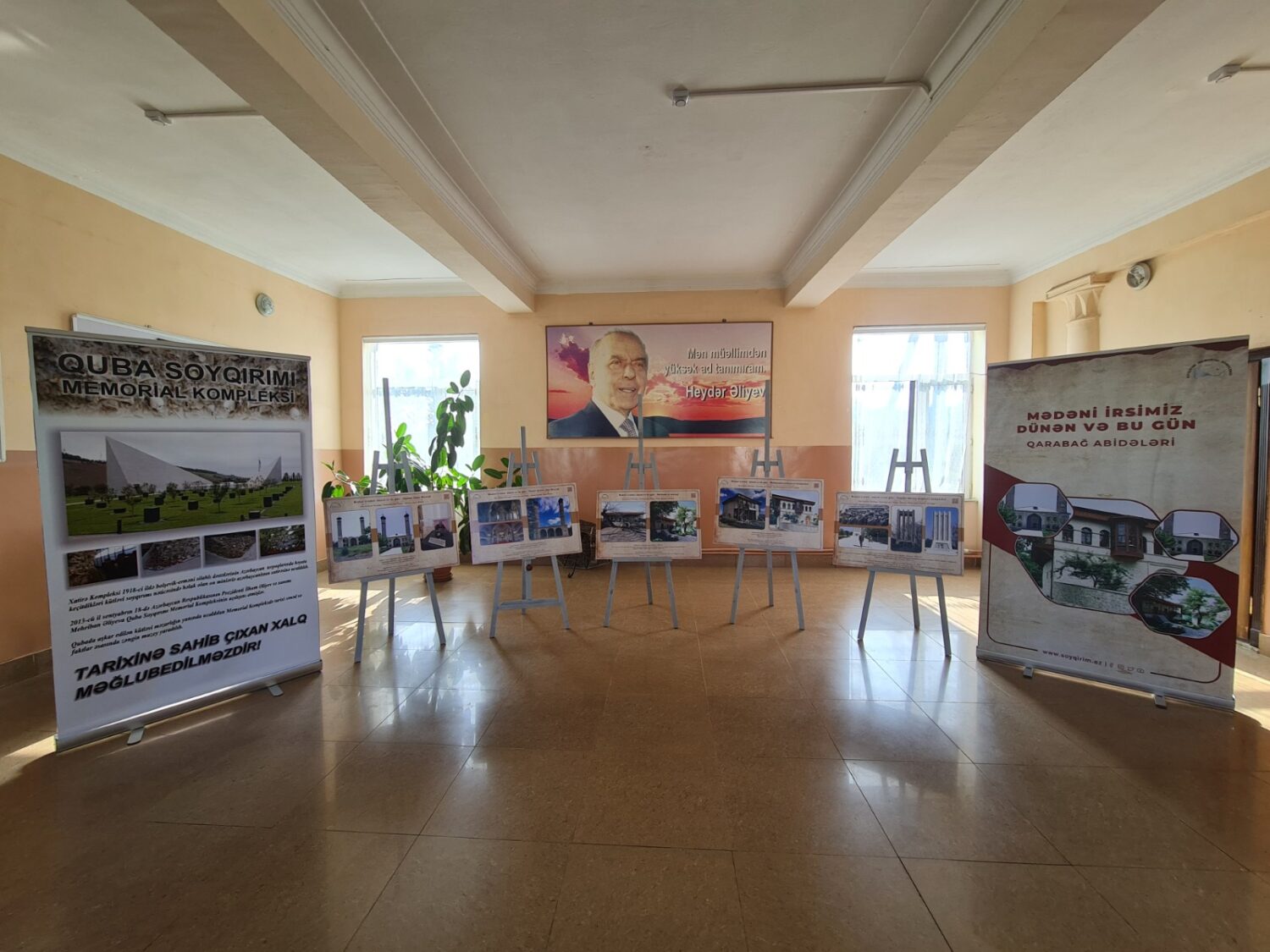
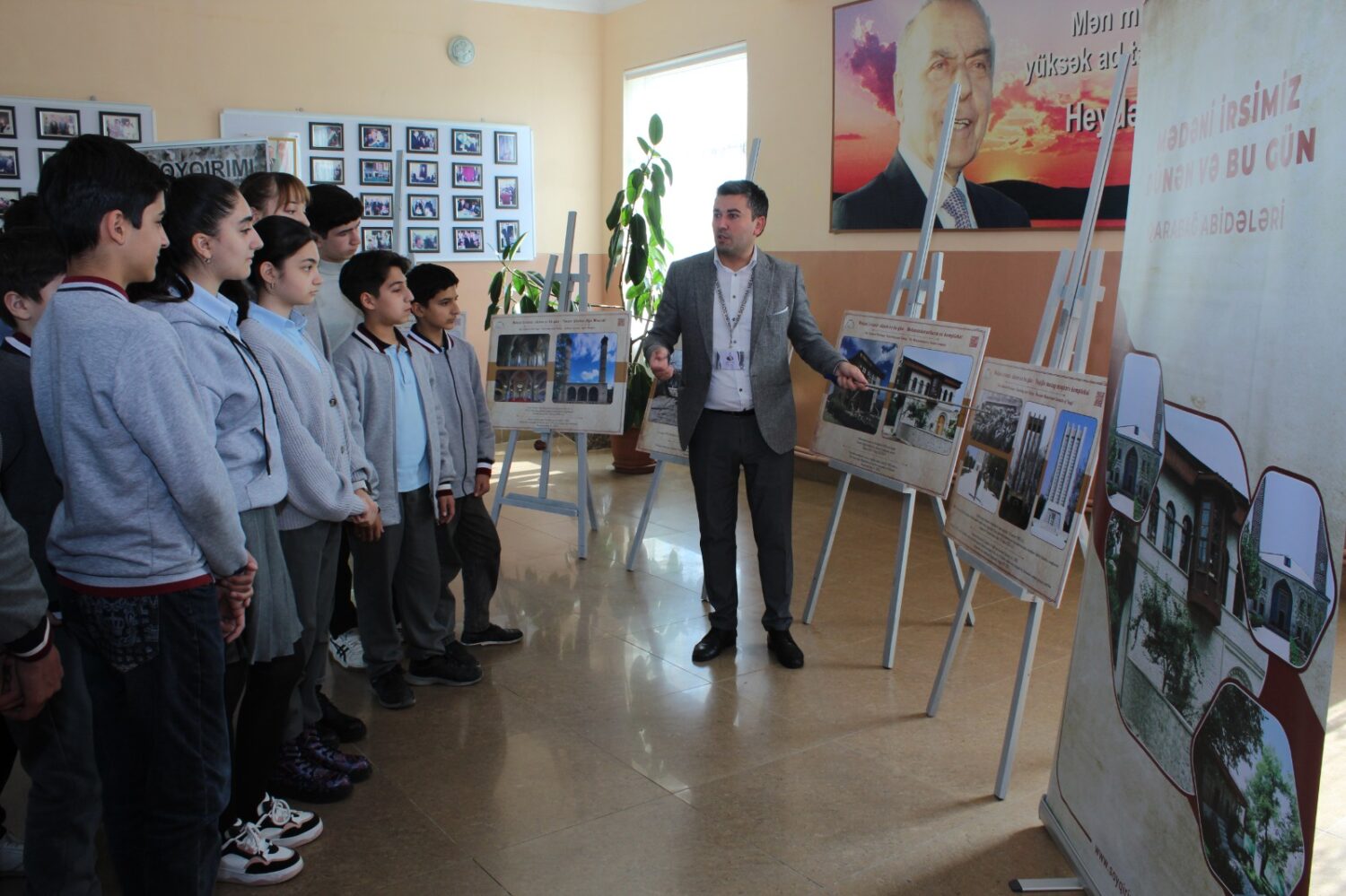

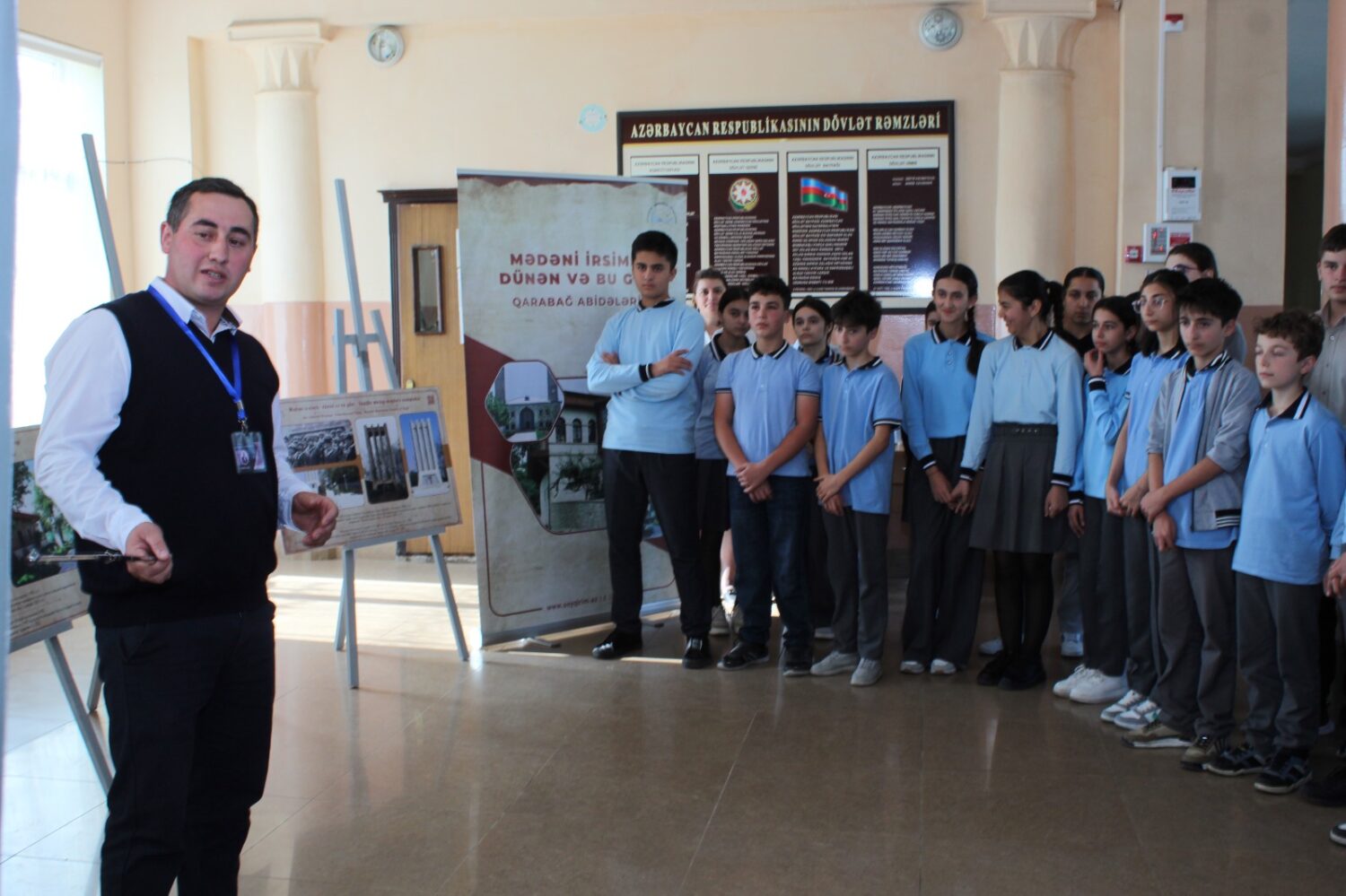

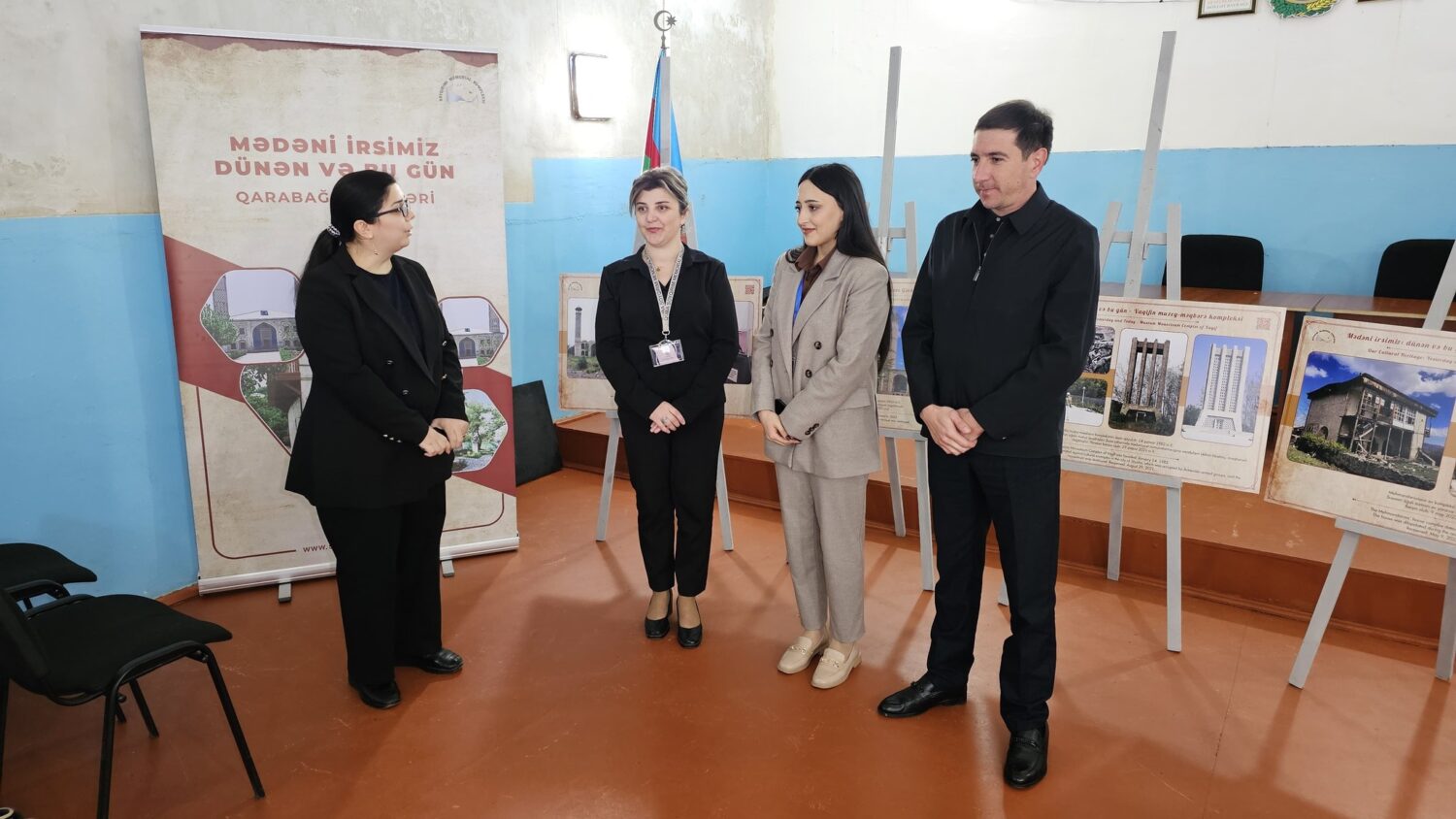
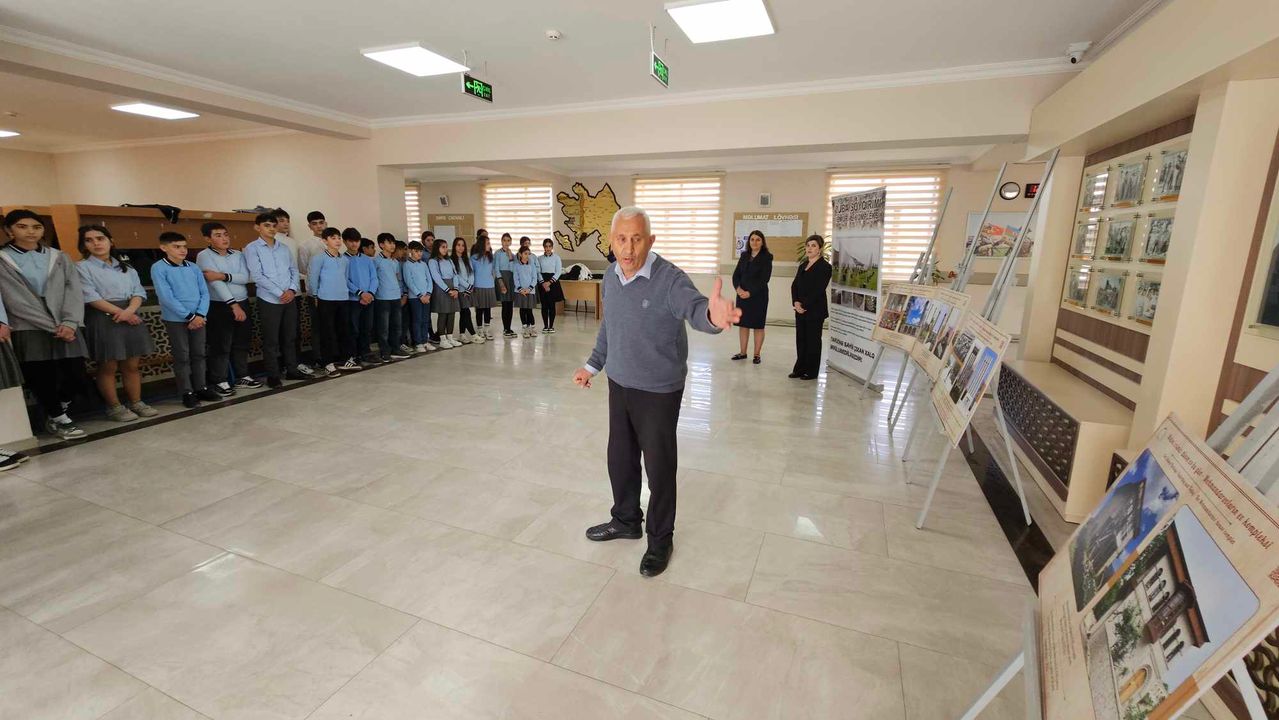
Guides from the Complex provided detailed information (15-20 minutes) on these monuments. Held in the lead-up to Victory Day on November 8, the exhibition aims to promote the protection of cultural heritage, draw young people’s attention to the post-war reconstruction process in Karabakh, foster a sense of national pride among the younger generation, and familiarize them with historical truths. It is worth noting that the exhibition will continue in the schools until Victory Day.
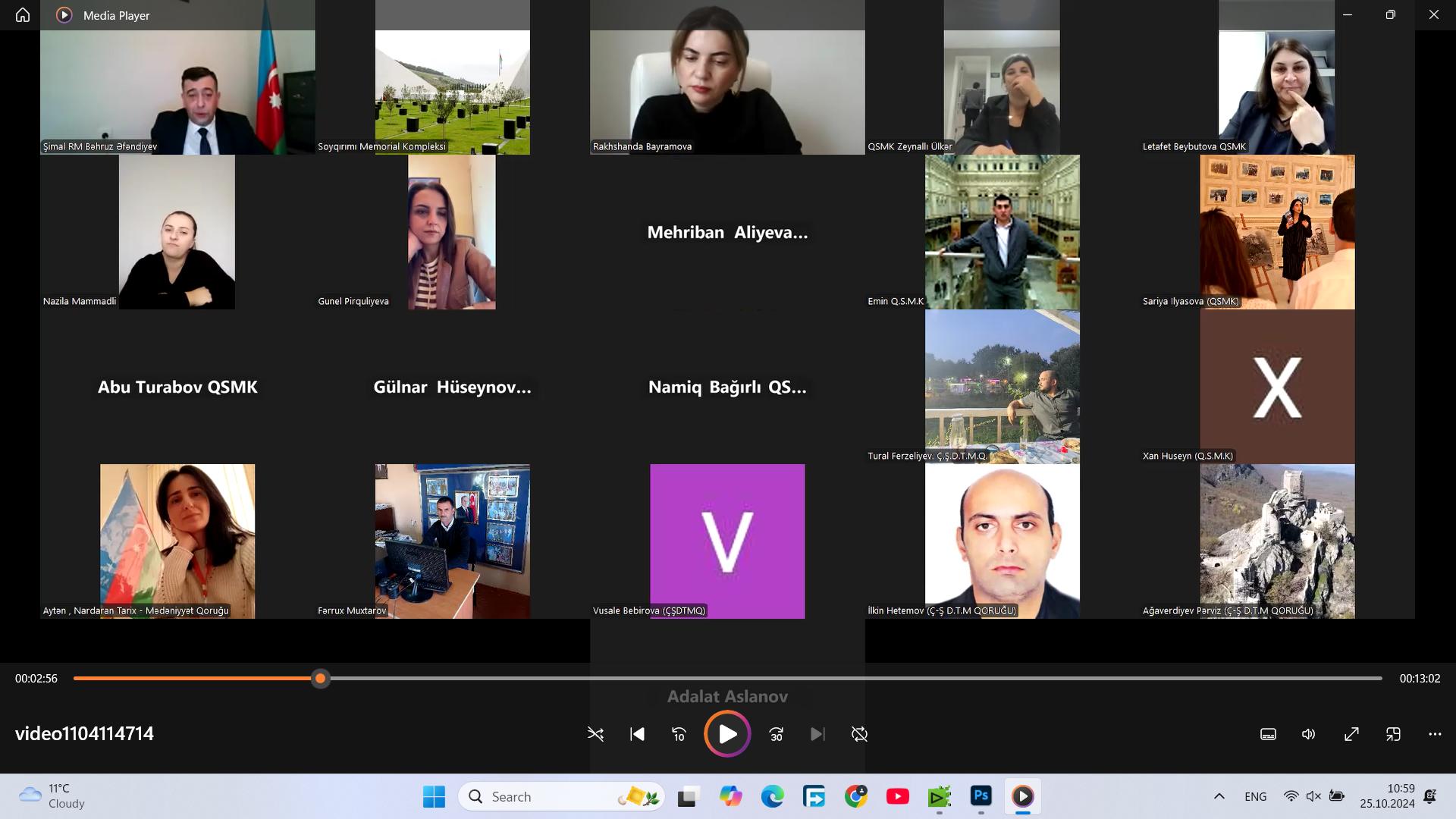


Aimed at raising awareness, the webinar began with opening remarks from Bahruz Afandiyev, Head of the Ombudsman’s Northern Regional Center, who greeted the participants and addressed the topic. In his speech, he emphasized that corruption is one of the main factors hindering development in every sector of society, posing a serious threat to economic and social progress, and leading to violations of people’s rights and freedoms. Following this, Dr. Rakhshanda Bayramova, Director of the Genocide Memorial Complex; Alemdar Gasimov, Director of the Nardaran Historical and Cultural Reserve; and Gunel Pirguliyeva, Director of the Shabran State Historical and Cultural Reserve, spoke. They highlighted that corruption not only undermines national and universal values but also weakens the structure of a democratic and lawful state. They noted that instances of corruption contradict the values of integrity and justice and, over time, erode social trust. In conclusion, participants exchanged views on the questions raised.