
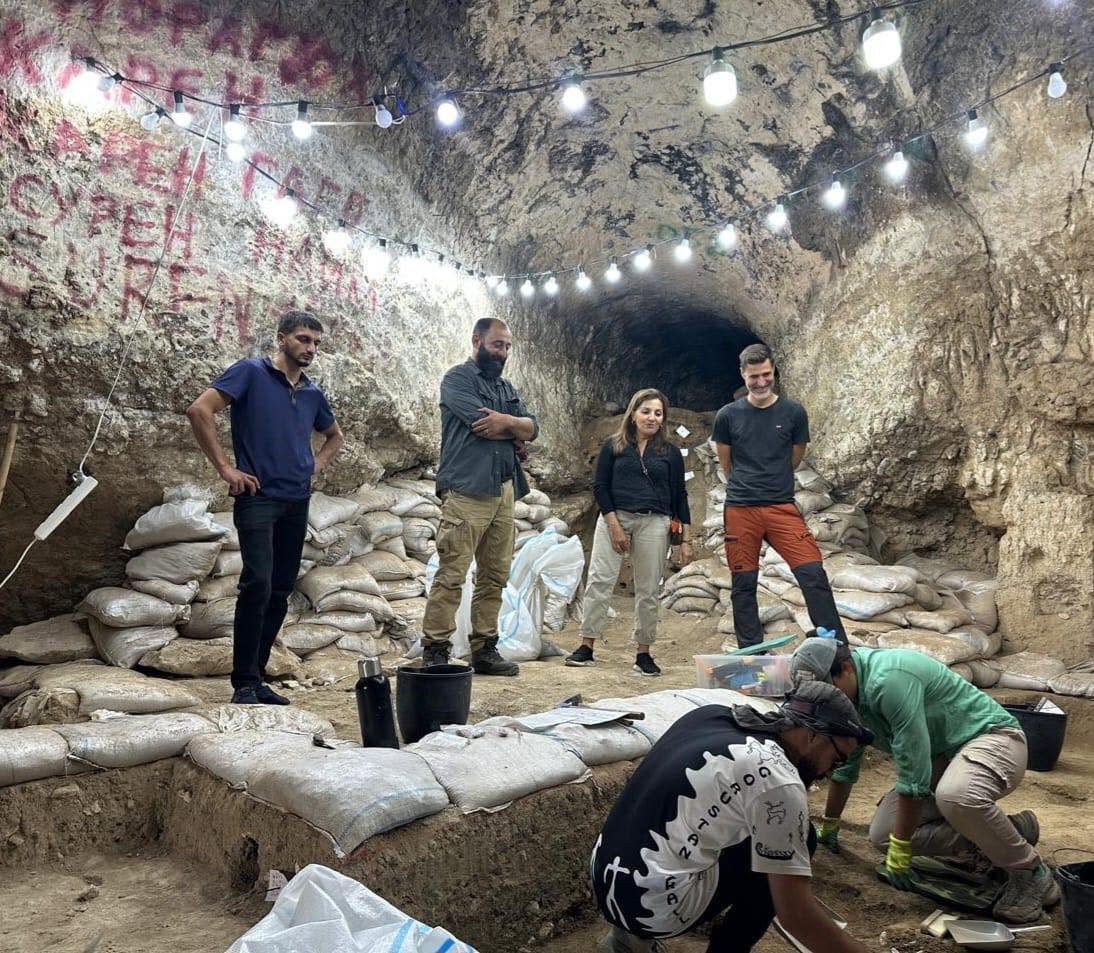
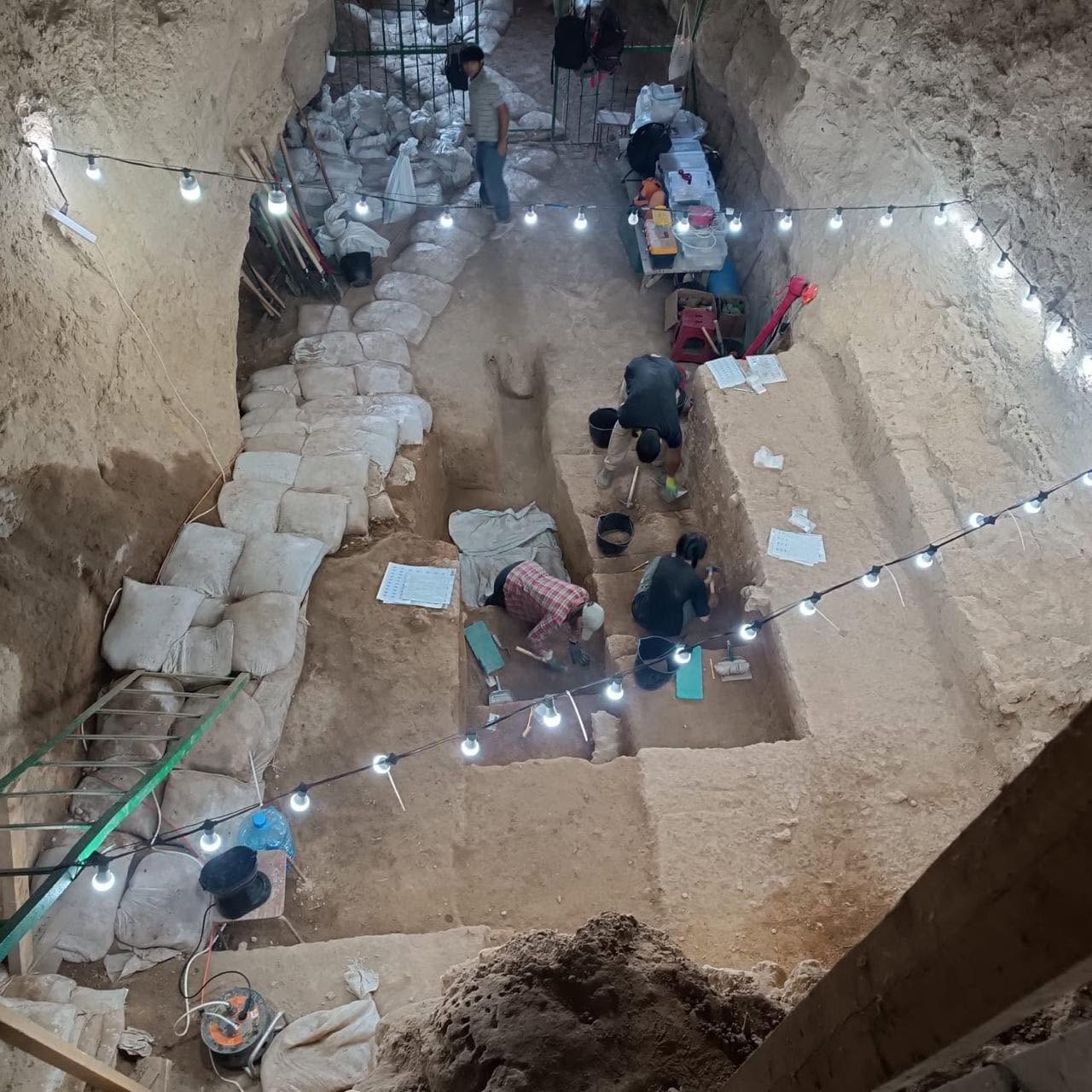
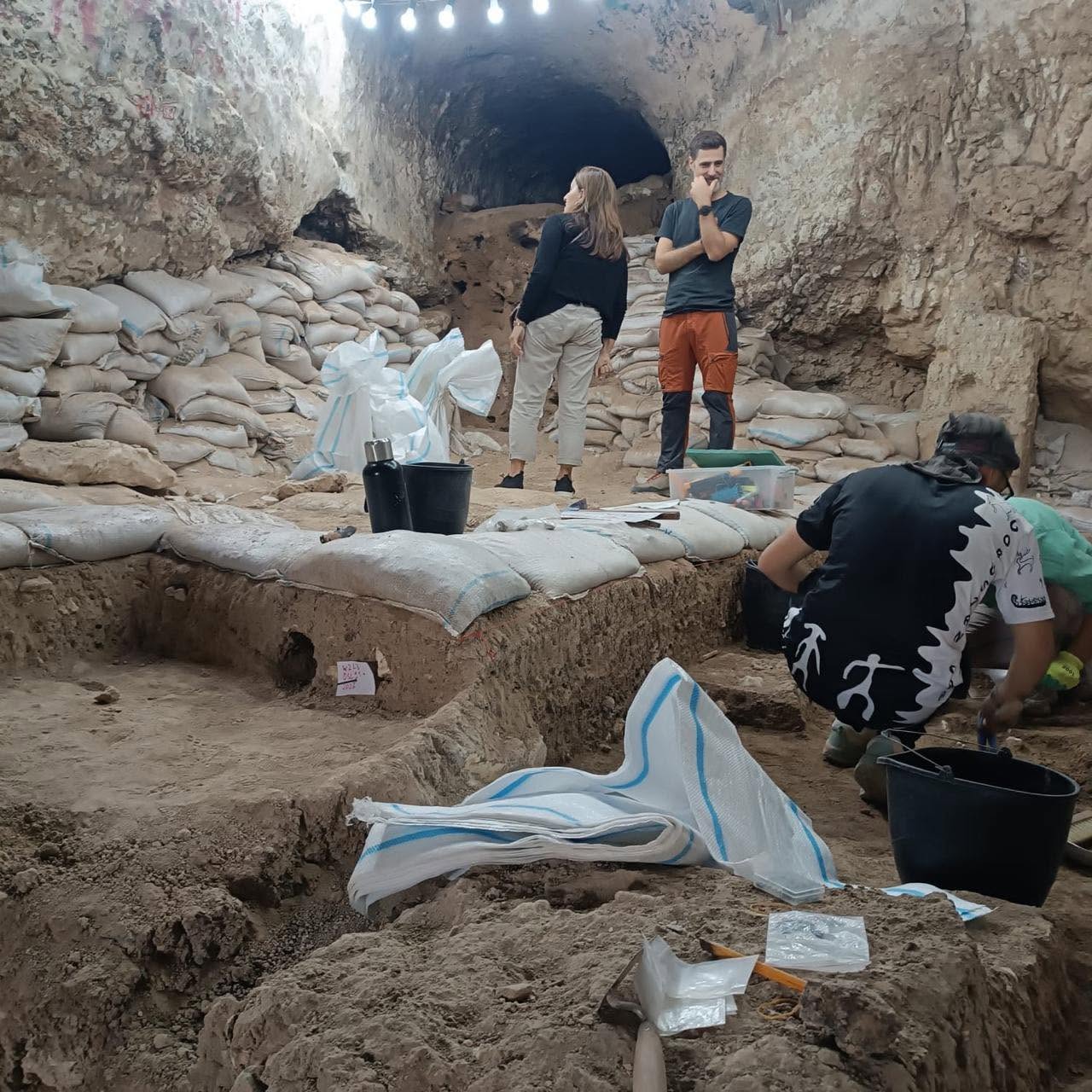
Ajdar Babazade, Senior Researcher at the Institute of Archaeology and Anthropology of ANAS and Head of the Azykh Archaeological Research and Analysis Laboratory operating under Karabakh University, provided detailed information about the activities of the international expedition, which has been operating since 2023, as well as the material and cultural findings discovered in the area.
It was noted that modern technologies such as Total Station, GPS and 3D modelling are used during the excavations, and all data are collected within a unified Archaeological Information System.
The main scientific significance of the current research conducted at Azykh Cave lies in integrating the digital documentation of excavations, laboratory analyses, paleoecological reconstruction, international scientific cooperation and the training of local specialists within a single research programme.
The new scientific data expected to be obtained as a result of the ongoing research are anticipated to make an important contribution to a more accurate determination of the chronological and cultural characteristics of Azykh Cave during the Paleolithic period, to broadening scientific understanding of the settlement and living environment of ancient humans in the South Caucasus, and to a deeper and more comprehensive assessment of the scientific significance of Azykh Cave in the context of the world’s earliest human settlements.
It should be noted that the joint Azerbaijan–Germany expedition at Azykh Cave has now been continuing for the third year. The research is being conducted within the framework of a memorandum signed between the Institute of Archaeology and Anthropology of ANAS and Germany’s LEIZA Institute, with specialists from Portugal, the United Kingdom, the United States, Türkiye, France and other countries participating in the studies.
NEWS
Related news
 15 October 2026
Muzeylərin fəaliyyətinə həsr olunmuş görüş keçirilib
 09 October 2026
“Soyqırımı Memorial Kompleksi”ndə YAP-ın VIII qurultayının yekunlarına həsr olunmuş tədbir keçirilib.
 29 September 2026