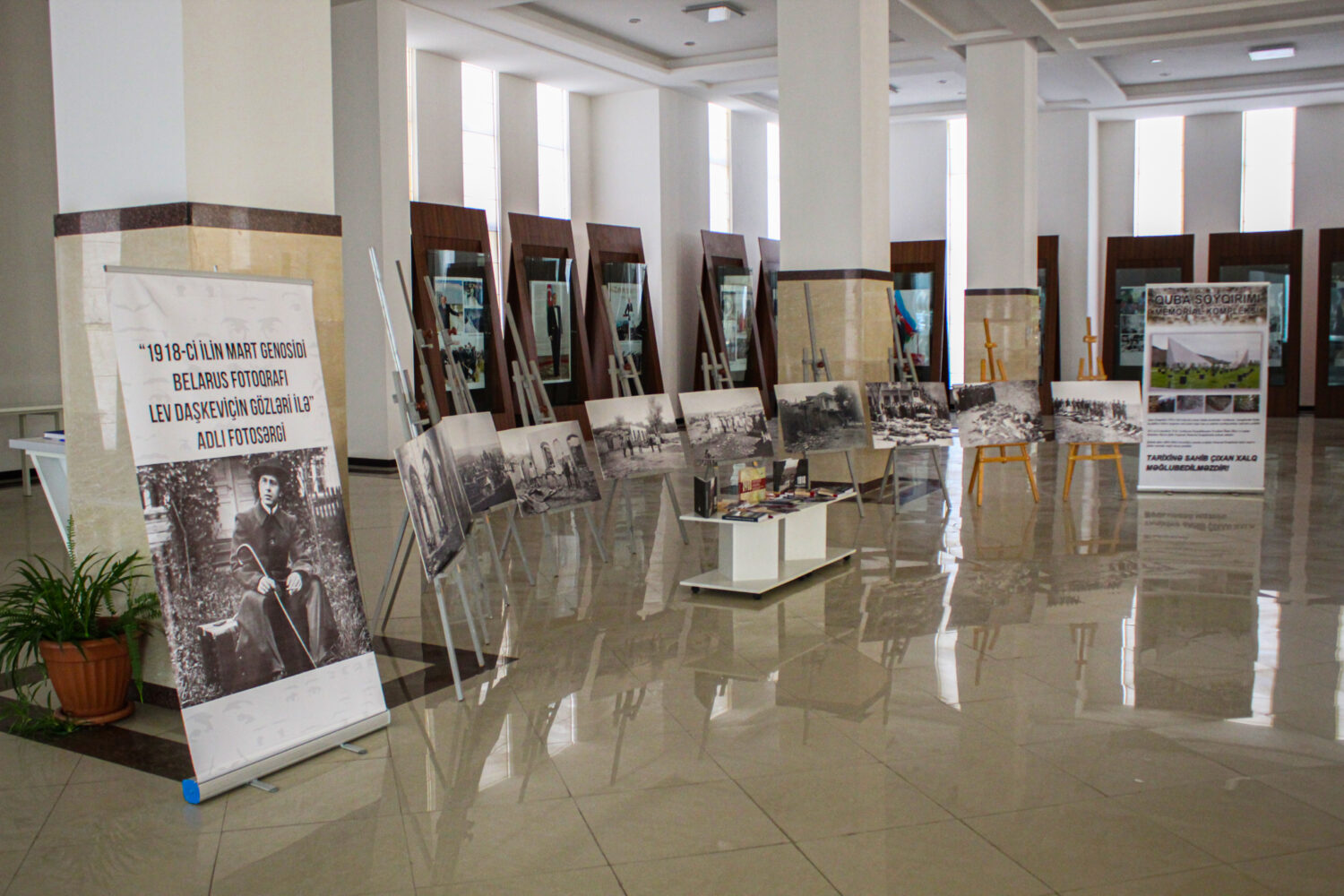
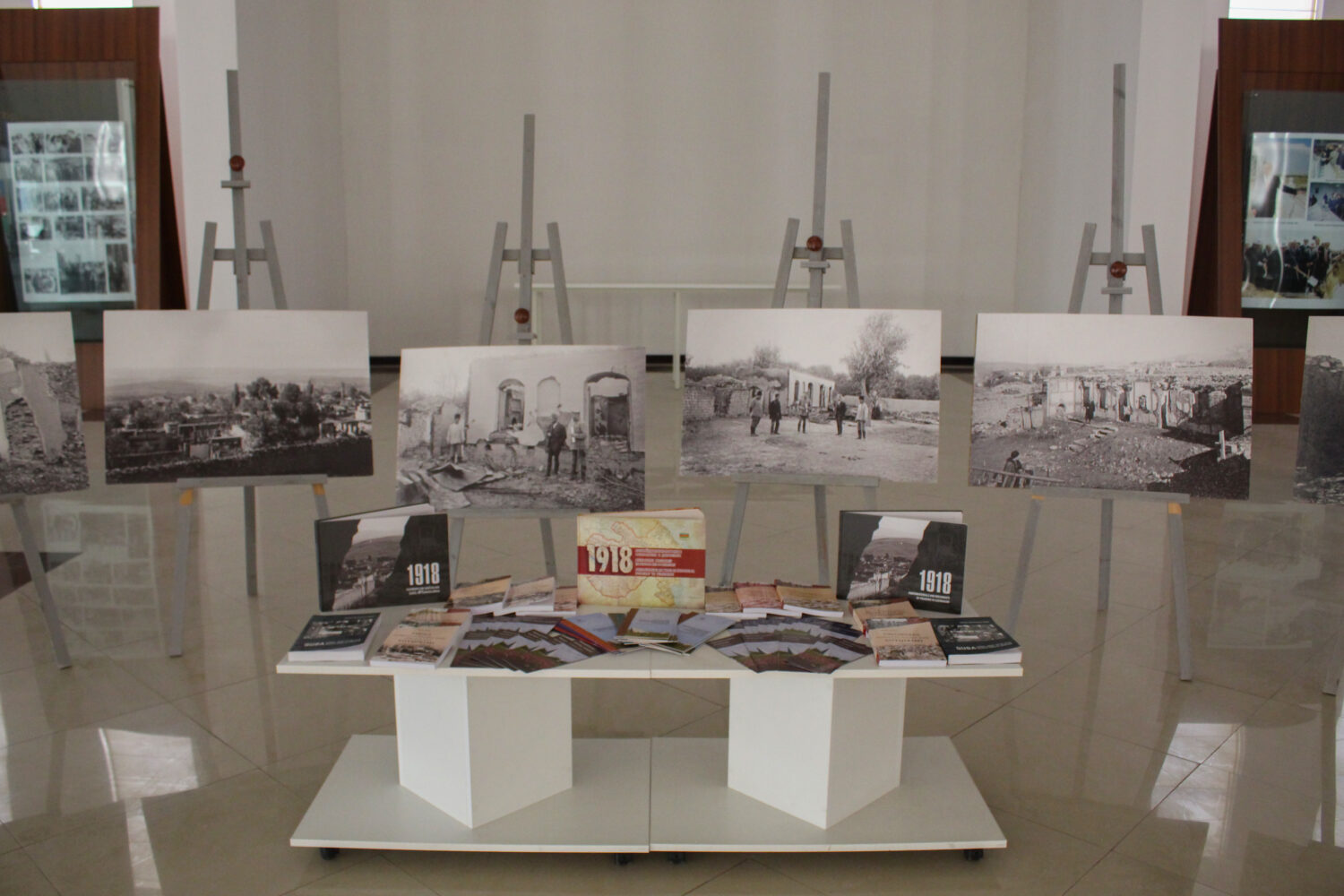
Genocides committed by Hamazasp in Guba district. (May 1-9)

In 1918, on the instructions of the head of the Baku soviet dashnak bolshevik Stepan Shaumyan, a group of 3000 dashnak Hamazasp and Armenians, sent to Guba district committed unprecedented genocides against the civilian population in order to suppress the national movement and establish for their planning government. Historical documents show that Hamazasp made a threatening appeal to the population of the city after the invasion of Guba, which consisted of about 20000 people and about 10000 houses. Hamazasp in the Ancient Guba Square, around the Jhuma Mosque, clearly states the purpose of his visit to Guba:
“I am a hero of the Armenian people and a defender of its interests. I did not come here to establish law and order, to establish the Soviet government. My aim is to destroy all muslims living in the area from the shores of the caspian sea to Shah mountain, to destroy your homeland to reveal to you what we did in Shamakhi”.
Witness statements and archival documents of the time show that Armenians beheaded the family of 14 people of Karbala Mammad Taghi oqhlu, 5 families of Mohammad Rasul oqlu in Guba, Bibikhanim, wife of Haji Dadashbala Gasim oghlu and his son Abdul Gasimi, burned them alive in Karbalai Abba. He tore his son and two daughters, Hokuma and Bustan, together with the child in his arms, and mashadi Ganbar, the son of mullah Mohammad Saleh, his wife and five infants.
Haji Ismail Orujov, a resident of Guba, wrote in his explanation that according to the cleric who buried the dead in the city, he himself believed that the bodies of 2800 people had been buried. During the events, more than 2153 houses were destroyed and burned, more than 24 mosques, 5 caravanserais, 152 warehouses, 166 haystacks, 68 stables, 312 shops, 17 mills, 4 workshops, 4 teahouses and 284 other buildings and historical and religious monuments were destroyed or burned. According to the stuff of 3 volumes and 451 pages of investigative materials collected by the Emergency Commission of Inquiry gangs of the Baku Soviet under the command of dashnak Hamazasp, consisting mainly of Armenians, killed more than 16000 Azerbaijan’s Turks in Guba district in 9 days was burned and destroyed 167 villages.

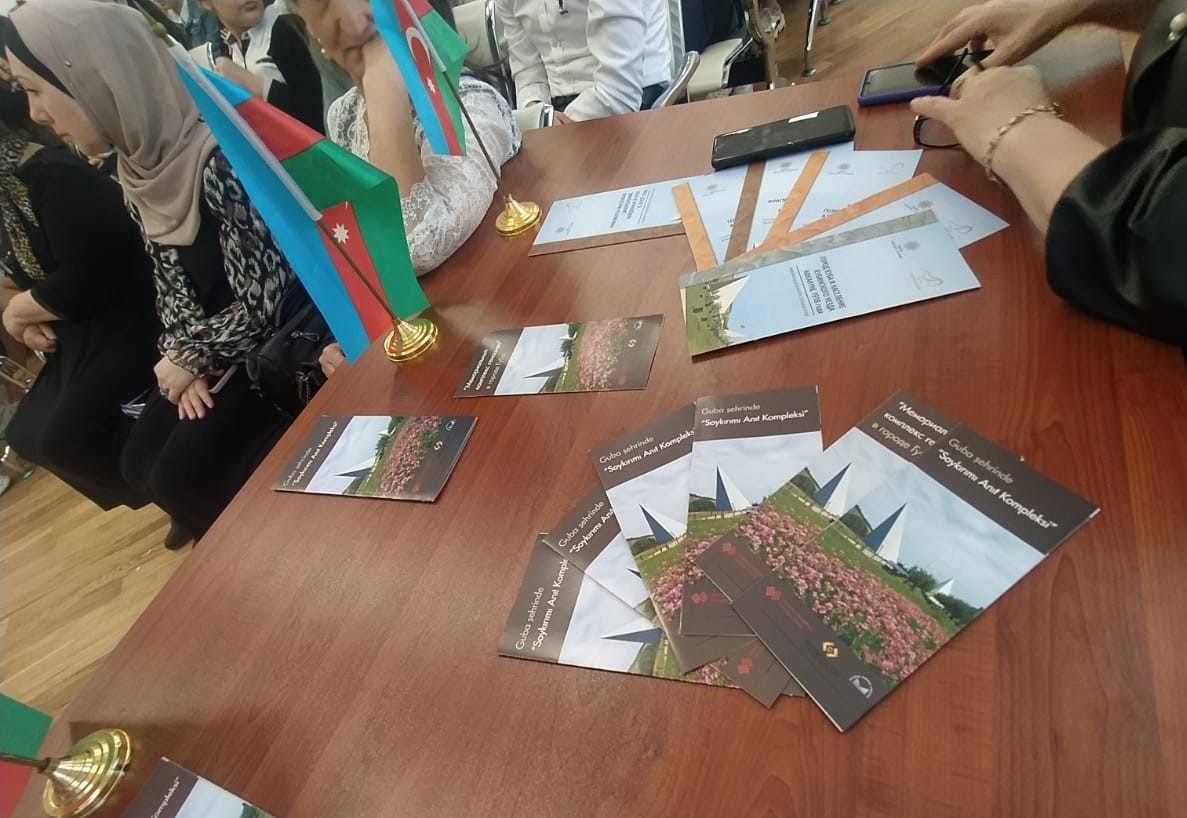
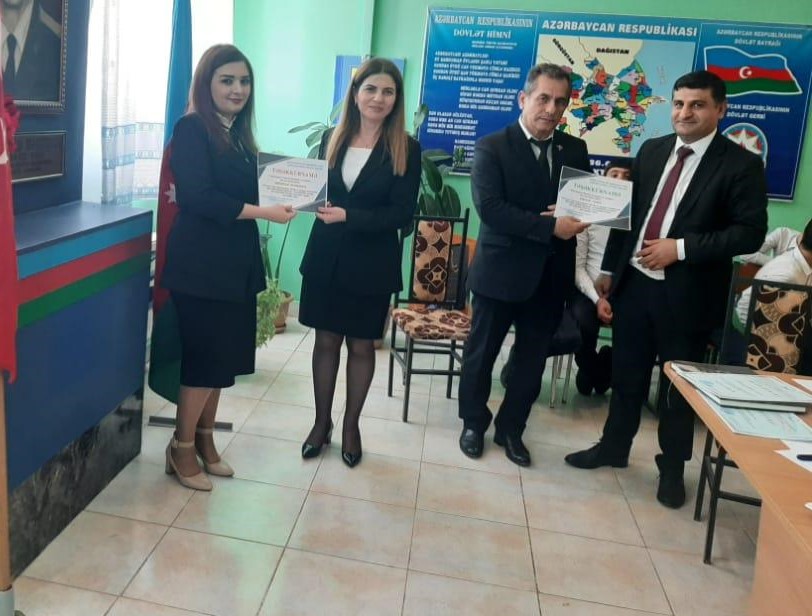
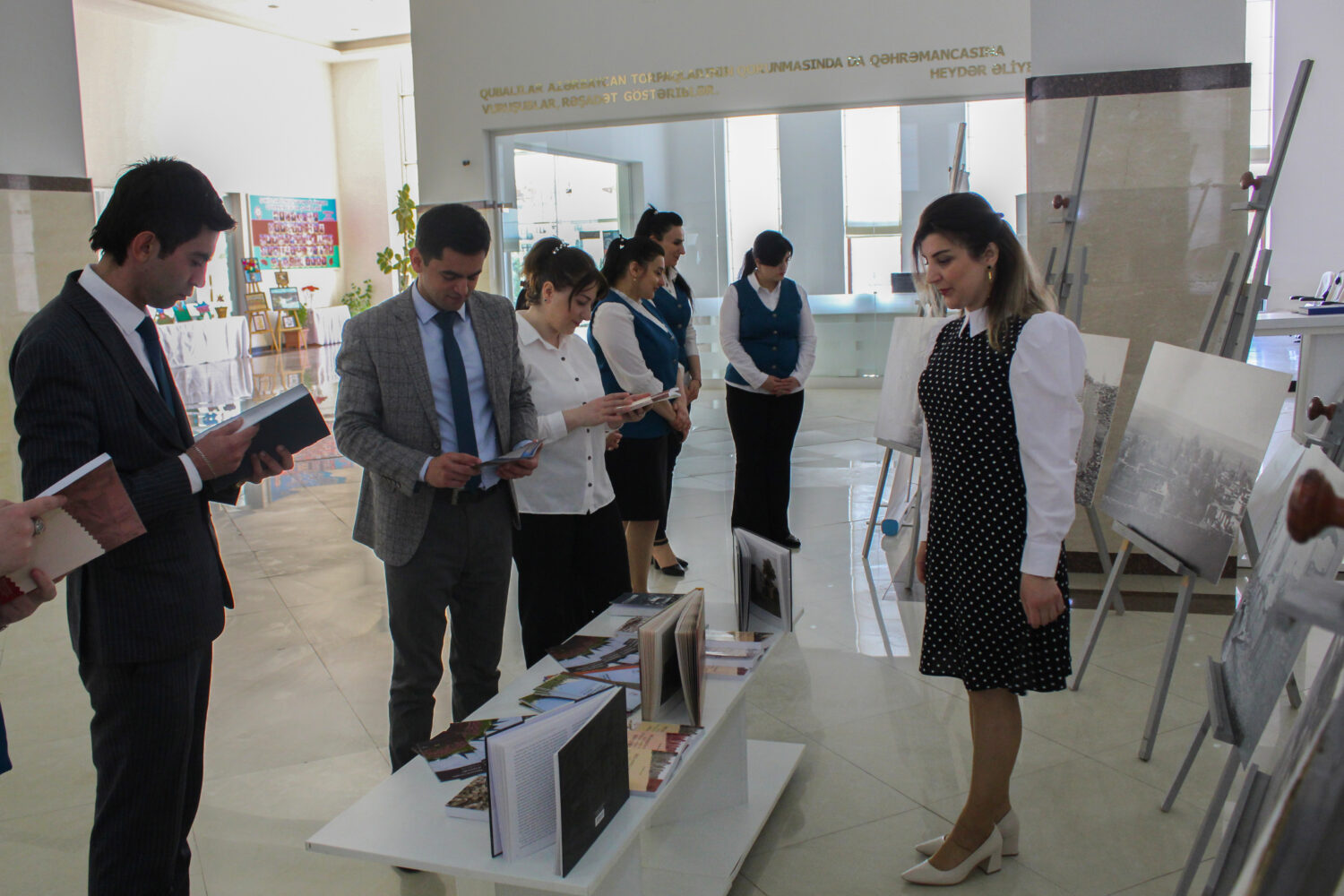
A Memorandum of Understanding was signed.

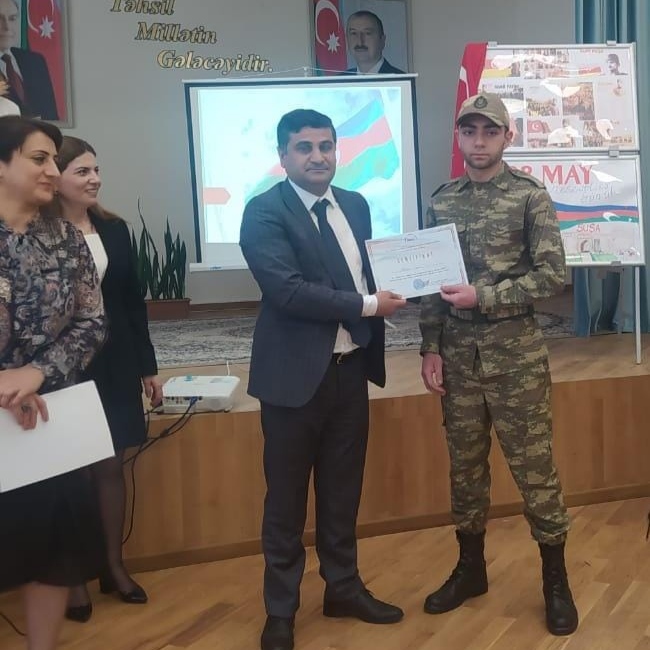
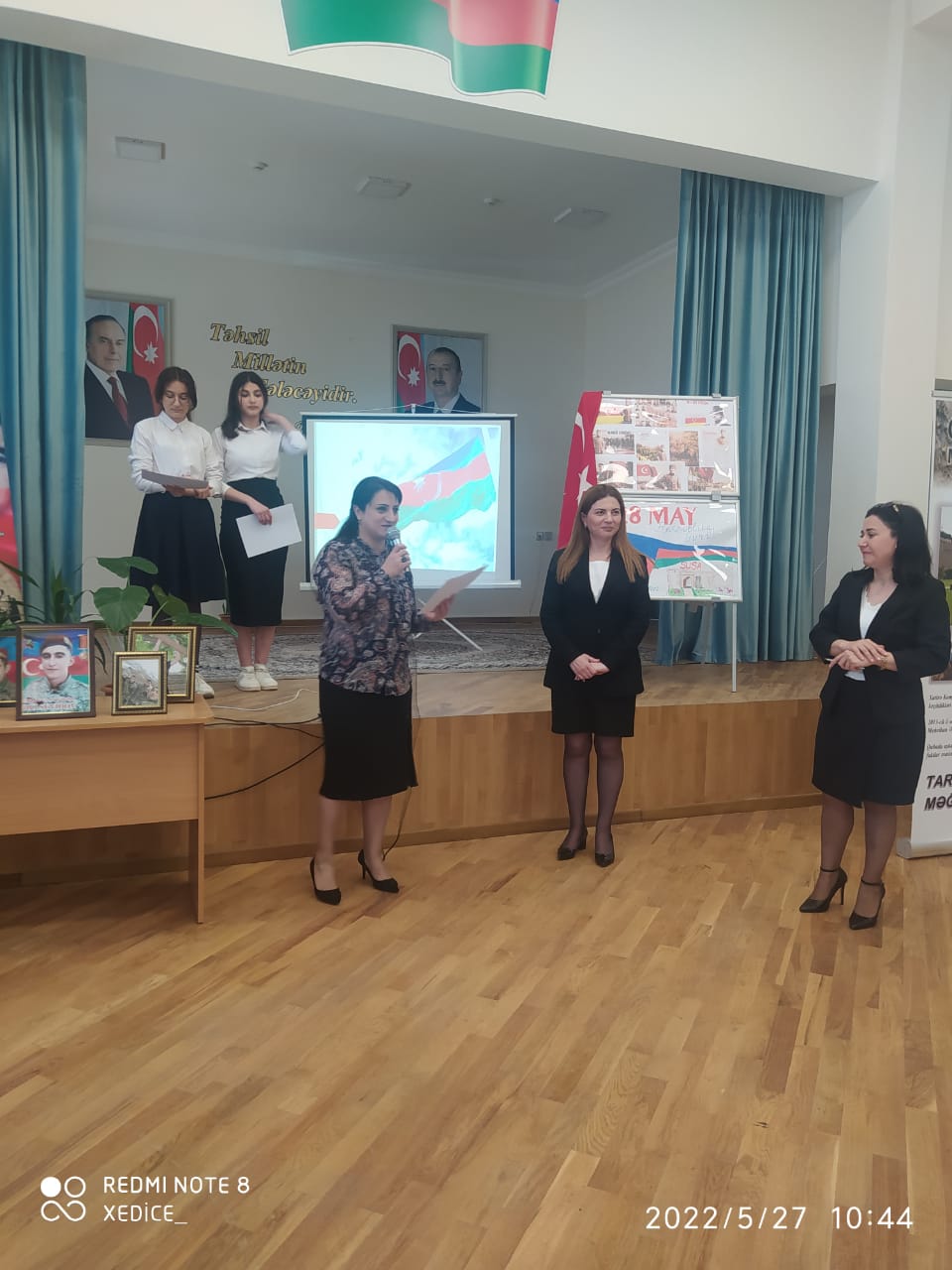
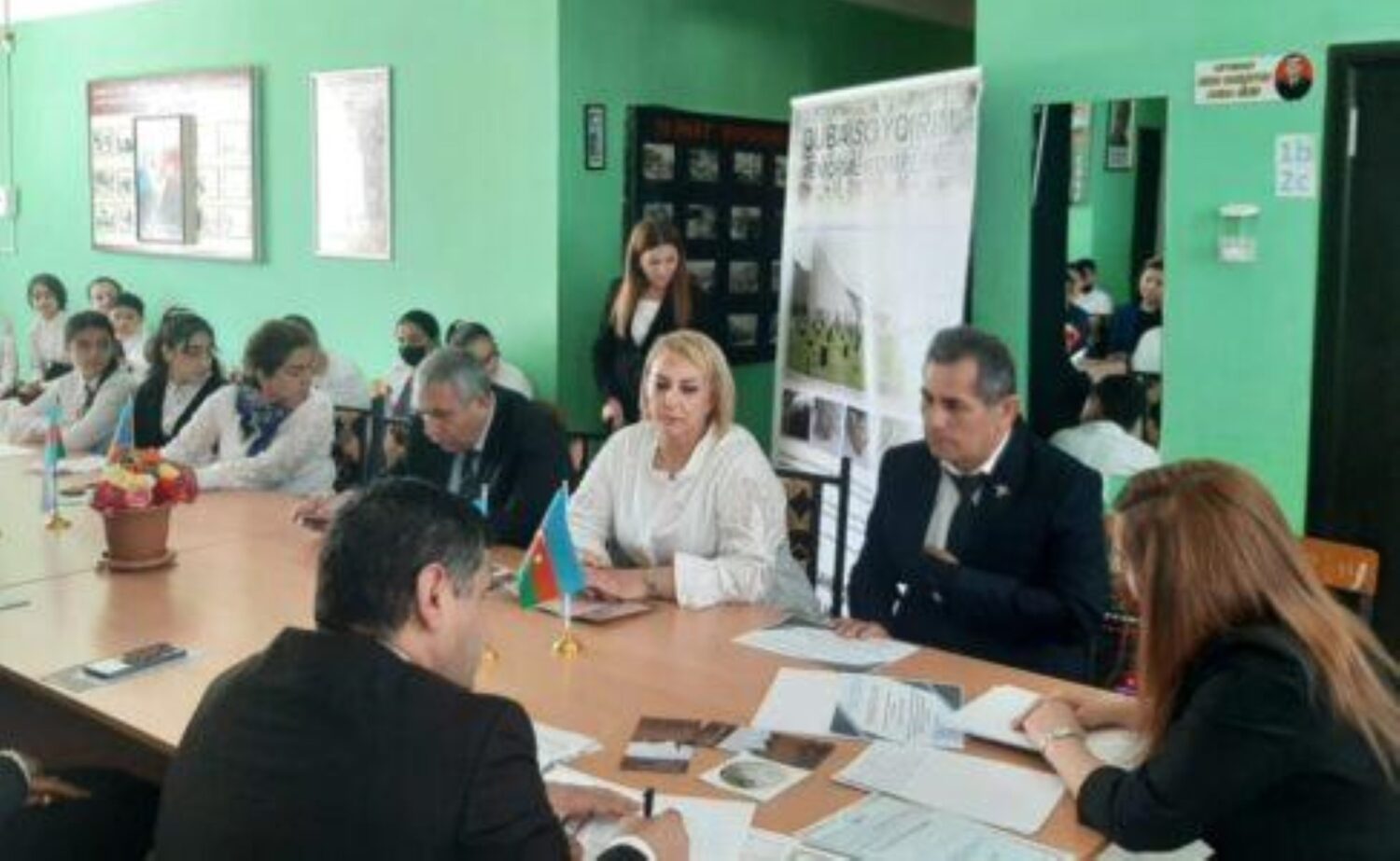
The Genocide Memorial Complex in Guba, which has been operating since 2013, is the only ideological center that promotes Armenian vandalism against the Turkish-Muslim population. The process of establishing cooperation in the international arena and within the country in order to convey the truth about the genocide to the world is being successfully continued, according to the complex’s new strategy for future propaganda and agitation. On May 5, 2022, a Memorandum of Understanding was signed between the Shamakhi branch of the Azerbaijan State Pedagogical University and the Genocide Memorial Complex as a continuation of this tradition. Priorities identified during the official meeting included the establishment of closer cooperation between the two institutions, the implementation of projects in the fields of science and culture, the organization of various exhibitions and excursions, and joint propaganda and advocacy work in the media and social networks.
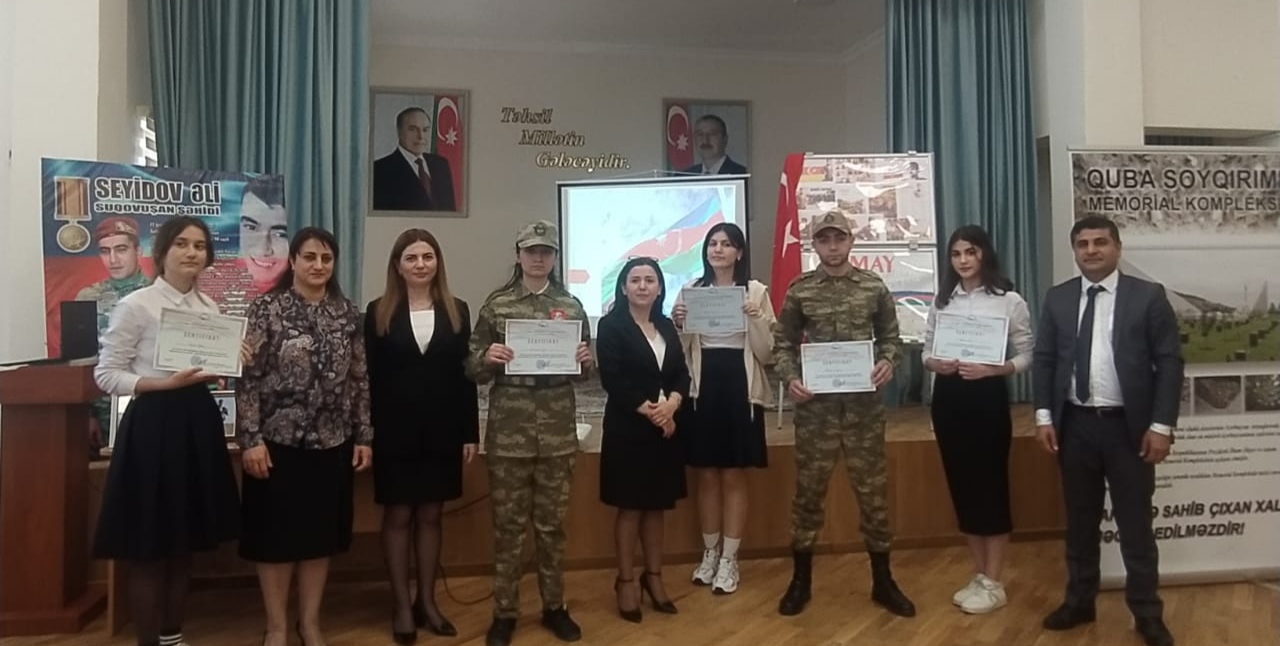
It should be noted that the Shamakhi branch of the Azerbaijan State Pedagogical University, one of the country’s leading universities, is celebrating its 30th anniversary this year, and has made significant contributions to the development

The official visit to the United States by the delegation led by Minister Anar Karimov continues.

Anar Karimov met with leading think tanks and scientists in the United States during his visit. Former US ambassadors to Azerbaijan also attended the meeting. Anar Karimov discussed the damage done to Azerbaijan’s cultural institutions during the Armenian occupation, as well as the fate of destroyed historical and religious monuments. He provided detailed information about the reconstruction and restoration work done in Karabakh following our historic victory, as well as statistical indicators. He also discussed the global campaign “Peace for Culture” (Peace4Culture). Scientists who praised the think tanks also proposed several plans for the restoration of Karabakh. The meeting continued with a discussion of a number of critical issues of mutual concern.

oday in history: The Azerbaijan Communist (b) Party was founded in Baku on February 11-12, 1920, and A. Mikoyan, an enemy of the Azerbaijani people, was appointed as its de facto leader.

The party launched an armed insurgency to depose the national government and establish Soviet Azerbaijan. Soviet Russia cleverly exploited Armenia’s hostility against Azerbaijan to include the Armenian uprisings in Ganjabasar and Karabakh, as well as the Armenian war against Azerbaijan, in this plan. At a time when almost the entire Azerbaijani army was fighting against Armenian rebels in Karabakh, the 11th Russian army, which defeated Denikin’s troops in April 1920, approached Azerbaijan’s northern borders and entered the country on the night of April 26-27, 1920.
Despite repeated submissions to the League of Nations and world policy-making states regarding Bolshevik Russia’s occupation of Azerbaijan, the Allies silently welcomed the Bolsheviks’ occupation of Azerbaijan.
On April 29, Azerbaijan’s Revolutionary Committee requested military assistance from Soviet Russia. However, on April 27, the 11th Russian army was within Azerbaijan’s borders. As a result, the Azerbaijan Democratic Republic collapses after 23 months of operation, and Azerbaijan is declared a Soviet Socialist Republic on April 28.

April 25, 1918 - Organization of the Council of People's Commissars of the Baku Soviet

The Bolsheviks, who captured Baku and the Baku province in March 1918, established the Baku Council of People’s Commissars on April 25, 1918 as a new Soviet body of power to temporarily strengthen their political power in Baku. The Baku City Duma, which had been operating until that time, headed by Fatali Khan Khoysky, was dissolved. In fact, S. Shaumyan, who was elected chairman of the “Armenian Soviet Government” Baku Council of People’s Comissars, consisting of strong nationalist Armenians and Russian Bolsheviks closely cooperating with them, as well as Foreign Affairs Commissioner, People’s Commissar for Internal Affairs P.A.Chaparidze, Justice Commissioner A.B. Karinyan, Transport Commissioner Markaryan , chairman of the emergency commission Ter-Gabrelyan, commissioner of state control A.S. Bogdanov, labor commissioner Y.D. Zevin were elected. The Azerbaijani commissioners were mainly entrusted with agricultural issues. Nariman Narimanov was the People’s Commissar for Urban Economy, while Mir Hasan Vezirov was for Land Affairs. Bütün köhnə hakimiyyət orqanları ləğv edərək yeniləri ilə əvəzlindı. A military tribunal, an Extraordinary Commission were established, banks, an oil industry, a workers’ and peasants’ militia, city, district and people’s courts were created, and the Caspian merchant fleet was nationalized.
However, on July 31, 1918, the Baku Council of People’s Comissars collapsed . Because it was a fictitious organization that had no national support since its inception, had a weak social base and served the colonial policy of Soviet Russia.

Today, the Genocide Memorial Complex hosted a presentation of the most recently read and discussed book by Ramiz Gusarchayly, the author of the poem "Vatan".

The Complex’s director, Ph.D. Rakhshanda Bayramova, welcomed the guests, spoke about his creativity, the importance of such works in the deepening of historical, patriotic feelings, and thanked the poet for writing the poem “Vatan” which is of great interest in Azerbaijani literature history.
Ramiz Gusarchayli began his words by thanking everyone for coming and then went into detail about the poem “Vatan.” The Complex’s employees then spoke about the poet’s works, particularly how he was inspired by his motherland’s love and created a perfect work in the poem “Azerbaijani Flag” with great skill, singing his feelings and poetic thoughts. The event finished with poems narrated by the poet himself.

HISTORICAL EVENTS IN Guba, DESCRIBED AS "3 DAYS' BATTLES" LOCAL RESISTANCE MOVEMENT

Shortly after the genocide in Baku on March 31, 1918, in April, on the orders of Stepan Shaumyan, David Gelovani of Georgian origin and an armed group of Armenians were sent to Guba to seize power. D. Gelovani, who declared himself the Guba Accident Commissioner, gave the local population two hours to recognize the Bolshevik government, and the helpless city administration agreed to this proposal. As soon as the accident occurred, D. Gelovani disarmed the local authorities and released the members of the Armenian gang. Members of Gelovan’s gang and the released Armenians are once again committing robberies and assassinations of civilians in the accident, this time under the guise of Bolsheviks.Guba accident commissioner Ali bey Zizikski and beys who witnessed these events formed a local resistance movement.
According to the ancient calendar, battles are fought in the accident on April 16-19 / April 28-30, Gelovan and his armed groups are expelled from the accident, and peace is restored in the accident. This assurance, however, does not last long. Later, in May, on the orders of Dashnak-Bolshevik S. Shaumyan, the Armenian executioner Hamazasp and his army of Dashnak Armenians carried out a 9-day genocide against the innocent civilian population of Guba as retaliation for the Guba accident.Many Armenian invaders were killed in this battle, which became known as the “three-day battles,” and GelovaNI and his armed groups were expelled from Guba.

A forum dedicated to the International Day of Monuments and Historic Sites was held.

On April 18, the State Service for Protection, Development, and Restoration of Cultural Heritage under the Ministry for Culture of the Republic of Azerbaijan and the ICOMOS Azerbaijan National Committee hosted a forum commemorating the International Day of Monuments and Historic Sites at the International Mugam Center.

Azad Jafarli, Chief of the Civil Service spoke at the event about the significance of commemorating the International Day of Monuments and Historic Sites. He stated that this important day, which aims to draw people’s attention to the preservation of monuments and historical sites, is widely observed in our country every year.

He noted that three historical examples of cultural heritage created by the Azerbaijani people for centuries – Icheri Shahar, Gobustan Rock Art Cultural Landscape, and Sheki Khan Palace, as well as the Shirvanshahs Palace and Maiden Tower-Sheki’s historical center-are now on the UNESCO World Heritage List.

He emphasized that, under the leadership of President Ilham Aliyev and First Vice President Mehriban Aliyeva, significant progress has been made in preserving, studying, and passing on our national cultural heritage to future generations, as well as restoring historical monuments in liberated territories.

Azad Jafarli stated that the issues raised at today’s event, as well as the exchange of views on them, will highlight key points for each of us: “I’d like to take this opportunity to thank Mrs. Zeynab Gul Unala, Vice President of ICOMOS, for her participation.” We went to Agdam yesterday and saw the ruins of the occupation while also witnessing a new reality, the construction of our state.

ICOMOS Vice President Zeynab Gul Unal provided detailed information about the organization’s activities. He stated that ICOMOS—the International Council on Monuments and Historic Sites—is an organization that works in the fields of cultural heritage protection and historical monument restoration and is a UNESCO consultative body on material and cultural heritage. ICOMOS is the world’s only non-governmental organization dedicated to promoting the use of theoretical, methodological, and scientific methods for the preservation of architectural and archaeological heritage. ICOMOS, according to Zeynab Gul Unal, is a large international network of architects, historians, archeologists, art historians, geographers, anthropologists, engineers, and urban planners. He congratulated Azerbaijan on the establishment of the ICOMOS National Committee in Azerbaijan and wished the organization success. In addition, Zeynab Gul Unal also emphasized the significance of UNESCO’s establishment of the International Day of Monuments and Historic Sites in 1983, at the suggestion of ICOMOS, in terms of cultural heritage protection.
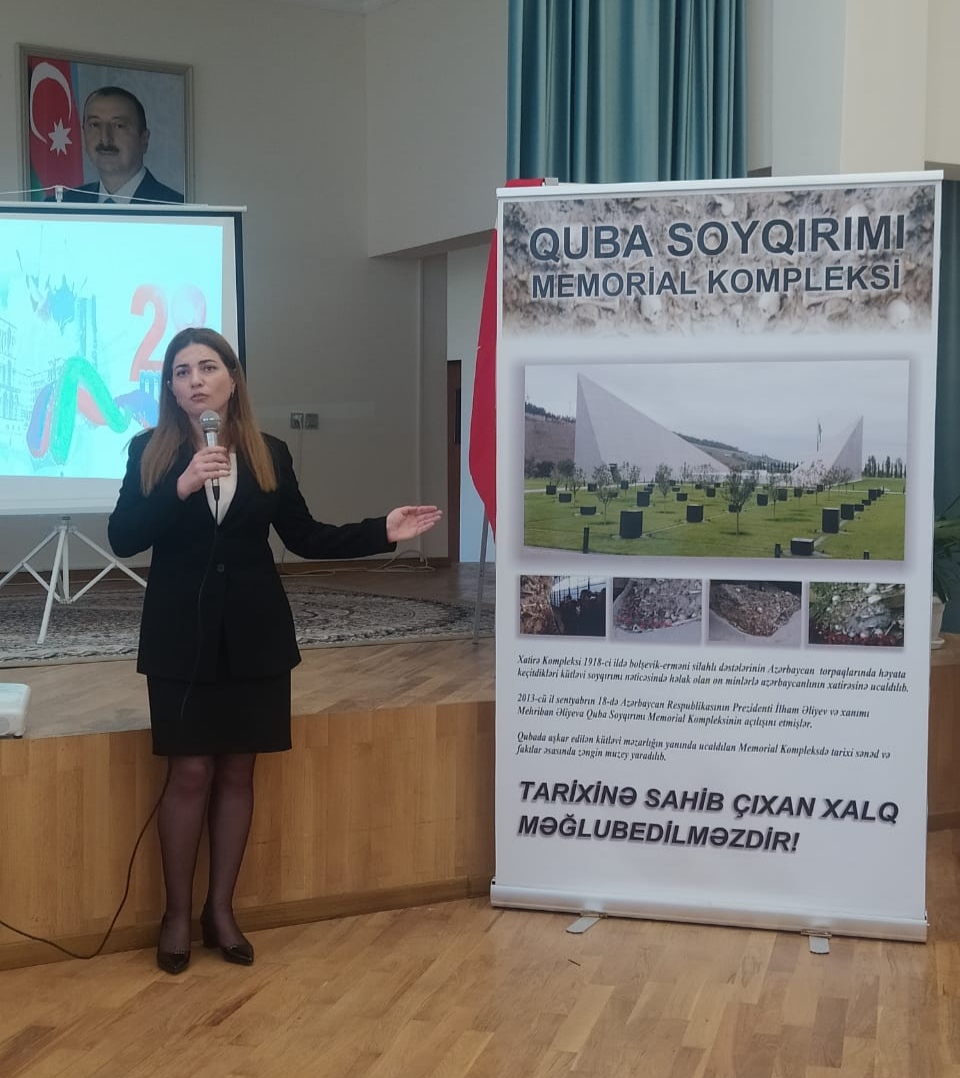
Elbay Gasimzadeh, Chairman of the Azerbaijan Union of Architects, drew attention to the international promotion of our country’s historical and cultural monuments. He noted that great work is being done in our country to study, protect, and restore historical monuments, as well as promote cultural heritage in the international arena, thanks to President Ilham Aliyev’s great attention and care. All of this ensures Azerbaijan’s integration into the global world, along with its material and spiritual culture. He emphasized the significance of mitigating the various natural effects of cultural heritage.


Let's get know and make widely known our national monuments!

Kish Albanian Temple is located in Kish village, Sheki region, one of Azerbaijan’s oldest cities and cultural centers. This temple was one of the first Christian churches built in the Caucasus, not just in Caucasian Albania. This church, which dates from the first century AD, is a historical monument built on the foundation of the Moon Temple, symbolizing the spread of Christianity in the Caucasus approximately 2,000 years ago. According to legend, the Elysee built a church in the village of Kish in Uti Province, Albania, to spread Christianity at the request of St. James, Jesus Christ’s brother.
Once upon a time an inscription on the temple stated that it was the Church of the Holy Apostle Elysee and that the Albanian Church was rebuilt in 1244 by Seraphim, the archbishop. Following the Synod’s official dissolution of the Albanian Church in the 1930s, the inscription of this temple, like that of many other Albanian temples, was completely destroyed. For many years, the temple served as the Caucasian Albanian Church’s center of religious education. Interestingly, the village where the temple is located has been known for over 2,000 years as “Kish,” which means “religion, belief, worship.”