
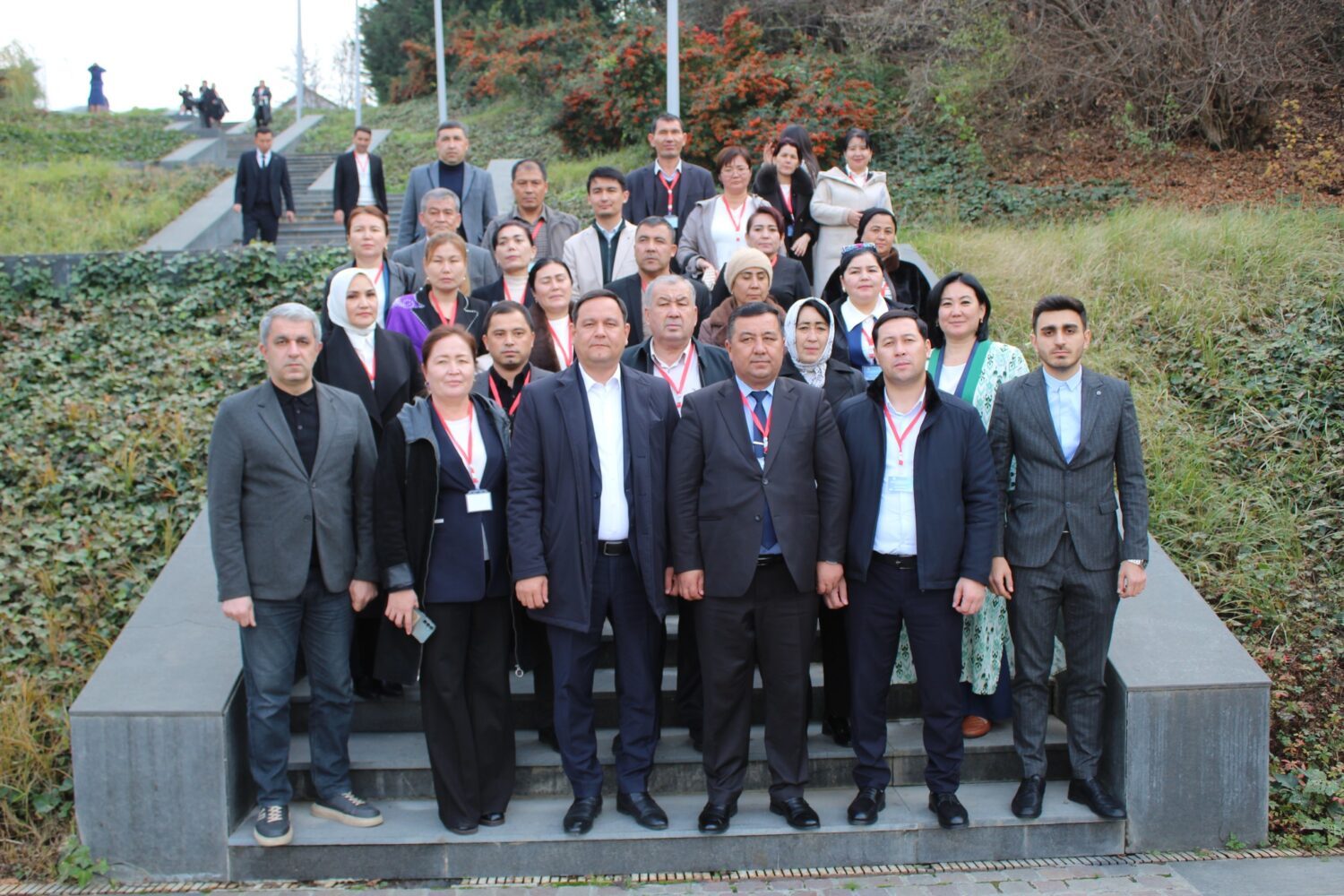


The participants first became acquainted with the museum of the Genocide Memorial Complex. During the guided tour, guests were informed by the Complex’s staff about the events of the 1918 Guba genocide and closely examined the exhibitions that reflect the mass atrocities committed against Azerbaijanis during that period through historical facts and archival materials.
Delivering the opening remarks, Mehriban Aliyeva, Deputy Director of the Complex, welcomed the guests and reviewed the history of friendly relations between Azerbaijan and brotherly Uzbekistan. She emphasized that significant progress has been achieved in economic cooperation between the two countries in recent years, noting that the main areas of cooperation include energy, textiles, agriculture, and urban development.
Subsequently, Timur Kalmuratov, Director of the Tashkent Regional Pedagogical Skills Center, expressed his gratitude for the organized training program and spoke about innovations in the field of education and opportunities for cooperation. He noted that an Agreement on cooperation between the Government of the Republic of Azerbaijan and the Government of the Republic of Uzbekistan in the fields of science, vocational education, and higher education has been approved.
Other speakers noted that Azerbaijan–Uzbekistan relations have an ancient history and that there have historically been close cultural ties between the two countries. Both nations have benefited from each other’s cultures and have exerted a unique influence on each other’s cultural development.
Within the framework of the training, participants also held discussions on preserving the memory of the events of the 1918 genocide, accurately conveying these historical facts to future generations, and using museum exhibition materials in the educational process. They also watched a documentary film prepared on the topic.
At the end of the event, certificates were presented to the participants.