
" Sericulture"
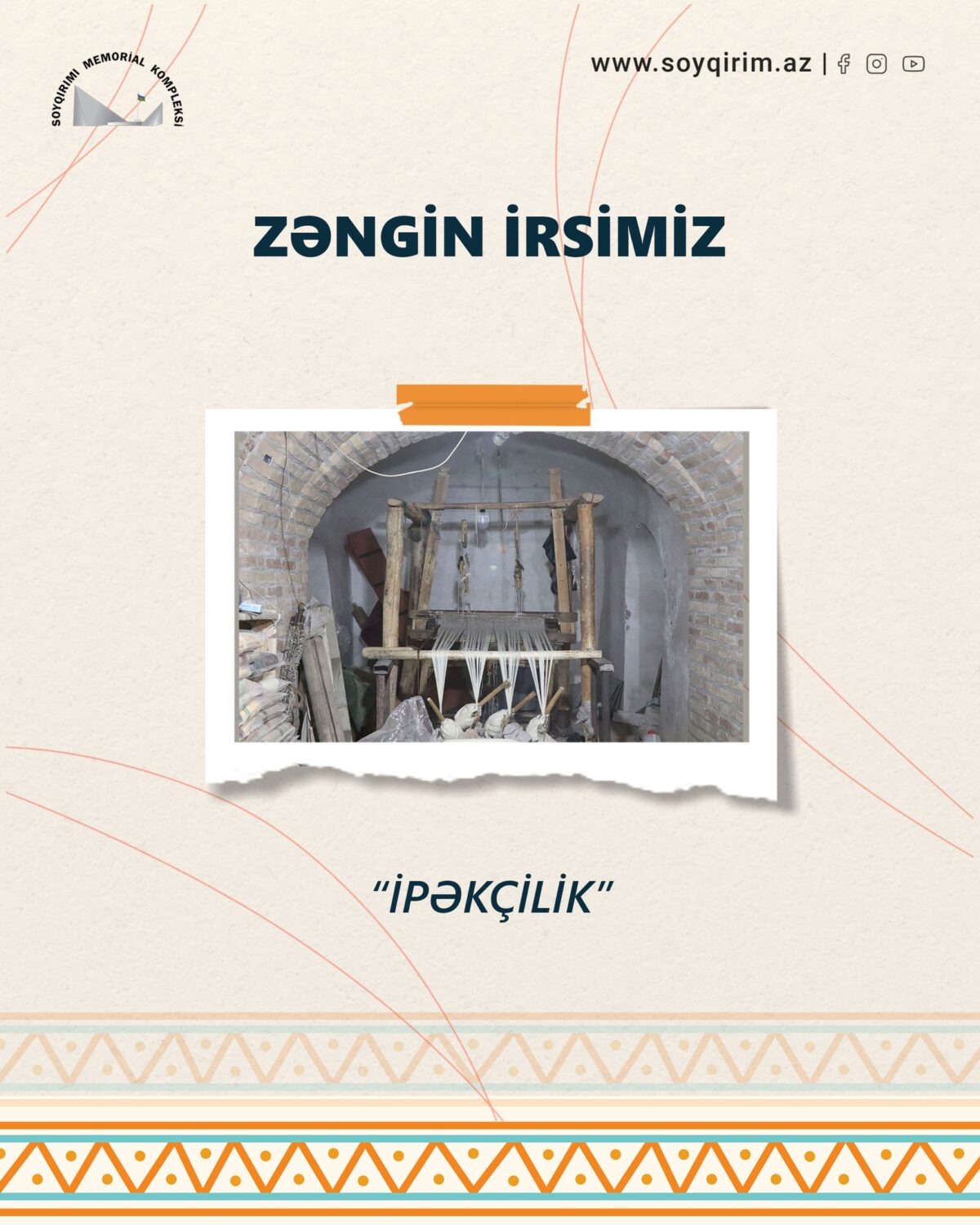
Sericulture in Azerbaijan has been an vital part of the nation’s agricultural and artisanal traditions for centuries. The presence of fertile climates in certain regions created favorable conditions for the development of this craft, with vast mulberry plantations supporting its growth. In particular, the districts of Sheki, Gakh, Zagatala, and Fuzuli have been known for widespread sericulture since ancient times. Sheki’s world-famous “Sheki silk” has long stood out for its quality and durability. The cocoons grown and the raw silk produced here have been used both in local production and exported to foreign markets.
The development of sericulture has impacted not only the economy but also the cultural life of the people. Traditional garments, carpets, and various decorative items made from silk fabrics reflect refined taste and a rich tradition of craftsmanship. Since each stage of silkworm breeding requires special care and labor, this field was considered one of the most demanding areas of agriculture. In recent years, comprehensive programs have been implemented across the country to revive and advance sericulture, with farmers receiving considerable support.
In 2014, Azerbaijani sericulture was inscribed on UNESCO’s Representative List of the Intangible Cultural Heritage of Humanity.