Azərbaycanlıların soyqırımına siyasi-hüquqi qiyməti ilk dəfə Heydər Əliyev verdi

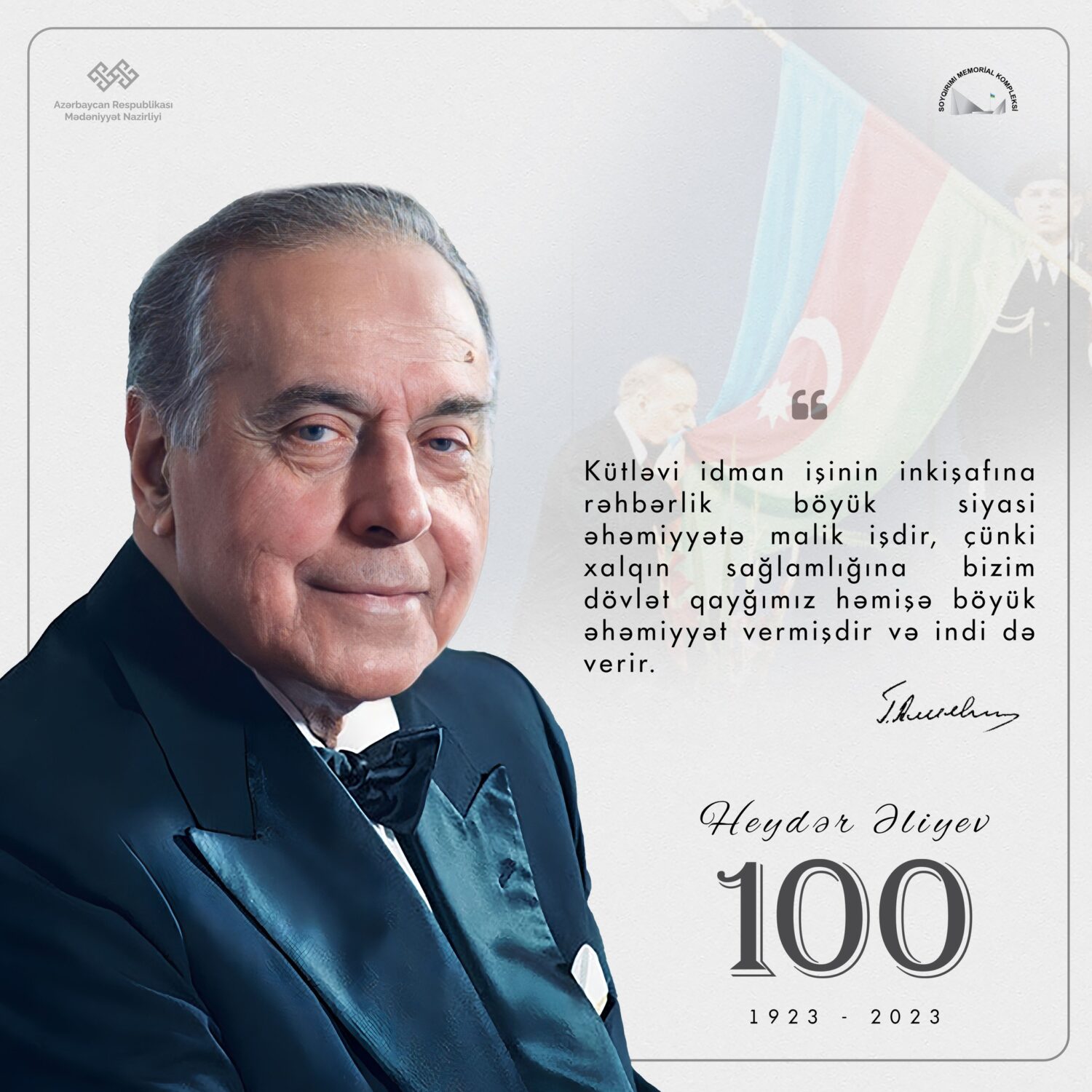
Azərbaycan tarixinin  Heydər Əliyev dövrü, tariximizin böyük inkişaf və  möhtəşəm   quruculuq  dövrüdür. Onun  rəhbərliyi  altında  əldə  olunan   uğurların ən mühümü  məhz qurub yaratdığı  müstəqil  Azərbaycan dövlətidir. Azərbaycanda  dövlət  quruculuğu dövlətçilik,  milli və mənəvi  dəyərlərin  qorunub saxlanılması,  iqtisadiyyatın, elmin, mədəniyyətin, bir sözlə  həyatın ən müxtəlif  sahələrində  böyük  nailiyyətlərin  qazanılması, coşqun  bir  tərəqqi  dövrü  məhz  Heydər  Əliyevin   uzaqgörən,  qətiyyətli  siyasəti nəticəsində   yaşanmışdır.  

Ötən əsrin 90-cı ilin əvvəlində  müstəqilliyini bərpa edən Azərbaycan ərazisinin bir hissəsinin Ermənistanın  təcavüzünə məruz qaldığı, xarici təzyiqlərin və daxili çəkişmələrin tüğyan etdiyi bir dövrdə xalqının səsinə səs verən Heydər Əliyev  ölkəmizi dünyanın siyasi xəritəsindən silinmək və dövlətçiliyini  itirmək  təhlükəsindən  xilas  edərək dövlətin dayanıqlı siyasi və  iqtisadi  inkişaf  yolunu  müəyyən  etmişdir. 

Azərbaycan Respublikası müstəqillik qazandıqdan sonra xalqımızın tarixi keçmişinin obyektiv mənzərəsini  yaratmaq  imkanını  əldə  etməsi məhz  Ulu öndər Heydər Əliyevin uzaqgörən siyasəti sayəsində olmuşdur. Uzun illər gizli saxlanılan, üzərinə qadağa  qoyulmuş həqiqətlər açılır, təhrif edilmiş hadisələr özünün əsl  qiymətini  alırdı.  Azərbaycan və ümumən Qafqazın  tarixinin  təhrif  olunması  həmin  proqramların  mühüm  tərkib  hissəsini  təşkil  edirdi.  “Böyük  Ermənistan” yaratmaq xülyasından ruhlanan erməni   qəsbkarları  1905-1907-ci illərdə azərbaycanlılara  qarşı  açıq  şəkildə  geniş miqyaslı qanlı aksiyalar  həyata  keçirdilər.  1918-ci ilin mart  ayından etibarən əks-inqilabçı  ünsürlərlə   mübarizə şüarı altında Bakı  Kommunası tərəfindən  ümumən   Bakı  quberniyasını  azərbaycanlılardan   təmizləmək  məqsədi  güdən  mənfur  plan  həyata  keçirilməyə  başlandı.  Böyük  dövlətlərin  yeritdikləri  imperiya  siyasətinin  icraçısı olan  ermənilərin əli ilə dəfələrlə azərbaycanlılara qarşı etnik təmizləmə və soyqırımı siyasəti  yeridilmiş, yüz minlərlə dinc azərbaycanlı  milli  mənsubiyyətinə  görə  məhv  edilərək  öz ata-baba  yurdlarından  didərgin salınmışdır.  Azərbaycanın qədim  yaşayış  məskənləri xarabalığa  çevrilmişdir. Sonralar  tarixi dovr 30-cu illərin  ağir  represiyaları  ilə  müşayət  olunaraq  Azərbaycanin ziyalı genofondunun  məhvinə  nail  olunmuş,  bunun  ardınca 1948-53-cü illər  azərbaycanlıların   kütləvi  deportasiya dalğası, 80-ci illərdən başlayaraq   Dağlıq   Qarabağ  probleminin  yenidən  süni  şəkildə  qızışdırılması,  1990-cı il  20  yanvar  faciəsi  və  1992-ci il Xocalı  soyqırımı  demək olar ki,  bu faciələrin  pik nöqtəsi oldu.  
 

Heydər Əliyevin  keçmiş hadisələrə hüquqi-siyasi qiymətin verilməsi istiqamətində  qərarları və  deyərdim ki, ən vacibi 1918-ci il mart soyqırımının öz siyasi qiymətini tapması oldu. Tarixə nəzər salsaq görərik ki, 1919 və 1920-ci illərdə martın 31-i Azərbaycan  Xalq  Cümhuriyyəti  tərəfindən  ümumilli  matəm  günü  kimi  qeyd edilib. Əslində bu,  azərbaycanlılara  qarşı törədilən  soyqırımı və bir əsrdən artıq davam edən torpaqlarımızın işğalı prosseslərinə tarixdə ilk dəfə siyasi  qiymət vermək cəhdi  idi. Lakin,  Azərbaycan  Xalq  Cümhuriyyətinin süqutu bu işin başa çatmasına imkan vermədi. Azərbaycan Xalq Cümhuriyyətinin varisi kimi Azərbaycan  Respublikası  bu gün onun axıra qədər həyata keçirə bilmədiyi qərarların məntiqi davamı olaraq, soyqırımı   hadisələrinə  siyasi qiymət  vermək  borcunu tarixin  hökmü   kimi  qəbul  edir.  Məhz bütün bunları  nəzərə alan Heydər Əliyev 1998-ci il martın 26-da “31 martı  Azərbaycanlıların  Soyqırımı günü” kimi qeyd  edilməsi haqqında fərman imzalamışdır.  Fərman  imzalandığı  vaxtdan  hər il 31 Mart respublika səviyyəsində qeyd edilir və soyqırımı  qurbanlarının  xatirəsi ehtiramla anılır.  Bu gün Azərbaycan Prezidentinin ətrafında sıx birlik nümayiş  etdirən  xalqımız  əmindir  ki, əsası ulu öndərimiz  Heydər Əliyev tərəfindən  yaradılan müstəqil dövlətimizin  inkişafı  etibarlı əllərdədir.

Lətafət Beybutova Ələsgər qızı

Quba şəhərində “Soyqırımı Memorial Kompleksi”

Elmi araşdırmalar, ekspozisiya və fond şöbəsinin müdiri 

https://yazarlar.az/2023/03/31/heyd%c9%99r-%c9%99liyev-siyas%c9%99tind%c9%99-inc%c9%99-m%c9%99qamlar/

https://azpressmedia.az/news2125

"Alinca Tower"

Alinca Tower, a historical architectural monument located on the right bank of Alinja River in Khanegah village of Julfa region, is one of the most valuable examples of the Nakhchivan-Maraga school of architecture. According to researchers, Alinja Tower was built before our era and restored in the 5th century of our era. Located on the highest peak of Alinja Mountain, the Town was known in history as the residence and treasure place of Atabays of Azerbaijan. The epic “Kitabi Deda Gorgud” is the first written source about Alinja Tower.
The monument was included in the list of world-important monuments in 2007, and large-scale restoration works are being carried out in Alinja Tower today.

"The Mahrasa temple"

The Mahrasa temple is located in the village of Soyudlu, Gadabay district, in the area of ​​urban ruins around the Shamkir river.
The construction date of the temple is attributed to the IV century. The monument was first associated with fire worship, and later it functioned as an Albanian Christian temple. At certain times, Armenians tried to describe this temple as their church.
The name of the temple is believed to be derived from the Persian and Turkish words “mah” which means “moon” and “rasad” which is the name of the place where celestial bodies are observed. There are monuments named “mahrasa” in Ganja, Kalbajar and other areas of Azerbaijan.
A number of traces of fire worship were found in the petroglyphs in the temple, including Albanian Christian graves and a stone tablet with a cross on it.

"Bayil Castle"

A historical architectural monument near the Bayil settlement that is currently under water. Bayil Castle, one of the most beautiful works of the Shirvan-Absheron school of architecture, was built in the 13th century and sometimes rises to the surface of the sea and sometimes sinks into the water as the Caspian Sea rises and falls. Although the castle is referred to by various names (“Underwater City”, “Bayil Stones”, “Sabayil Castle”, “Carvansara”, “Khanegah”, “Komrukkhana”, etc.), it is more commonly known as “Bayil Castle” in scientific literature.
Bayil Castle has an elongated plan according to the shape of the island. The length of the fortress is 180 m, and the average width is 35 m. The castle walls are fortified with six semi-circular towers in the east and five in the west (as in Baku Castle). The Bayil castle was finished during a political-military era, when the Mongol campaigns shook the entire Middle East (in 1234-1235). The life of this magnificent castle, built on an island near the coast, was, however, brief. Scientists believe it sank into the sea as a result of a strong earthquake in 1306.

"Mount Beshbarmag"

Mount Beshbarmag, located on the 85th km of the Guba-Baku road, in the territory of Galashikhi village of Siyazan district, was declared a State Historical-Cultural and Nature Reserve by the decree of the President of Azerbaijan Ilham Aliyev dated June 8, 2020. The altitude is 445 meters. This mountain, which consists of five peaks on the coast of the Caspian Sea, is popularly known as “Khidirzind Baba” or “Khidirzind Piri”. The well-known scientist and traveler Adam Oleary, on his way from Darbend to Shamakhi in 1636, mentioned the “Barmak” mountain on the caravan road, as well as the fact that there are many such courtyards in this country, which the local people call “caravansara” and “shelter”. The traveler also notes that this caravanserai is a very ancient building built of large square stones. Dutch traveler Jan Strays writes in his book “Travel”: “In 1666, we passed by Mount Parmax or Barmax. This mountain is near the sea, it is famous for the white and black oil that flows from the ground, and there are strong fortresses on the top of the mountain.

"Dome bath"

Gumbazli Bath, located in the center of Guba, is a XVIII-XIX century monument. The dome bath is also named “Chukhur hamam,” “Bakir hamam,” and “Mashadi Alimardan hamam.” Until 1985, it was used as a bath.
The vaulted bathhouse has a main hall, four chambers for males, and three more rooms for leisure and tea drinking. The red brick bathroom has one entrance, six windows, and one level. National ornaments were skillfully incorporated in the bathroom. It is made up of two arches, one enormous and one little.
According to Azerbaijan’s Cabinet of Ministers decision No. 32 of 2002, the bath was added to the list of local historical and cultural monuments, and extensive repairs were completed in 2016. The Ministry of Culture has designated it as a historical monument.

"Sohubgala"

Historical monument “Sohubgala” is one of the oldest fortresses on the territory of Azerbaijan. The monument is located in the Sohub village of Guba district, at the foot of the Main Caucasus, at an altitude of 1700 meters. The monument is called “Sohubgala”, “Divlergala”, “Div Castle”, “Sukut Castle”. Although the construction date of “Sohubgala” is not written in historical documents, some sources state that it belongs to the IV-VI centuries, and others to the IX-XI centuries. According to the researchers, the meaning of the word “Sohubgala” means “the side of the castle”, “the direction of the castle”. This ancient historical monument is made of bricks and egg yolk was used in its construction. The monument looks like 2 barrels from the outside and looks like the number 8. Since the beginning, there was no entrance to the monument. It is said that the entrance part of the monument was also removed due to underground secret ways. According to some stories, when people experienced clinical death, they were kept here for 3 days to wake up. “Sohubgala” monument is also of strategic importance. It was used as a military communication post in ancient times. Due to the fact that the traces of the bonfire left on the monument are still there, a special military communication was carried out from “Sohubgala”. There are ancient graves at the foot of the castle. “Sohubgala” historical monument is located on the Guba-Khanegah tourist route with a total length of 25 kilometers, the historical monument is a unique attraction for local and foreign tourists. From the peak where the historical monument is located, a mysterious view of the surrounding mountains and villages opens. The historical monument is protected by inventory No. 4676 as an architectural monument of local importance, according to Appendix No. 2 approved by the decision of the Cabinet of Ministers of the Republic of Azerbaijan dated August 02, 2001.

"Sheikh Juneid's "

Sheikh Juneid’s shrine is a historical and architectural monument of the early XVI century, located on the territory of Khazra village, Hussar district.
Sheikh Junaid is the grandfather of Shah Ismail Khatai.
Sheikh Junaid’s tomb is a square-shaped building measuring 7.23 metres on each side, and there are doors on all four walls. With the exception of the lower parts of the walls, which are covered in glazed tiles, all other wall surfaces, including the stalactites, are covered in clay.
From the history of the struggle between the Shirvanshahs and the rulers of Ardebil it is known that in the battle of 1456 between the Shirvanshahs led by Khalilullah I and the Qizilbashs led by Sheikh Juneid, the leader of the second army was killed in the territory of Hussar district. After the Safavids seized power in Shirvan, a tomb was built over the tomb in the village of Hazra in 1544.

April 18 International Day of Monuments and Historic Sites.

Sheikh Juneid’s shrine is a historical and architectural monument of the early XVI century, located on the territory of Khazra village, Hussar district.
Sheikh Junaid is the grandfather of Shah Ismail Khatai.
Sheikh Junaid’s tomb is a square-shaped building measuring 7.23 metres on each side, and there are doors on all four walls. With the exception of the lower parts of the walls, which are covered in glazed tiles, all other wall surfaces, including the stalactites, are covered in clay.
From the history of the struggle between the Shirvanshahs and the rulers of Ardebil it is known that in the battle of 1456 between the Shirvanshahs led by Khalilullah I and the Qizilbashs led by Sheikh Juneid, the leader of the second army was killed in the territory of Hussar district. After the Safavids seized power in Shirvan, a tomb was built over the tomb in the village of Hazra in 1544.

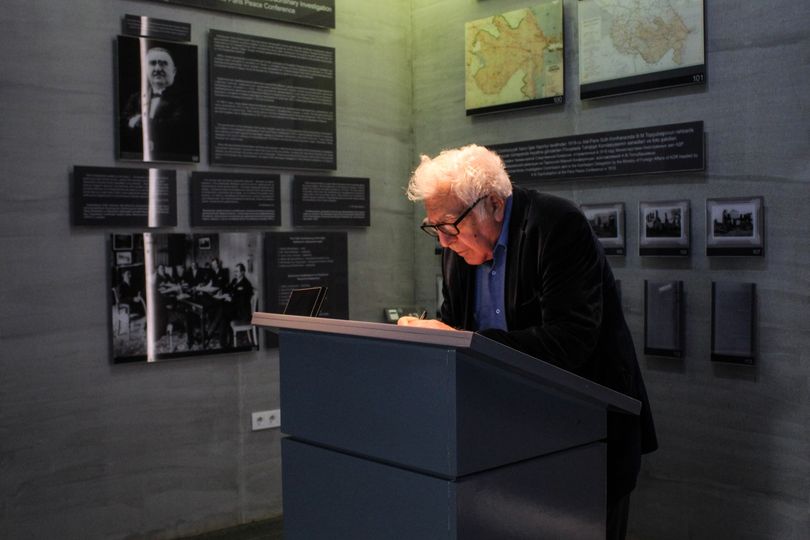
In connection with the "Year of Heydar Aliyev" and the 105th anniversary of the genocide committed against Azerbaijanis on March 31, 1918, a conference called "The importance of giving a historical, political and legal assessment to the genocide of Azerbaijanis" was held in Yasamal district secondary school №150.

Doctor of philosophy in history, associate professor, leading researcher of ANAS Institute of Oriental Studies, specialist of the “Genocide Memorial Complex” in Guba, Subhan Talibli spoke at the conference and spoke about the role of National Leader Heydar Aliyev in giving a political and legal evaluation to the genocides committed against Azerbaijanis. During the conference, the director of the school and history teachers spoke about the genocides that occurred in the history of Azerbaijan. At the end of the event, a film related to the topic was shown.