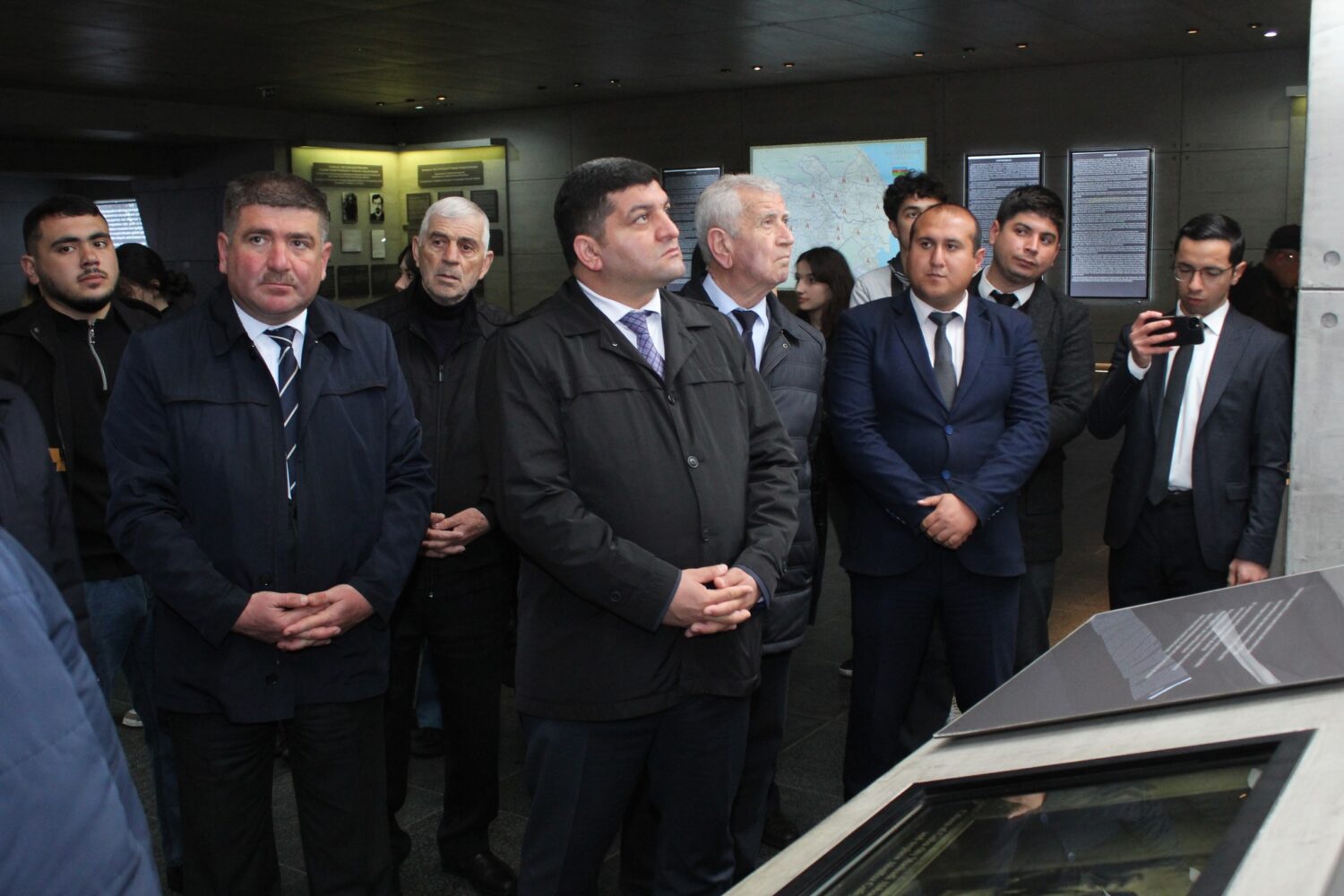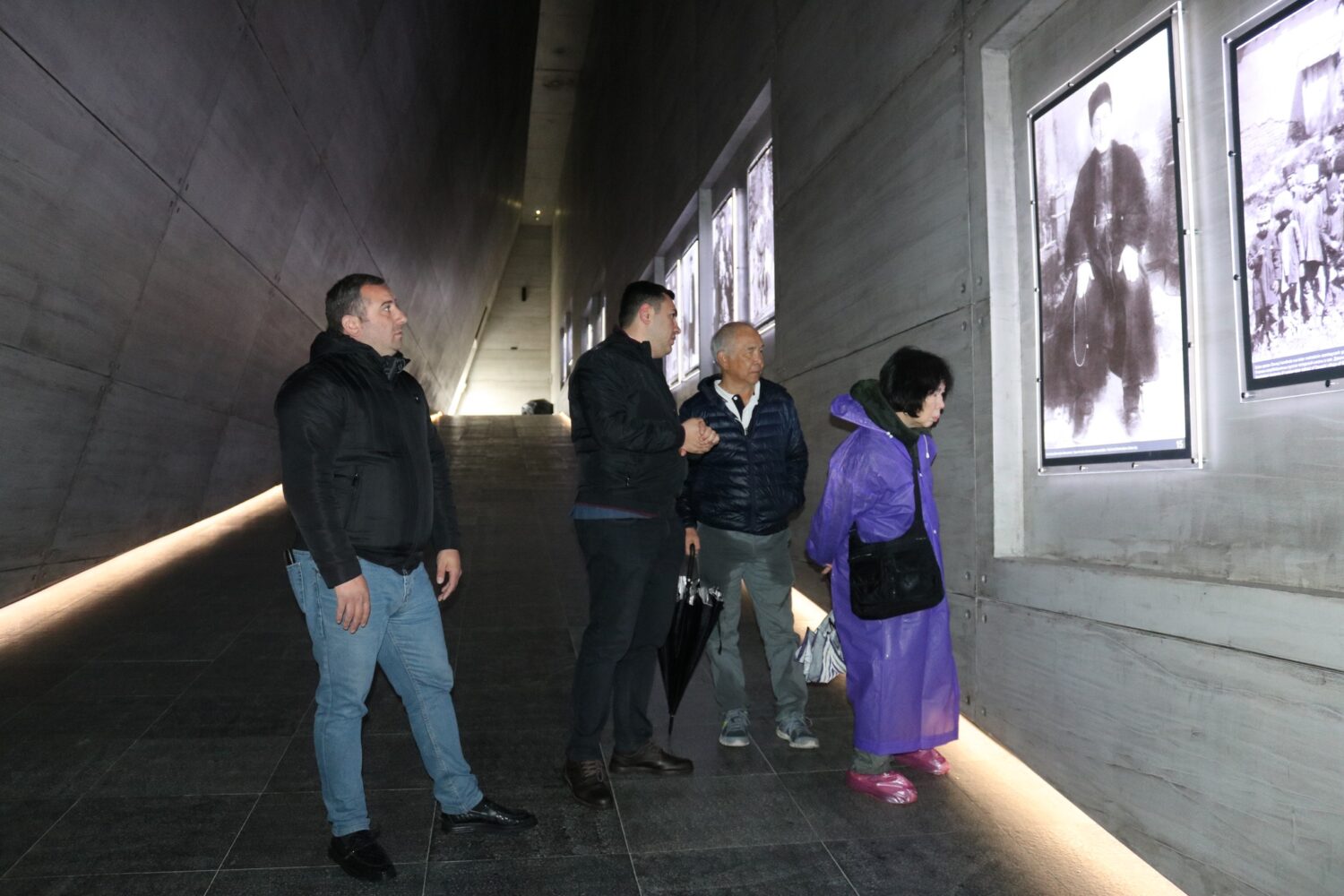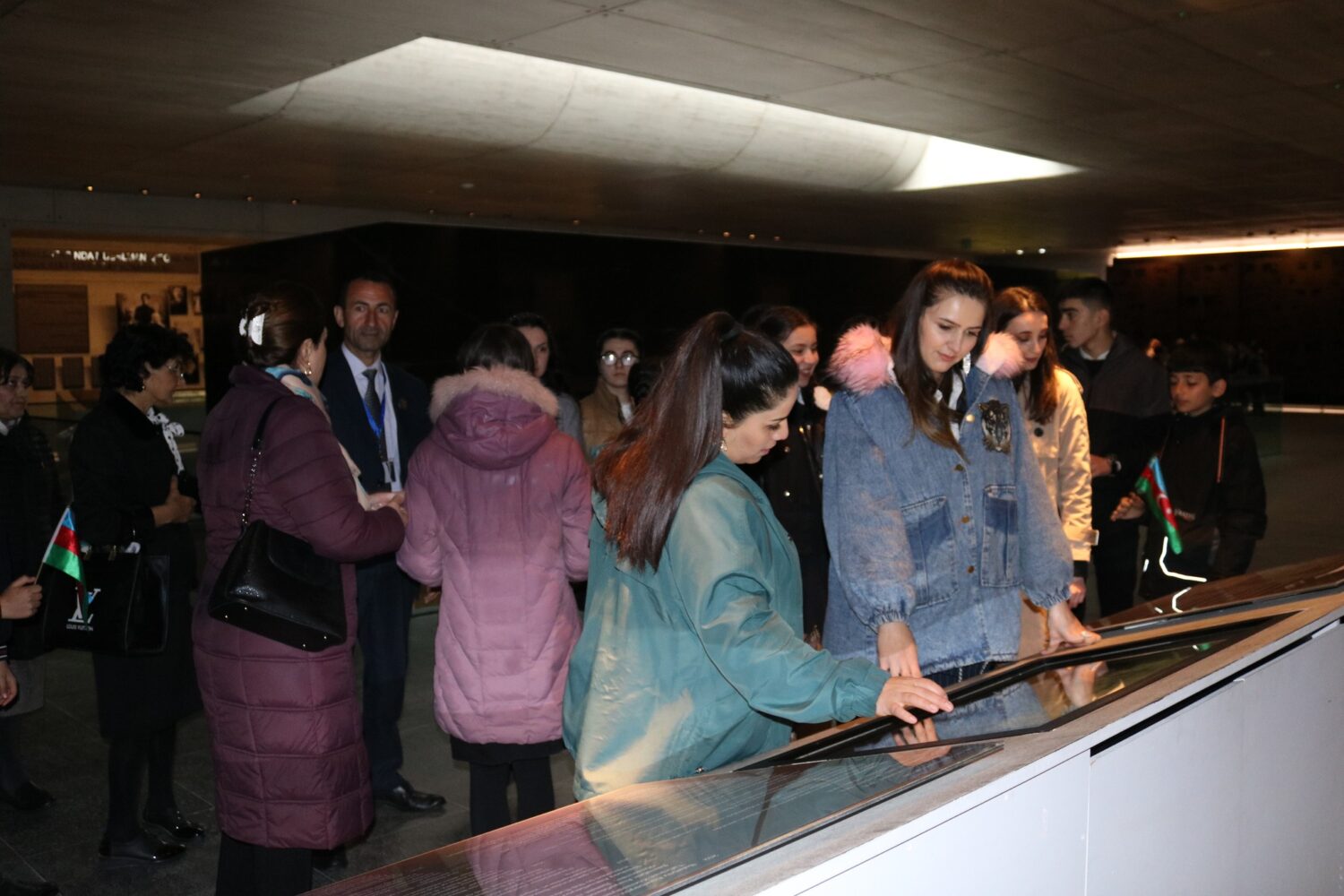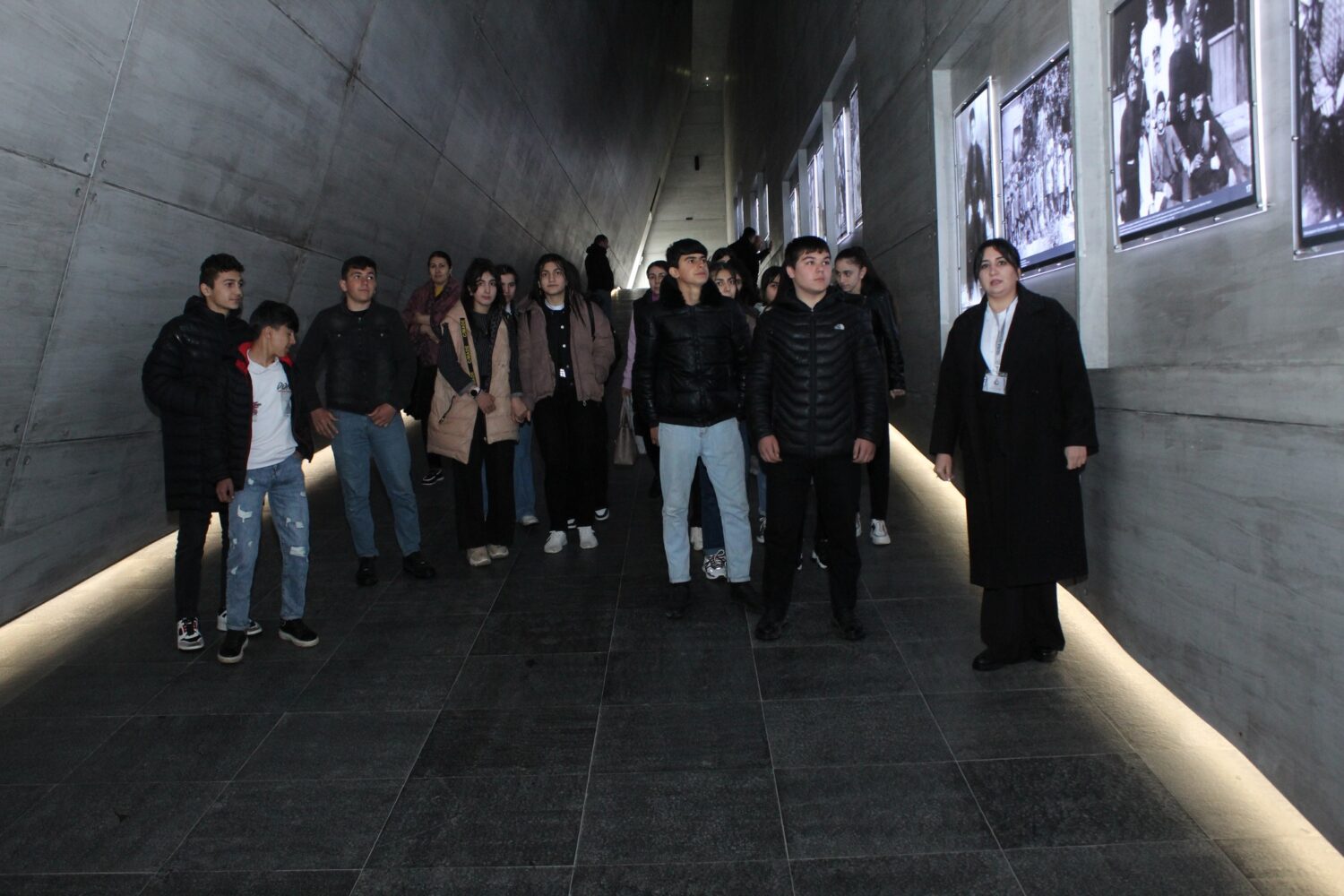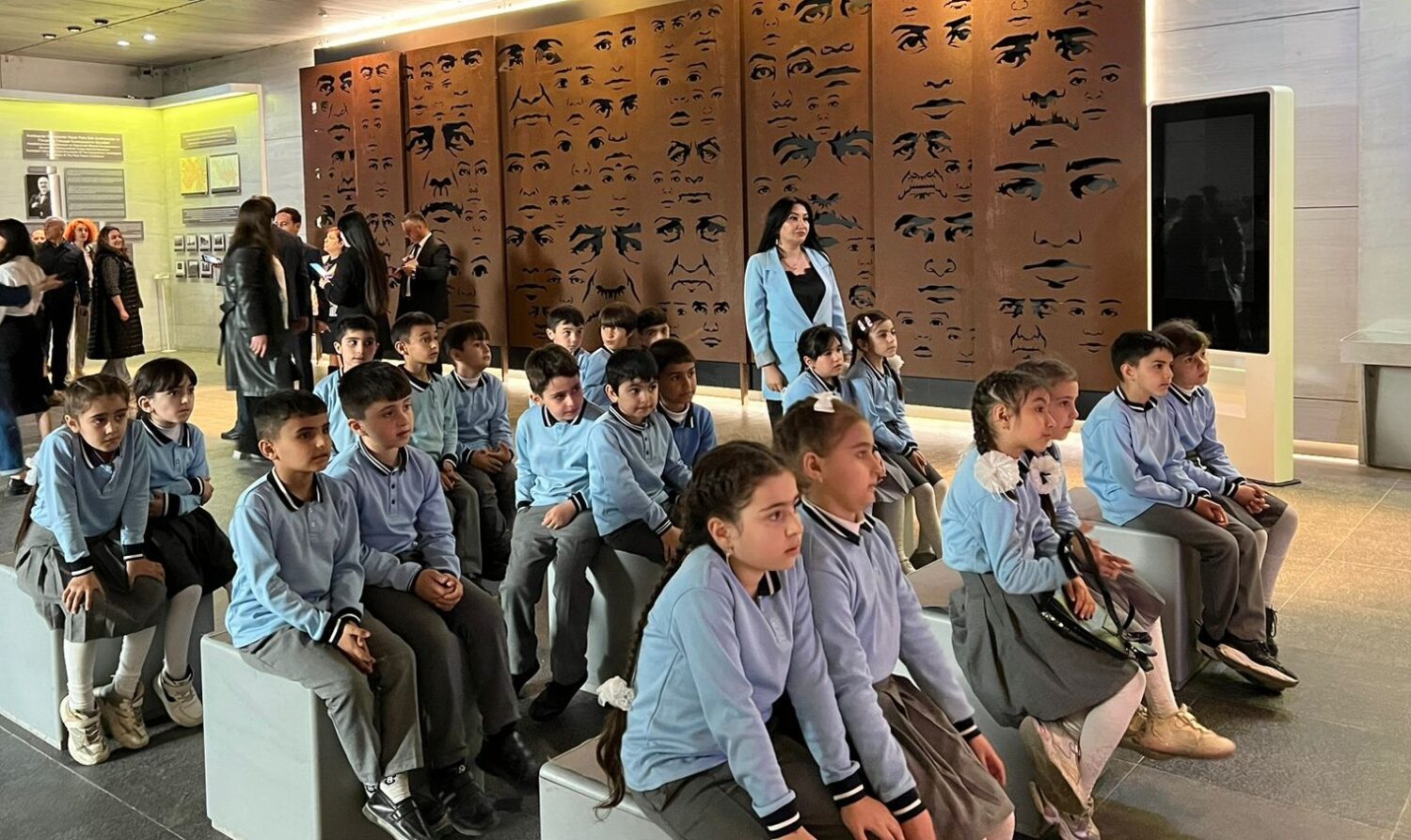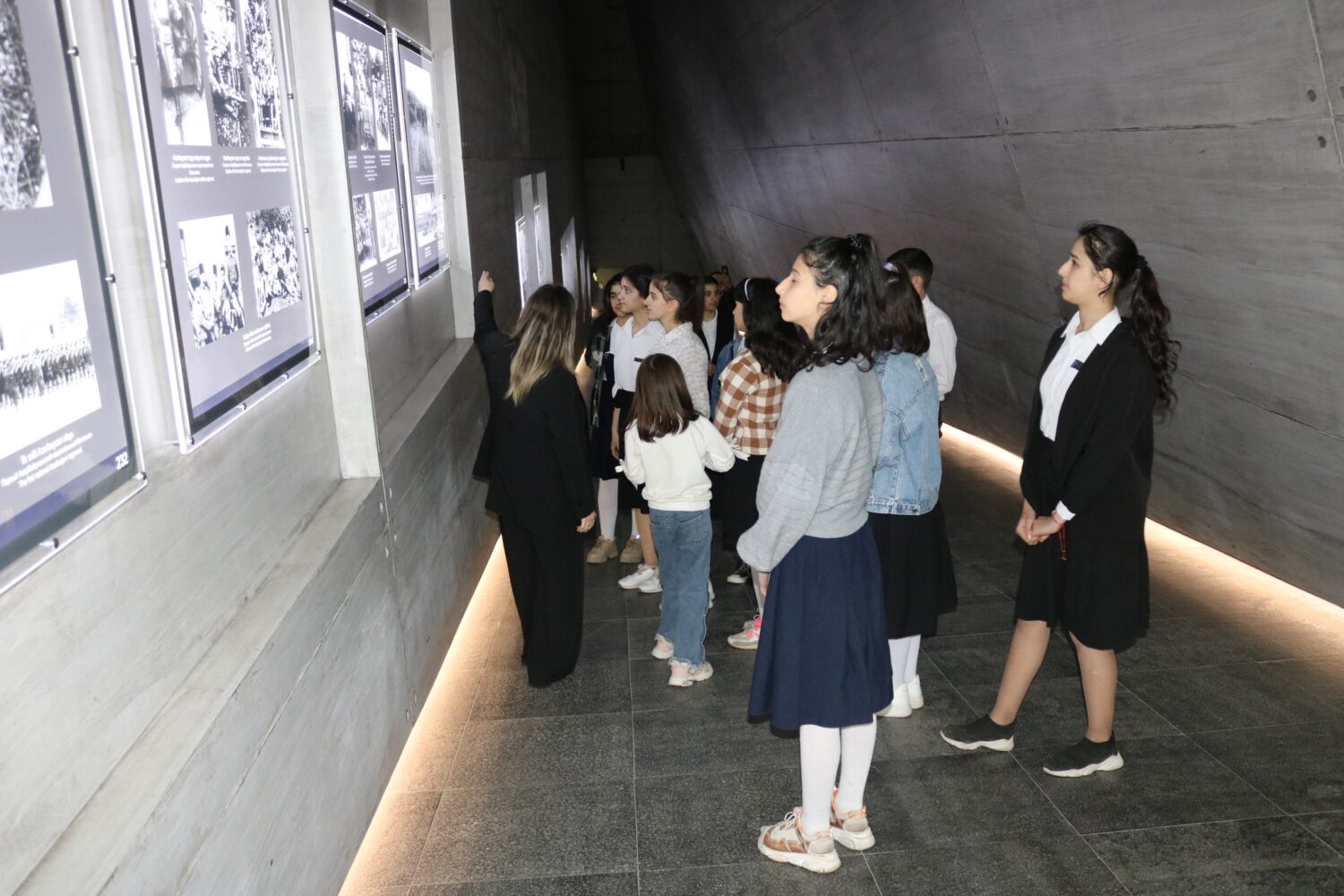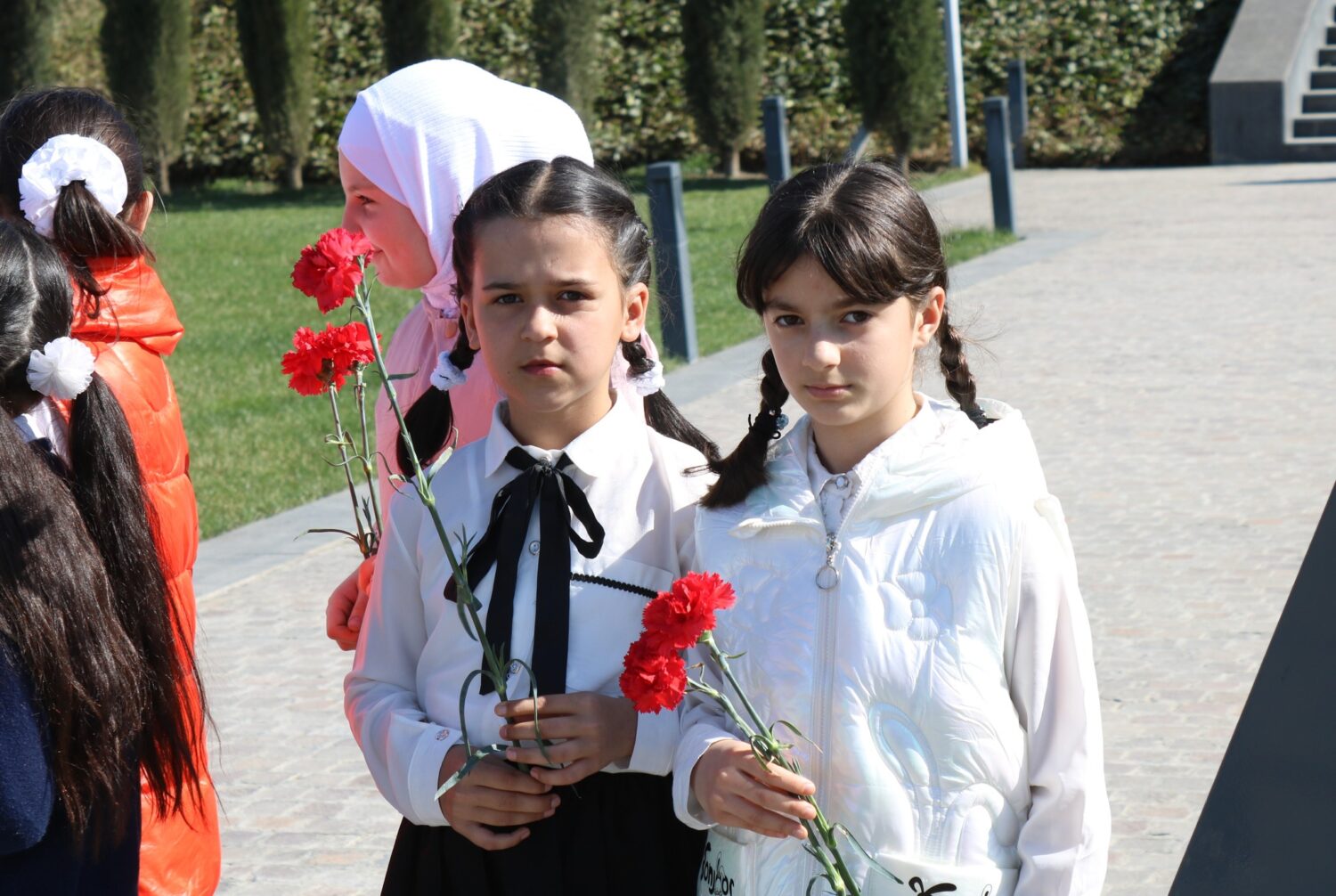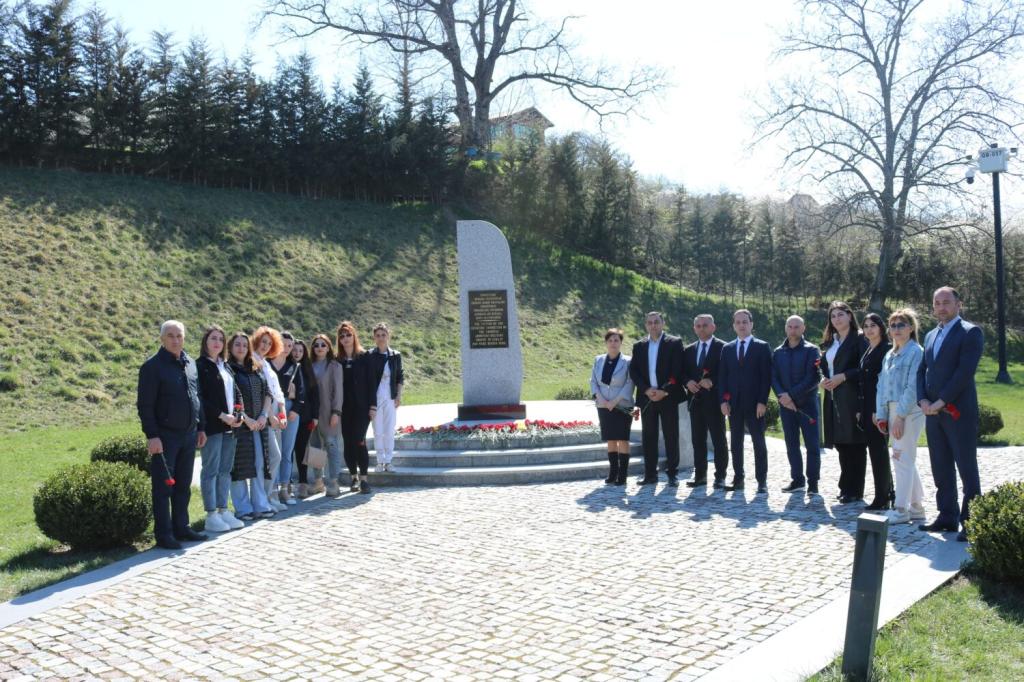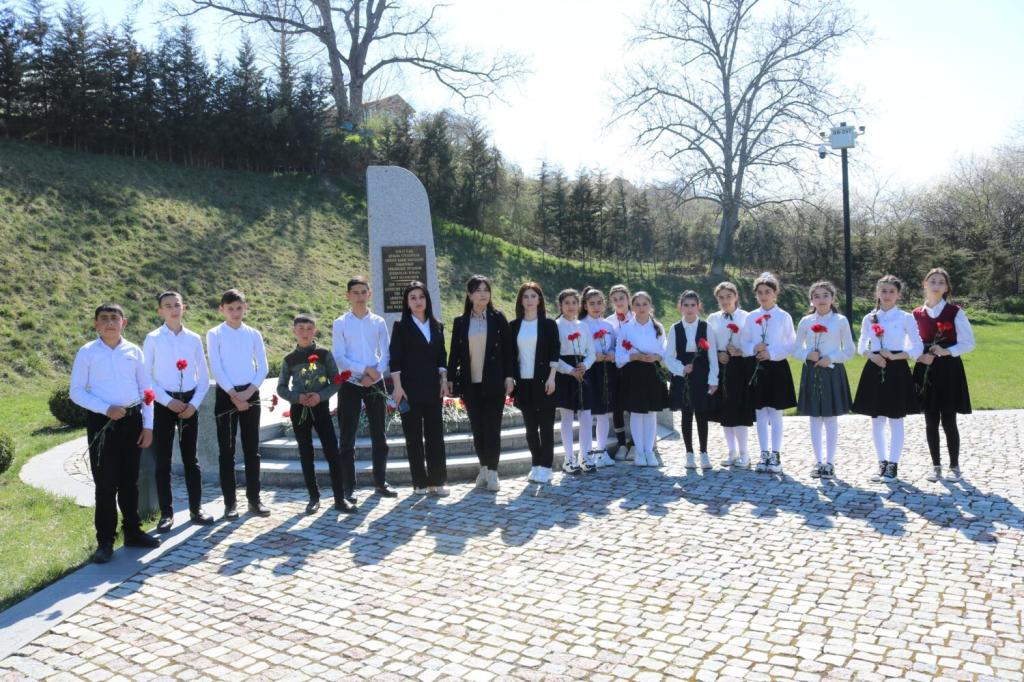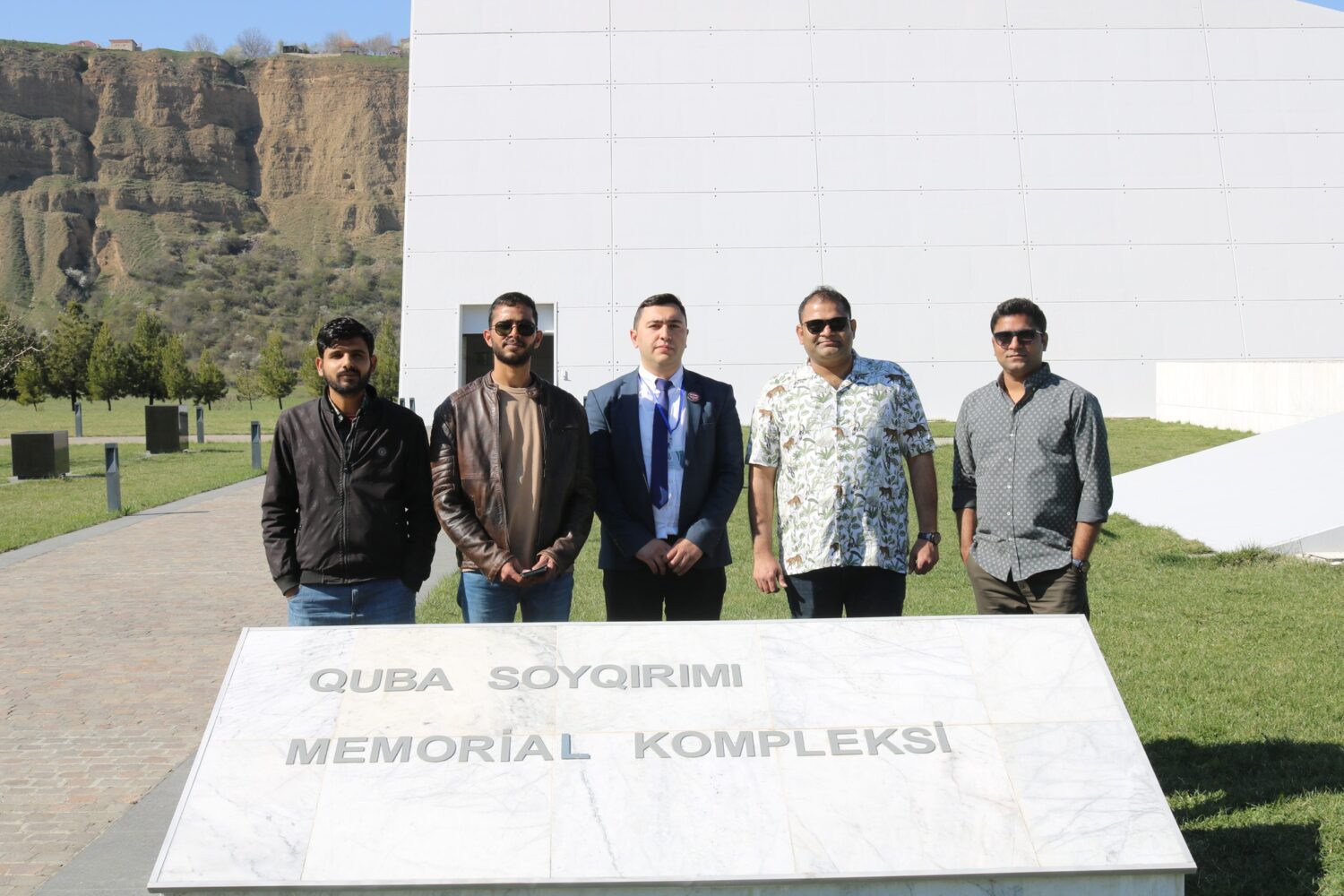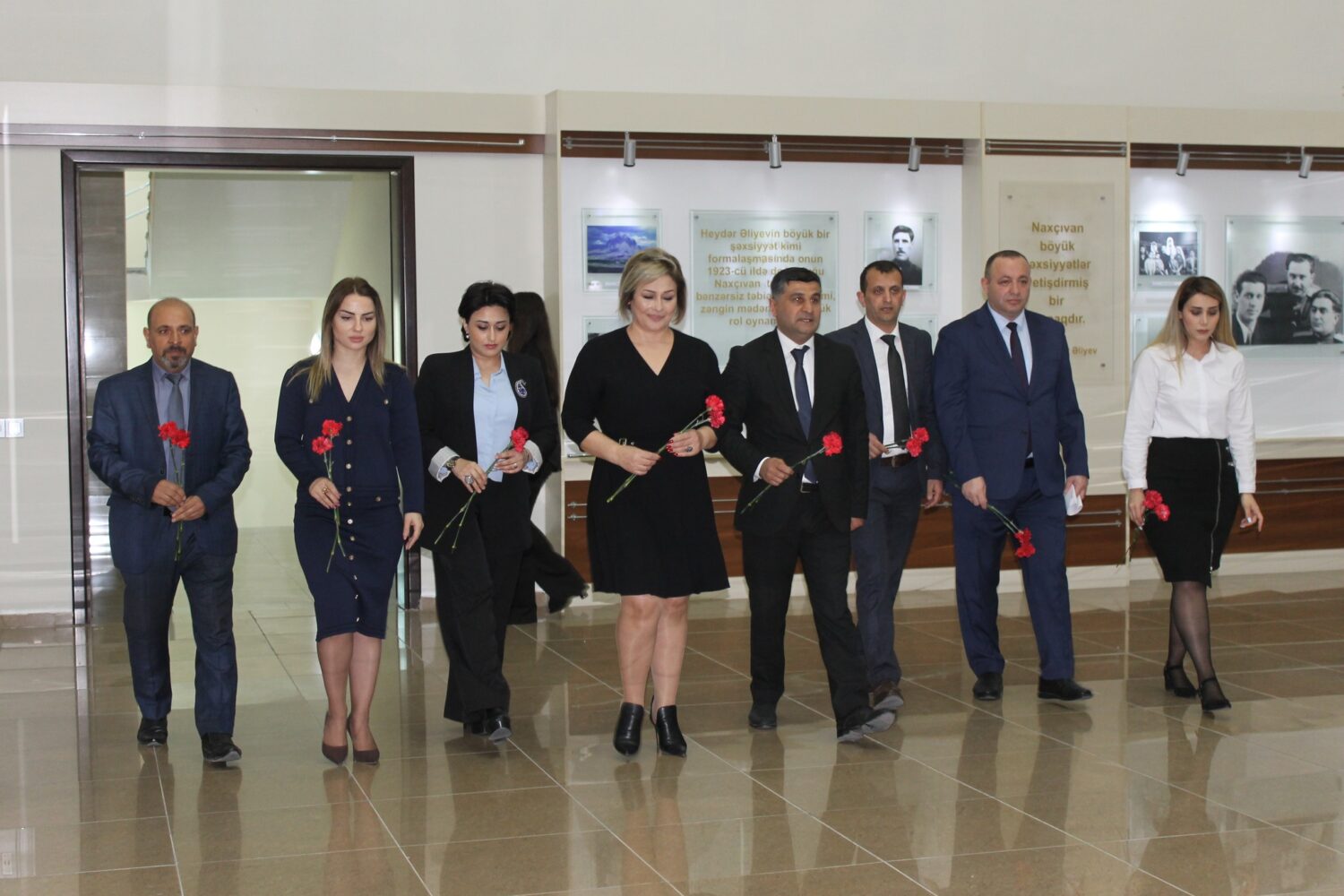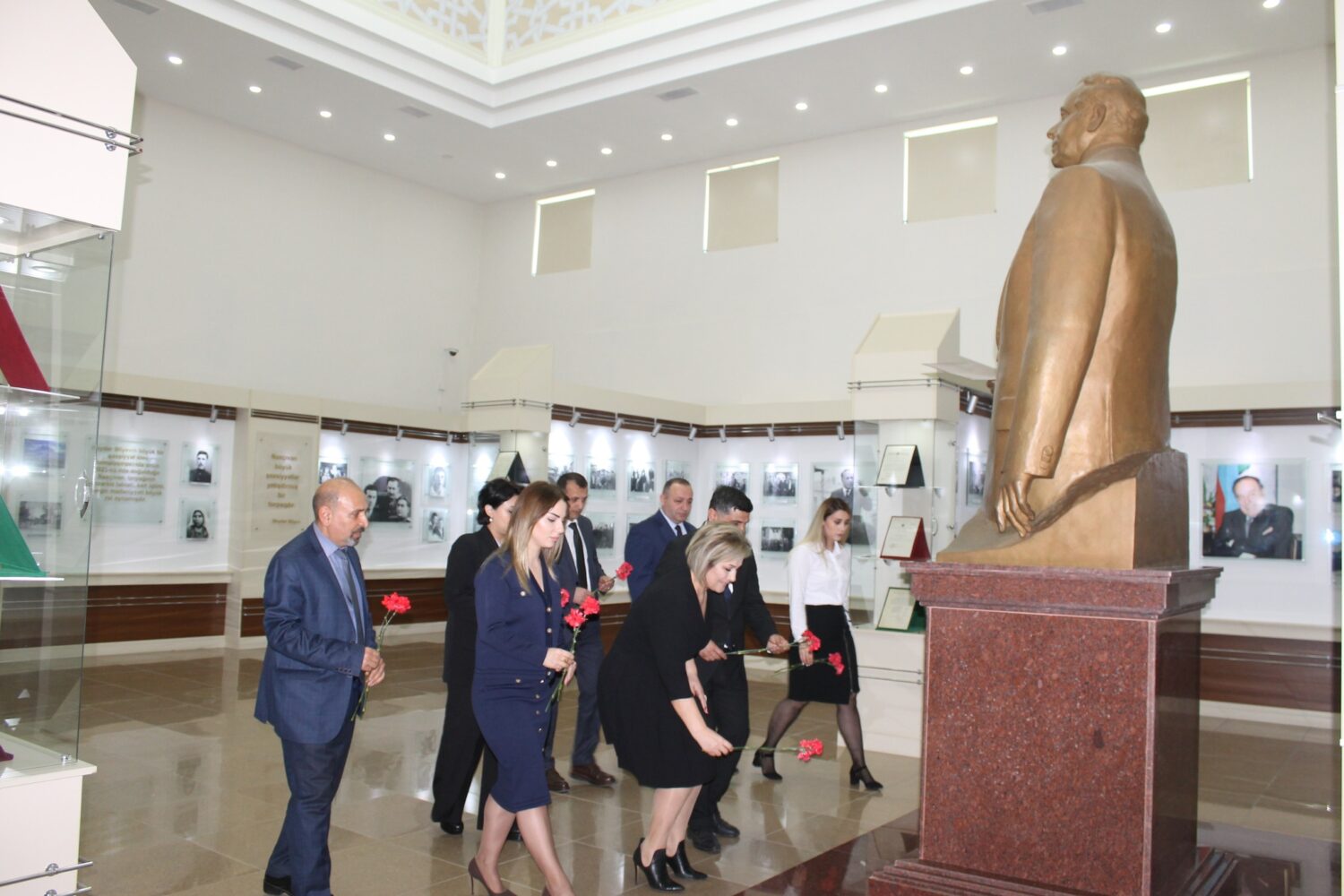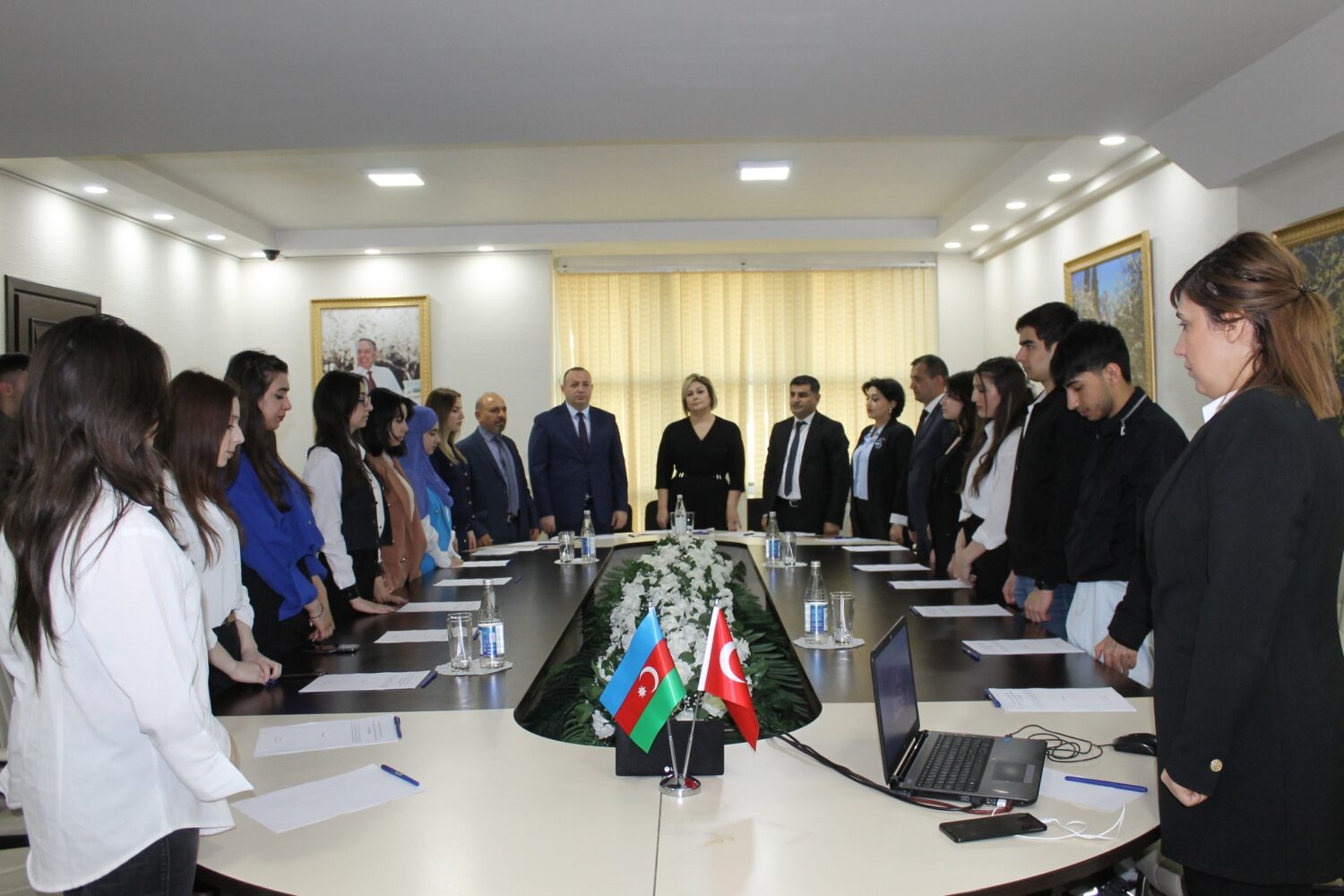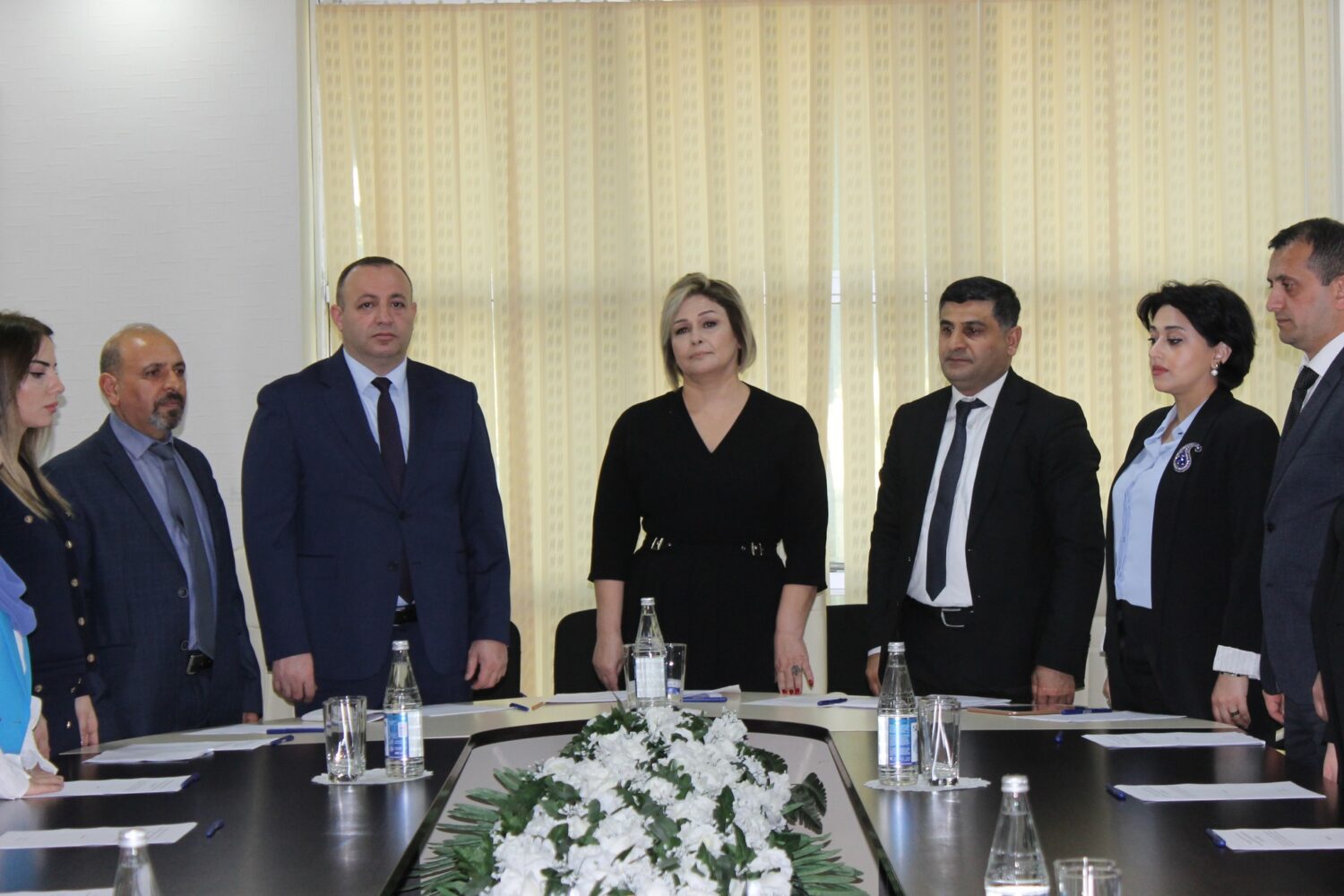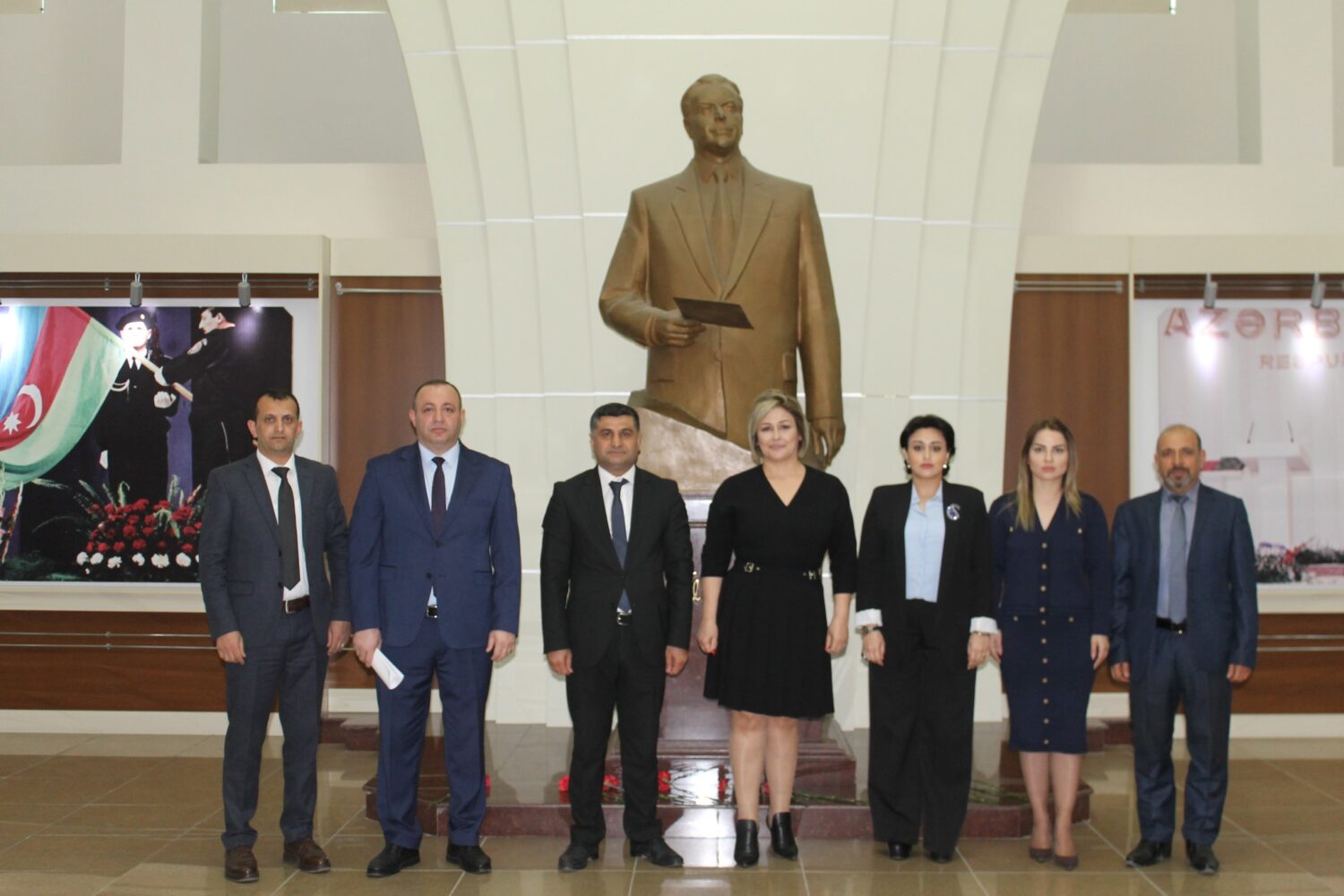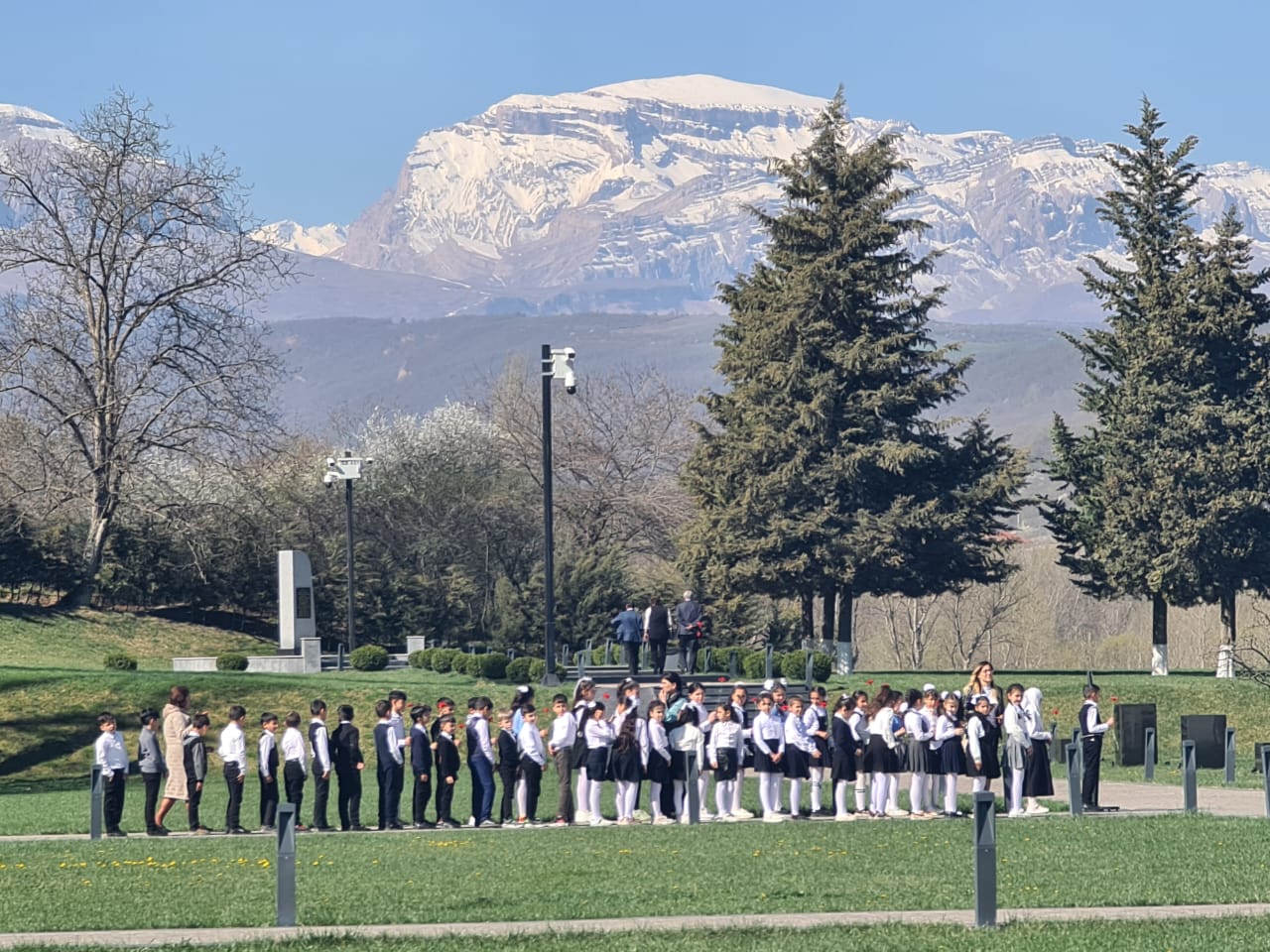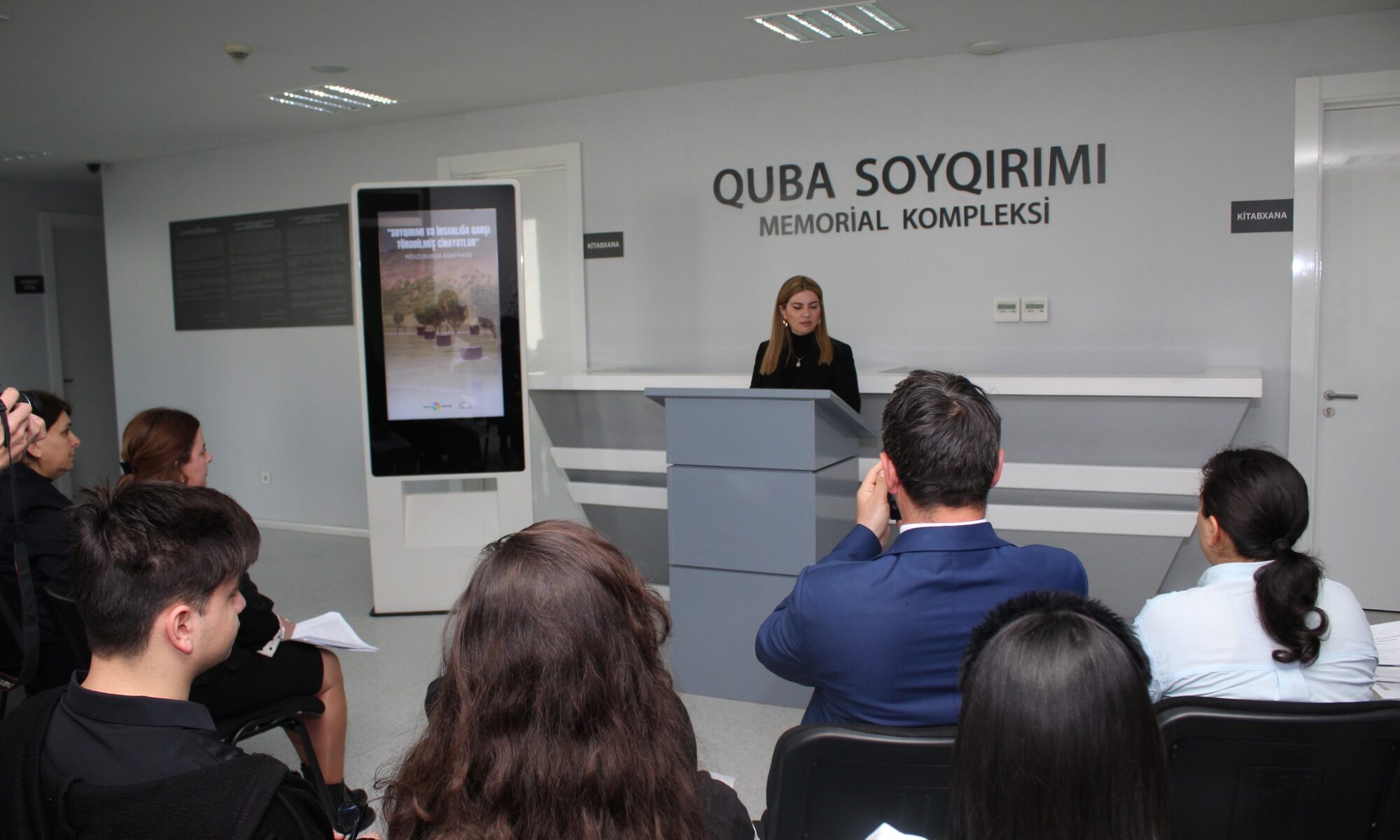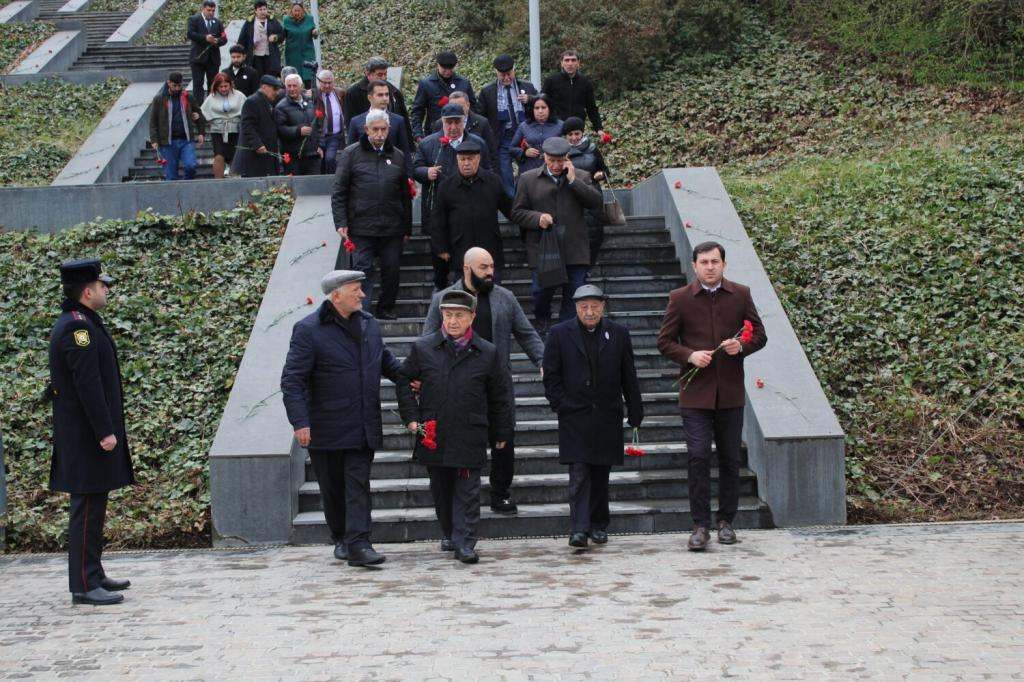
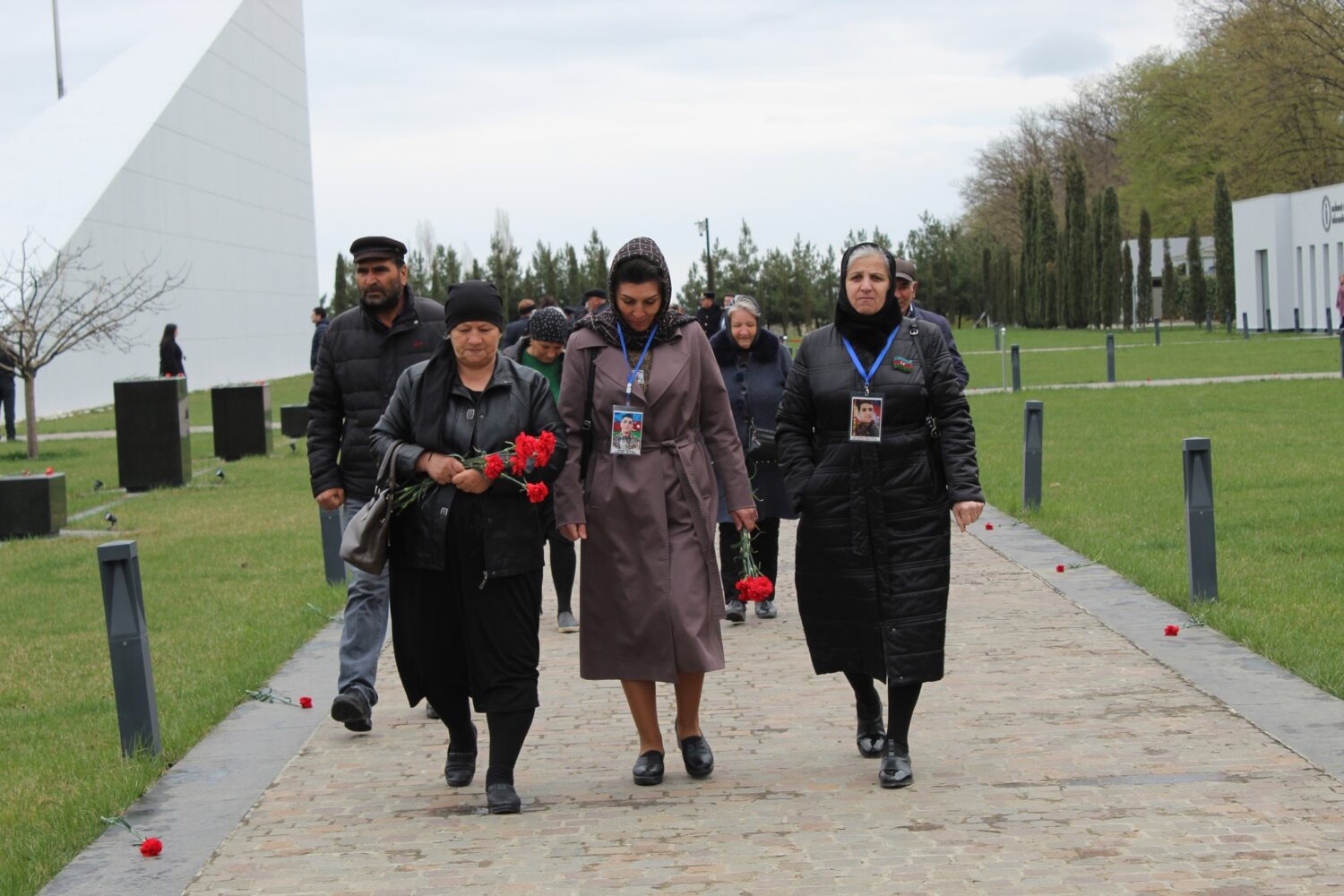
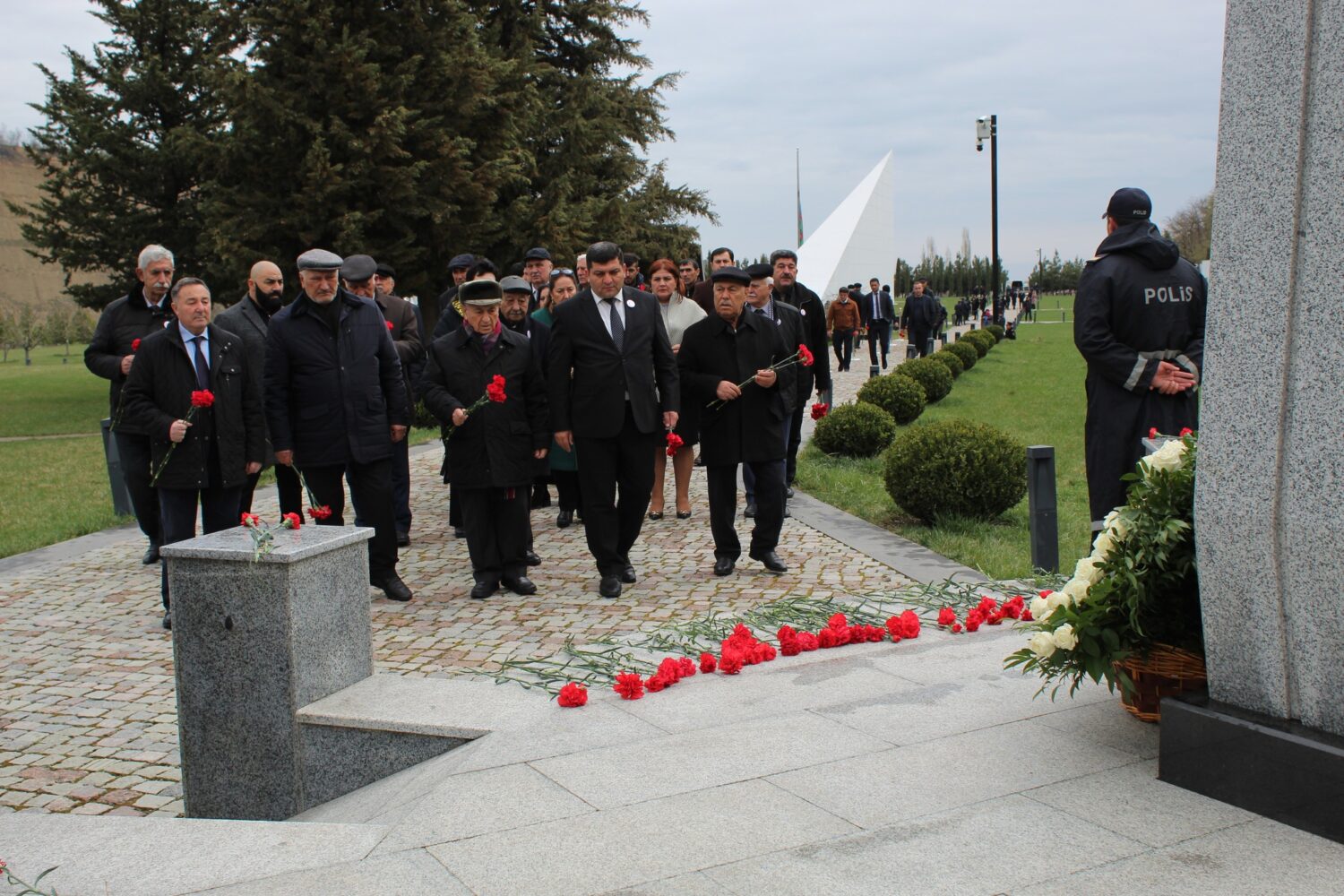
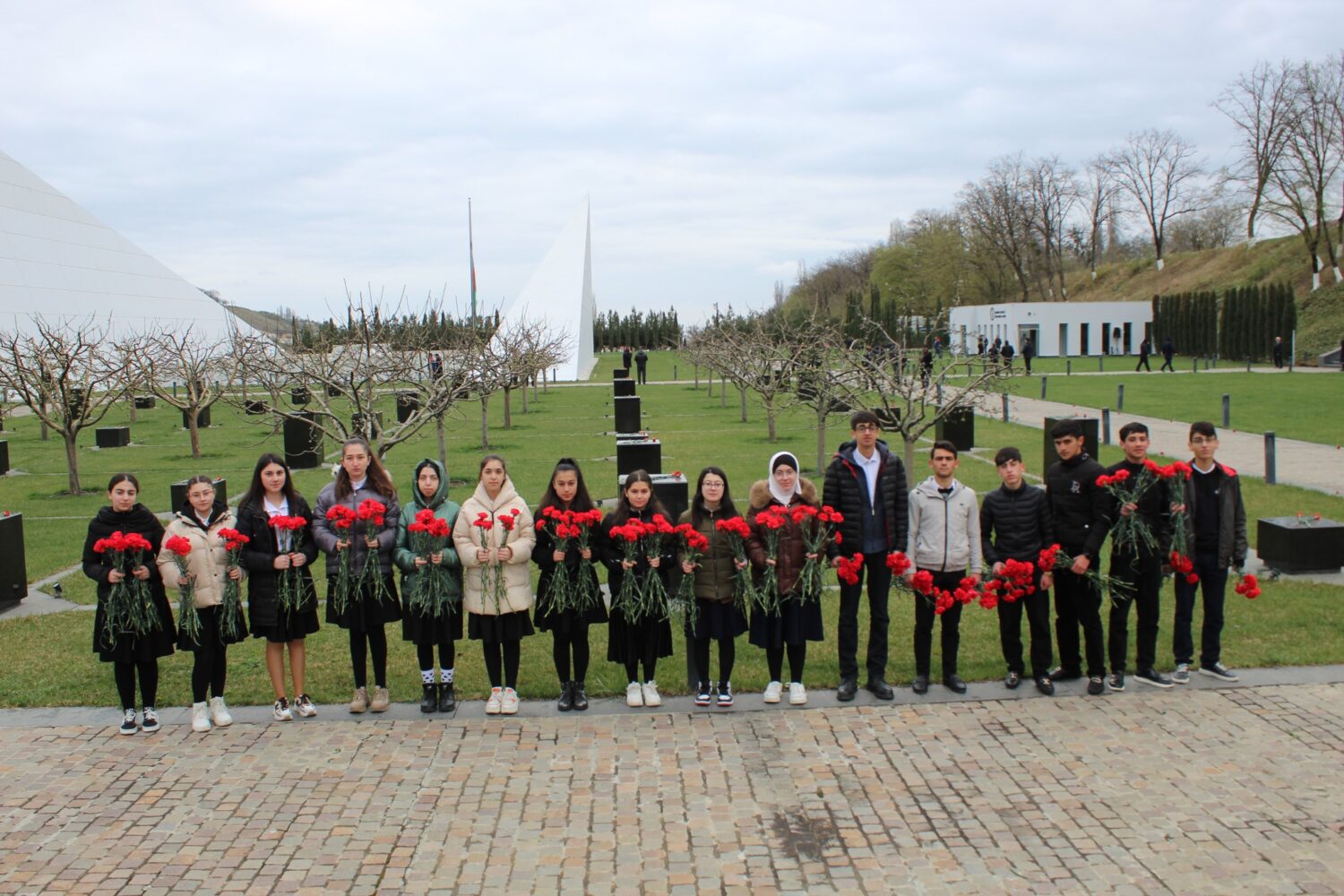

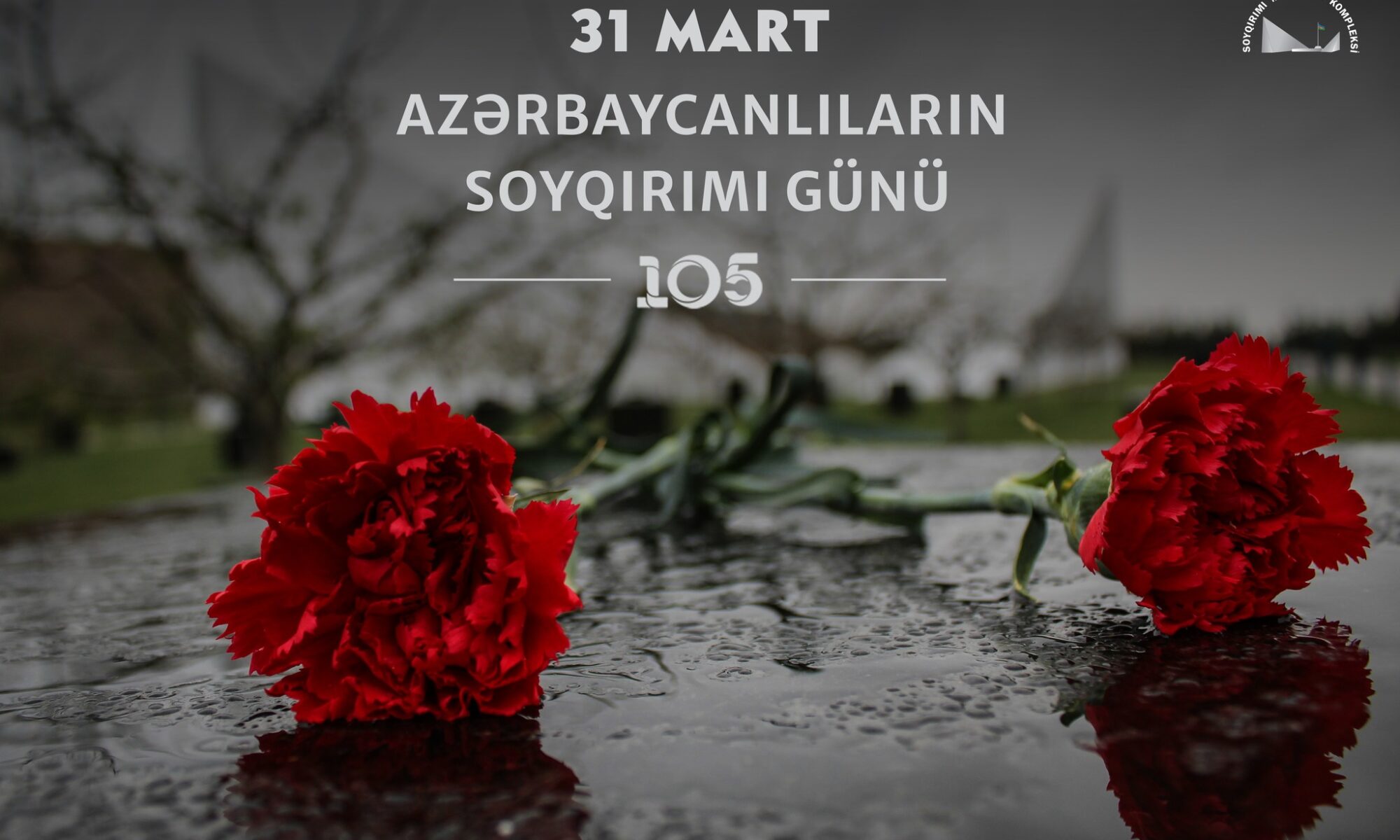
Genocide Memorial Complex continues a series of events in connection with the "Year of Heydar Aliyev" and the 105th anniversary of the genocide of Azerbaijanis on March 31. The next event on "Activity of the Great Leader Heydar Aliyev in the direction of recognition of the 1918 genocide committed against the Azerbaijanis" was held at the Kurdemir Heydar Aliyev Center.

The event was attended by the staff of Kurdemir Regional Culture Department, Museum of History and Local Studies, Art Gallery and the Centralized library system.The speakers noted in their reports that the decree “On the Genocide of Azerbaijanis” signed by the national leader Heydar Aliyev on March 26, 1998 is a very important document in the recognition of these genocides. At the end, the participants of the event were presented with books and booklets containing the facts of the genocide.

From the pen of historians

Doctor of History Atakhan Pashayev writes in his book “On the trail of unopened pages”:
“The events of the bloody march in Baku, contrary to historical facts and documents, by historians of the Soviet era, this massacre is not a policy of genocide carried out as a result of the hostility of one people against another, but part of the All-Russian Civil War, the struggle of the Bolsheviks for Soviet power and their great counter-revolutionary victory. However, it would be pertinent to add that in the chorus of historians of the Soviet era, a peculiar forgery, veiled in Armenian moaning, draws attention to itself. Just flick through the book “Young Turks before the Court of History” by “party and state figure, scientist and educator, communist and citizen (Henrik Azatyan) John Kirakosian” (Yerevan, Ayastan publishing house, 1986) to see how much of history has been distorted and written with prejudice”.

An event was held in the Heydar Aliyev Center of Imishli District in connection with the "Year of Heydar Aliyev" and the 105th anniversary of the genocide committed against Azerbaijanis on March 31.

On February 28, 2023, an educational event was held at the Heydar Aliyev Center to commemorate the “Year of Heydar Aliyev,” as well as the 105th anniversary of the March 31 Genocide of Azerbaijanis, with the joint organization of the Kurdamir Regional Culture Department’s Imishli district representative office, the “Genocide Memorial Complex” in Guba, and the Heydar Aliyev Center of Imishli District.
The event was attended by the leadership and staff of the Kurdamir Regional Culture Department’s Imishli district representative office, the Imishli District Veterans Society, the Imishli District Music School, the Museum of History, the district library, and local cultural institutions. During the event, Aysu Bulbulzadeh, an employee of the Genocide Memorial Complex, informed the participants about the events of the genocide committed against Azerbaijanis at the beginning of the twentieth century, the historical activity of the great leader Heydar Aliyev to give political value to these events with the March 26, 1998 decree, and to publicize the genocides committed against Azerbaijanis outside the country’s borders. Later speakers emphasized that genocide is a crime against humanity. At the conclusion of the event, a documentary film about the genocide events was shown, and books and booklets about the topic were distributed.
It should be noted that this year marks the 105th anniversary of the genocide against Azerbaijanis, and the Memorial Complex is hosting a series of events in accordance with the relevant event plan.


"Anig Castle"

Anig Castle, which belongs to the Middle Ages, was built at an altitude of 1100 m above sea level, on the right bank of Gusarchay, in a strategically important area. The Anig fortress, which controlled the Salavat mountain pass, was located in the south of the present Anig village. In the construction of the fortress, all the possibilities of the terrain were successfully used, artificial fortifications were also installed. The defensive walls were built of river stones. Only two parts of the walls remain: the length of the first part is 15-16 meters. The second part is the corner tower of the castle gate. The height of the remains is from 5.8 to 9.3 meters. Fragments of glazed pottery dating back to the 9th-13th centuries were found on the territory of the castle. Based on the information of the Georgian chronographer, it is assumed that the Anig fortress, which existed since the 9th century, was destroyed in 1288.

Staff of the Ministry of Culture commemorates the victims of the Khojaly genocide

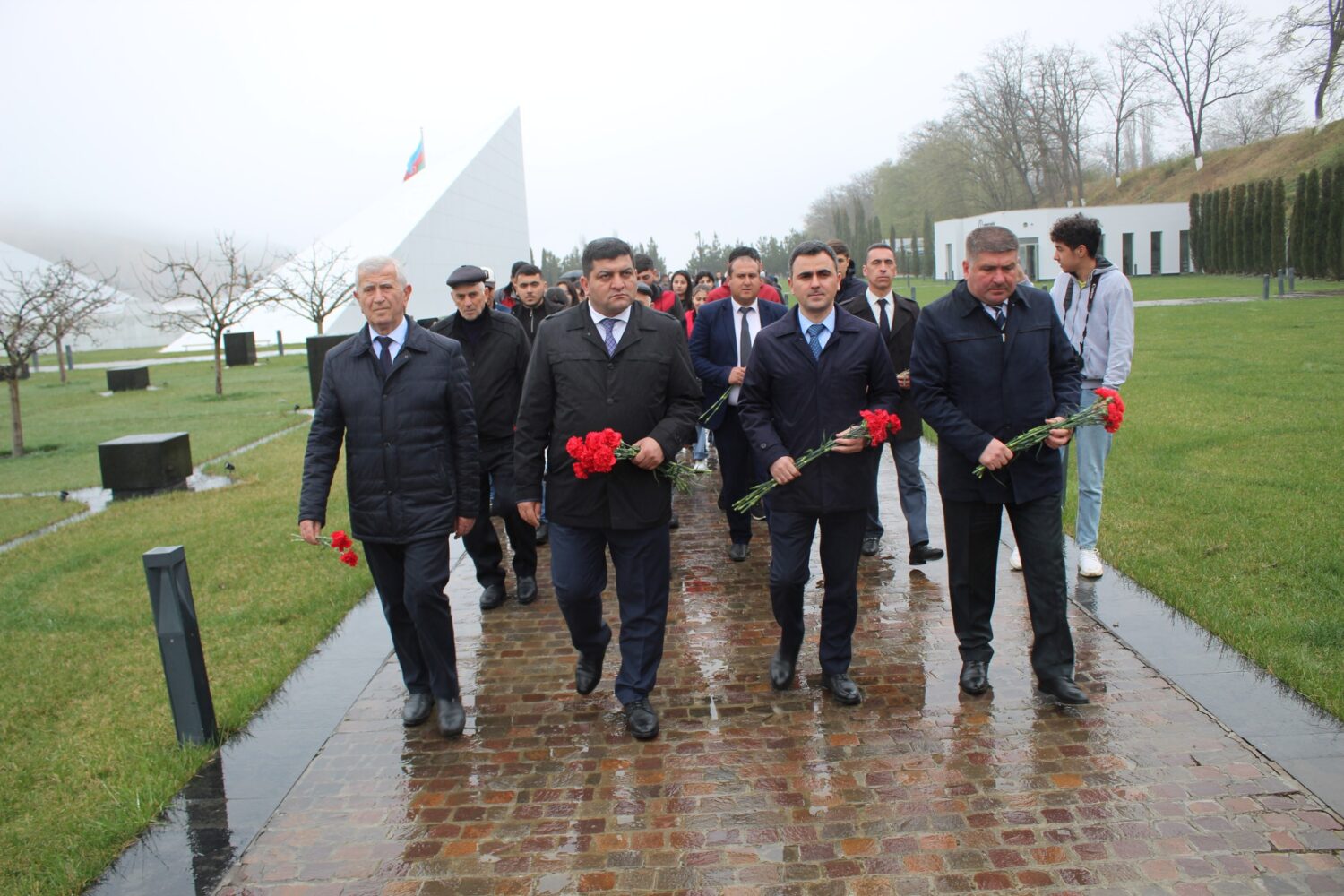
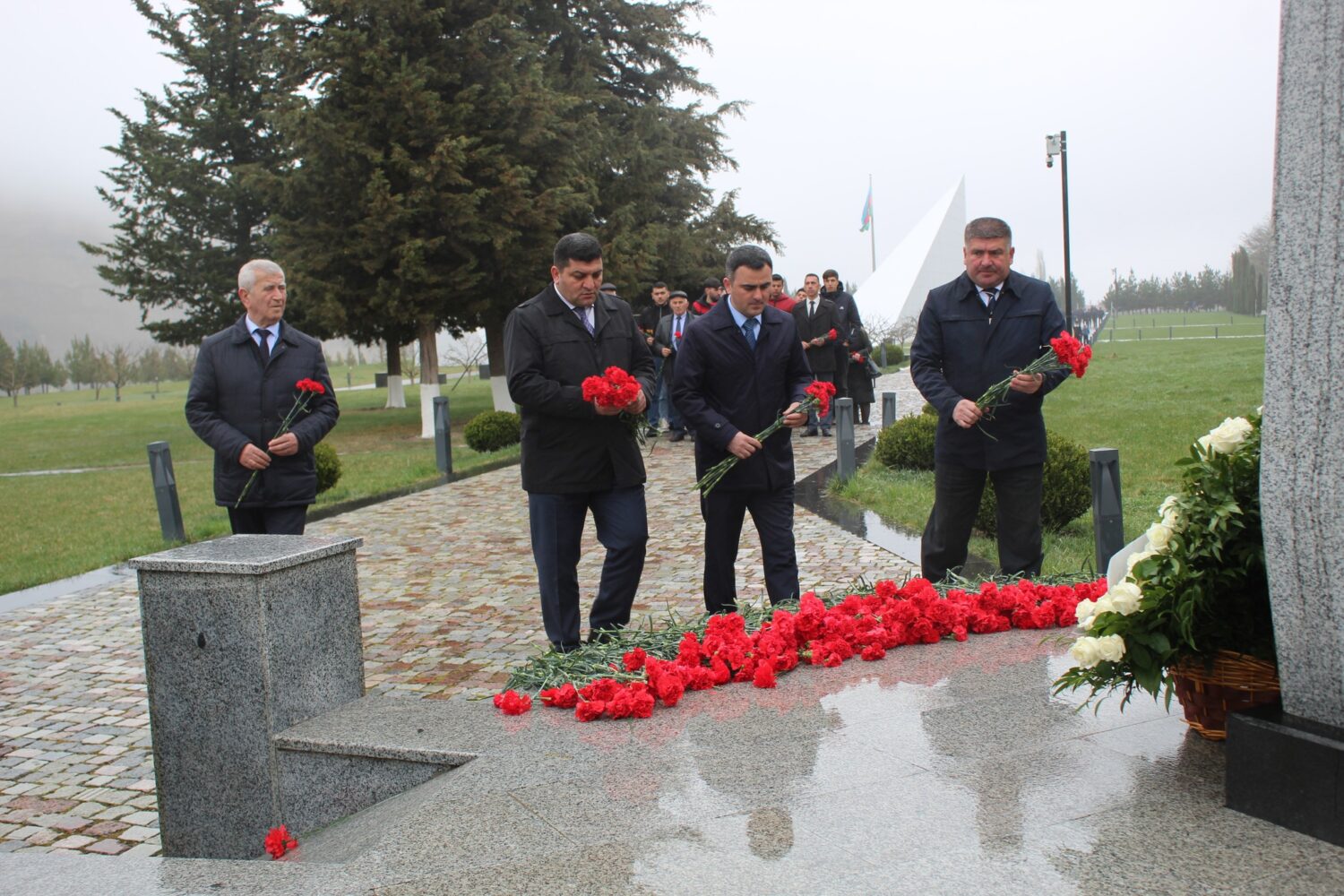
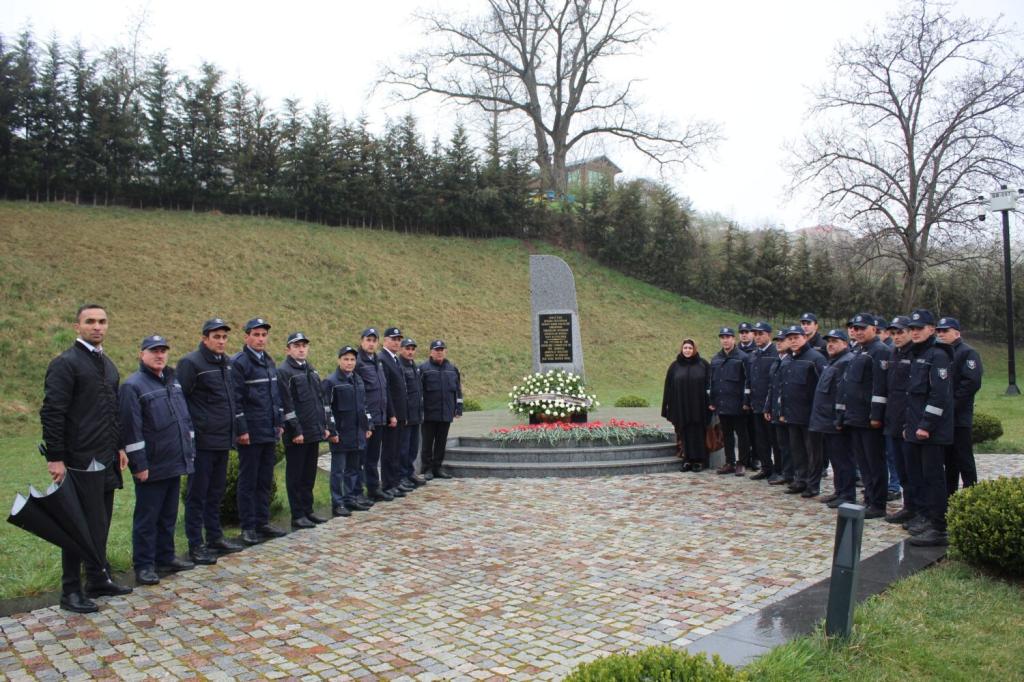
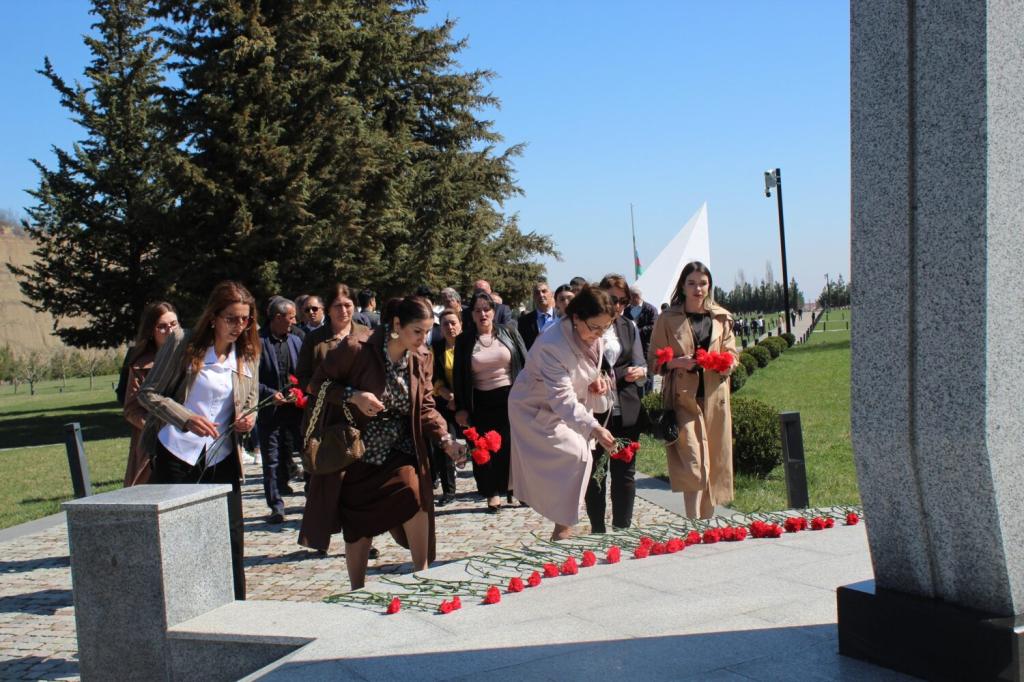
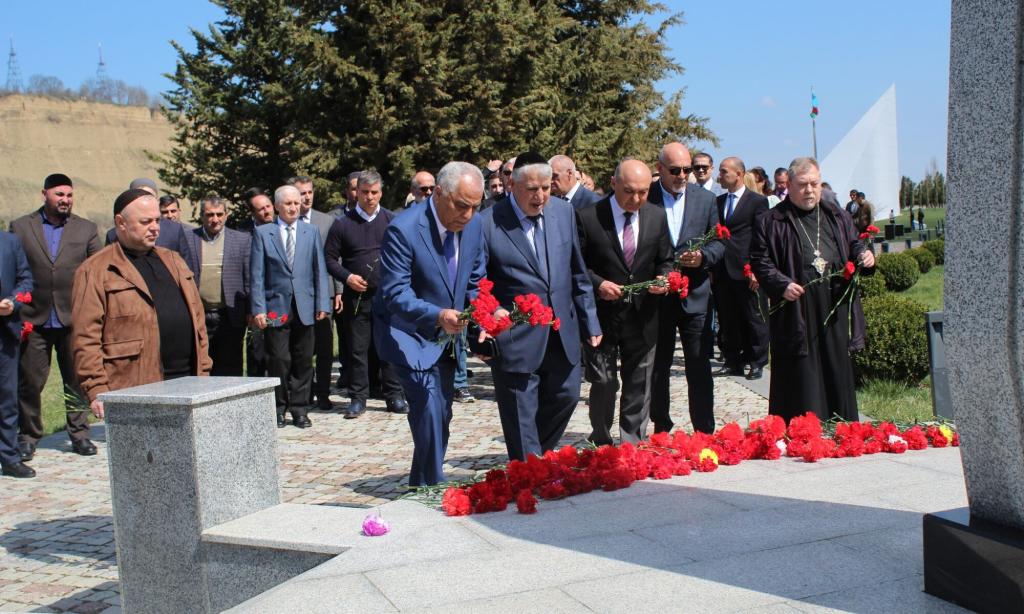
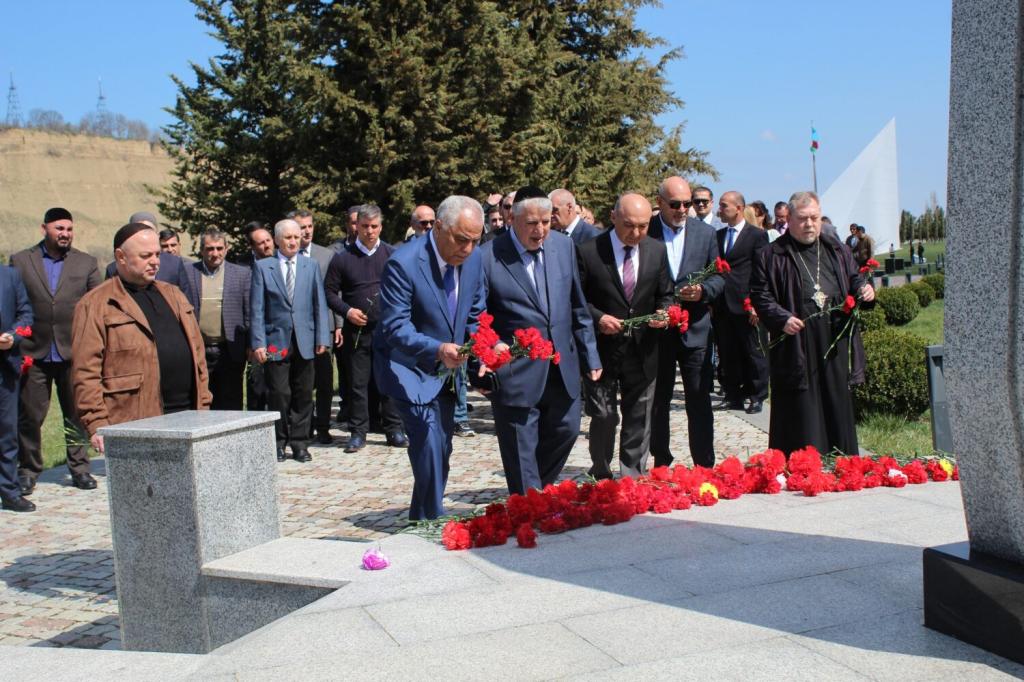
The Khojaly genocide, a bloody tragedy that earned a place in human history as one of the darkest events of the 20th century, is commemorated today on its 31st anniversary. On this occasion, the staff of the Ministry of Culture visited the Khojaly genocide monument on February 26, and laid flowers in front of it, paying homage to the victims of the tragedy. During the night of February 25–26, 1992, Armenian armed groups committed yet another massacre against the Azerbaijani people, destroying Khojaly entirely. 613 people lost their lives, 1275 civilians were taken captive, and the fate of 150 individuals remains unknown. Additionally, 8 families were wiped out, 25 children were left orphaned, and 130 children lost one parent in this genocidal act.

An exhibition of books and photos dedicated to the 105th anniversary of the genocide of Azerbaijanis and the 31st anniversary of the Khojaly genocide was held at the Heydar Aliyev Center in Imishli, jointly organized by the "Genocide Memorial Complex" and the Imishli District Executive Power, within the framework of the 2023 "Year of Heydar Aliyev".

Visitors to the center were also given the opportunity to watch a documentary film dedicated to the genocides of 1918. It should be noted that the exhibition will last for several days

Today in History

 
Abbasgulu bey Khanbaba oglu Shadlinsky, was born on February 24, 1886 in the village of Upper Vedi of Yerevan province. Having great prestige among the people and heading a volunteer detachment of 200 people in early 1918, Shadlinsky had special services in preventing genocides committed by Dashnak-Armenian armed formations against Azerbaijanis in Nakhichevan, Iravan, Darelayaz, Zangezur and other areas. After the proclamation of Soviet power in Nakhichevan on July 28, 1920, accepting the proposal of the Military Revolutionary Committee and Nariman Narimanov, Shadlinsky united his military units with the Red Guards. Shadlinsky’s detachment defeated the executioner Dron’s Dashnak forces in the battles towards Zangezur, ending the Anglo-Dashnak occupation. A. Shadlinsky remained in Nakhijevan until the end of 1922 and was in charge of guarding its borders.
It should be noted that based on the novel “The Snowy Pass” by Farman Karimzada and its plot about the life and activities of Shadlinsky is told in the feature film “The Last Pass” directed by Kamil Rustambekov filmed at the “Azerbaijanfilm” film studio.
Source: Encyclopedia of the Democratic Republic of Azerbaijan: Volume II.

An event dedicated to the 105th anniversary of the genocide of Azerbaijanis and the 31st anniversary of the Khojaly genocide , with the joint organization of the Genocide Memorial Complex and Guba branch of the Azerbaijan State Pedagogical University was held. University employees Dr.

Ismayil Mahmudov, Dr. Tahmina Aliyeva, Deputy Director of the Genocide Memorial Complex Mehriban Aliyeva, Associate Professor Subhan Talybli, leading researcher of the Institute of Oriental Studies of ANAS, Abutalib Turabov, an employee of the complex, and teachers and students of the Guba branch of Azerbaijan State Pedagogical University took part in the event. The speakers who spoke were about the killing of more than 50,000 innocent people by Armenian usurpers during the genocides of 1918, the activity of the memorial complex, the atrocities committed by Armenian armed groups in the city of Khojaly on the night of February 25-26, 1992, including information about the Heydar Aliyev’s activity in the introducing the Khojaly genocide to the world. At the end, various booklets containing the facts of the genocide were presented to the participants of the event.

Let's get know and make widely known our national monuments!

Anig Castle, which belongs to the Middle Ages, was built at an altitude of 1100 m above sea level, on the right bank of Gusarchay, in a strategically important area. The Anig fortress, which controlled the Salavat mountain pass, was located in the south of the present Anig village. In the construction of the fortress, all the possibilities of the terrain were successfully used, artificial fortifications were also installed. The defensive walls were built of river stones. Only two parts of the walls remain: the length of the first part is 15-16 meters. The second part is the corner tower of the castle gate. The height of the remains is from 5.8 to 9.3 meters. Fragments of glazed pottery dating back to the 9th-13th centuries were found on the territory of the castle. Based on the information of the Georgian chronographer, it is assumed that the Anig fortress, which existed since the 9th century, was destroyed in 1288.


An event was held in connection with the 105th anniversary of the genocide of Azerbaijanis on March 31 and the 31st anniversary of the Khojaly genocide on February 26.

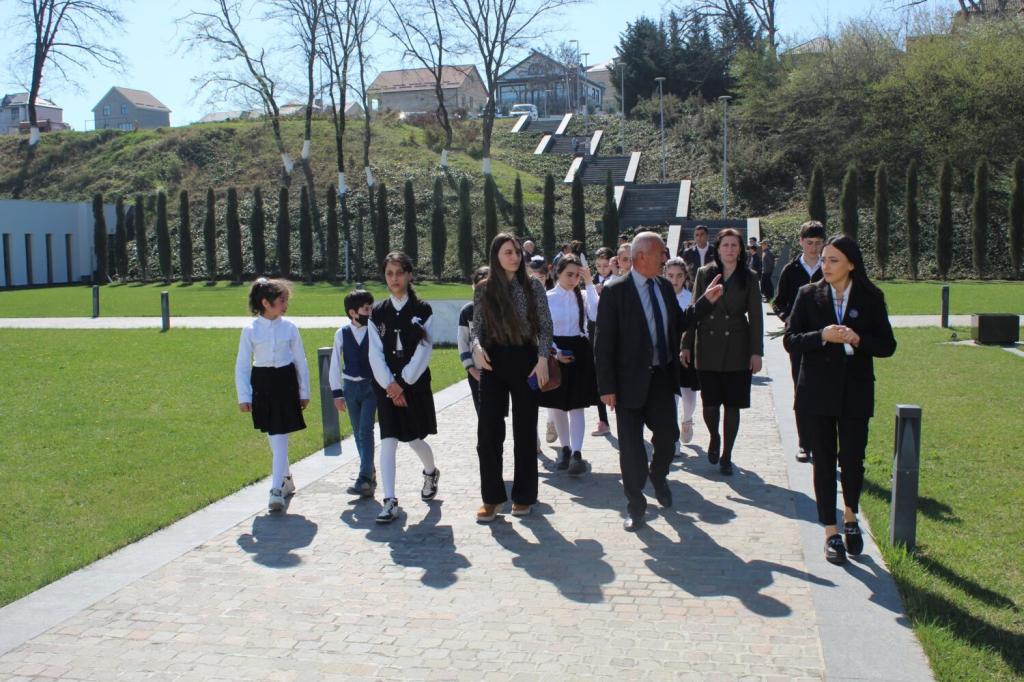
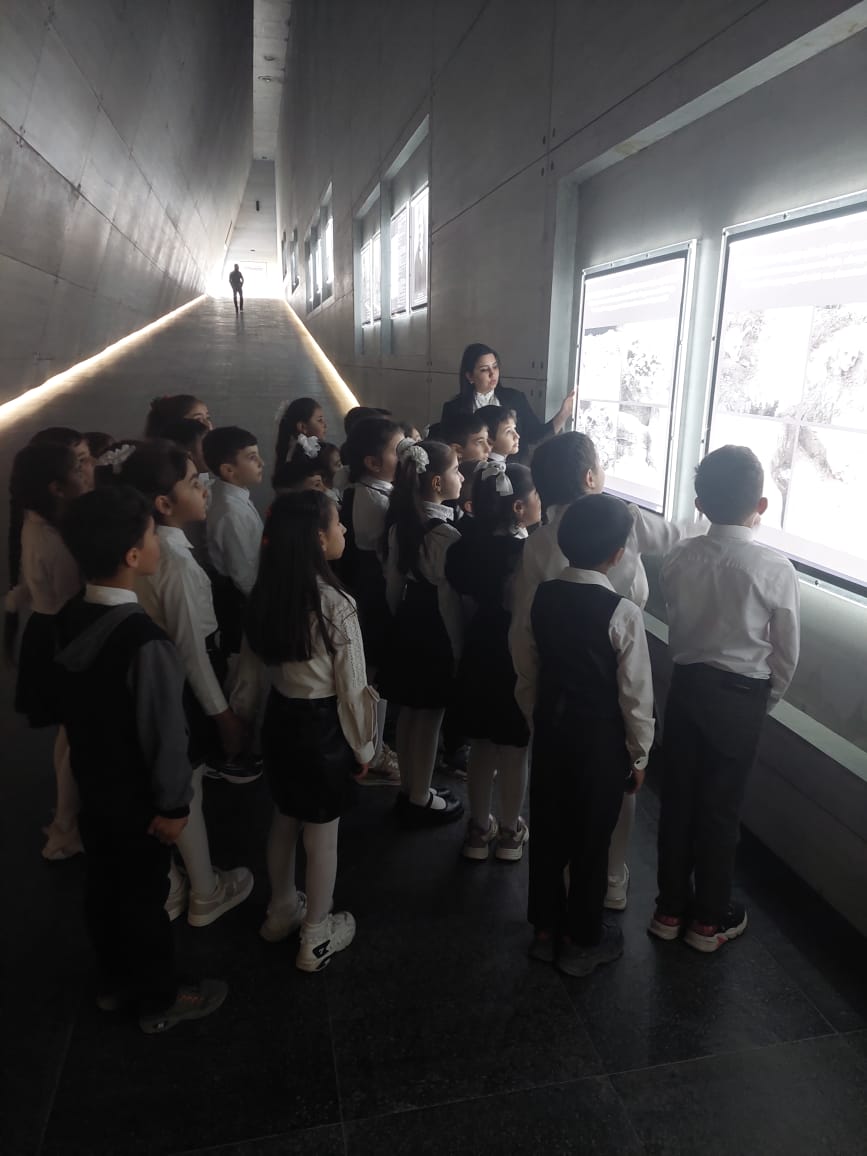
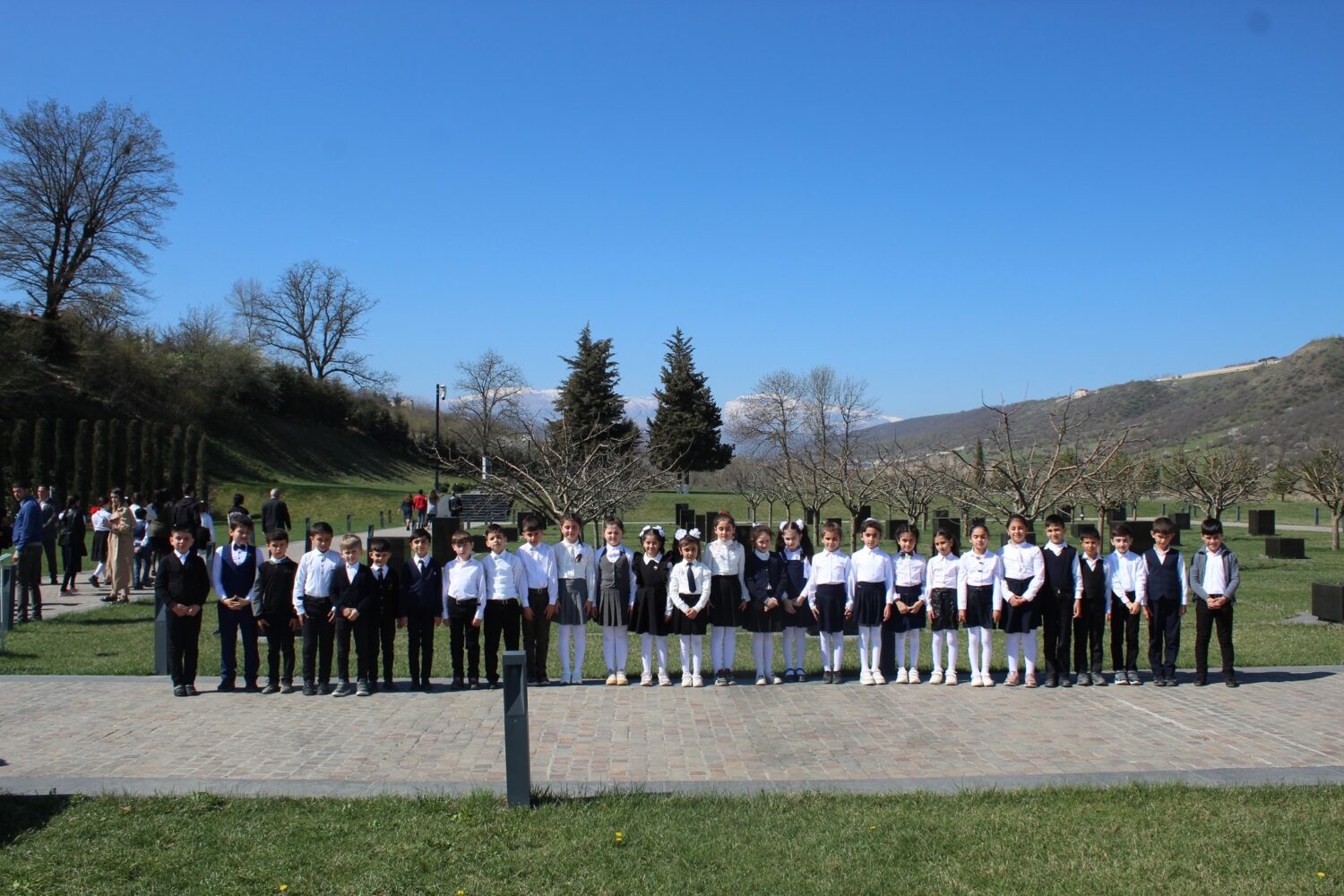
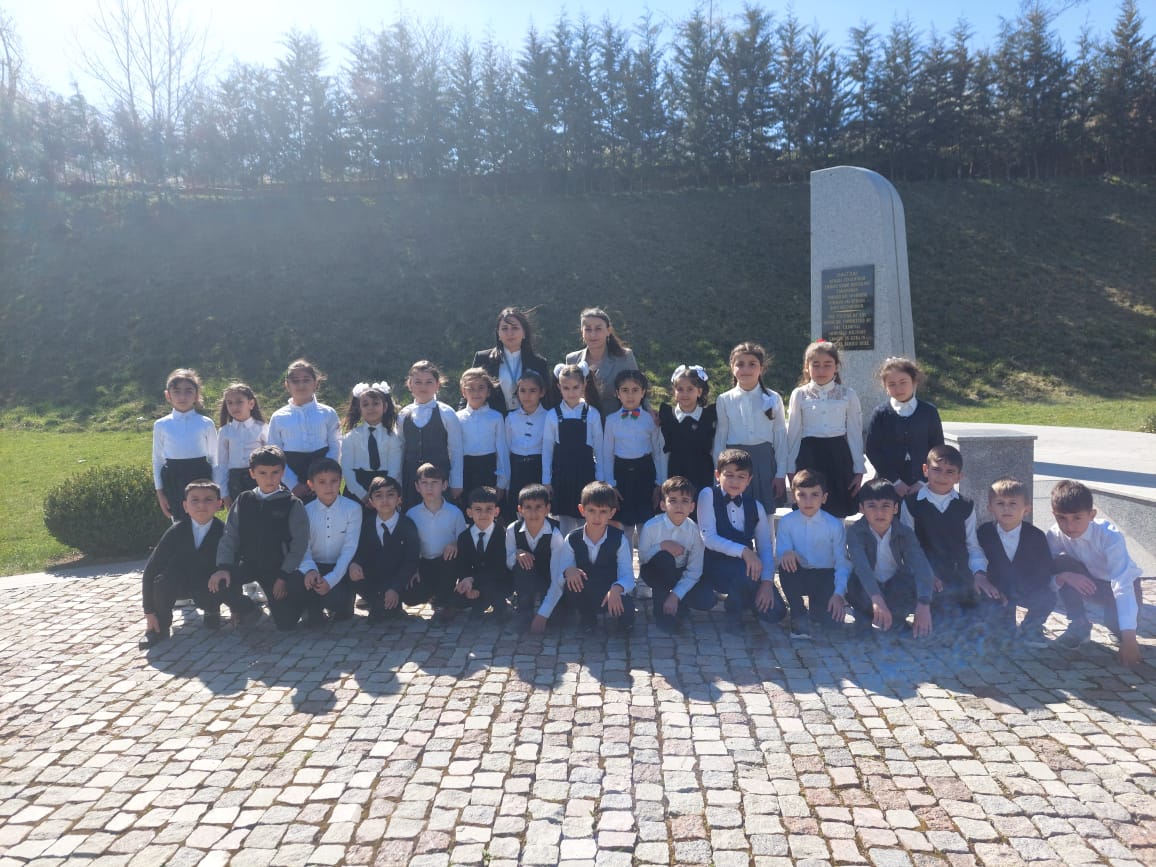
On the topic “Do not forget the historical truths”, dedicated to the 105th anniversary of the genocide of Azerbaijanis and the 31st anniversary of the Khojaly genocide on March 31, with the joint organization of the “Genocide Memorial Complex” and the secondary school named after Heydar Aliyev, a lecture was organized for the grade schoolers No. 1 of the city of Guba. Mehriban Aliyeva, deputy director of the Genocide Complex, gave a report at the event and gave thorough information about the terrible events of genocide committed by Armenian usurpers against Azerbaijanis in 1918 and 1992. At the end of the event, opinions were switched out with the participation of students.

An online seminar on "Resistance movement against the Soviet occupation in Azerbaijan" was held

On February 21, 2023, an online seminar on “Resistance movement against the Soviet occupation in Azerbaijan” was held on the eve of the 105th anniversary of the March 31 genocide of Azerbaijanis at the “Genocide Memorial Complex” in Guba. At the online event moderated by the deputy director of the complex, Mehriban Aliyeva, the employees of the complex – Dr. Subhan Talibli, Aysu Bulbulzade, Aslan Islamov made speeches on various topics. The seminar were attended by the 50 scientific workers of the reserves under the State Service for the Protection, Development and Restoration of Cultural Heritage, as well as guides, together with the staff of the Genocide Memorial Complex. It should be noted that in connection with the 105th anniversary of the genocide of Azerbaijanis on March 31, more than 150 employees of various historical and cultural reserves participated in the series of online events held during the month of February. The seminars were broadcast live on the Facebook social network.