Employees of the complex became members of the editorial board of an international scientific journal.

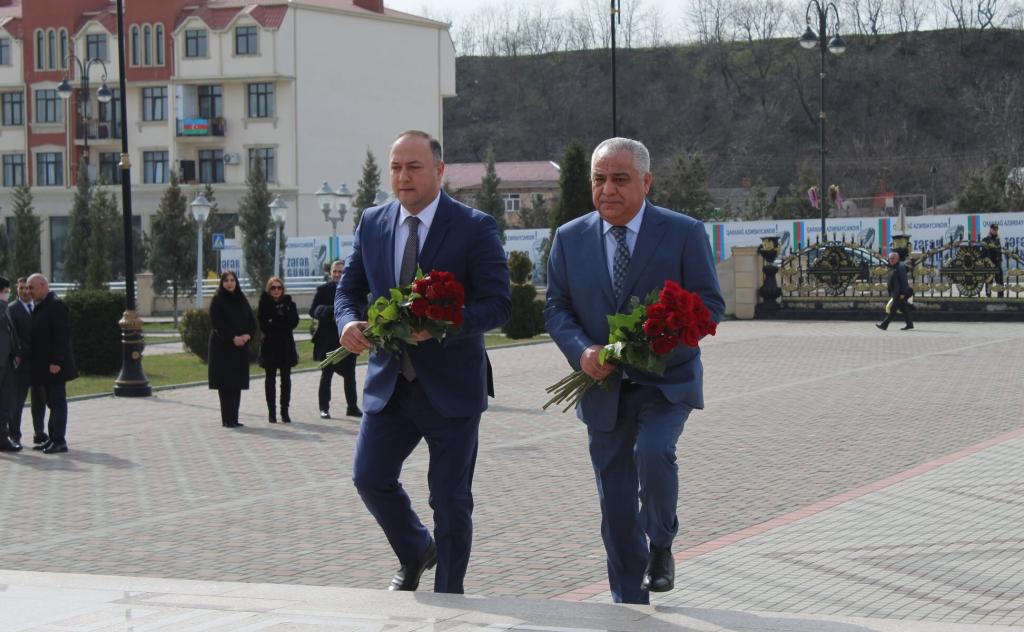
“Bank and Policy”, the economic and political scientific journal that started operating in 2021, was published in Azerbaijan. IMCRA (International Meetings and Conferences Research Association) is the magazine’s publisher. The company’s purpose, which has achieved a number of successes, is to provide serious scientific support to Azerbaijan’s ongoing reforms and innovations in the political and economic arenas. Ph.D. Rakhshanda Bayramova, director of the “Genocide Memorial Complex” in Guba, and Ph.D. Assoc. Subhan Talibli, a researcher, became members of the magazine’s editorial board.

Subhan Talibli, Ph.D., associate professor at the ANAS Institute of Oriental Studies, spoke today at the online scientific seminar organized by the "Genocide Memorial Complex" in Guba.

He made a speech with the report named “January 20, the Road to Independence.”
In his report, the historian spoke about the glorious history of January 20, 1990, when the people of Azerbaijan, who had been imprisoned for many years in the Soviet empire, raised their voices for freedom and demonstrated courage for their sovereignty.

January 20

January 20 is a glorious date when the people of Azerbaijan, who had spent many years in captivity in the Soviet empire, raised their voices for freedom and demonstrated courage for their sovereignty.
On the night of January 19-20, 1990, Soviet troops entered Baku and took to the streets, firing heavy equipment and various weapons on civilians protesting against the empire. Nonetheless, on a cold winter night, Baku’s streets and squares were filled with only one emotion: freedom and independence. The day people were shot and crushed under tanks was a turning point in our history; the sun rose on the road to freedom. Later, a watershed moment occurred, and Azerbaijan gained independence for the second time in the 20th century.

On this day in history, the Azerbaijan Democratic Republic's independence was de facto recognized at the Versailles Peace Conference on January 11, 1920.

The recognition of Azerbaijan’s independence by many countries was one of the successful outcomes of the Azerbaijan Democratic Republic’s 23-month activity. The delegation sent to the Paris Peace Conference, led by Alimardan Bey Topchubashov, informed the world of the existence of a state – Azerbaijan that prefers to live in freedom, is committed to democratic development, and treats all people with respect and dignity, regardless of religion, race, or nationality.
On January 11, 1920, at the suggestion of then-British Foreign Secretary Lord George Nathaniel Curzon, the Supreme Council of the Versailles Peace Conference convened in the aftermath of World War II and adopted a decision on the de facto recognition of the Azerbaijan Democratic Republic. On January 14, 1920, a day before the official decision of the Paris Peace Conference was presented to A.B. Topchubashov, Nasib Bey Yusifbeyli, Prime Minister of the Republic of Azerbaijan, addressed the citizens and informed them of the recognition.
In this regard, January 14 was declared a non-working day in the Azerbaijan Democratic Republic. At a solemn meeting of the Parliament on January 14 in connection with the de facto recognition of the Republic, a minute of silence was observed in memory of those who gave their lives for independence, followed by congratulatory speeches. M.A. Rasulzade, the founder of the Azerbaijan Democratic Republic, concluded his speech with the following words: “The people of Azerbaijan have demonstrated their independence to the rest of the world. The flag, once raised, will never fall!”

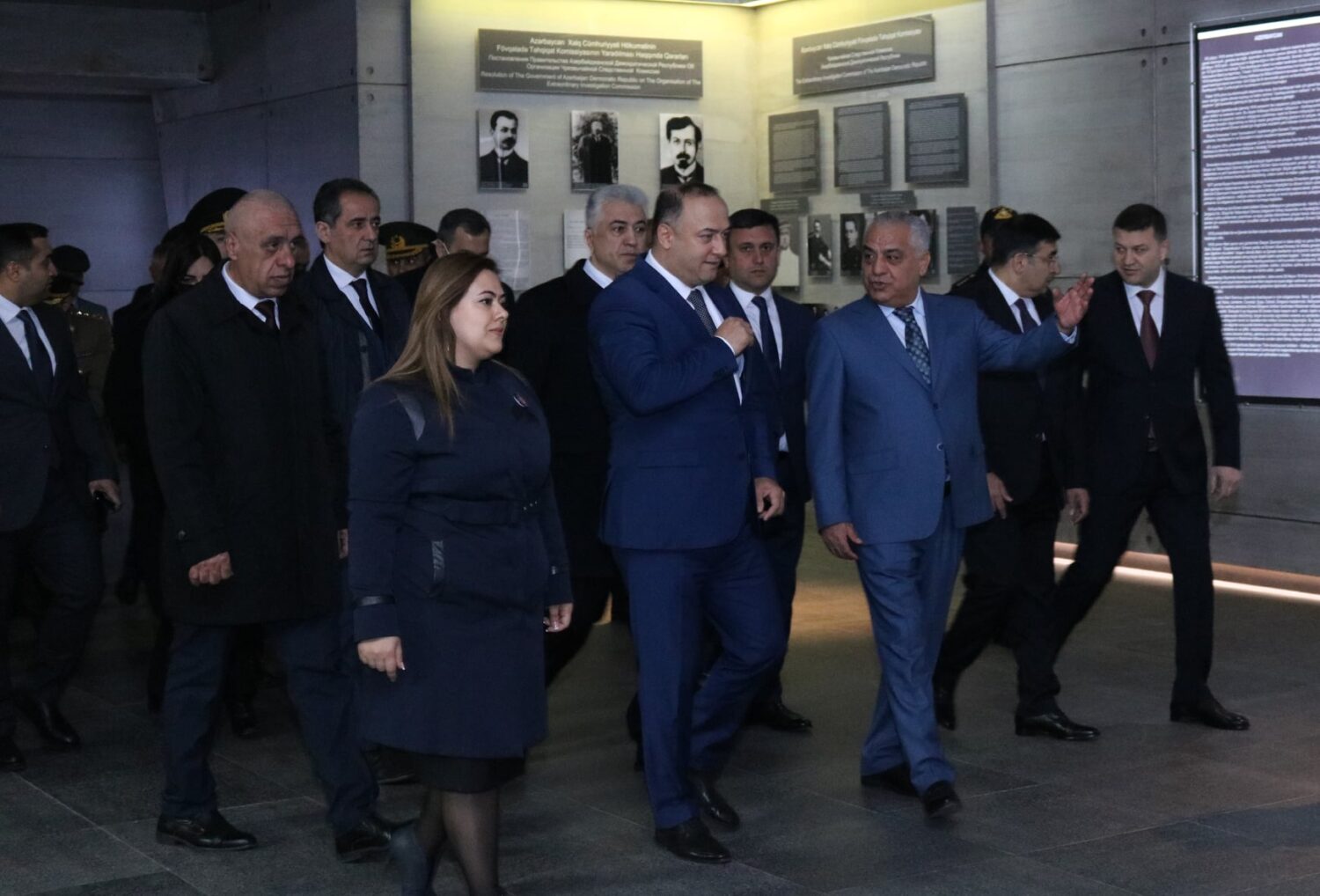
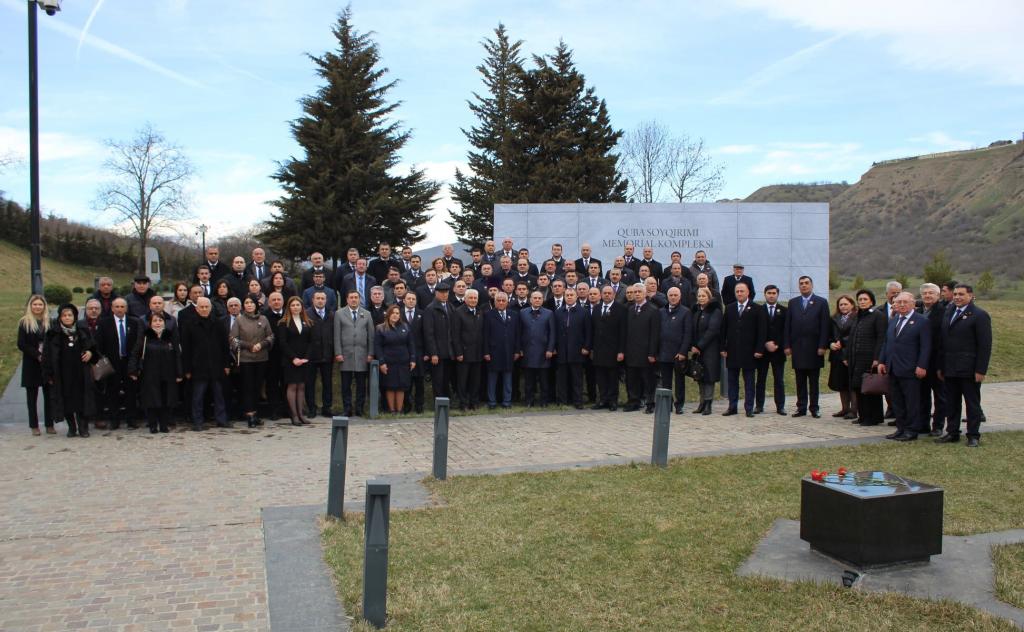
On the occasion of World Azerbaijanis' Solidarity Day on December 31, the Chiraggala-Shabran State Historical and Cultural Reserve and the Genocide Memorial Complex in Guba organized a seminar to exchange experiences. Prior to the event, guests visited the monument to the victims of the genocide and got acquainted with the museum of the complex.

The seminar discussed the implementation of work in both reserves at the current level of requirements.
In general, the meetings analyzed the work to be done by the two reserves in the fields of science, fund, and exposition, as well as the directions of joint activities on the Internet platform, and identified priority areas for future collaboration.
At the conclusion of the discussions, employees of the Chiraggala-Shabran State Historical and Cultural Reserve were given books and booklets about the 1918 genocide in Azerbaijan.

On this day in history: The Azerbaijan Parliament was established on December 7, 1918.

The Azerbaijani Parliament was inaugurated on December 7, 1918, at 13:00, in the building of Haji Zeynalabdin Tagiyev’s former Girls’ School on Nikolayev Street (now the building of the Institute of Manuscripts named after Mohammad Fuzuli). It was the first parliament in the Muslim East to be founded on the most democratic principles of the time. At the opening of the parliament, Mohammad Amin Rasulzadeh, Chairman of the National Council of Azerbaijan, delivered a congratulatory speech. The parliament approved the government’s program and expressed confidence in Fatali khan Khoyski’s government.
Alimardan bey Topchubashov was elected as the parliament’s chairman, and Dr. Hasan bey Agayev was elected as the first deputy chairman. As Alimardan bey Topchubashov left for the Paris Peace Conference, Hasan bey Agayev took charge of the parliament’s activities. The resignation of Fatali khan Khoyski’s government was accepted at the first meeting of parliament, and it was decided to form a new government. Fatali khan Khoyski was once again entrusted with the formation of the new government. Fatali khan Khoyski delivered his program to parliament on December 26, 1918, and submitted the composition of the new government for approval. The parliament approved the government’s program and expressed confidence in Fatali khan Khoyski’s government.

Historical facts: Land of ancient Azerbaijan - Zangazur district

After the collapse of Azerbaijan Democratic Republic, the Soviet government made illegal biased decisions to annex Azerbaijani lands to Armenia, without taking into account the country’s sovereignty. One of these decisions, taken against the will of the state and Azerbaijani people, was the transfer of the historical Zangazur district to Soviet Armenia.
The transfer of the historical territory of Azerbaijan – Upper Zangazur, to Armenia began on November 30, 1920 by the decision of the joint meeting of the Political and Organizational Bureaus of the Central Committee of Azerbaijan Communist Party. The decision proposed to divide the Zangazur region into two parts: West Zangazur district and East Zangazur district. As a result, 3105 sq.verst of 6742 sq.verst of Zangazur district remained part of the Azerbaijan SSR, and 3637 sq. verst was given to Armenia. These purposeful territorial divisions separated the ancient land of Nakhchivan from other Azerbaijani lands.
In 1933, the Soviet Union abolished the Upper Zangazur district of Armenia, and after the creation of the regions, the name Zangazur began to be erased from the maps.
Gafan, Gorus, Garakilsa (Sisian) and Mehri districts were established in the territory of Zangazur district, the historical land of Azerbaijan. First there were created Kurdistan area, then Zangilan, Gubadli, Lachin districts on the rest of Zangezur in Azerbaijan . In 1992-93, the remaining territories of Zangazur were occupied by Armenian armed forces.