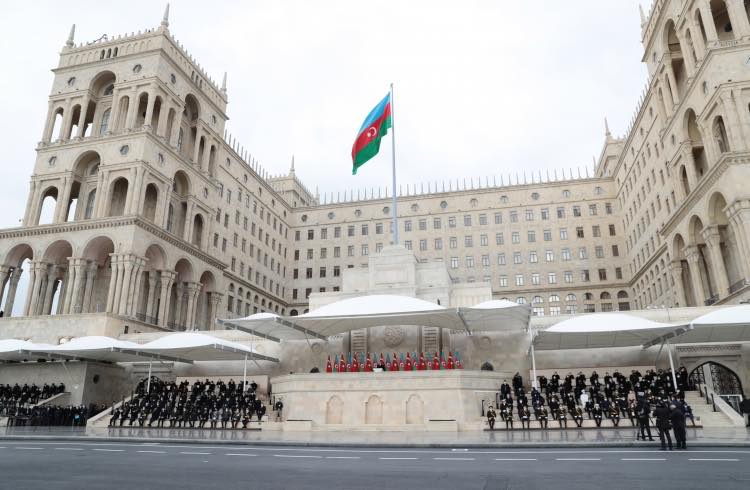
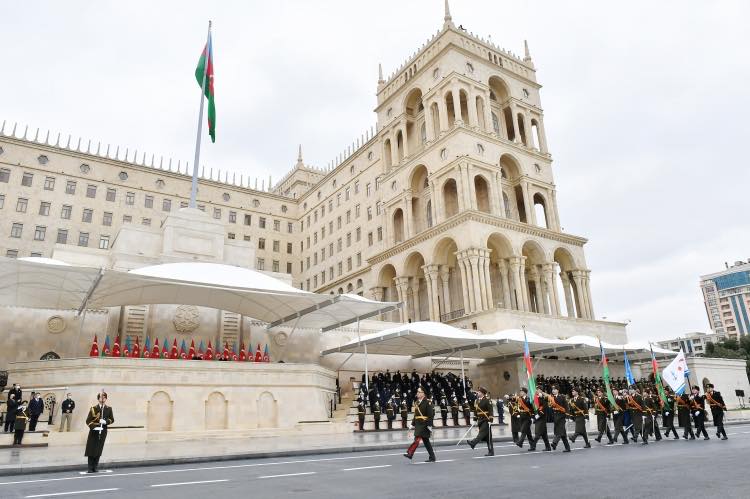
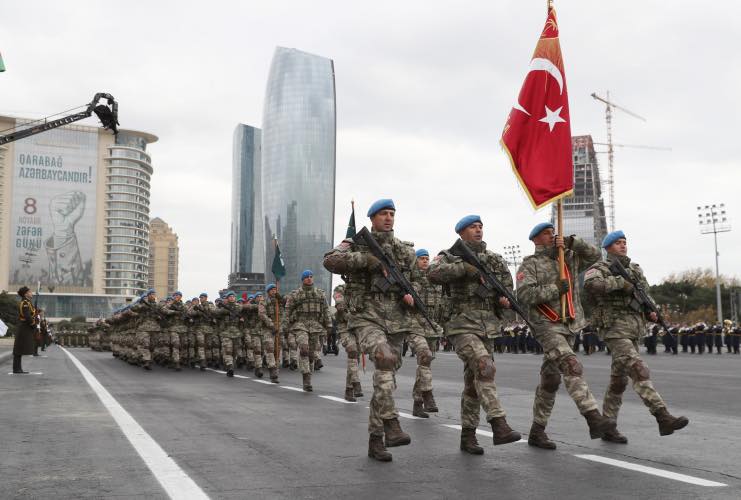
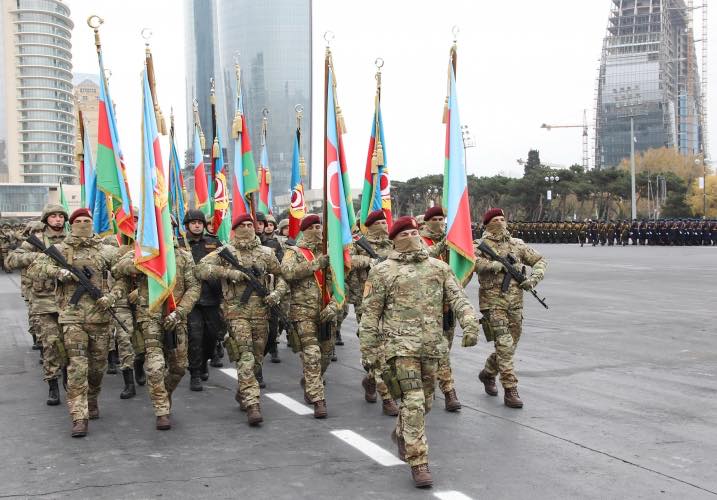
A Victory parade dedicated to Victory in the Patriotic War was held at the Azadlig Square, Baku.
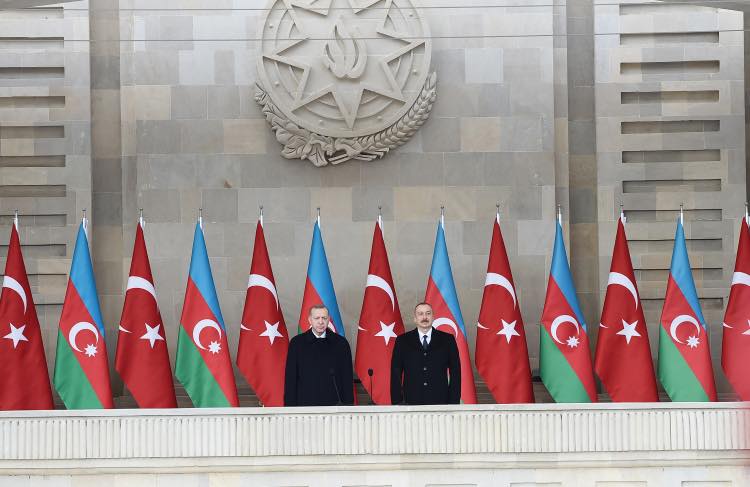
President of the Republic of Azerbaijan Ilham Aliyev, First Lady Mehriban Aliyeva, President of the Republic of Turkey Recep Tayyip Erdogan and his spouse Emine Erdogan attended the Victory parade.
Deputy Minister of Defense, Lieutenant General Karim Valiyev awarded with the “Zafar” Order, was the Victory parade commander at the event dedicated to the magnificent Victory in Azerbaijan’s Patriotic War – the “Operation Iron Fist”.
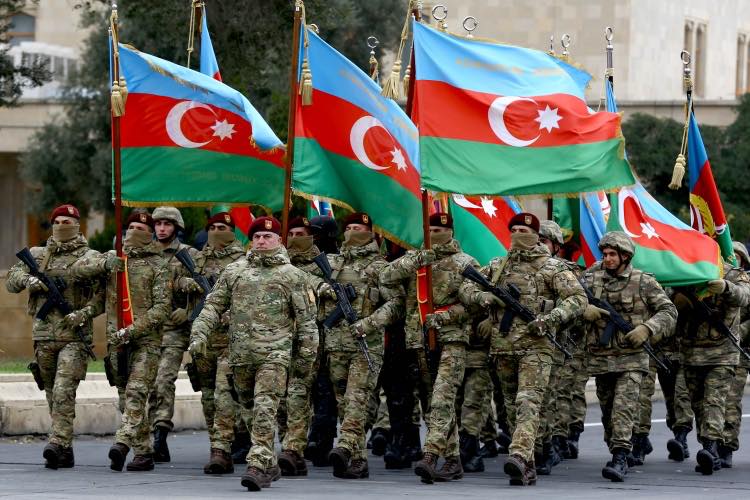
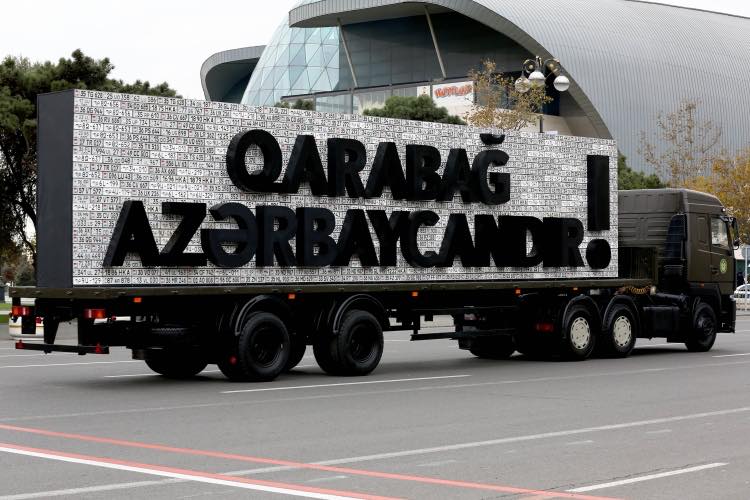
The parade featured more than 3,000 personnel, about 150 military hardware, including state-of-the-art military equipment, missiles and artillery systems, air defense systems, as well as warships and boats. The parade also featured part of the military trophies seized by Azerbaijan’s Army from the destroyed enemy during the Patriotic War.
A military orchestra played the “Azerbaijan fanfare”.
Minister of Defense, Colonel General Zakir Hasanov reported to the President of the Republic of Azerbaijan, Victorious Commander-in-Chief of the Armed Forces Ilham Aliyev and President of the Republic of Turkey Recep Tayyip Erdogan.
The heads of state saluted the soldiers.
A military orchestra played the national anthems of the Republic of Azerbaijan and the Republic of Turkey.
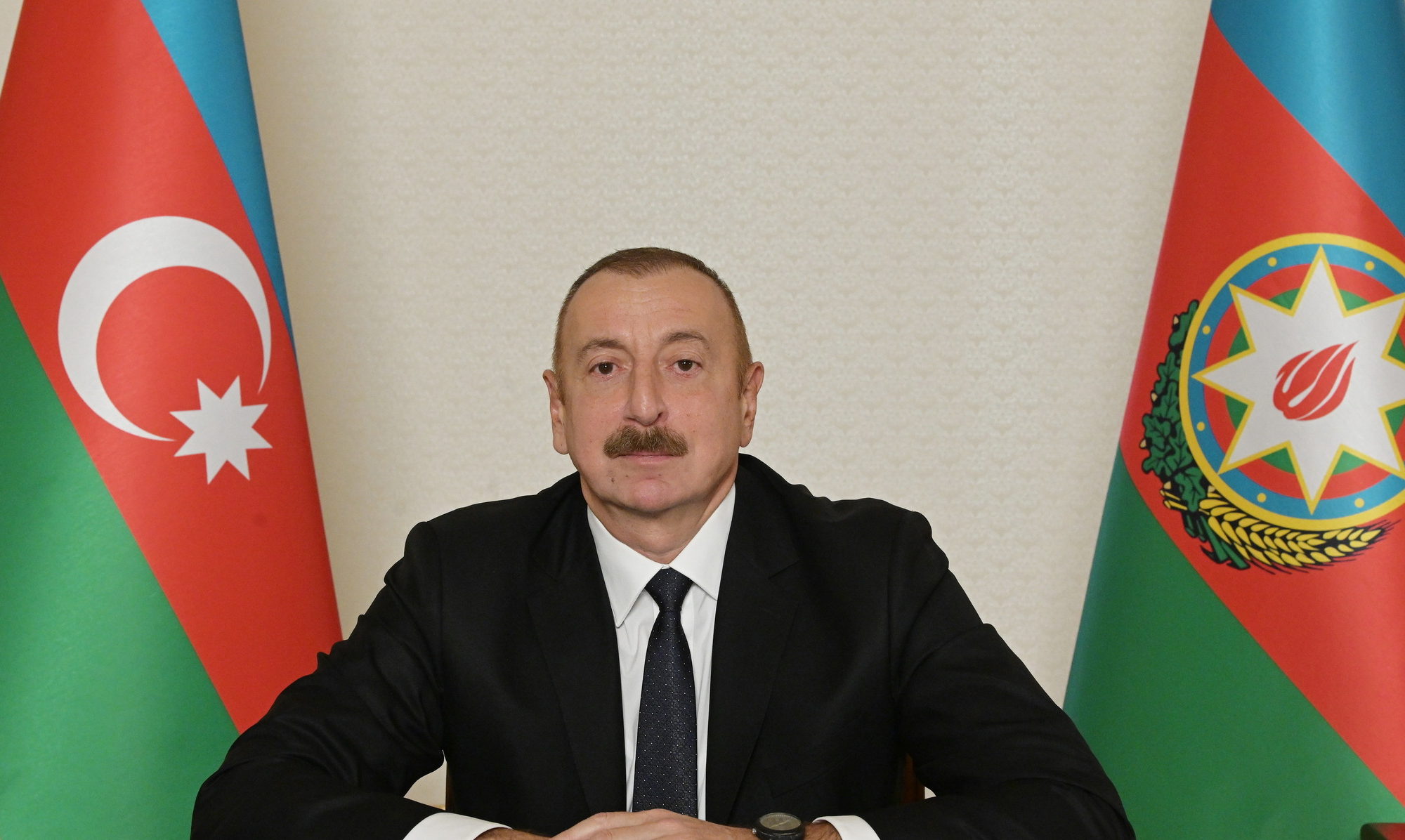
President of the Republic of Azerbaijan, Commander-in-Chief of the Armed Forces Ilham Aliyev made a speech at the parade.
Speech by the President of the Republic of Azerbaijan Ilham Aliyev
– Dear President of the Republic of Turkey, my dear brother Recep Tayyip Erdogan!
Dear servicemen!
Distinguished guests!
Ladies and gentlemen!
First of all, may I request that a minute’s silence be observed in memory of our martyrs that died in the Patriotic War.
May Allah rest all our martyrs in peace!
It is a historic day today. The Victory Parade is held at the Azadlig Square today. I am delighted that the President of the Republic of Turkey, my dear brother Recep Tayyip Erdogan, has accepted my invitation to take part in this parade. At the same time, a large delegation from Turkey, Turkish soldiers and officers are present here. This once again demonstrates our unity, friendship and brotherhood.
From the first days of the Patriotic War, or rather from the early hours, we have felt Turkey’s support. Turkish President Recep Tayyip Erdogan has supported Azerbaijan’s just cause from the first hours. His open, unequivocal and harsh statements made the Azerbaijani people very happy. My brother said that Azerbaijan was right in this war! He said that Azerbaijan was not alone and Turkey was always with Azerbaijan. It is a manifestation of our unity and brotherhood. Turkey’s political and moral support for Azerbaijan makes every Azerbaijani citizen proud and happy. Today, we participate in the Victory Parade together. We once again show our unity to our peoples and indeed to the whole world.
In forty-four days, Azerbaijan won a brilliant victory and defeated Armenia. Azerbaijan has ended the occupation. Every single day of these 44 days is our glorious history. Azerbaijan’s Army advanced every day, liberated new cities, villages, settlements and strategic elevations. Azerbaijani soldiers and officers were driven by one goal – to end this occupation, this injustice, to celebrate a victory of historical justice, and we have succeeded.
Azerbaijani territories have been under occupation for about 30 years. In the early 1990s, Armenia’s policy of aggression against Azerbaijan led to our lands’ occupation. Armenia’s aggressive policy began in the late 1980s. At that time, 100,000 Azerbaijanis living in the present-day Republic of Armenia were expelled from their ancestral lands. Zangazur, Goycha and Iravan districts are our historical lands. Our people have lived in these lands for centuries, but the Armenian leadership expelled 100,000 Azerbaijanis from their native lands at the time. After that, the same events unfolded in Nagorno-Karabakh. The Armenian side used force to commit a war crime against Azerbaijan’s civilian population, perpetrated the Khojaly genocide. Then, in May 1992, Shusha and Lachin’s occupation created a geographical link between Armenia and Nagorno-Karabakh. The capture of Kalbajar district in April 1993 aggravated the situation and, in fact, led to the continuation of the policy of subsequent occupation.
For many years, we have delivered the truth about this issue at all international events. Much has been done, and our efforts have paid off. Although we have regained our territorial integrity on the battlefield, I believe that our political and diplomatic efforts in recent years have borne fruit. All leading international organizations recognized and supported Azerbaijan’s territorial integrity.
Four resolutions of the UN Security Council, UN General Assembly resolutions, those of the Organization of Islamic Cooperation, the Non-Aligned Movement, the European Parliament and other organizations supported Azerbaijan’s just cause. Thus, a legal basis was created for resolving the conflict. At the same time, thanks to our focused efforts, the world community was fully informed about the conflict and Karabakh’s history. Armenia’s false propaganda was thwarted, and the whole world saw that Karabakh is our ancient historical land. For centuries, the Azerbaijani people have lived and created in these lands. Moreover, the whole world saw that Nagorno-Karabakh was an integral part of Azerbaijan in terms of international law.
We have been gaining strength over the years, strengthening our economy, working in the political arena, international organizations, and the country, strengthening our Army. As a result, Azerbaijan has undergone a successful development in recent years, and year after year, our superiority became more pronounced. Armenia has been no match for us. I have repeatedly said over the past 17 years that if Armenia did not withdraw its occupying forces from our lands of its own free will, we would resolve the matter by military means. When I was elected President in 2003, I swore on the Constitution and the Holy Quran that I would protect Azerbaijan’s territorial integrity. Today, I can say with great pride that Azerbaijan has achieved what it wanted and restored historical justice and international law.
We have been closely following the processes around the world. We saw that international law, its norms and principles have been flagrantly violated in recent years. Some countries use force to achieve their goals, while international law and UN Security Council resolutions remain on paper. Under such circumstances, a military solution to the conflict was inevitable. Besides, in recent years, especially in the last two years, Armenia’s provocative steps, statements and actions have made war inevitable. The very harmful and dangerous statements by the Armenian leadership almost put an end to the negotiations. By saying that “Karabakh is Armenia”, the Armenian leadership put an end to the talks. Resettlement of Armenians from abroad in our historical lands is a war crime. It runs counter to international conventions. This, in fact, put an end to the negotiations, made the talks meaningless.
We realized it and conveyed our message to the world from international platforms. This September, three days before the war, I said at the UN General Assembly that Armenia was preparing for a new war and that Armenia must be stopped. And this is what happened. There were three military provocations against us this year. In July, a military provocation was committed on the Armenia-Azerbaijan border when Armenia attempted to capture our territory. But they got a fitting rebuff, and we pushed them back. In August, a subversion group was sent to Azerbaijan, and we neutralized them. Finally, on 27 September, our villages and military positions came under artillery fire, causing casualties among civilians and servicemen. We said enough is enough; this occupation must and will end. As Commander-in-Chief, I gave an order to our Army to end the occupation and punish the occupier. Azerbaijan achieved what it wanted in 44 days and restored justice.
Every single day of these 44 days is our glorious history. Every day Azerbaijan was advancing. For these 44 days, there was not a single day on which we fell back. We broke through the fortifications Armenia had built in almost 30 years. Those fortifications were constructed to prevent Azerbaijan from advancing, not to let our soldiers pass through. At the same time, Nagorno-Karabakh’s geographical terrain was more favorable for the Armenian side. Azerbaijani soldiers and officers completed their glorious mission with extraordinary heroism and courage and liberated our native lands from occupiers. Jabrayil, Fuzuli, Zangilan, Gubadli districts, and Sugovushan and Hadrut settlement, a part of Khojaly district, a part of Kalbajar district, the Murovdag mountain range, the southern part of Lachin district, strategic elevations were liberated from the enemy on the battlefield. The Azerbaijani flag was hoisted there. Our glorious war ended in Shusha. The liberation of Shusha on 8 November is our historic achievement. Shusha was our first occupied city, and it was the last to be liberated. After the liberation of Shusha, we broke the enemy’s spine, and it was forced to surrender. The liberation of Shusha is a historic event. Our Army, our heroic sons, crossed mountains, valleys, forests, climbed cliffs to reach Shusha, destroyed the enemy in hand-to-hand combat and raised the Azerbaijani flag in Shusha. A day later, we liberated 70 more villages, and Armenia surrendered, raised a white flag, was brought to its knees, received its deserved punishment, and sought help. We have destroyed Armenia on the battlefield. We have shattered the myth the Armenians had created for years. They had created a tale by spreading false information about their Army, claiming that the Armenian Army was invincible. In 44 days, the Armenian Army was destroyed – military equipment reduced to scrap and manpower annihilated. Azerbaijan showed its strength and power.
I said that we were gathering strength, and we did. We have won this victory thanks to the professionalism, heroism, and the national spirit. We were right. Justice was on our side. When our soldiers and officers launched a counter-offensive, they were driven by the dream to liberate our native land from the occupiers. On 10 November, Armenia was forced to sign an act of capitulation. According to this act of capitulation, Kalbajar, Lachin and Aghdam districts were returned to Azerbaijan without a single shot fired, and the Azerbaijani flag was raised there. It shows that we have won the war both on the battlefield and in the political arena. However, many, especially the mediators dealing with this issue, had repeatedly said that there was no military solution to the conflict. We have proved that there is a military solution to the conflict. Otherwise, neither war nor peace situation would have lasted for another 30 years. How much longer could we tolerate that? How much more patience were we supposed to have? I have repeatedly said that the Azerbaijani people’s patience had run out. If Armenia did not vacate the occupied territories of its own free will, we would expel them from there. They must get out of our lands!
I said this before and during the war, in my addresses to the nation and my interviews with foreign media. I said that Armenia must get out of our lands of its own accord, withdraw from our lands. Otherwise, we will go to the end, and we did go all the way. This is why we triumphed on the battlefield. After that, we won politically and forced the enemy to vacate Kalbajar, Lachin and Aghdam districts, leave our lands.
This is a historic victory. The people of Azerbaijan have been waiting for this day for nearly 30 years, waiting for Commander-in-Chief’s order for some 30 years. I have repeatedly said to the Azerbaijani people that we must be stronger. We know what to do and when, and how to do it. Life has shown that we took timely steps, mobilized all our resources, created an iron fist and crushed the enemy’s head. During the war, I said that our iron fist embodies both our unity and strength. That iron fist broke the enemy’s spine and crushed the enemy’s head. We are celebrating this holiday as a heroic nation today. The victorious Armed Forces of Azerbaijan have fulfilled their historic mission and defeated Armenia. Armenia’s Army is almost non-existent. It has been destroyed. After that, if Armenian fascism ever raises its head again, the result will be the same. Again, Azerbaijan’s iron fist will break their back.
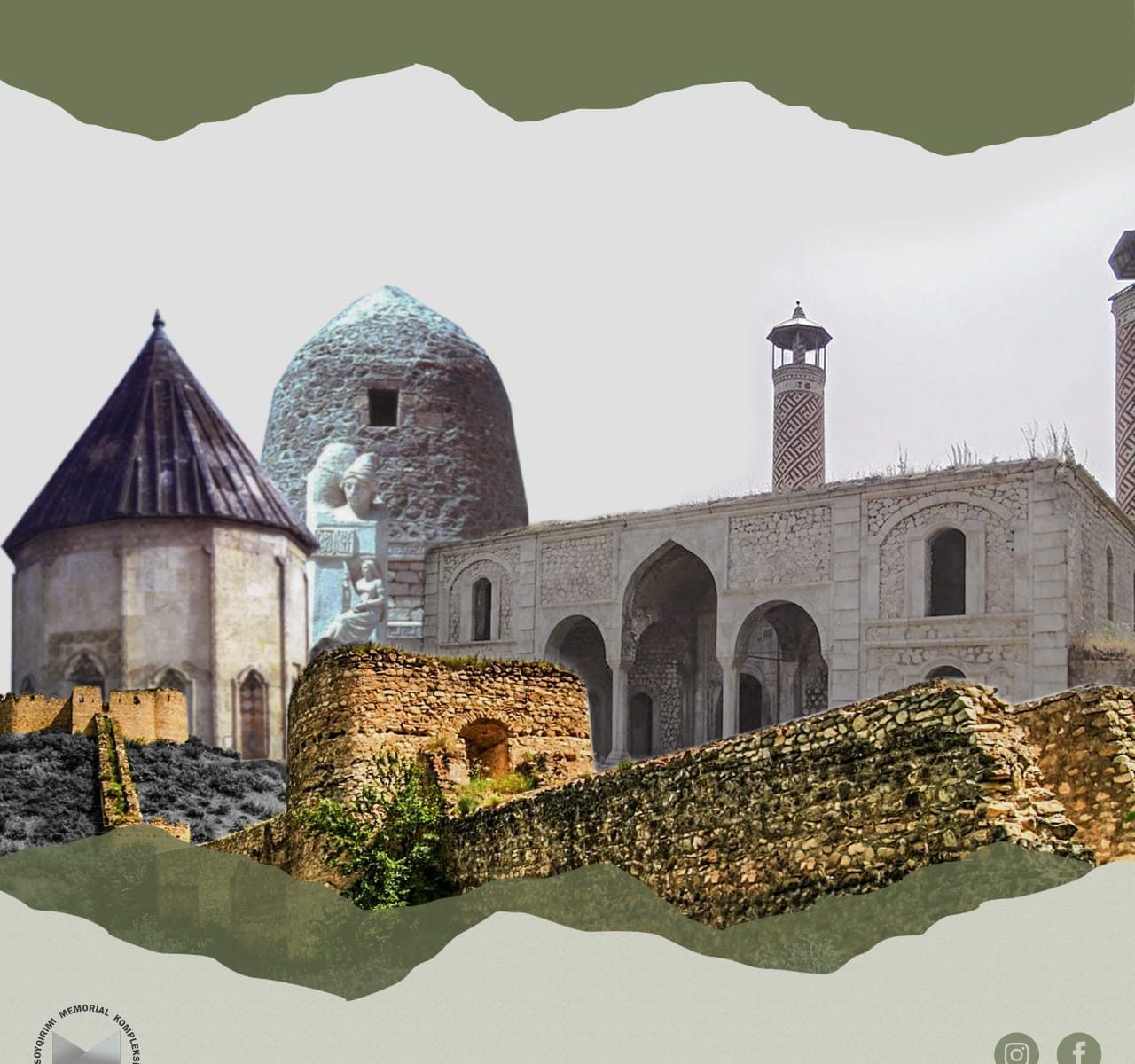
A new era is beginning for us now – an era of redevelopment. The despised enemy has devastated the occupied lands. This information is already available to everyone. There are plenty of videos. My visits to the liberated territories showed that as well. The enemy had destroyed all buildings, all historical sites, mosques, graves, and cemeteries. We will restore them all, and restoration work has already begun.
I want to highlight the heroism of the Azerbaijani people again. Defeated on the battlefield, the hated enemy committed war crimes against the civilian population and fired at our cities with ballistic missiles, phosphorus bombs and cluster munitions. As a result of this cowardly shelling, about 100 civilians, including women and children, have been killed. More than 400 civilians have been injured, and more than 5,000 homes have been destroyed or damaged. However, Azerbaijani citizens did not take a single step back from their land. They said that they would rather die than retreat, that they would go all the way to the end. During the war, there were more than 10,000 deserters in the Armenian Army. Azerbaijan’s Army saw none. Our wounded soldiers and officers were asking doctors in military hospitals and clinics to heal them as soon as possible, that they must return to the battlefield and complete their mission. The people of Azerbaijan have shown their greatness, their high moral spirit. The very reason for this victory is the Azerbaijani people. We have fulfilled our historic mission by showing unity, resolve, determination and national spirit.
From now on, Azerbaijan will only develop. Life will return to our liberated lands. I said that each of us must be active in this work. Together we will rebuild our cities and villages destroyed by the enemy. We have the resolve and the opportunities to do so.
There have been many parades at Azadlig Square, but this parade is of particular importance. This is the Victory Parade. This is a historic event. In one of the parades, I said that the flag raised in Lalatapa in 2016 would be brought to the parade. I said that the day would come when the Azerbaijani flag raised in the liberated lands would be delivered to the Azadlig Square, and this day has arrived. We, the people of Azerbaijan, are witnessing this historic day. From now on, we will only move forward.
I want to end my speech with a well-known saying. Everyone knows that the Armenian leadership said a year ago that “Karabakh is Armenia and full stop”. I said, “Karabakh is Azerbaijan and exclamation mark”. Today, the whole world sees that Karabakh is Azerbaijan! Karabakh is ours! Karabakh is Azerbaijan! Glory to the victorious Armed Forces of Azerbaijan! Long live Azerbaijani-Turkish friendship and brotherhood! Long live Azerbaijani soldiers!
X X X
President of the Republic of Turkey Recep Tayyip Erdogan then addressed the parade.
Following the speeches of the heads of state, the Victory parade started. Azerbaijan’s Armed Forces’ personnel marched to the podium under the State Flag of the Republic of Azerbaijan and the Victory Flag of the 44-day Patriotic War, which is now inscribed in golden letters in the country’s glorious military history.