

Most of the documents and materials collected by the Extraordinary Commission of Inquiry, which was established to investigate the genocide committed by Armenian-Bolshevik forces in 1918, consist of witness statements:

Interrogation Protocol, October 9, 1918. Baku City.

The following individual, interrogated as a witness by the Extraordinary Commission of Inquiry under the Government of Azerbaijan in accordance with Article 443 of the Criminal Procedure Code, provided the following statement:

Colonel Vladimir Konstantinovich Olongren:

“I am 54 years old and reside in Baku, in the house of the Ashurbeyov brothers at the intersection of Kamenistaya and Gogol Streets, No. 205-32.

On Monday, March 19 of this year, around 5 o’clock in the morning, 20-25 armed Armenian soldiers, led by two Armenians in officer’s uniforms, entered the house of the Ashurbeyovs. This group began searching all the apartments in the house, starting from the third floor. When they entered Ali Bey Ashurbeyov’s apartment and found a box containing Berdan-type rifle cartridges, the Armenians, leaving nothing untouched, began to destroy the entire apartment. They broke furniture, mirrors, chandeliers, clocks, and other items, looting valuables in the process. One of the officers, of medium height, put on Ali Bey’s fur coat and, with the help of a few soldiers, managed to don his uniform overcoat before leaving. I can identify this officer if I see him, as well as his tall and extremely thin companion. Of all Ali Bey Ashurbeyov’s household items, only his carpets could be saved. The Armenians returned to this house many times in groups, and each time I had to prevent them from entering the apartments. The tall officer who participated in the looting of Ali Bey’s apartment gave me a document stating that he had searched the entire house and found no Muslims. I had to show this document to the Armenian gangs that came to the house, and they would leave without entering the apartments.”

It was read and signed: Colonel Olongren.

Members of the Extraordinary Investigation Commission: Juror Mammad Khan Tekinski, Assistant Prosecutor A. Kluge (signatures)

Source: AR PII SSA, f. 277, p. 2, work 13, v. 14. Solmaz Rustamova-Tohidi – Baku. March 1918. Azerbaijan Massacres in the Documents, p. 250.
"Ancient Shabran: Urban Culture of the Middle Ages in the Context of Archaeological Findings"

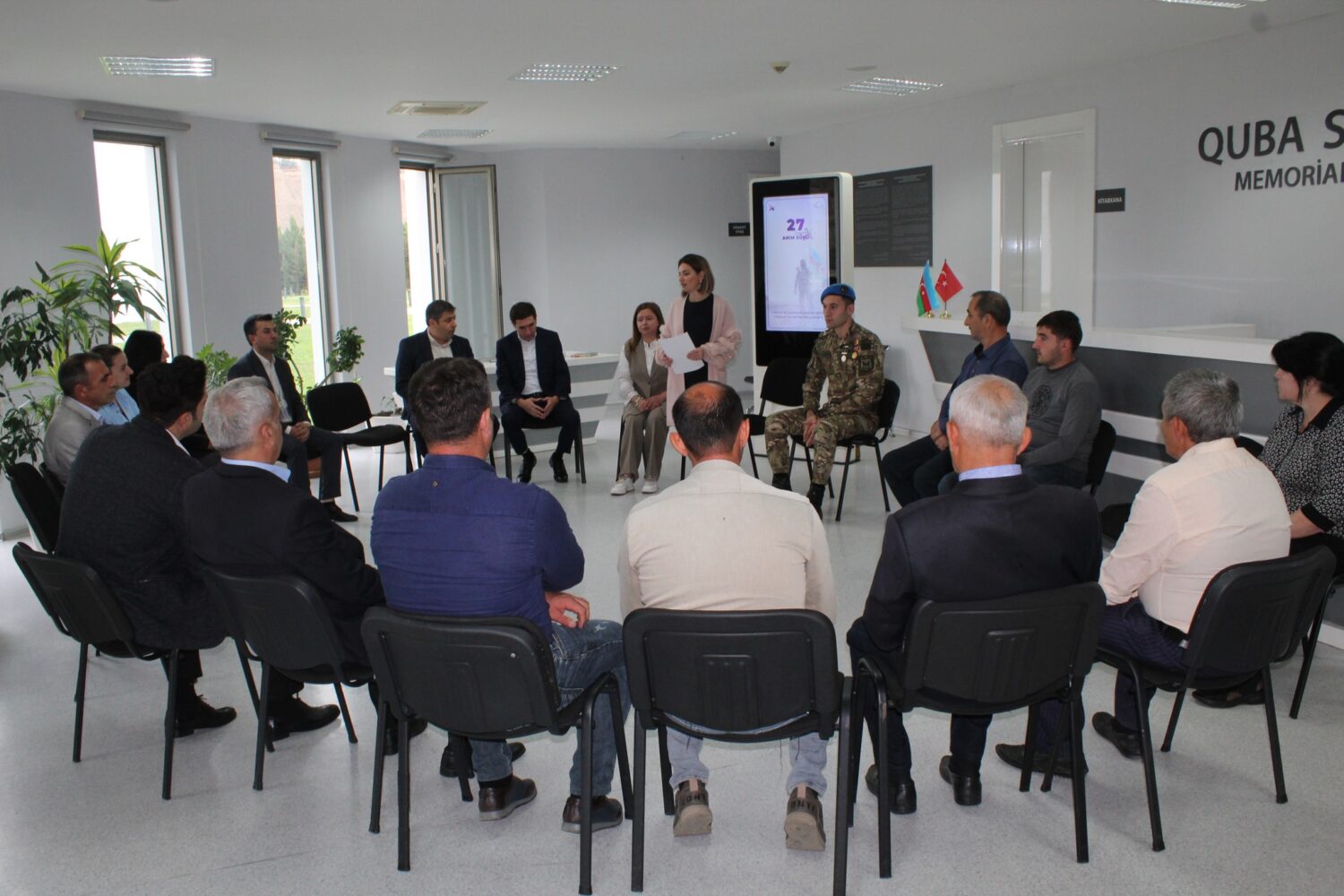
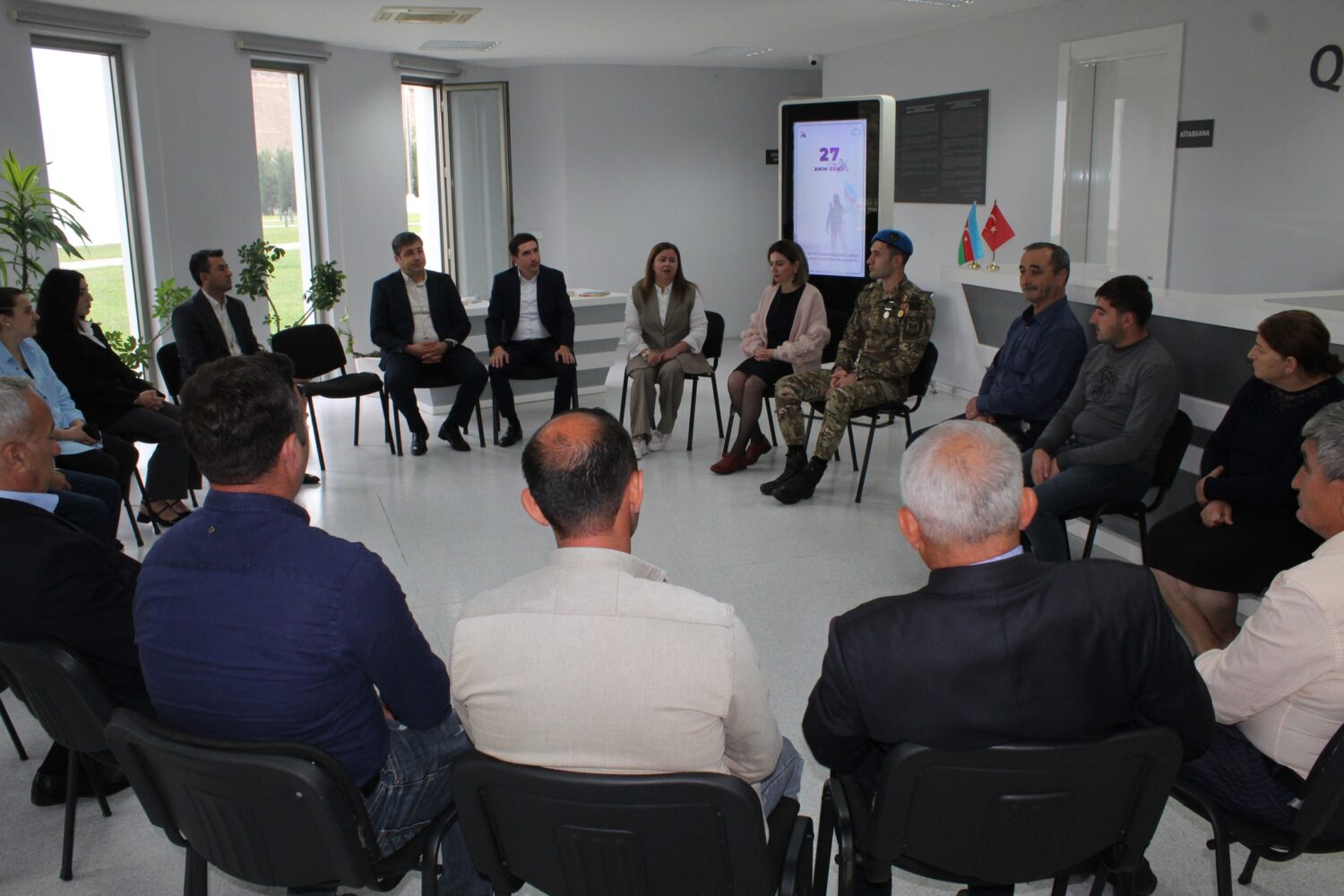
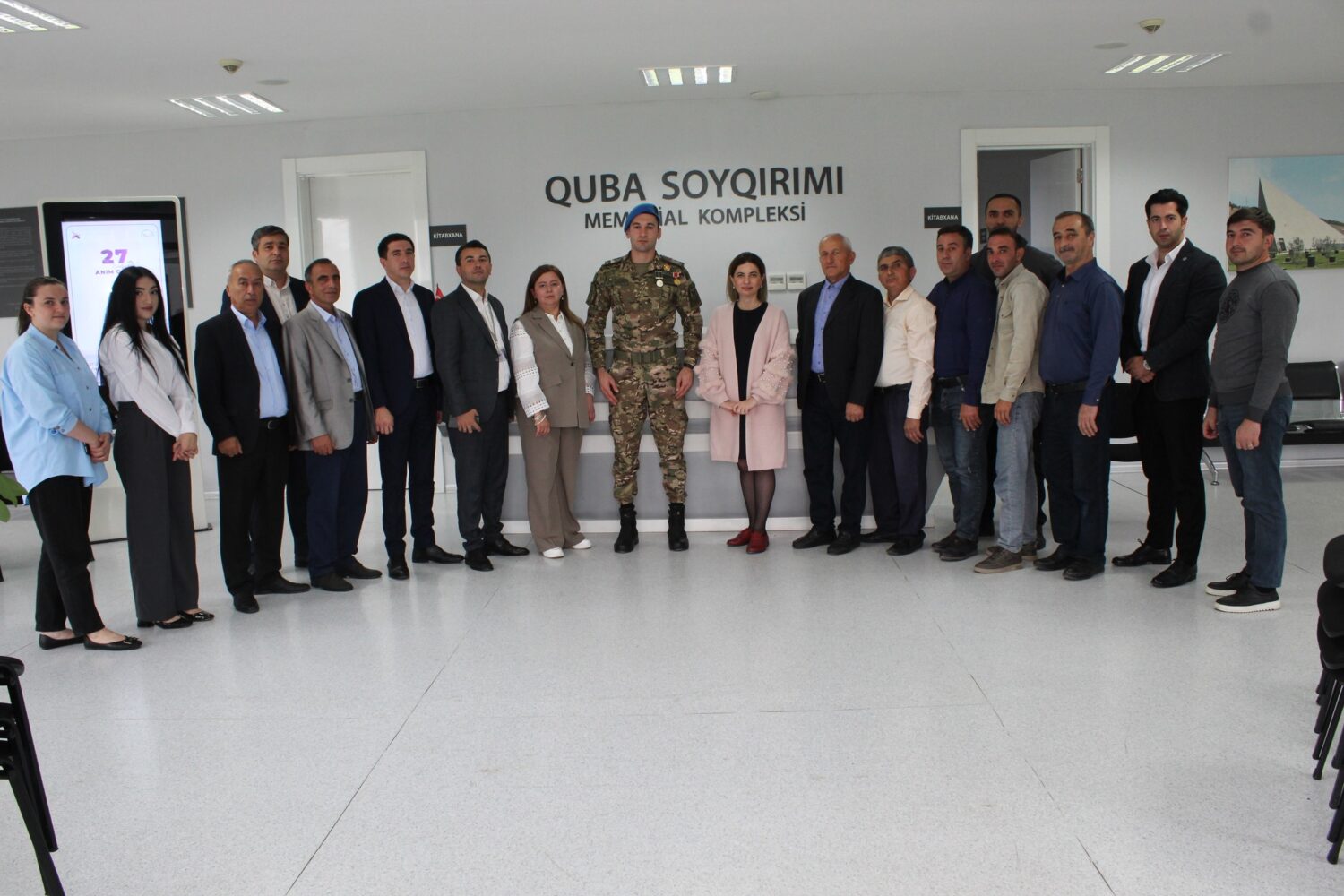
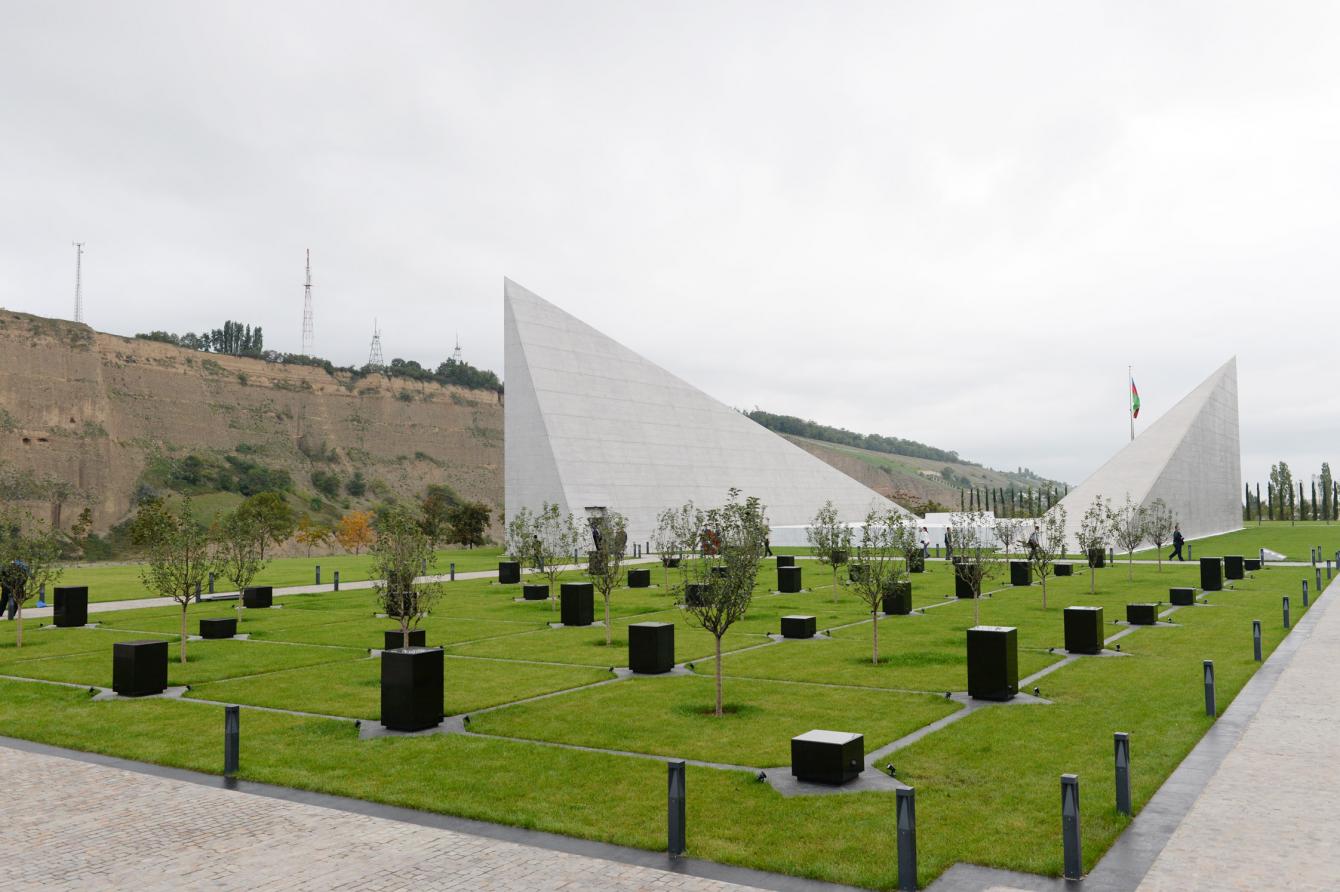
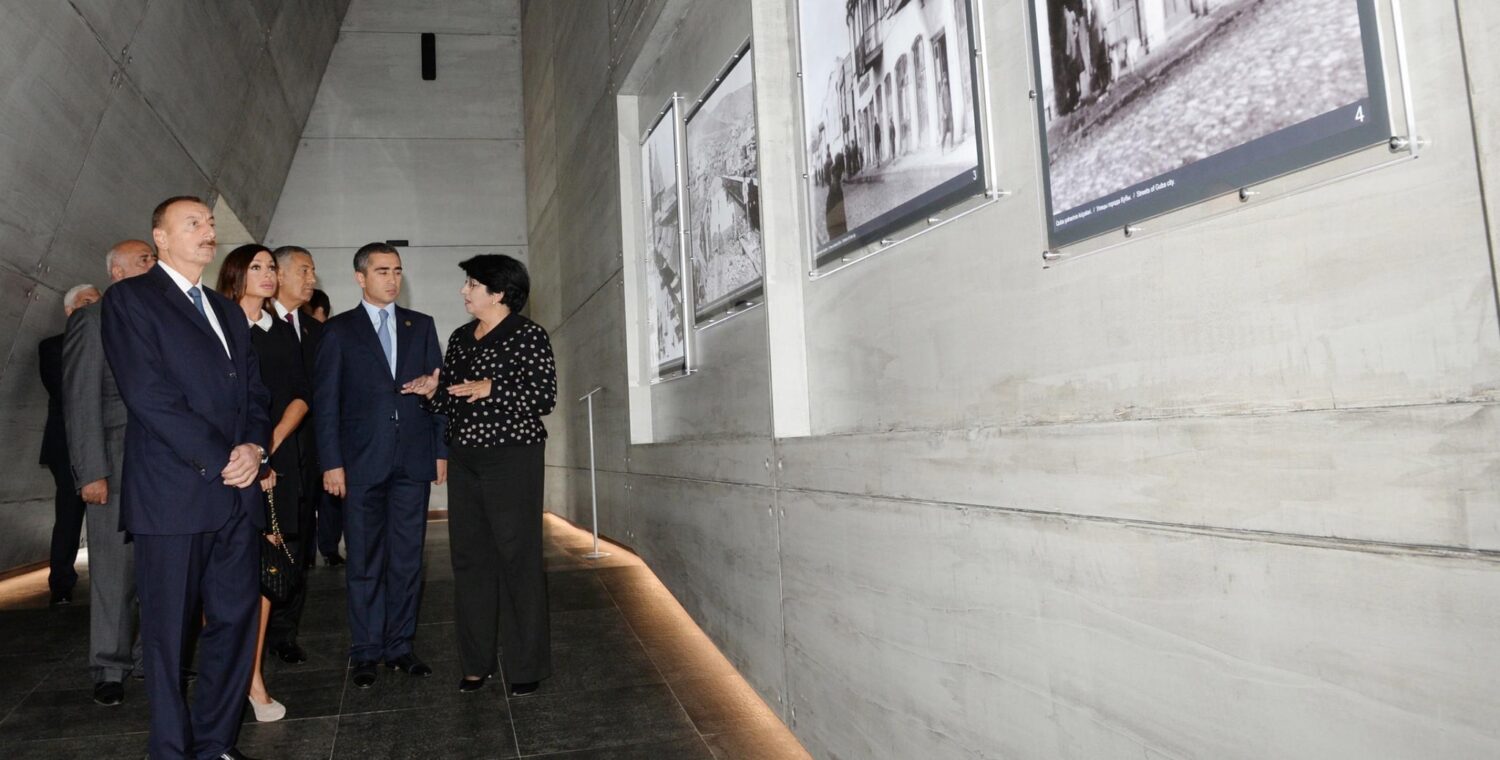
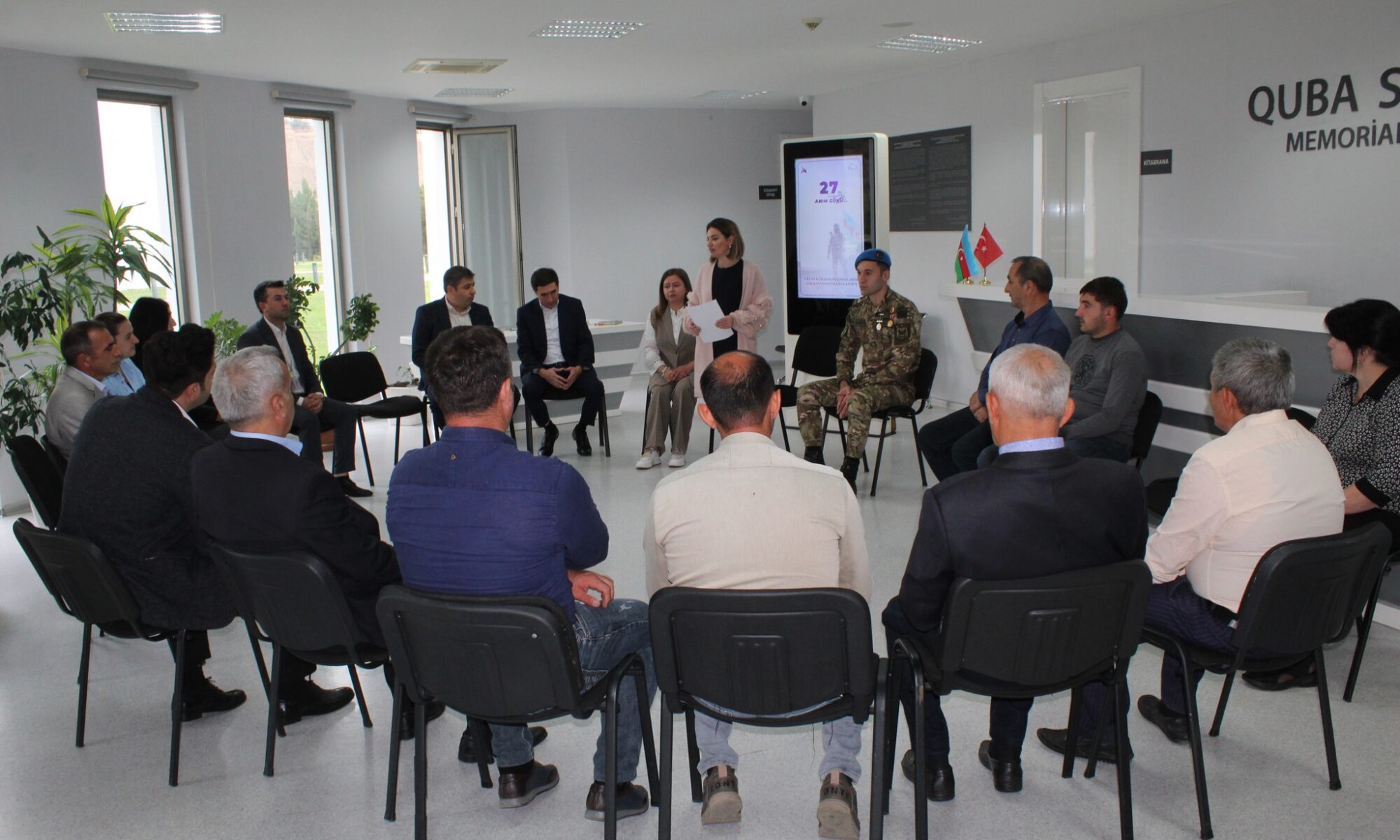
In the city of Quba, a master class titled “Ancient Shabran: Urban Culture of the Middle Ages in the Context of Archaeological Findings” was organized at the “Genocide Memorial Complex.” The session was led by Lachin Mustafayev, PhD in History, an archaeologist, and a lecturer at the Department of General History and History Teaching Technology at the Azerbaijan State Pedagogical University.
First, the event honored the memory of our martyrs who sacrificed their lives for our lands with a one-minute moment of silence. The event was then opened with a welcoming speech by Dr. Rəxşəndə Bayramova, who greeted the participants and provided detailed information about the events of 1918 and the activities of the Memorial Complex. Following this, Günel Pirquliyeva, Director of the “Chiraggala-Shabran” State Historical and Cultural Reserve, emphasized the importance of close cooperation between museums. She noted that on October 22, 2019, by the decree of President Ilham Aliyev, the “Chiraggala” and “Shabran” reserves were merged to form the “Chiraggala-Shabran” State Historical and Cultural Reserve. Referring to the exhibition of cultural artifacts, iron, and pottery products discovered among the remains of the city of Shabran, archaeologist Lachin Mustafayev gave a detailed presentation on Albanian culture and urban planning culture. He stated that the “Chiraggala-Shabran” reserve encompasses seven historical monuments, three of which are of global significance. The speaker emphasized that the history of every nation is also affirmed in the craftsmanship examples it creates. From the Stone Age to the present day, the examples of folk craftsmanship have evolved through various socio-economic formations. Items based on simple manual labor, such as household equipment, have later become cultural artifacts that provide insight into those eras. Pottery, considered one of these craftsmanship examples, is one of the oldest industries in Azerbaijan. It has not only preserved its significance but has also been recognized among the masterpieces of human culture. Archaeological research has confirmed that pottery is a legacy of the Neolithic period. The master class was attended by nearly 50 participants, including employees of history-related institutions from various regions, students, youth, and cultural workers.

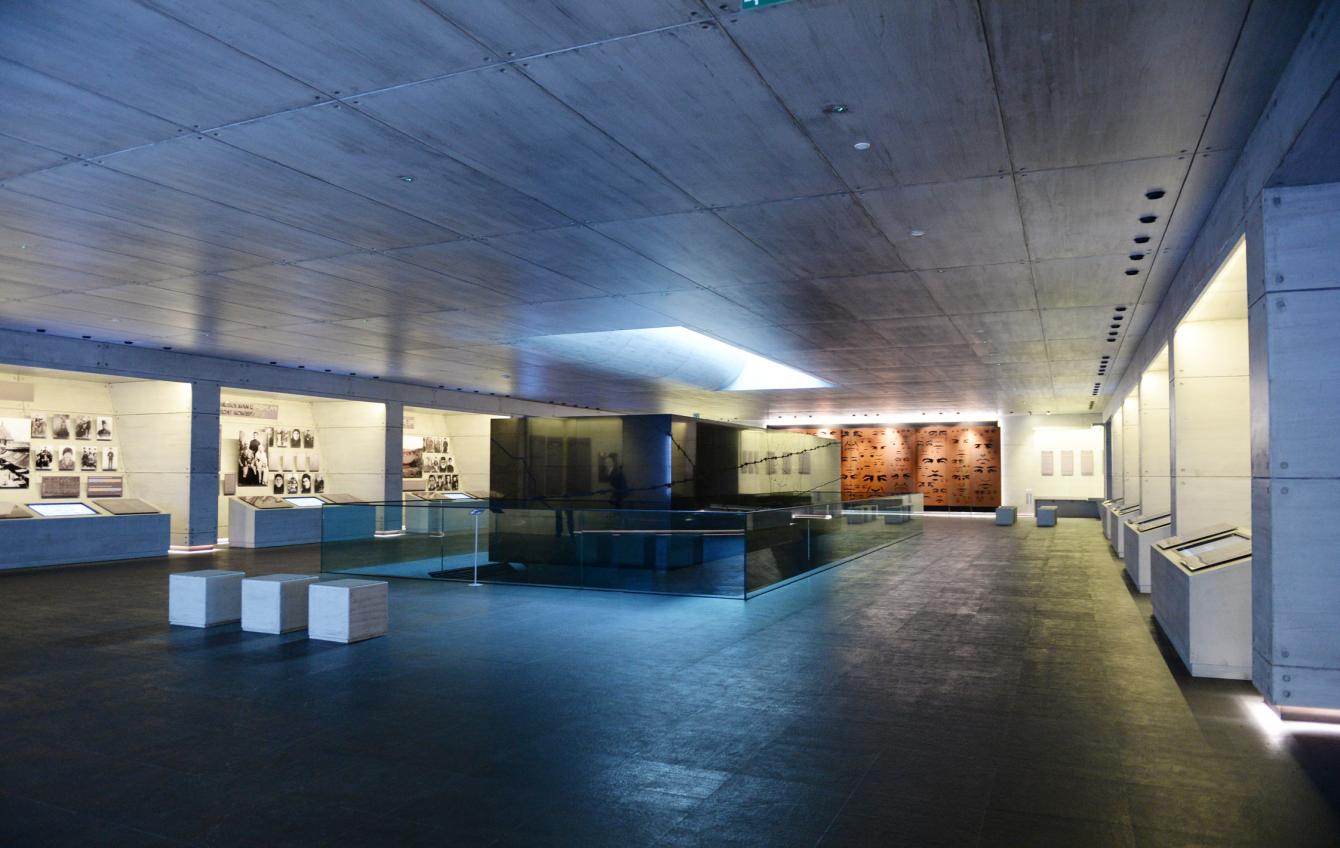
It is worth noting that since August 1st, an exhibition related to the “Chiraggala-Shabran” State Historical and Cultural Reserve has been on display in the museum section of the “Genocide Memorial Complex” in the city of Quba.

"Mir Yagub Mehdiyev"

Mir Yagub Mehdiyev, an active participant in the Azerbaijani national independence movement, was born in 1891 in the Khirdalan settlement of Baku. After graduating from the Alexandropol Commercial School in 1909, he continued his education at the Faculty of Economics at the Petersburg Polytechnic Institute.
Mehdiyev was deeply involved in the social and political life of the country, serving as the deputy chairman of the Peasants’ Union and the Baku Council of Muslim Public Organizations. He later became one of the organizers of the Union Party and was elected a member of its Central Committee at the party’s first and second congresses. In addition to representing the Union Party, Mehdiyev was elected as a member of the Transcaucasian Seym. At the Seym’s meeting on March 25, 1918, he spoke for the first time on behalf of the Muslim faction, requesting the declaration of independence for the South Caucasus.
Following the fall of the Transcaucasian Federation on May 26, 1918, Mehdiyev became a member of the National Council of Azerbaijan. According to the “Law on the Establishment of the Azerbaijan Parliament-Mabusan,” issued by the National Council on November 19, 1918, he was appointed as a member of the Azerbaijani Parliament without the need for elections and served as a member of the “Ittihad” faction. Mehdiyev was also part of the Azerbaijani delegation that participated in the Paris Peace Conference (1919-1920). He played a significant role in securing the de facto recognition of Azerbaijan’s independence on January 11, 1920. During his time as a member of the Seym, Mehdiyev was the first to voice the slogan, “We must separate from Russia and become independent,” following the events of March 1918.
Mehdiyev passed away on November 7, 1949, in Istanbul, Türkiye. He was buried in the Feriköy Cemetery.

"Abdulali Shirali bey oghlu Amirjanov"

Abdulali Shirali bey oghlu Amirjanov, who played a crucial role in saving thousands of Azerbaijanis during the March 1918 genocide against Turkish-Muslims in Baku and preventing further massacres, was born in 1870. He completed his education at the Sheki city school from 1876 to 1883 and graduated from the Aleksandrovsk Teachers’ Institute in 1888.
In the early 20th century, Amirjanov worked as a teacher and accountant in government offices and various companies, actively participating in cultural and educational societies. Following the February Revolution in 1917, he became a member of the Temporary Executive Committee of Baku Muslim Public Organizations. In 1918, he served as the Minister of Finance in the second cabinet of the Azerbaijan Democratic Republic and later as the State Controller. On November 19, 1918, he was elected to the Parliament of the Azerbaijan Democratic Republic under the “Law on the establishment of the Azerbaijan Majlis-Mabusani” by the Azerbaijan National Council.
After the occupation of April 1920, Amirjanov emigrated and joined the Azerbaijan National Center. He passed away in 1948.

Dear Visitors, as part of the collaborative efforts between the "Genocide Memorial Complex" and the "Chiraggala-Shabran" State Historical-Cultural Reserve in Guba, an exhibition titled "The Living Culture of Ancient Shabran" will be held at the Complex starting from August 1, 2024. This exhibition will showcase dozens of cultural and material artifacts, including iron and pottery items, discovered among the ruins of the ancient city of Shabran near the Shabran River, which is part of the "Chiraggala-Shabran" State Historical-Cultural Reserve.

Visitors will have the opportunity to learn in detail about the monuments within the “Chiraggala-Shabran” reserve and their history, with expert guidance provided by the reserve’s guides.

It is important to note that this exhibition, organized as part of a new initiative to highlight and promote our historical heritage, will be hosted at the Genocide Museum and will be open to the public every day from 10:00 AM to 4:00 PM throughout August and September.

Mirza Bala Mahammadzade's story "Counter-revolutionaries"

Mirza Bala Mahammadzade’s story “Counter-revolutionaries” is the first fiction work dedicated to the March 1918 genocide. In this narrative, the writer portrays the tragedy experienced by an Azerbaijani intellectual, Huseyn, who, despite losing relatives and loved ones in the events, still referred to the victims as “counter-revolutionaries” due to his ideological indoctrination by Russia. Huseyn struggled to see and express the truth, failing to fully appreciate the essence of the problem. Through Huseyn’s exaggerated Bolshevik and Armenian Dashnak mindset, Mahammadzade created a vivid character that remains relevant today.
The story includes a poignant description: “The Shamakhi incident did not trouble Huseyn as much as the events in Crimea and Turkestan. According to the information he received from reliable sources, those killed in these Turkish fires were ‘counter-revolutionaries.’ But now, Baku was experiencing tumultuous days. The city was ablaze. The bombardment from steamships, accompanied by the sounds of machine guns, cannons, rifles, and bullets, and the cries of the people, the groans of children, women, and girls, painted a clear picture of horror. The dead, the burning, the running, the screaming, the destruction, the cutting—all mixed together… Women, girls, and the elderly ran barefoot from house to house, corner to corner. What was the reason for this? These were Turkic Muslims, those who yearned for freedom and autonomy. Tired of centuries of slavery, suffering, and humiliation, they desired a more humane existence. For this, they were punished. They were deemed counter-revolutionaries because they refused to submit to Velikorus imperialism. I wonder, does Huseyn see them?”

Muhammad Hadi - To the Heroic Turkish Soldiers"

The headquarters of the Caucasian Islamic Army, which came to Azerbaijan’s aid, was situated in Ganja. Muhammad Hadi, present in Ganja at that time, warmly welcomed their assistance to Azerbaijan and composed the poem “To the Heroic Turkish Soldiers” in 1918.
 
Bold we stand with hearts unafraid,
Sons of soldiers, forever brave.
A Turkish son flees not from strife,
Zealous souls, knights in life.
Turkish nation, Turkish land,
Through the dark, we take our stand.
Grateful for the light we’ve won,
Turk’s newfound strength, by God’s sun.

"Agdu Temple"

Agdu Temple is a grave monument located in the village of Agdu (renamed Agitu on April 19, 1991) in the Garakilsa (renamed Sisian on February 3, 1940) district of the Zangezur region. This monument, built in the 7th century, stands at a height of 9 meters. Historically, Aghudi village has been home to Turko-Oghuz tribes, with only Azerbaijani Turks living there until 1988. The first Armenians moved to the village following the 1988 genocide of West Azerbaijani Turks.

MUHAMMED SAID ORDUBADI "THE BLOODY YEARS"

 
Mammad Said Ordubadi, who was a live witness of Armenian brutality at the beginning of the last century, wrote a book called “Bloody Years” based on historical facts and deep observations. In this work, the writer wrote on the basis of the statements of 245 people who witnessed the Armenian-Muslim massacres in the Caucasus in 1905-1906, as well as the tragedies, unimaginable tortures and lootings committed by Armenians against people in the territories of Azerbaijan. In his work “Bloody Years”, which reflects the Armenian treachery and horror of the inhuman atrocities of Armenians in their ancestral home of Azerbaijanis, Ordubadi characterized how cunning, evil-doing, bloodthirsty, Turkish blood-thirsty villains our nefarious neighbors are with the disasters and troubles they caused.
In 1908, Ordubadi, who wrote on the basis of facts and eyewitnesses’ accounts of the Armenian Dashnak genocide carried out by relying on them at a time when tsarist censorship still ruled, completed this work. Unfortunately, the fate of this book, which was written on the basis of facts and evidence, was bad. In 1914, Mammad Said Ordubadi was arrested in Julfa and exiled to the city of Sarits (Volgograd) in Russia.

One of the heads of government of the Azerbaijan Democratic Republic, a prominent statesman and political figure Nasib bey Yusifbeyli was born in 1881 in Ganja.

Yusif bey Yusifbeyli, elected as a representative to the Constituent Assembly of Russia but unable to travel to Petrograd due to the October Revolution of 1917, actively participated in the establishment of the Transcaucasian Sejm. Serving as the Minister of Education in the government of the Transcaucasian Democratic Federative Republic proclaimed on April 22, 1918, he undertook the most complex and responsible tasks in national policy. After the formation of the Azerbaijan Democratic Republic in 1918, in the first cabinet of the government organized by Fatali Khan Khoyski, Yusifbeyli held the position of Minister of Finance and Public Education, and subsequently in the 2nd and 3rd cabinets of Khoyski – the position of Minister of Public Education and Religious Convictions.
Among the important events during Yusifbeyli’s tenure were the establishment of Baku State University, sending about 100 Azerbaijani young people to various universities in Europe, preparation and enactment of a land reform bill, opening courses to combat illiteracy, and more. Additionally, one of the government’s final decisions was a resolution on January 30, 1920, to develop projects for military orders, a national anthem, a state emblem, and a seal.
The most significant event in the history of the Azerbaijani people was the de facto recognition of Azerbaijan’s independence by the great powers on January 11, 1920. On January 14, Nasib bey Yusifbeyli brought this news to the Azerbaijani people.
The government of the Azerbaijan Democratic Republic could not fully realize its plans. Nasib bey Yusifbeyli, who left the city to avoid persecution after the occupation of Baku by the 11th Red Army, was tragically killed on the road on May 31, 1920.