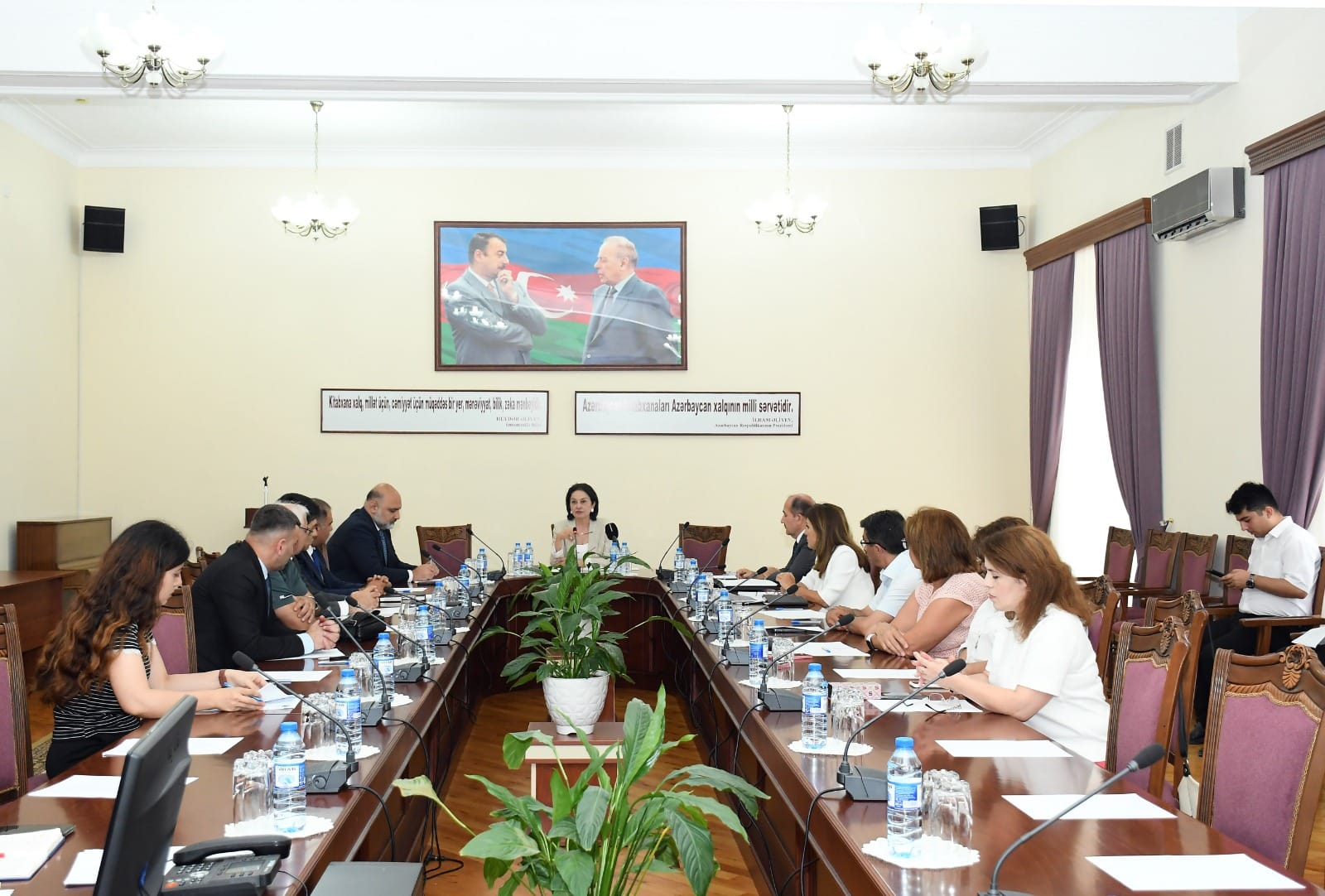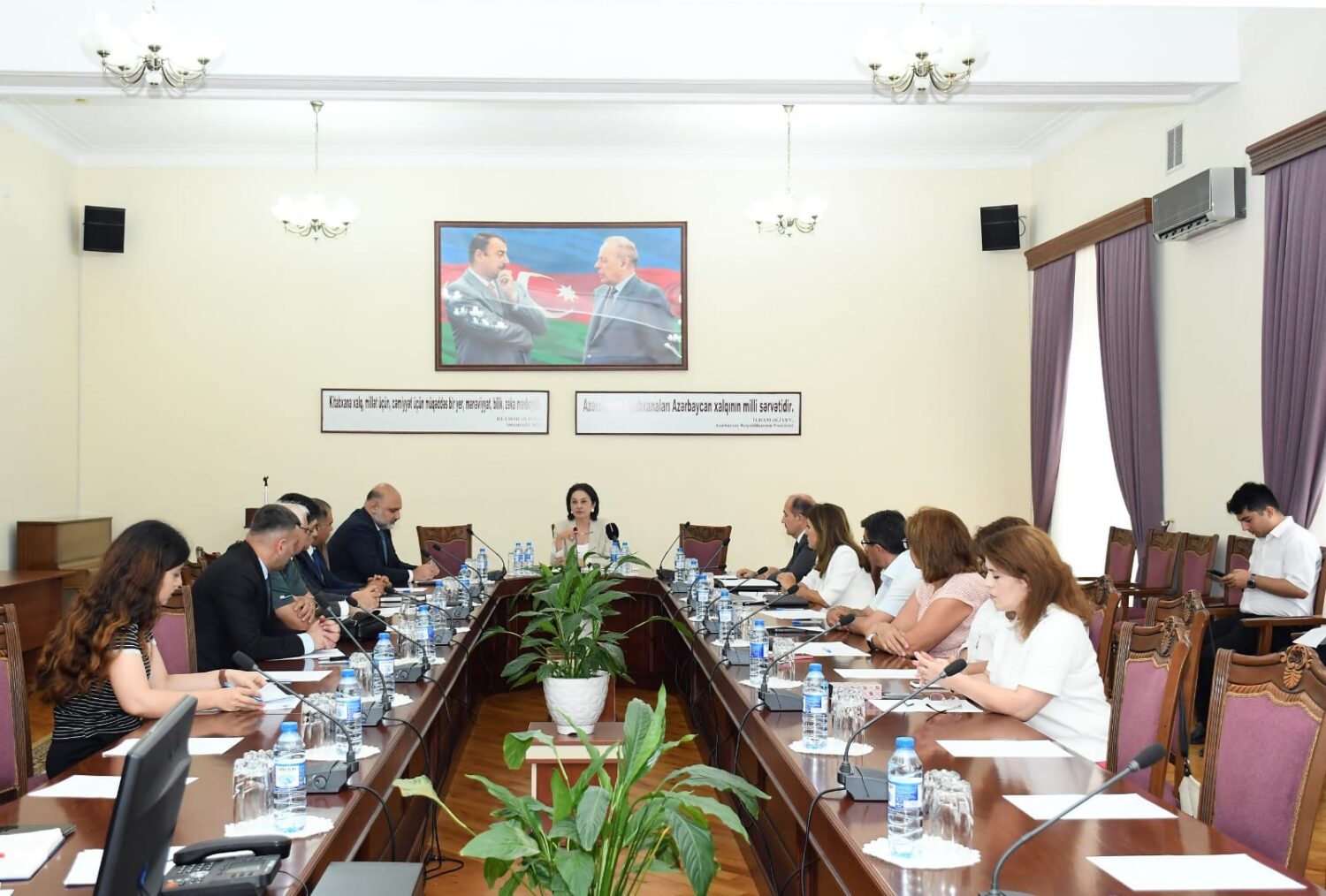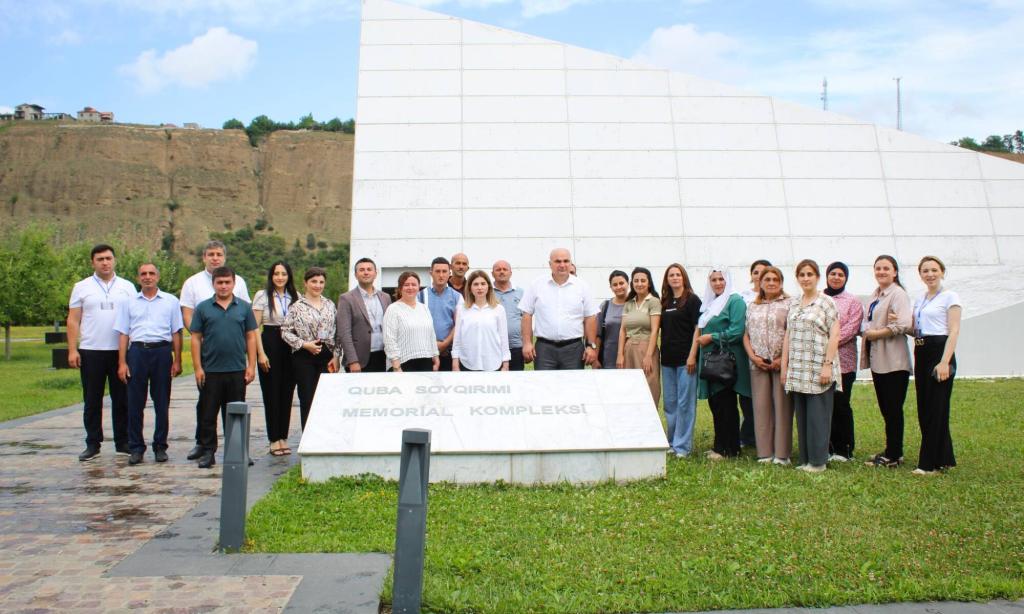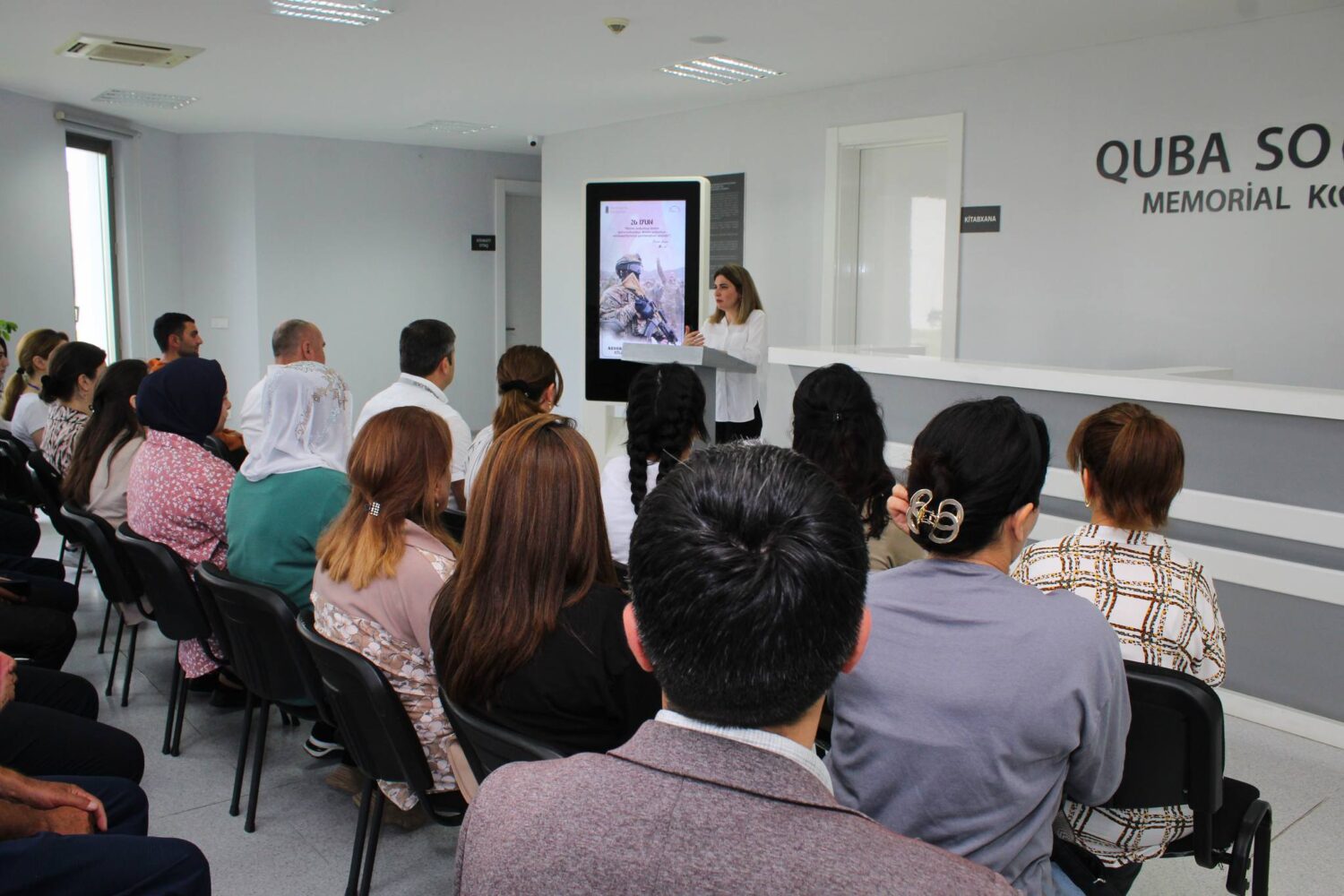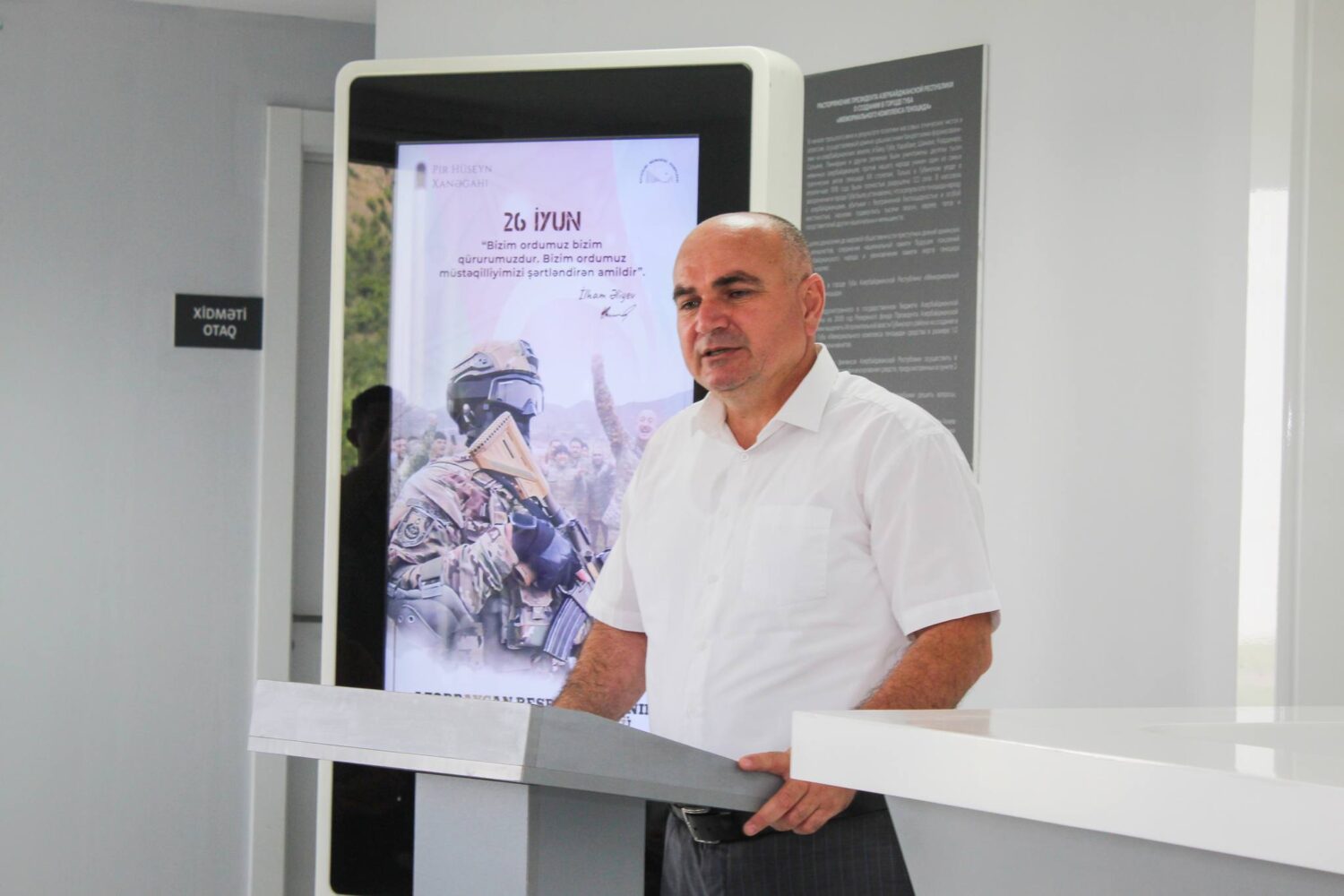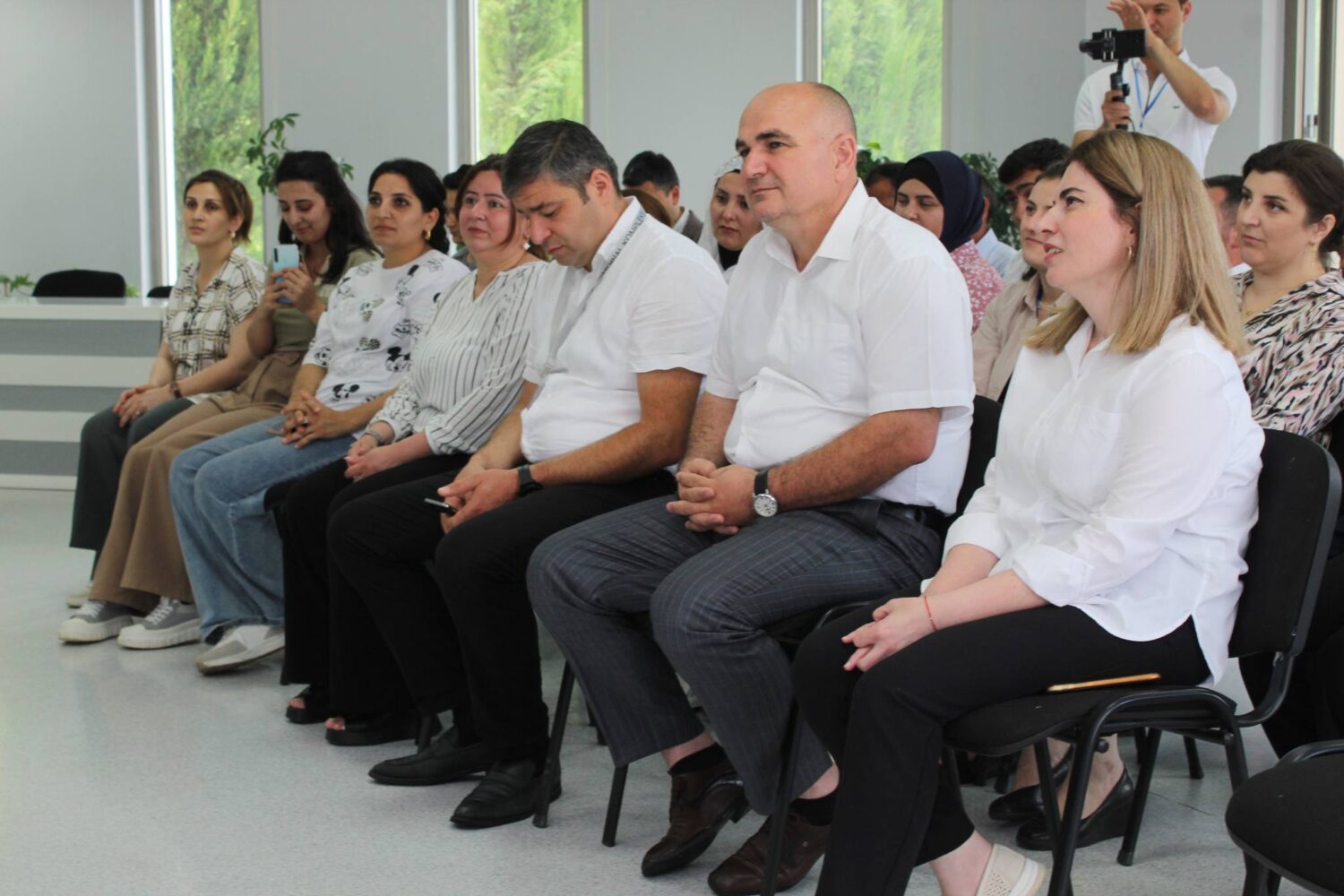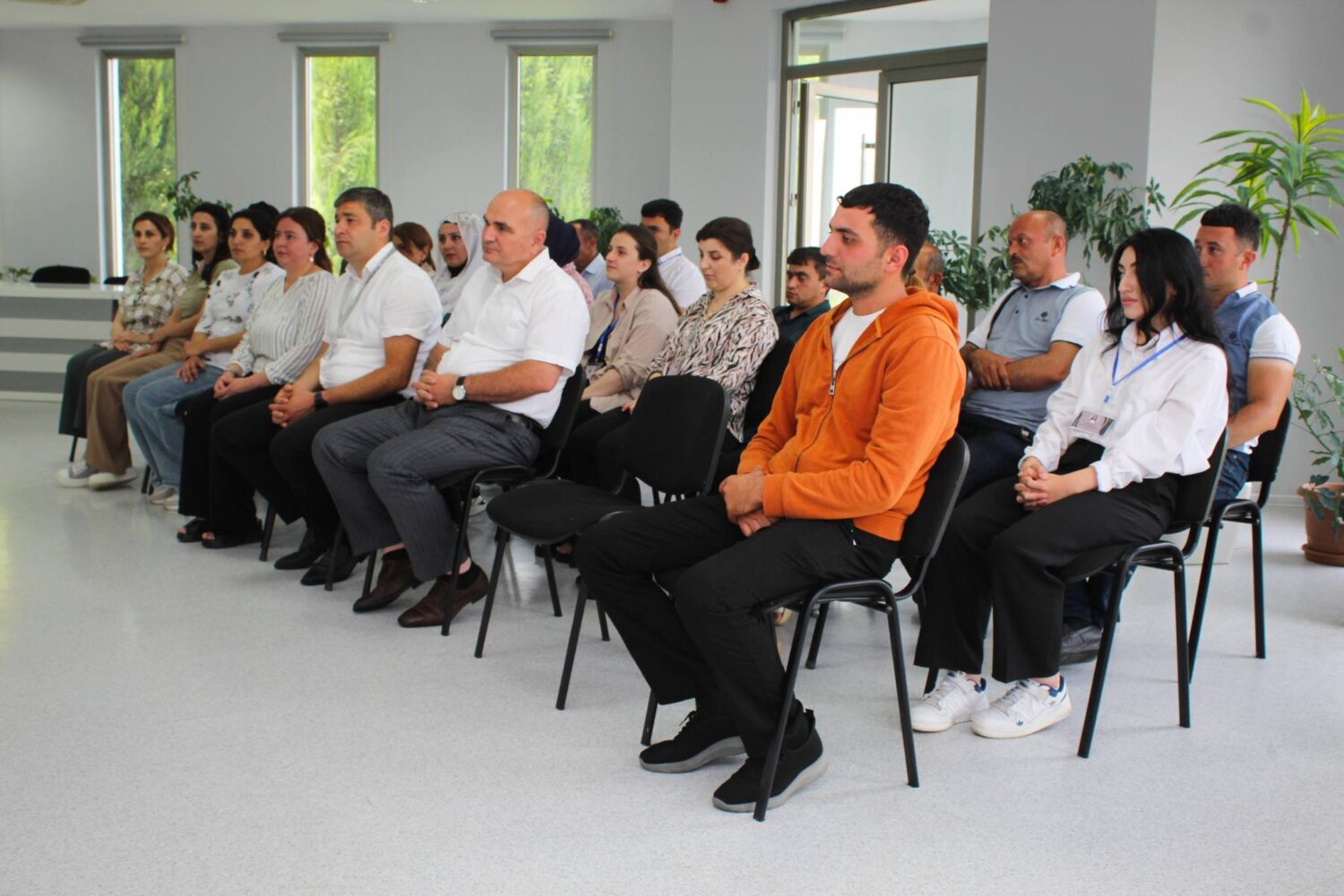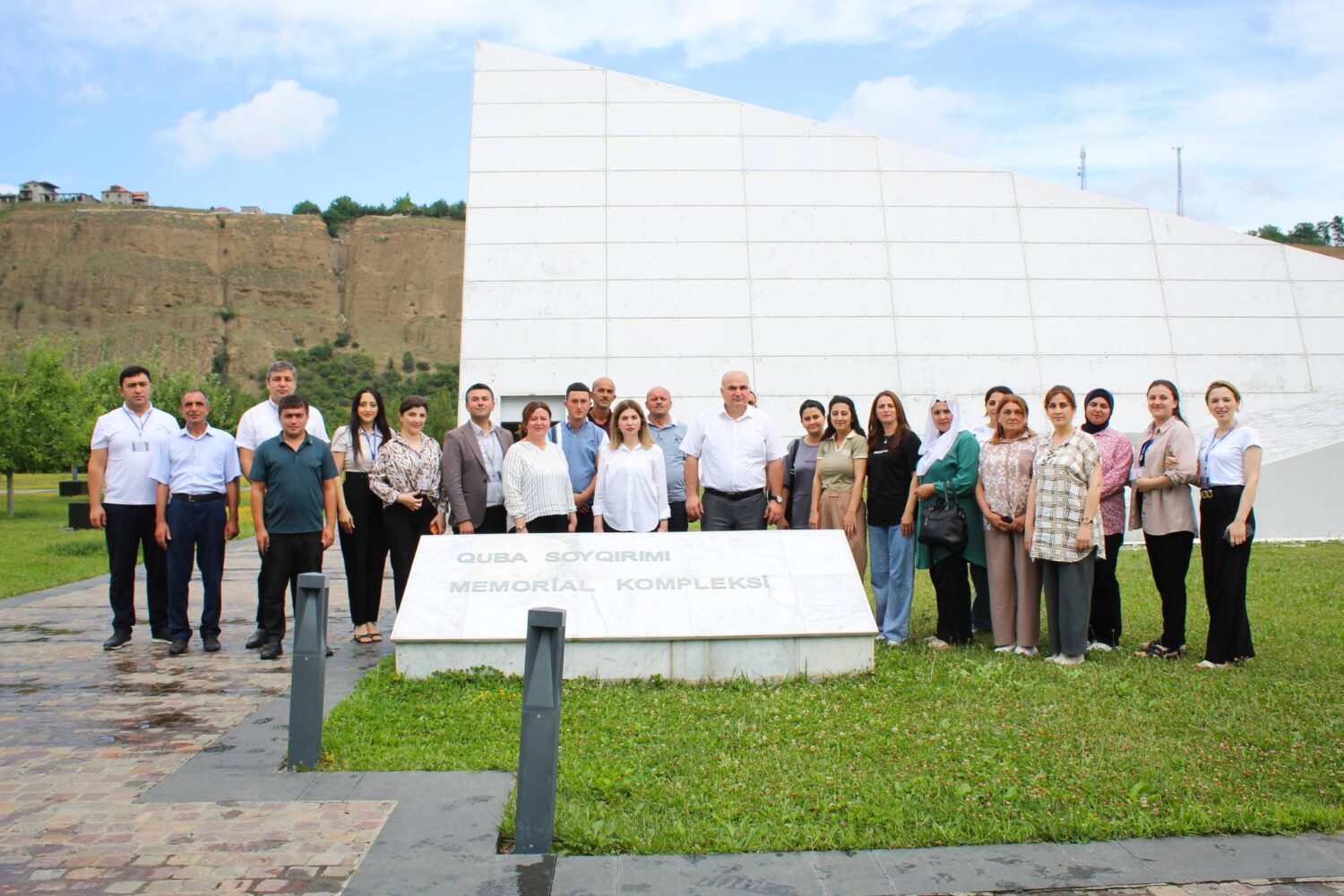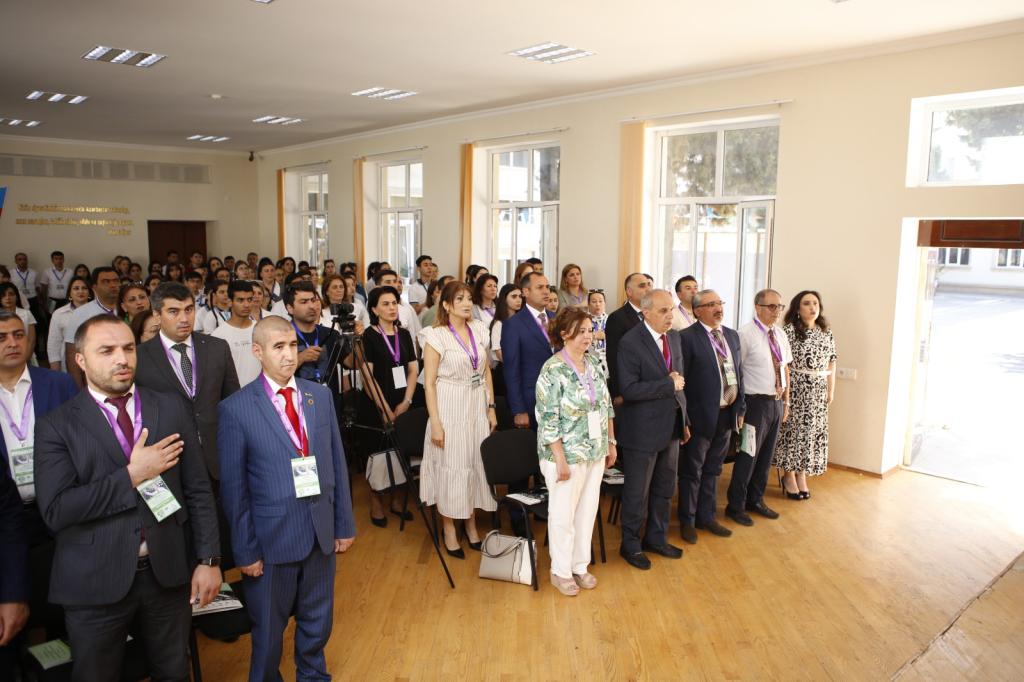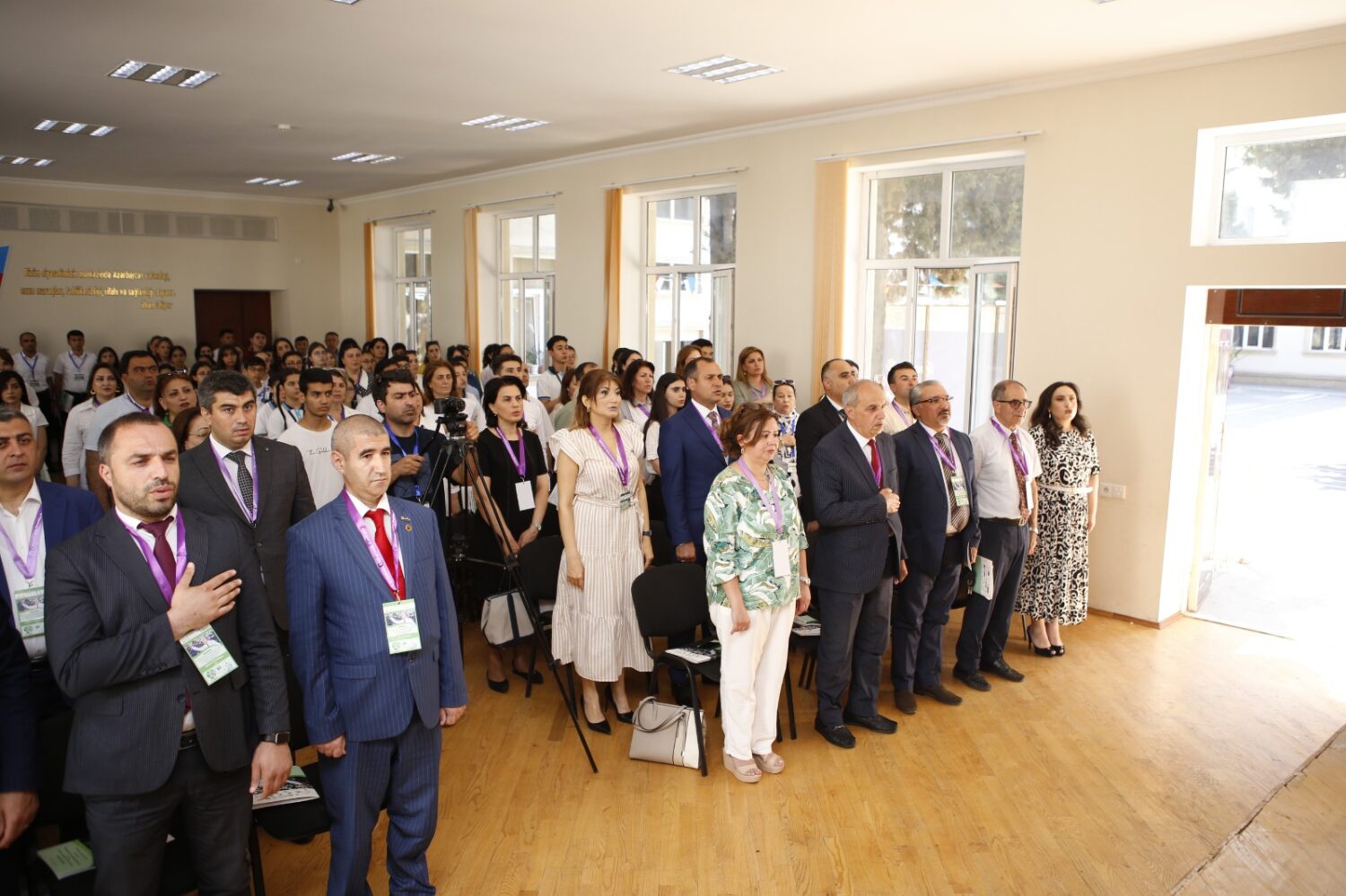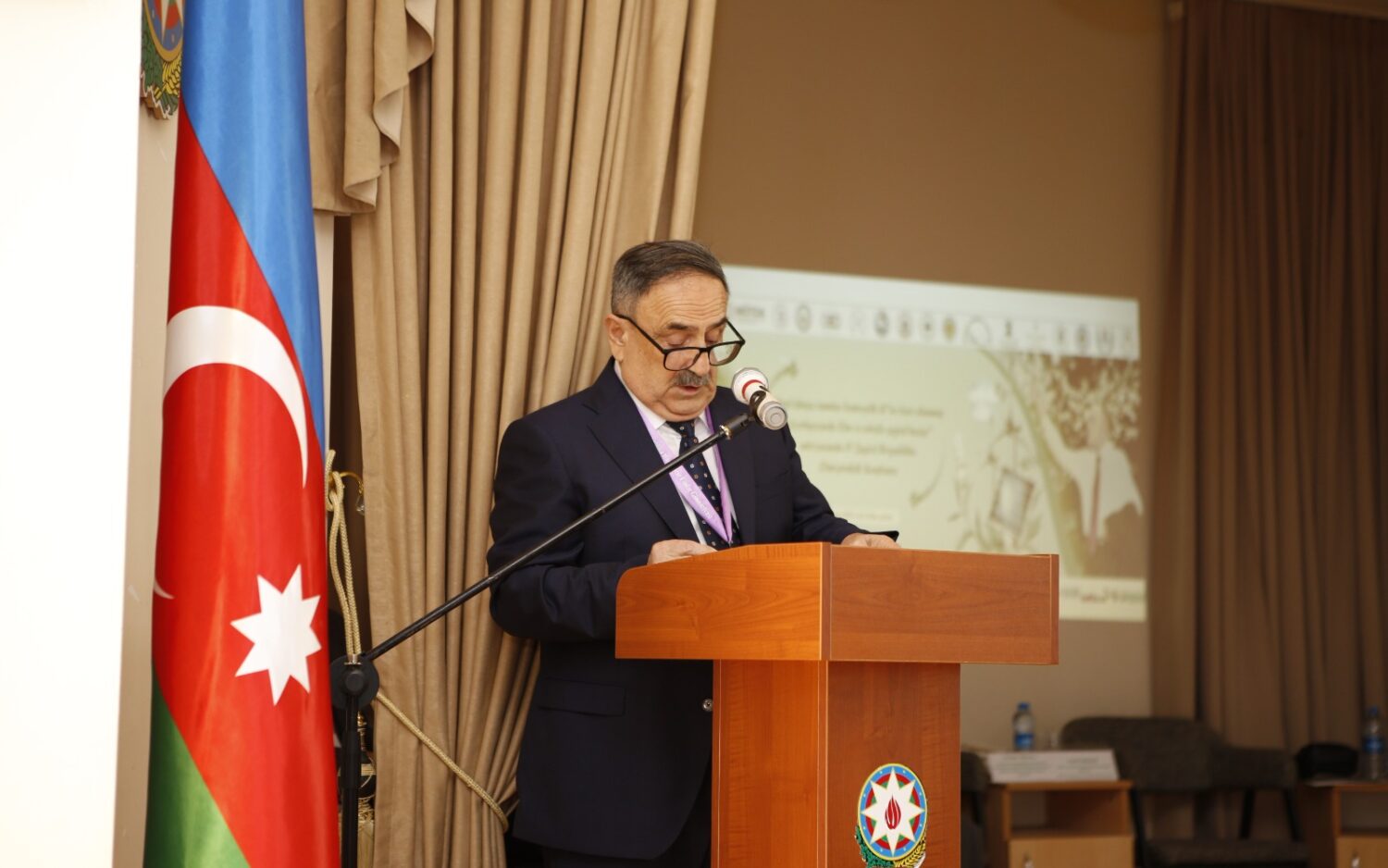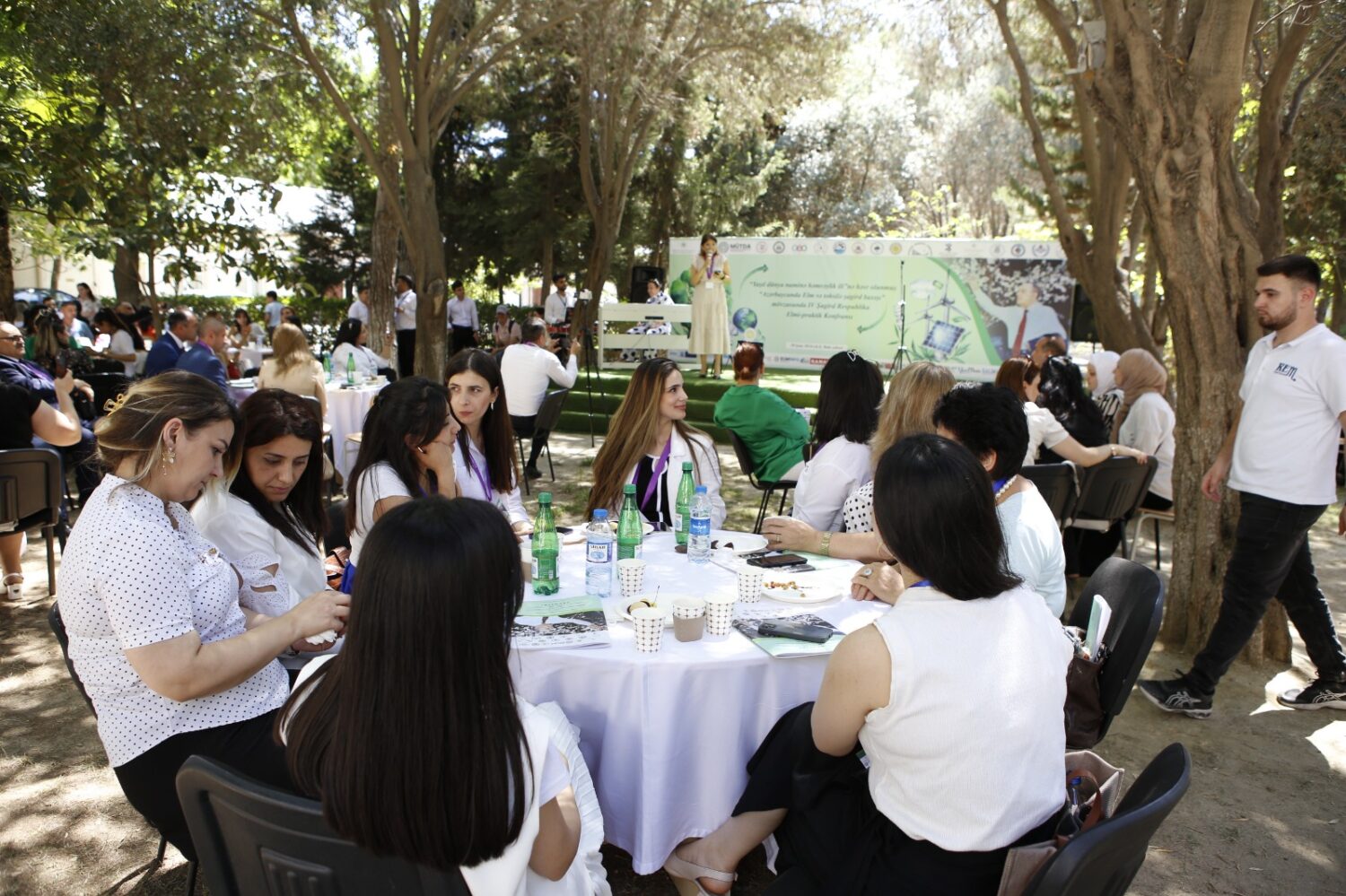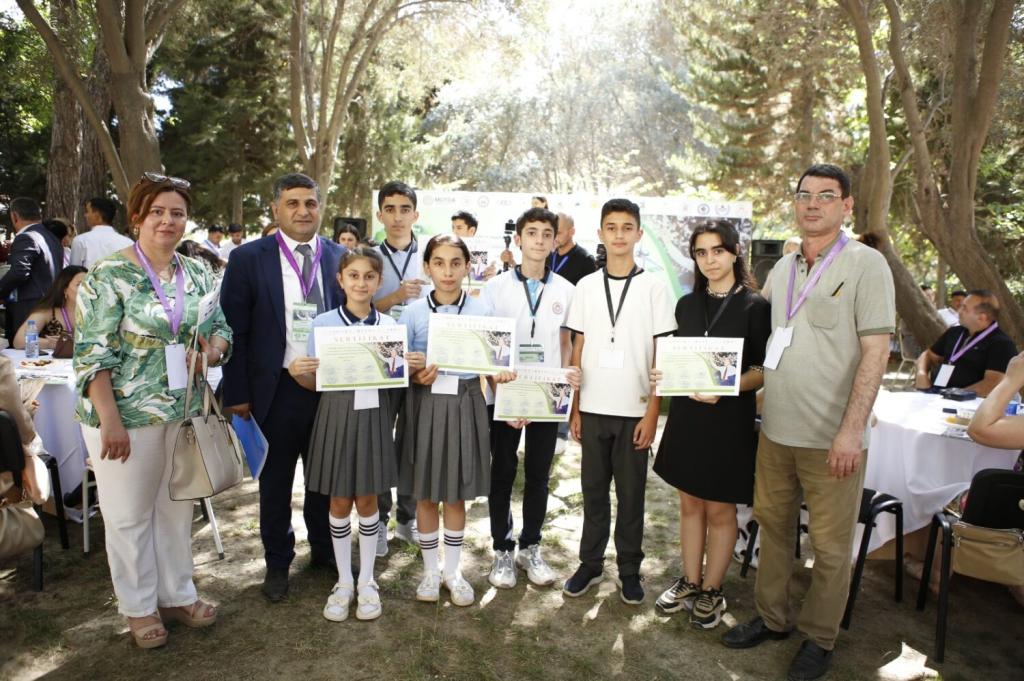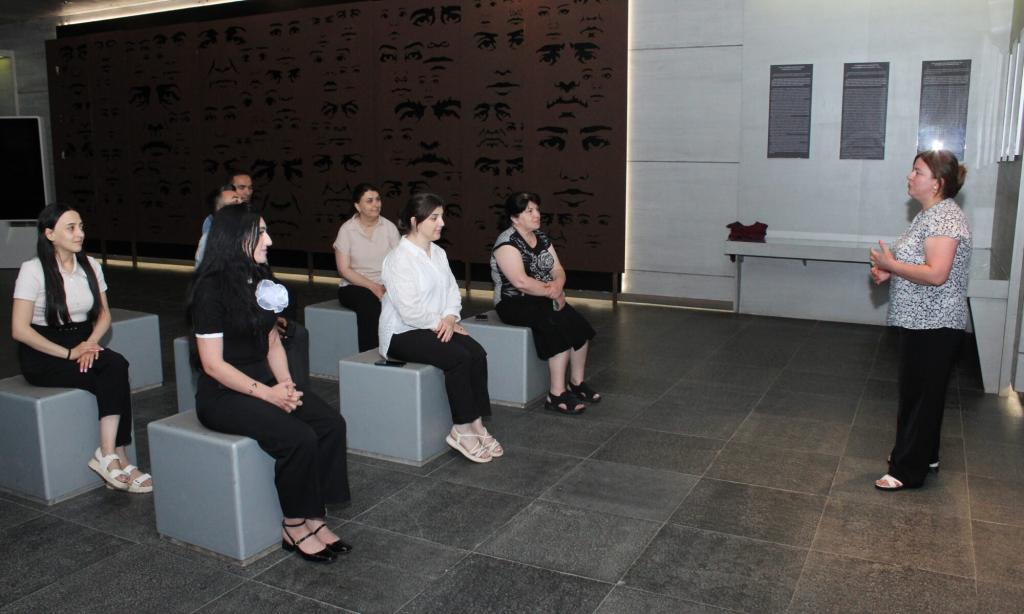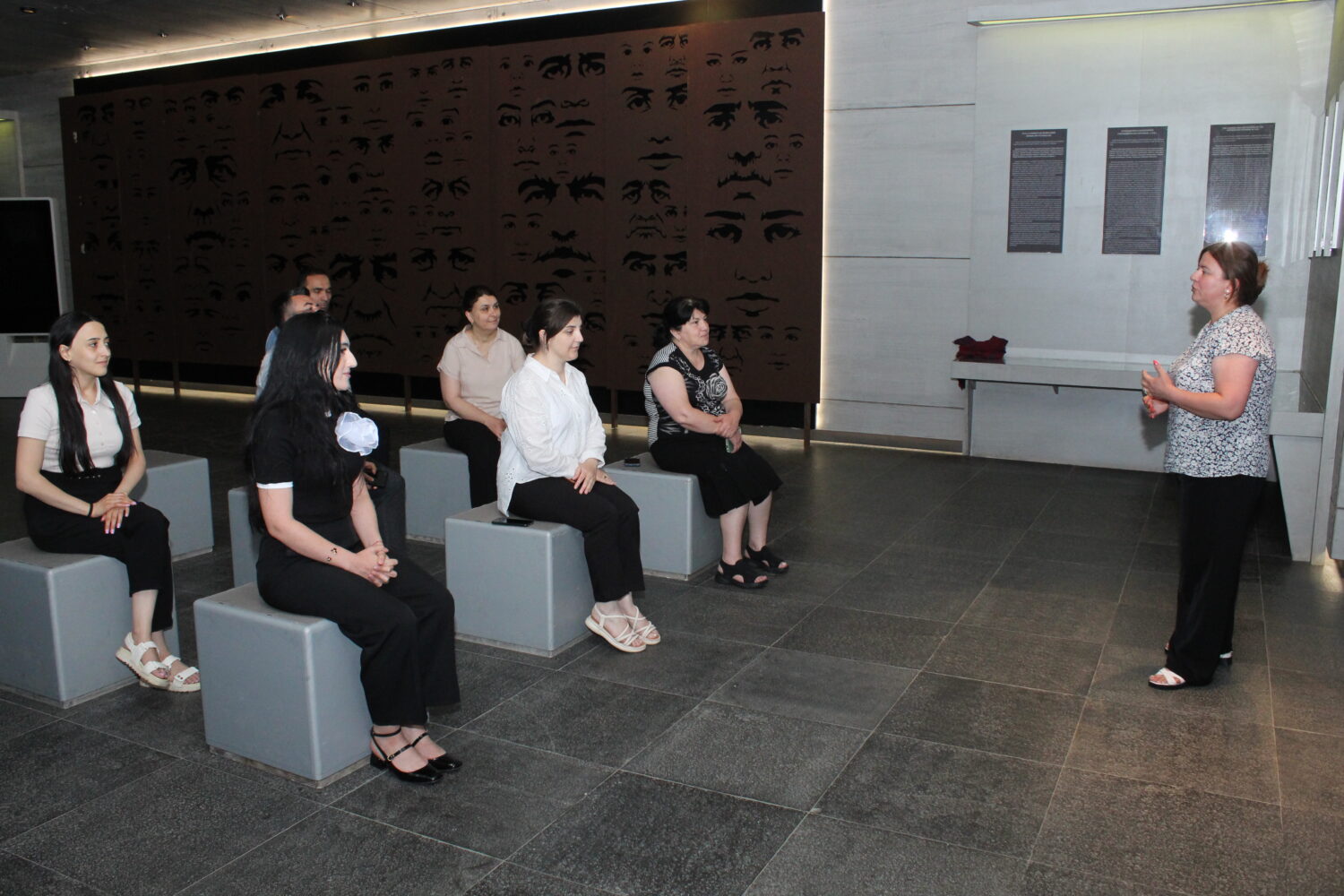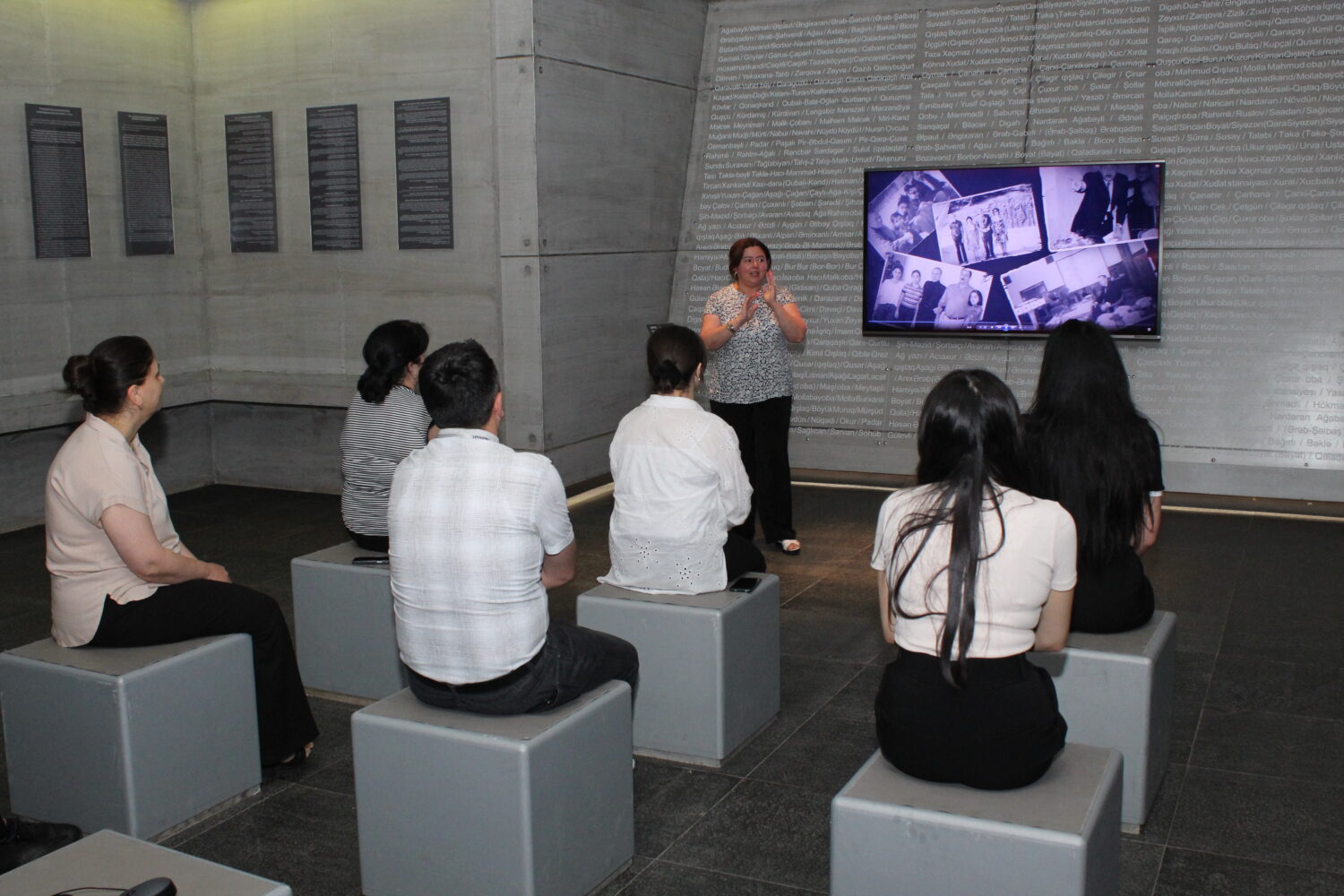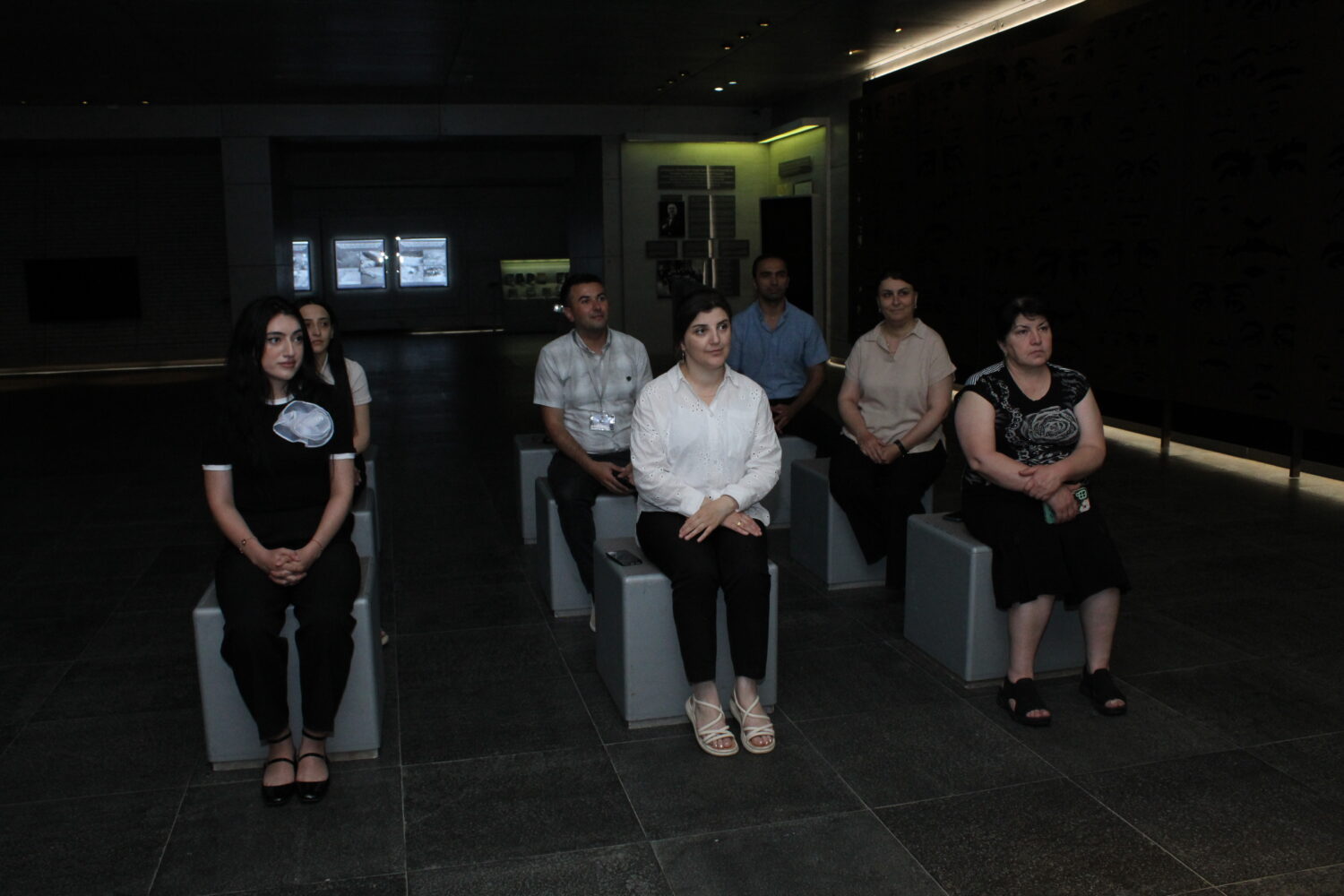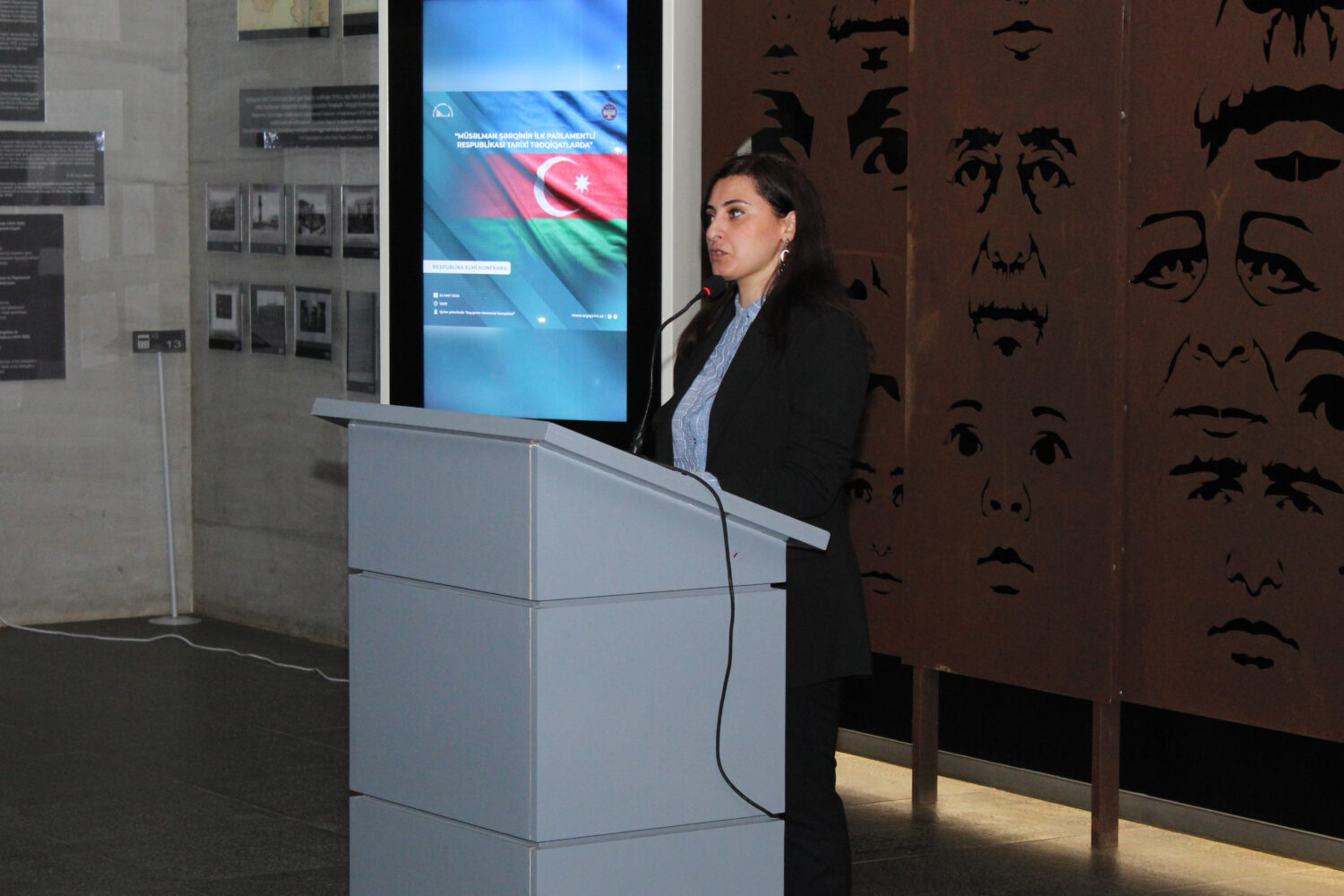
According to the approved action plan of the "Genocide Memorial Complex" for the second half of 2024, a series of "Master classes" are being conducted in Guba.
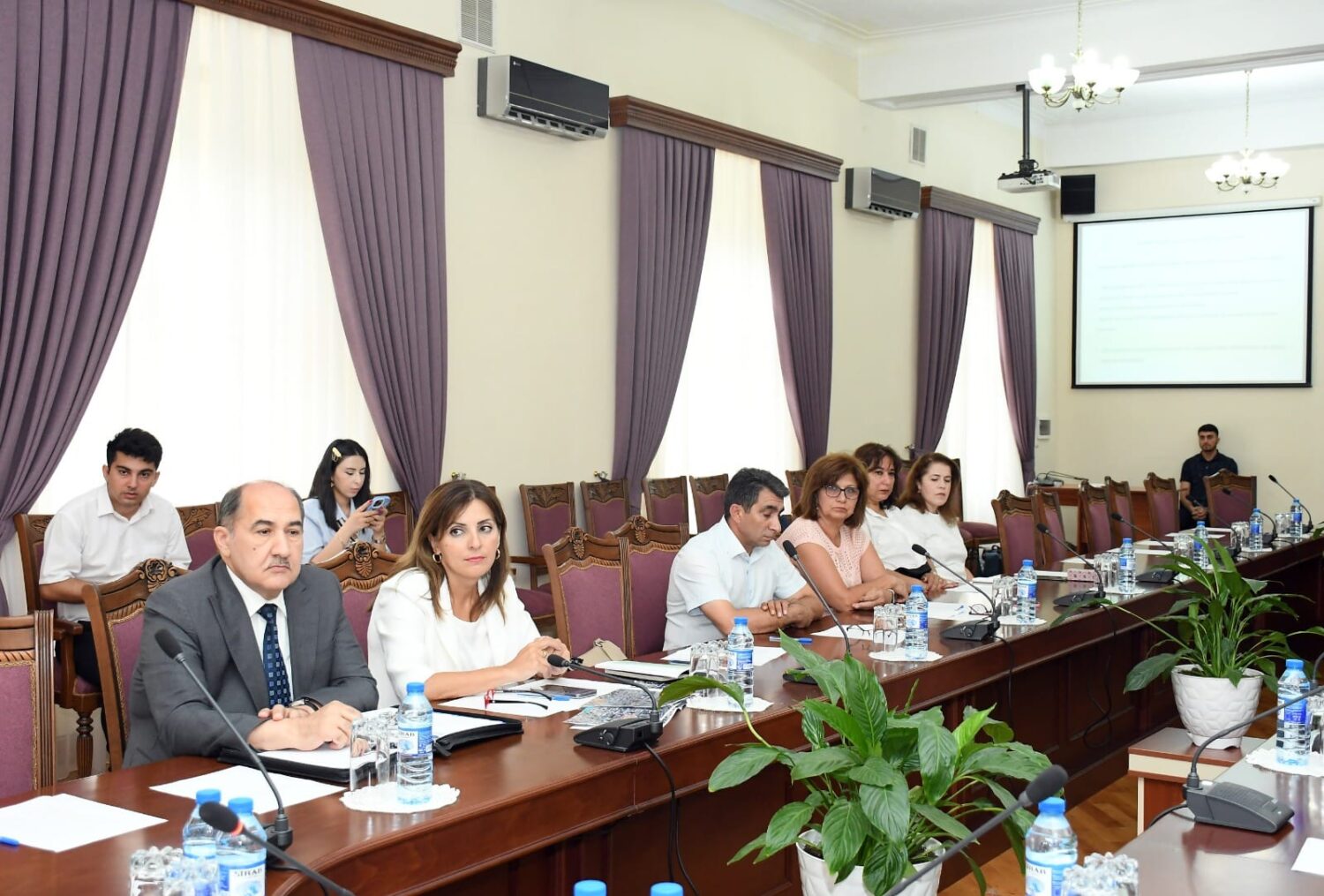
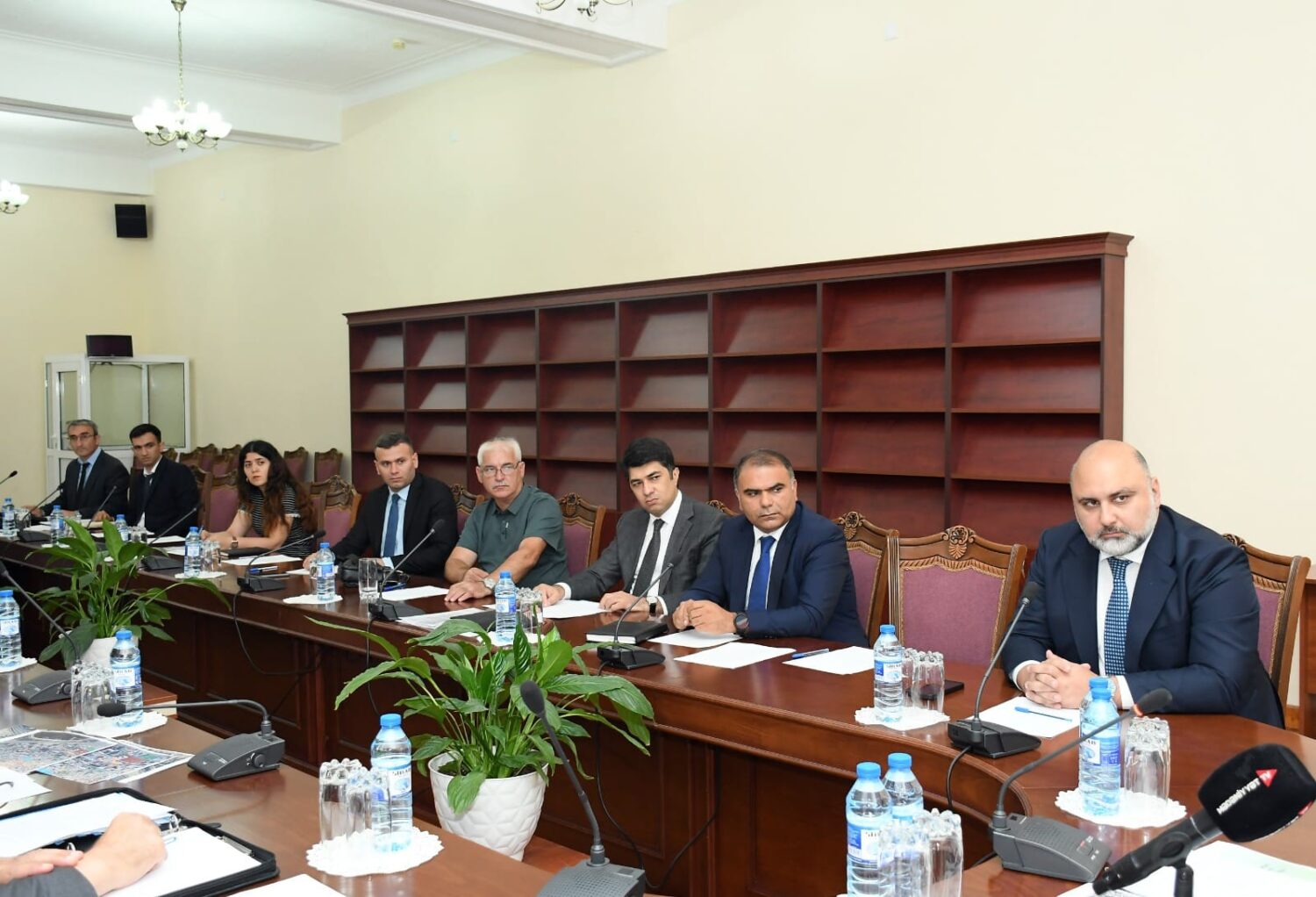
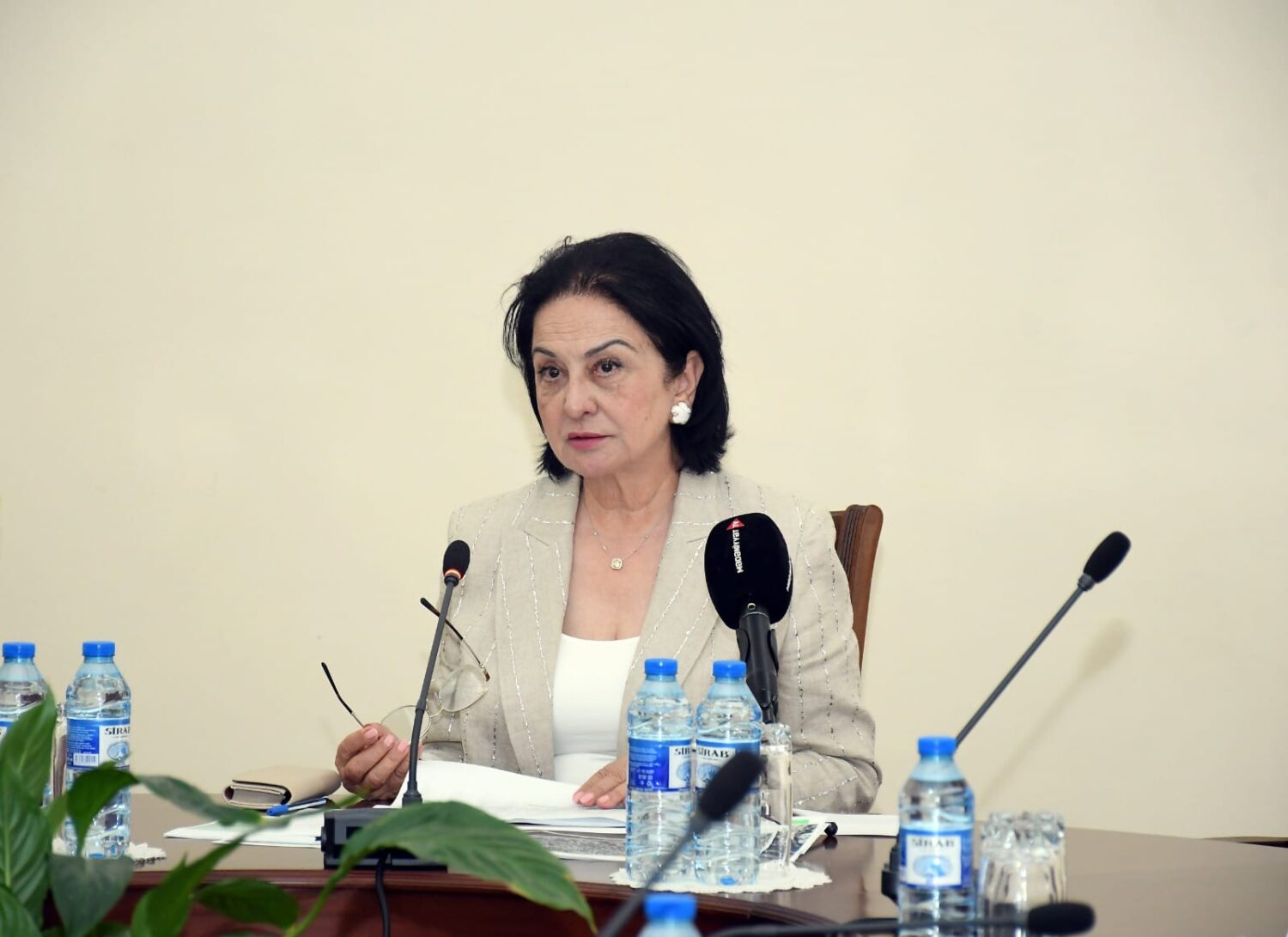
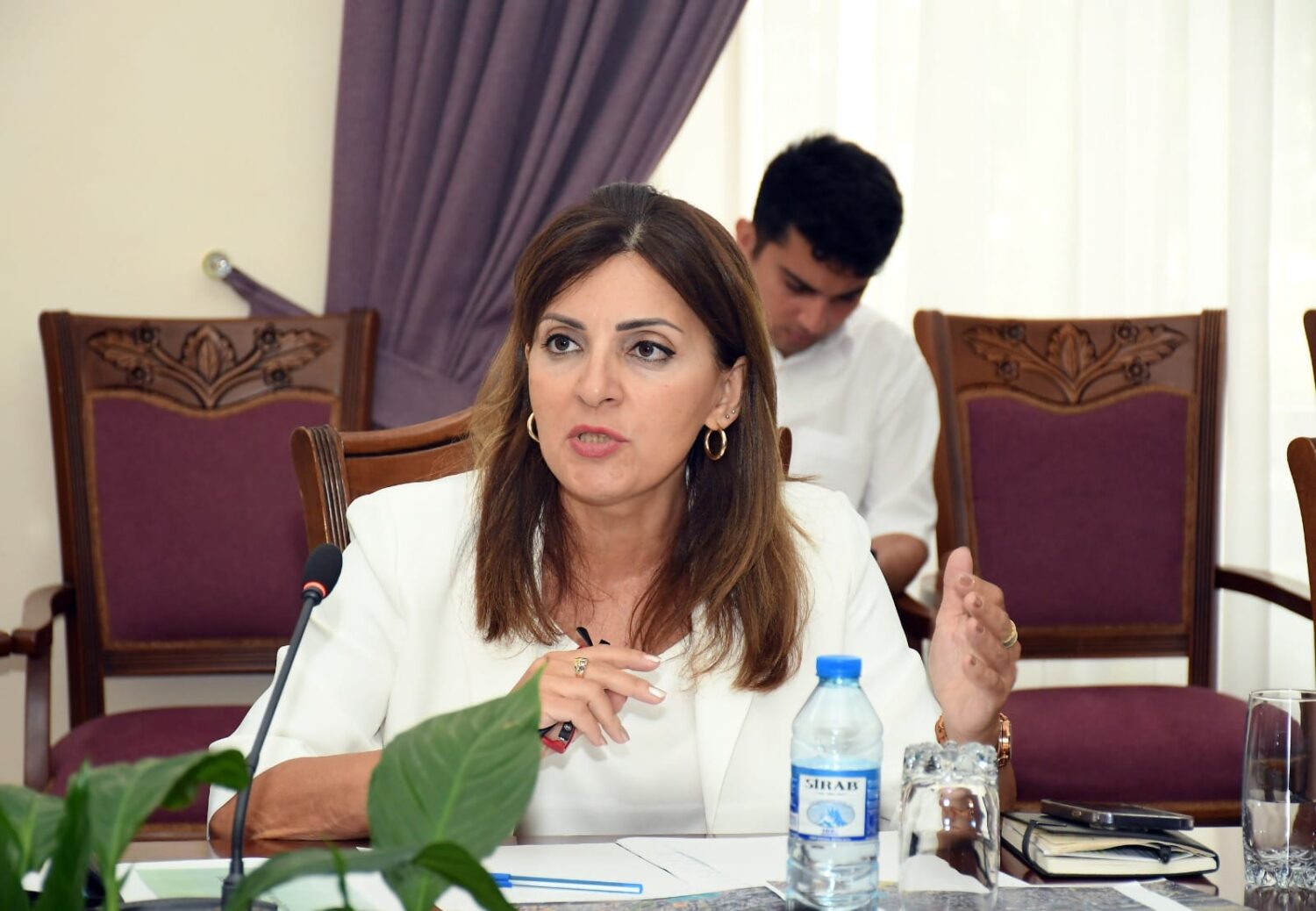
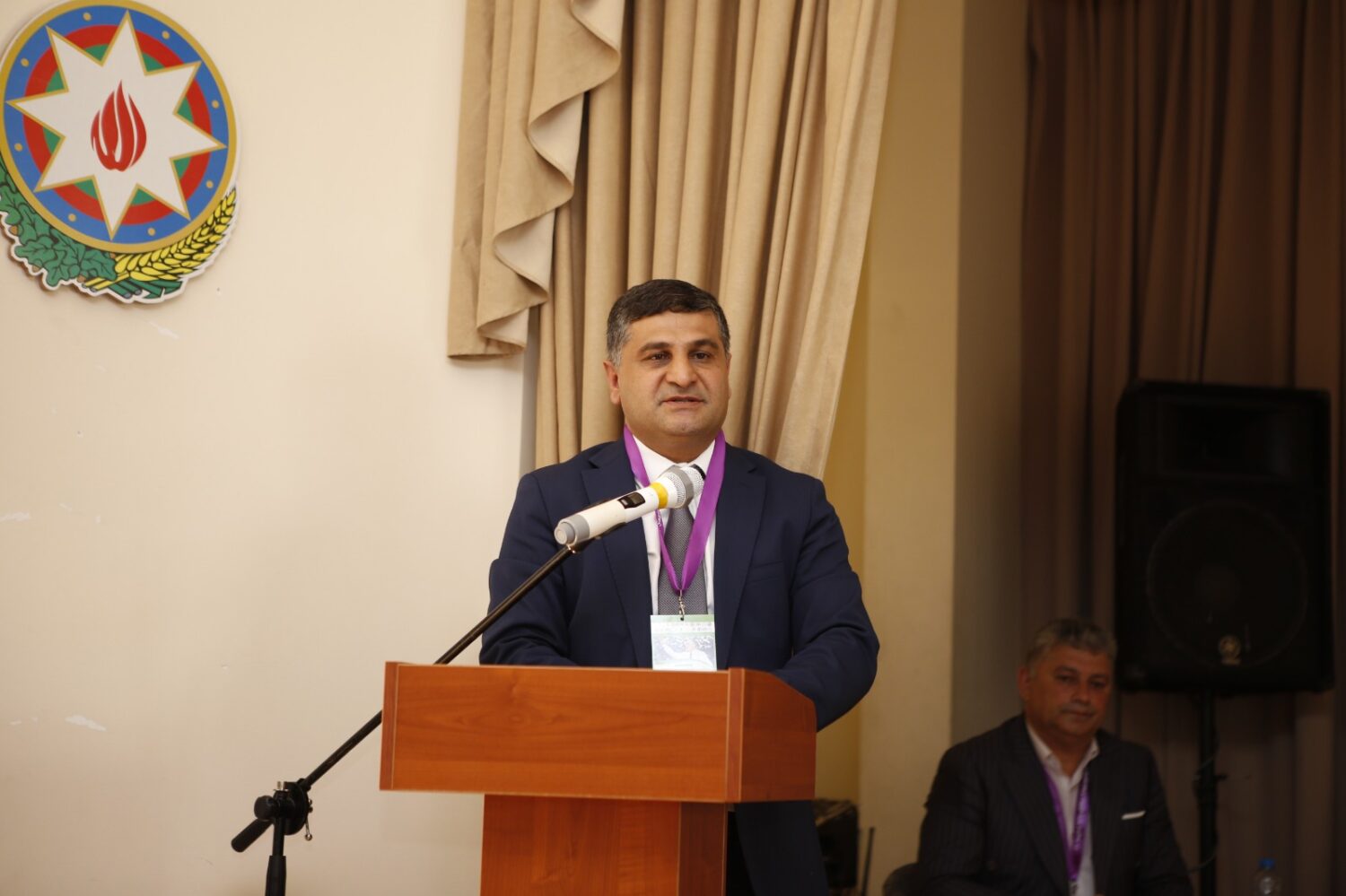
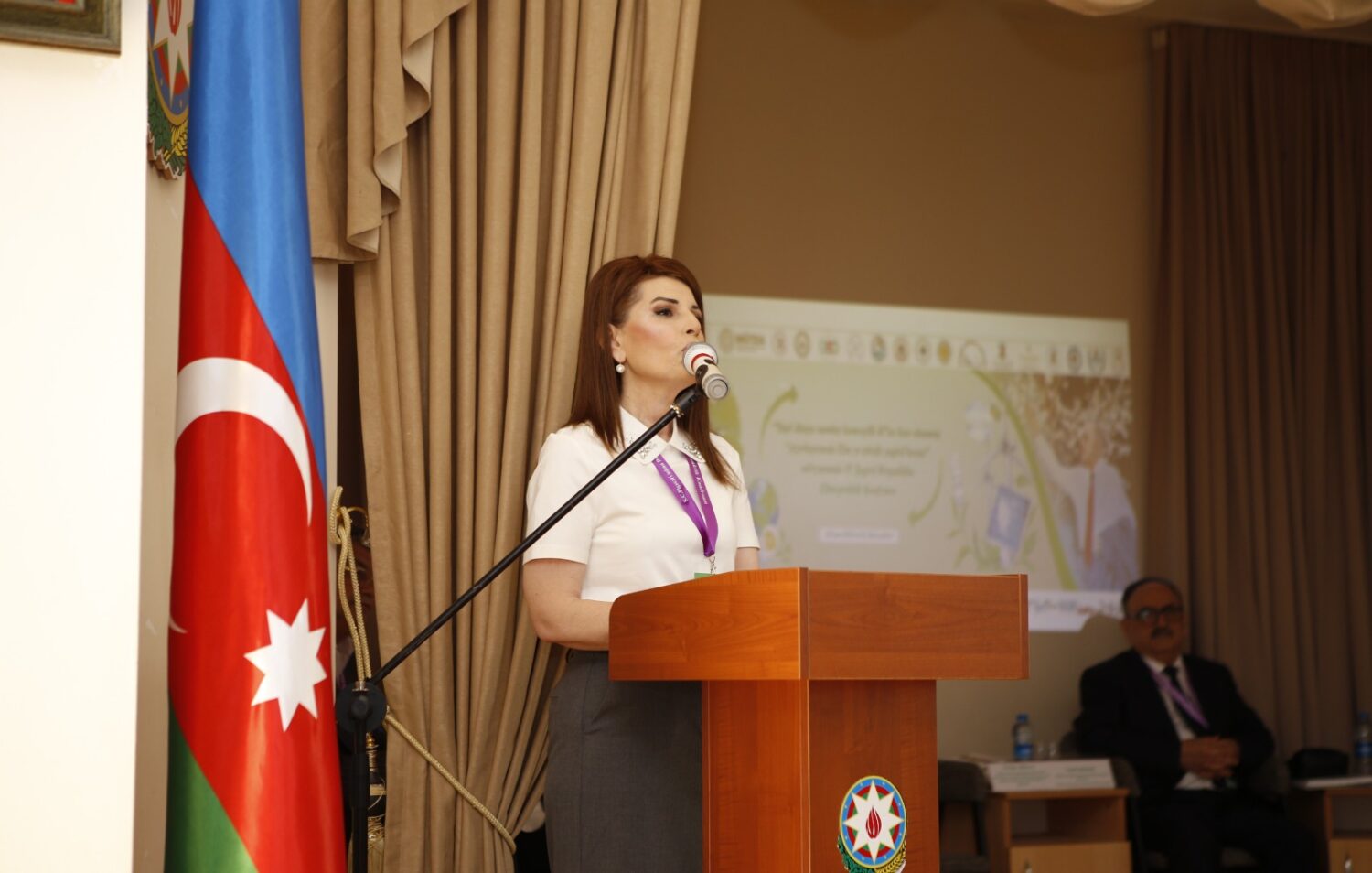
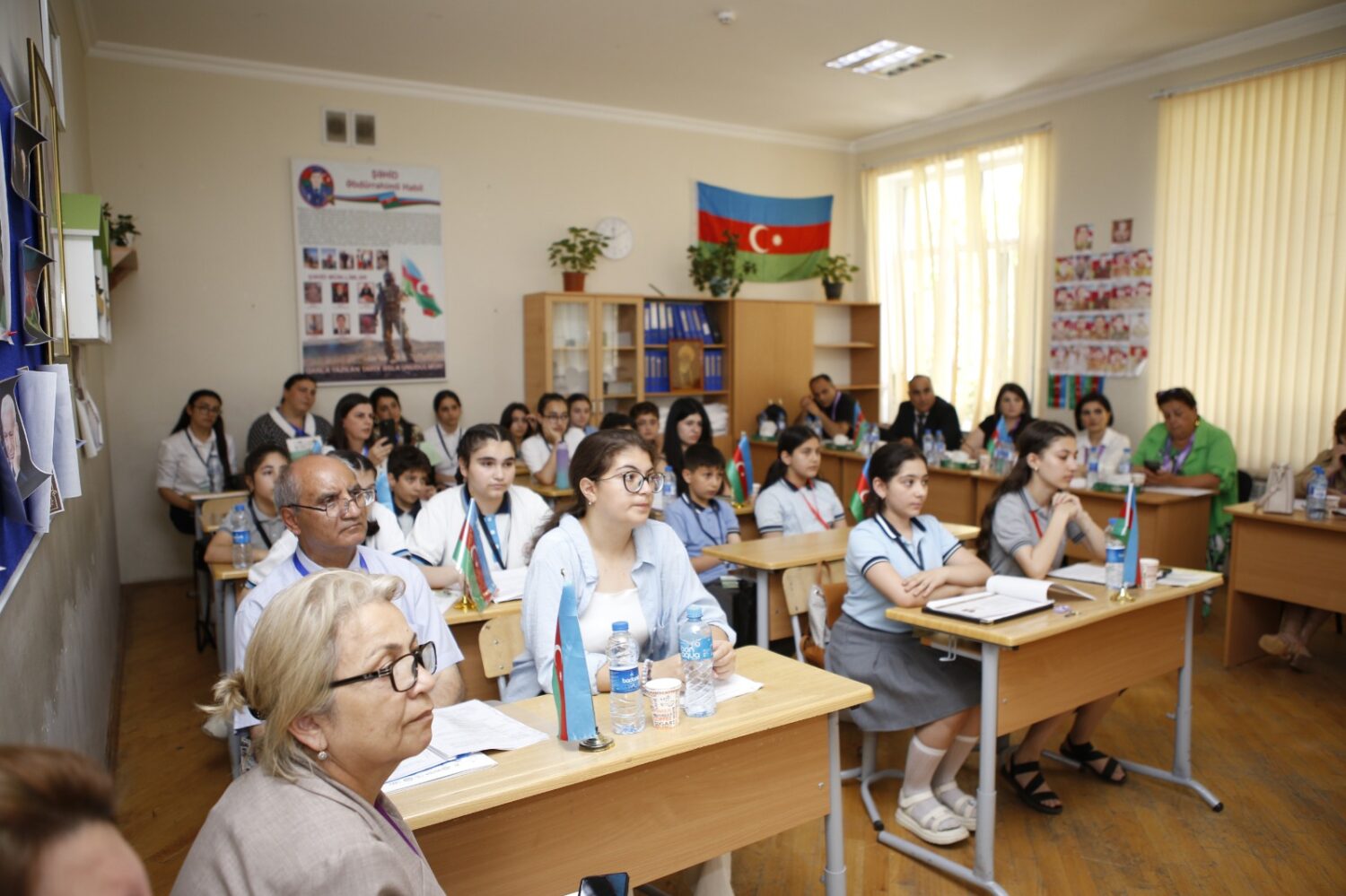
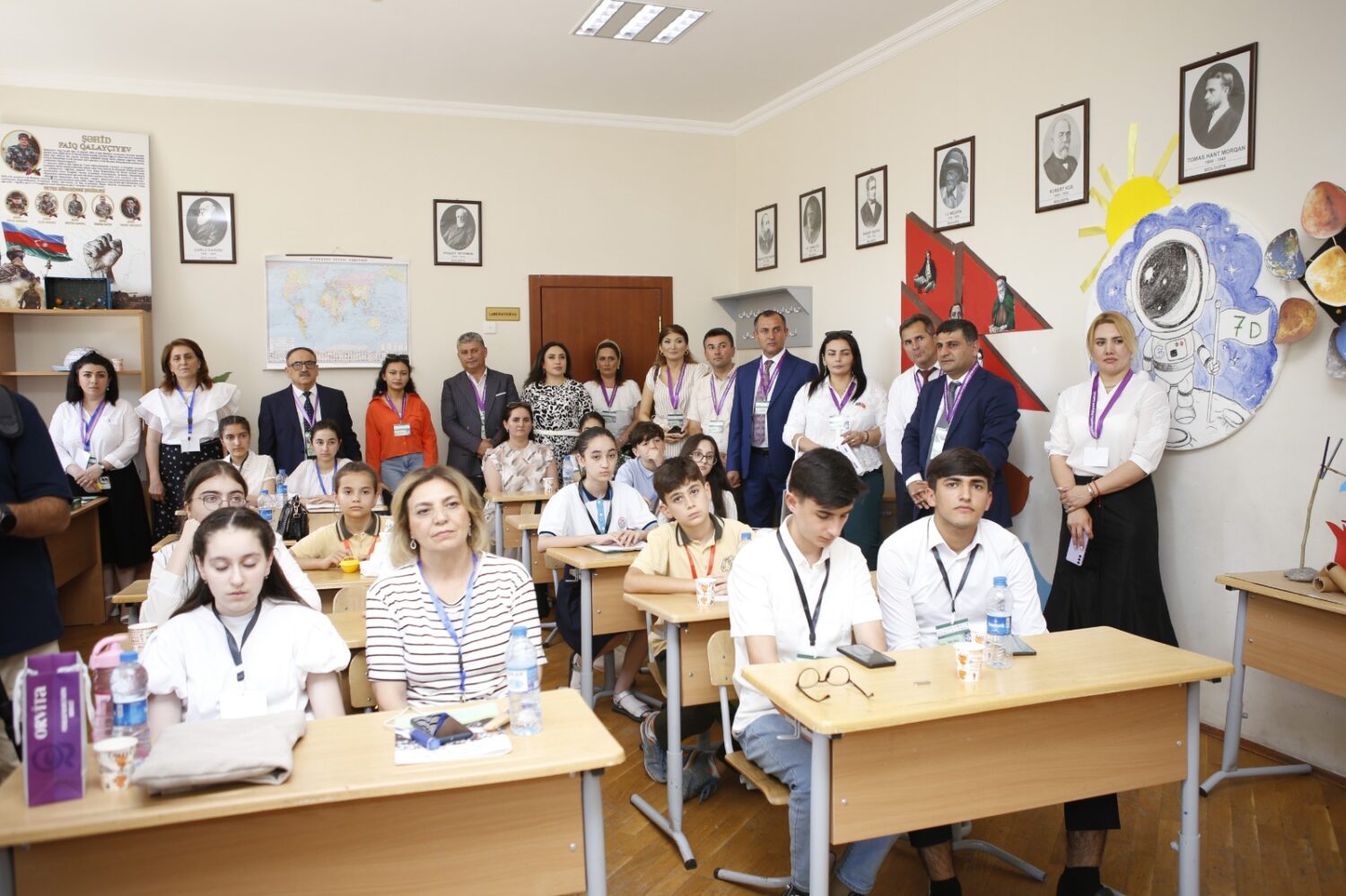
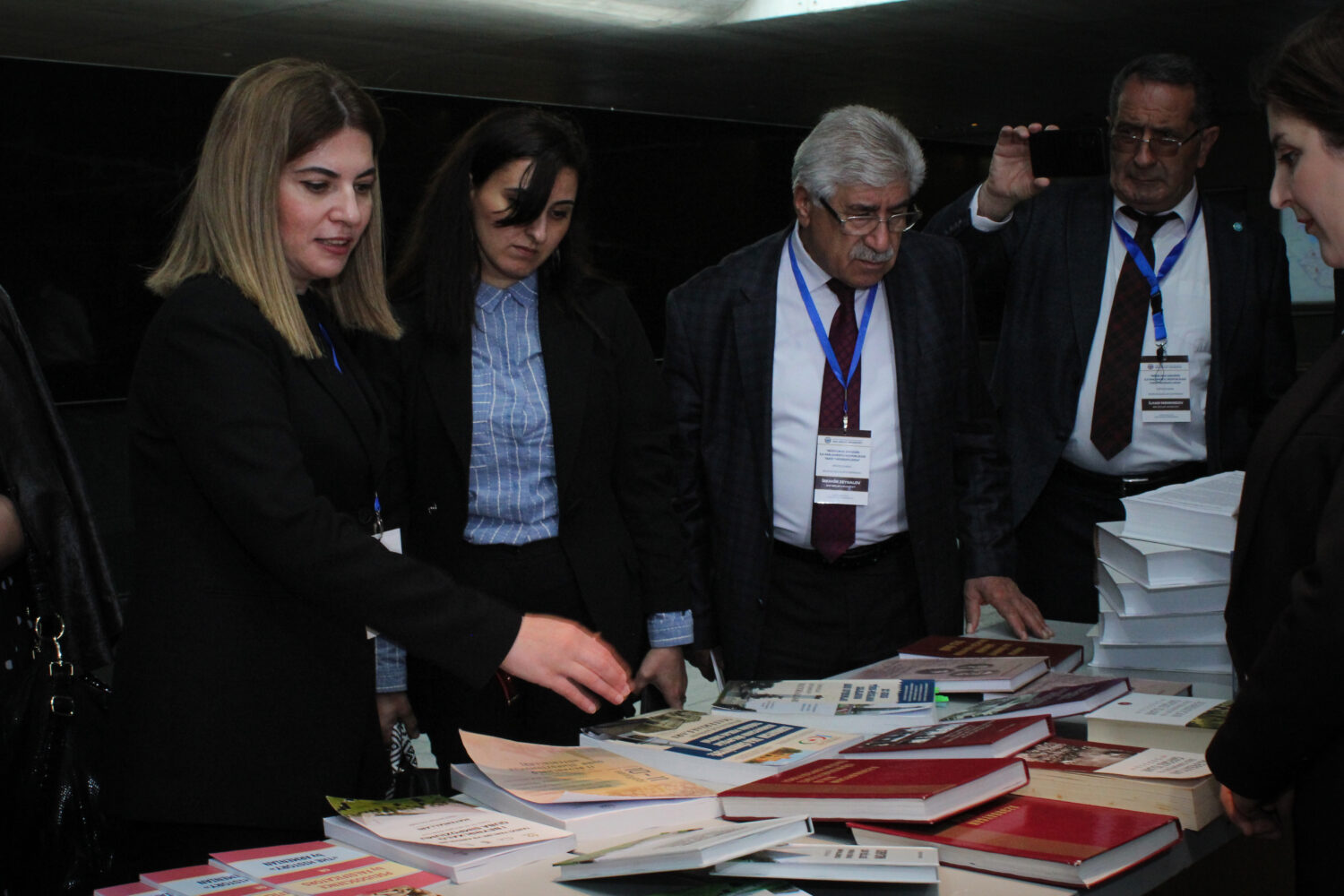
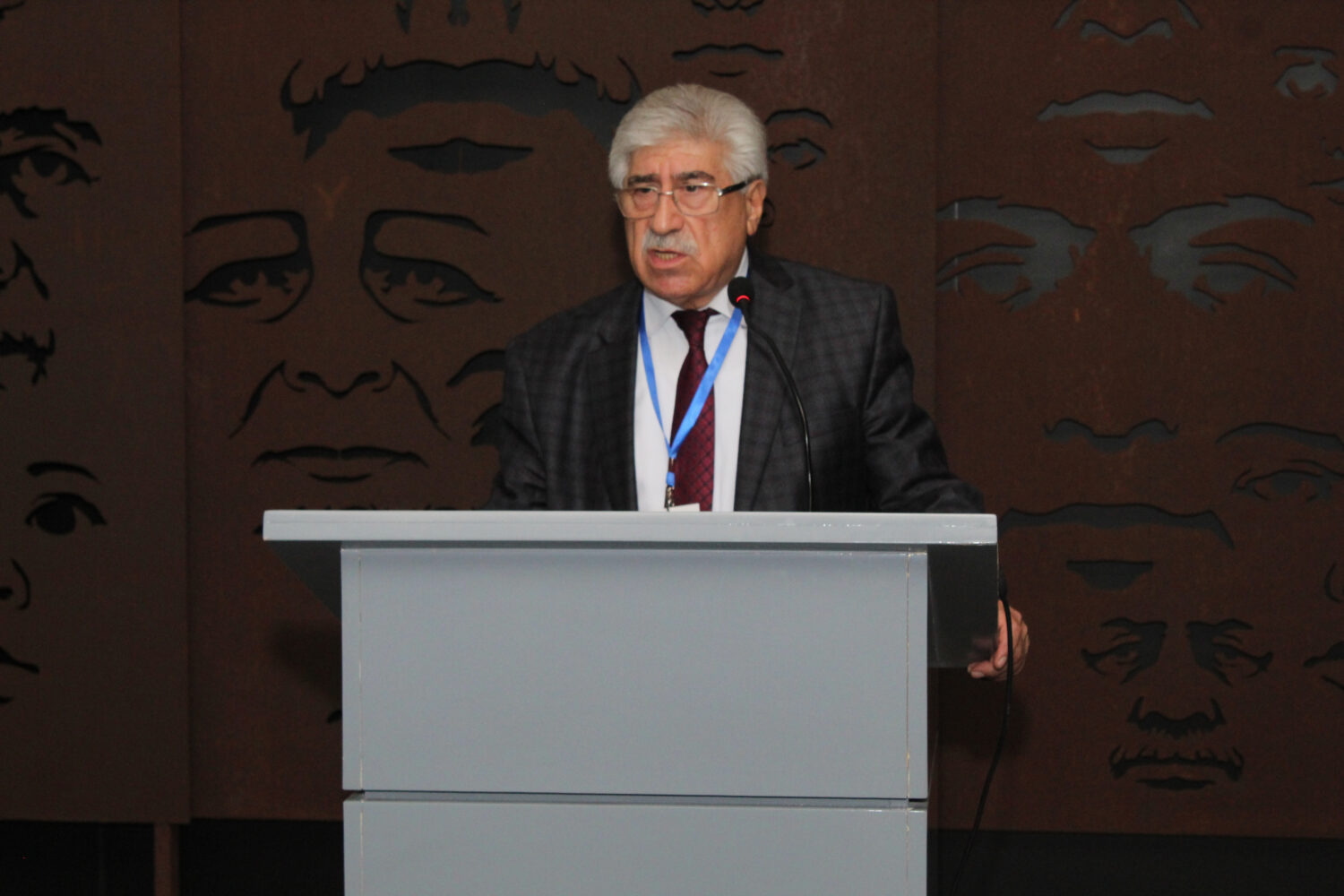
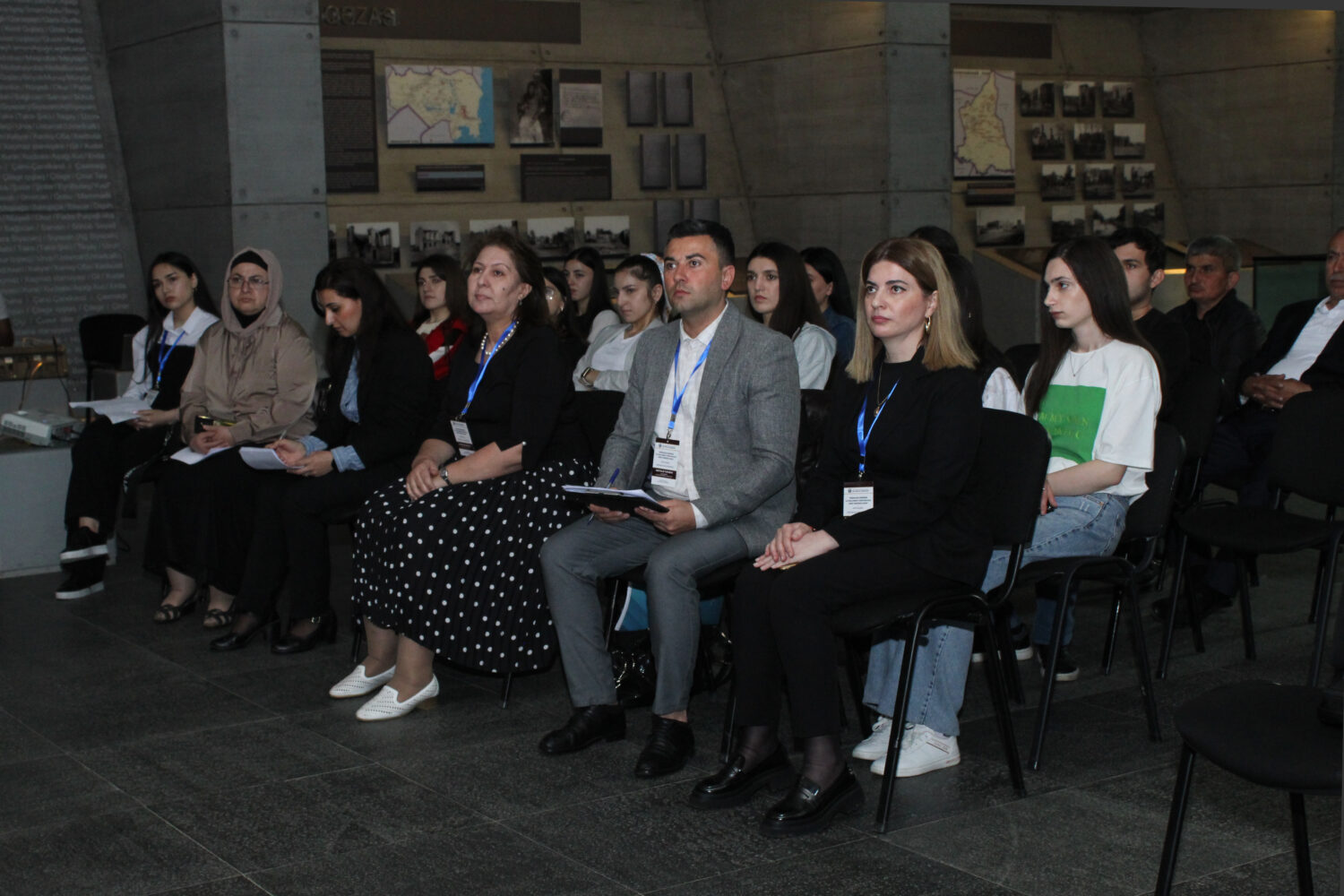
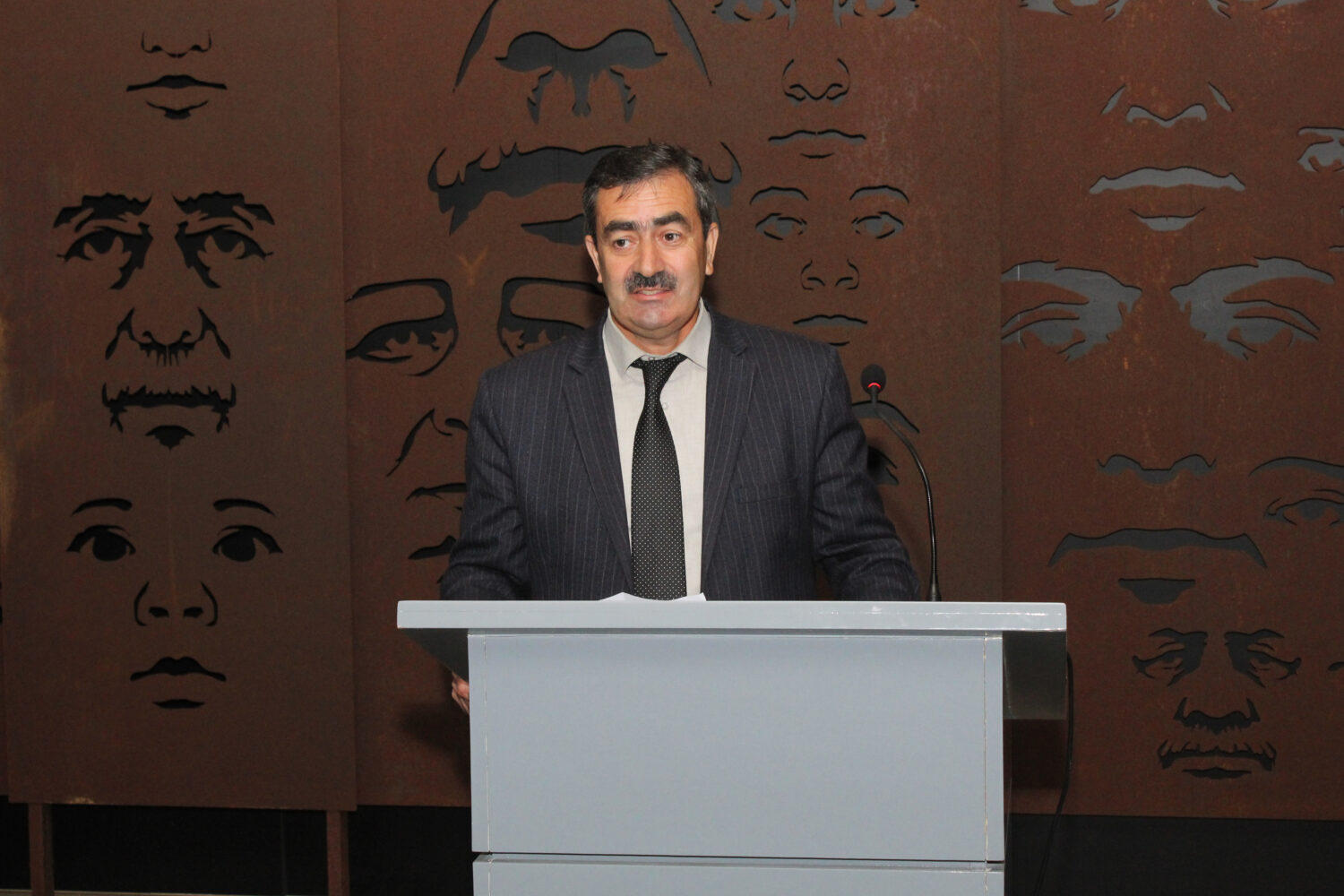
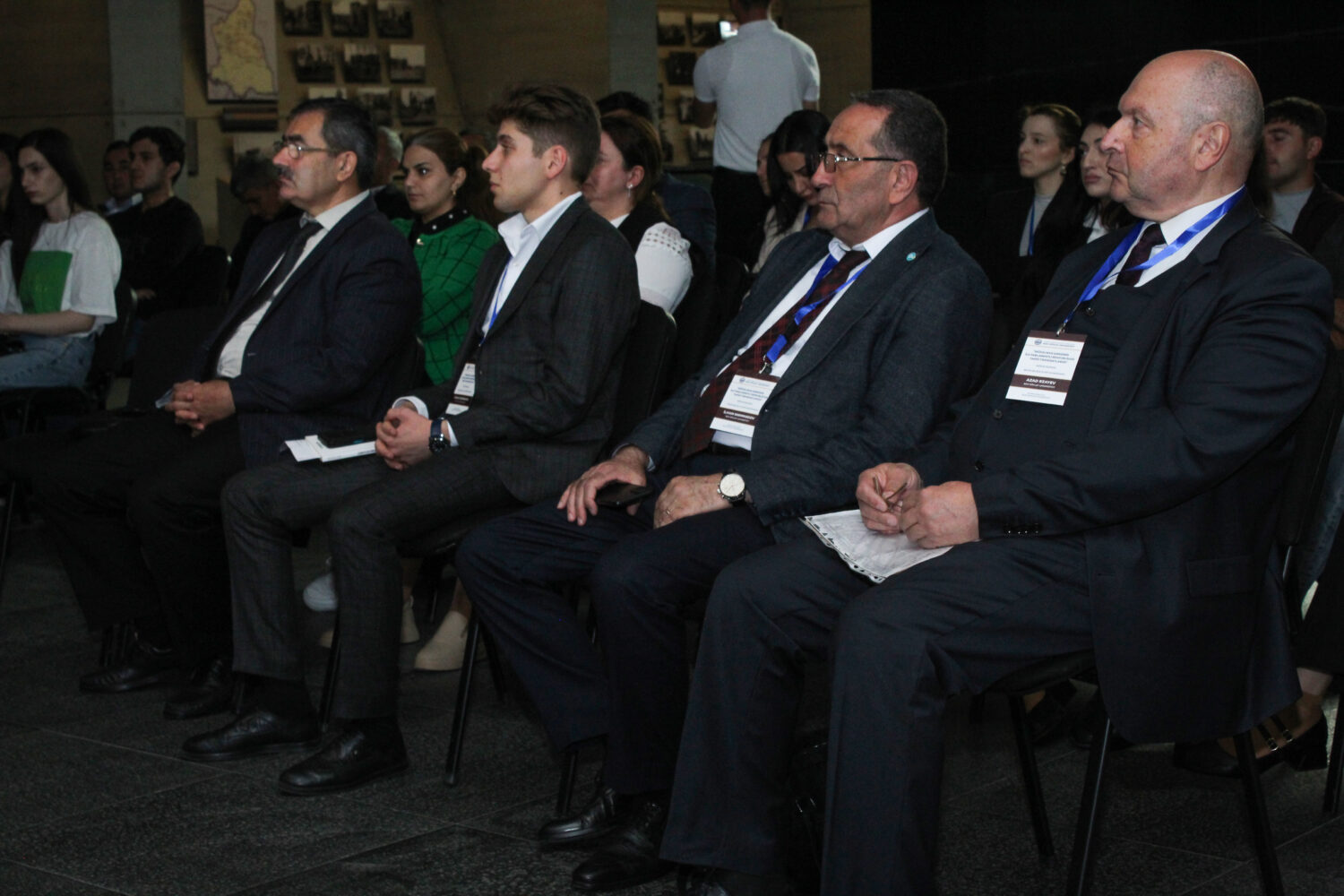
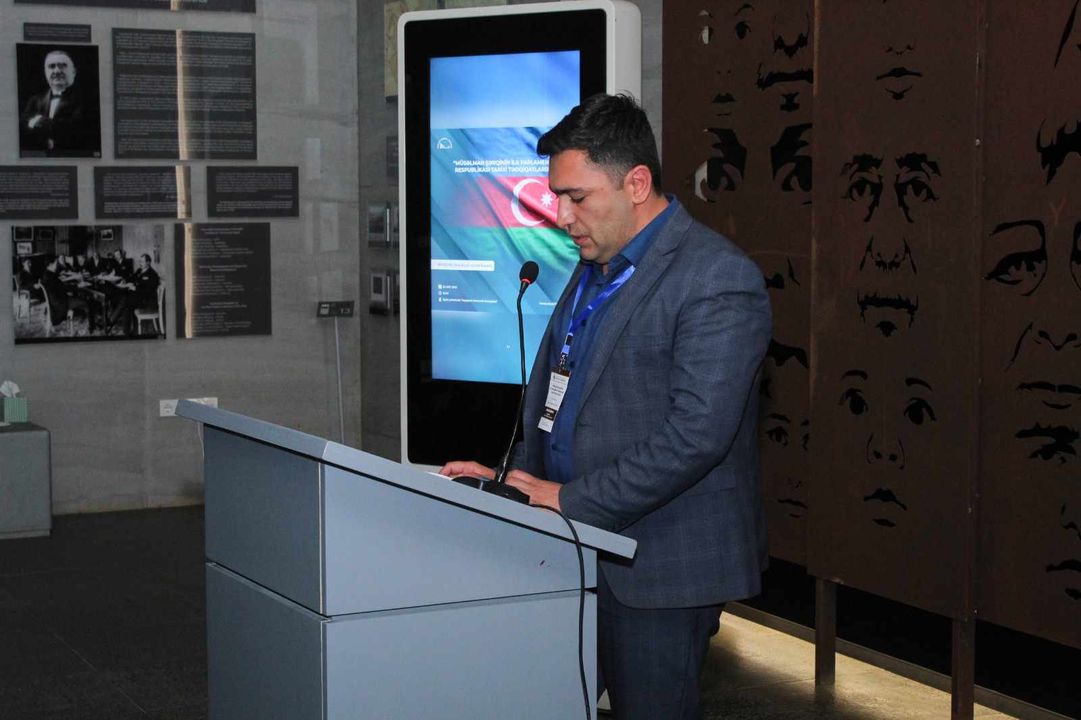
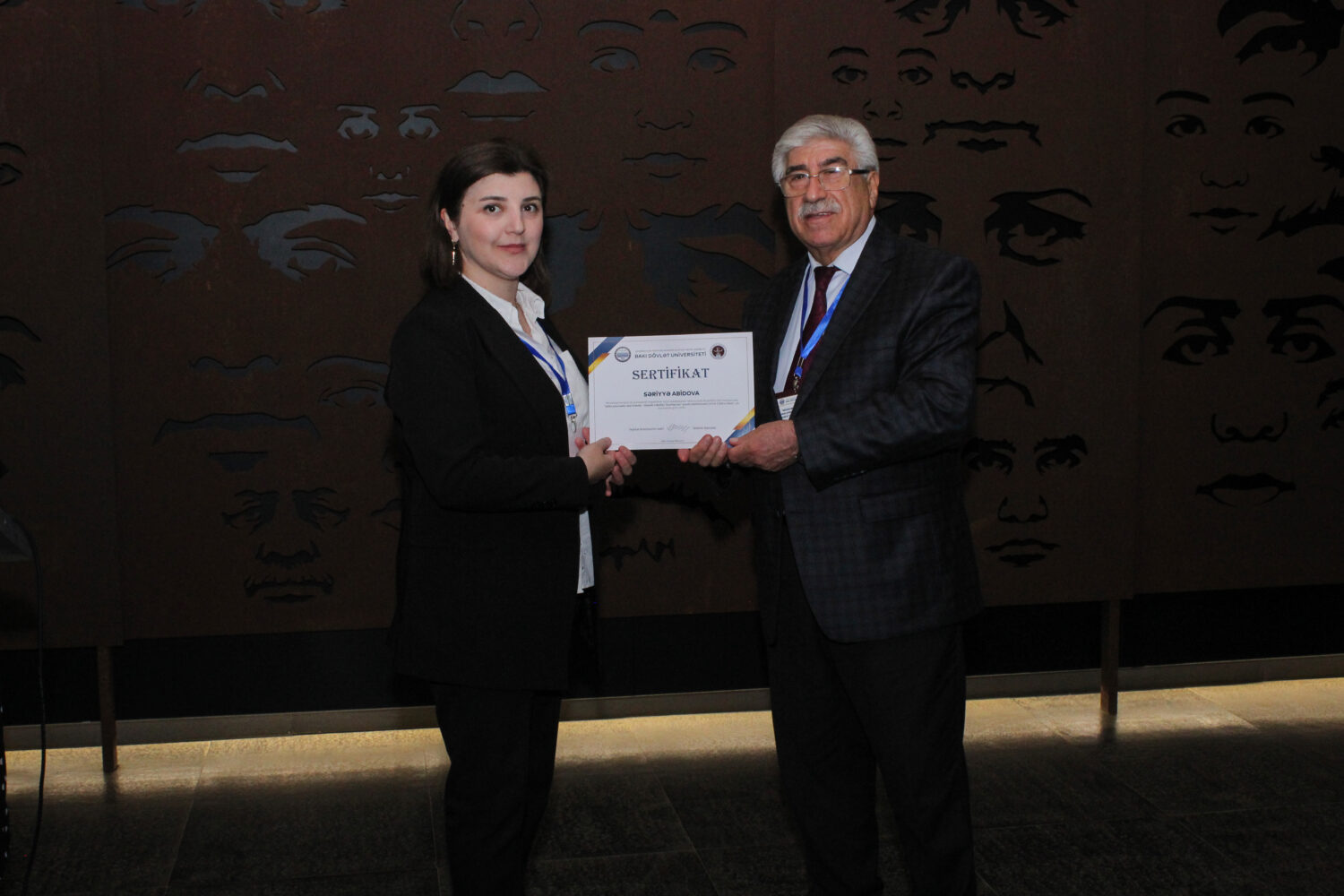
On May 18, International Museum Day, a hybrid format “Master class” titled “Perspectives of Development of Museum Studies” was organized at the Genocide Memorial Complex. The session featured Dr. Yegana Eyvazova, PhD in pedagogy and Associate Professor, who heads the Department of Museum Studies at ADMIU. Following the master class, there was an exchange of views on topics of interest among the Complex staff.

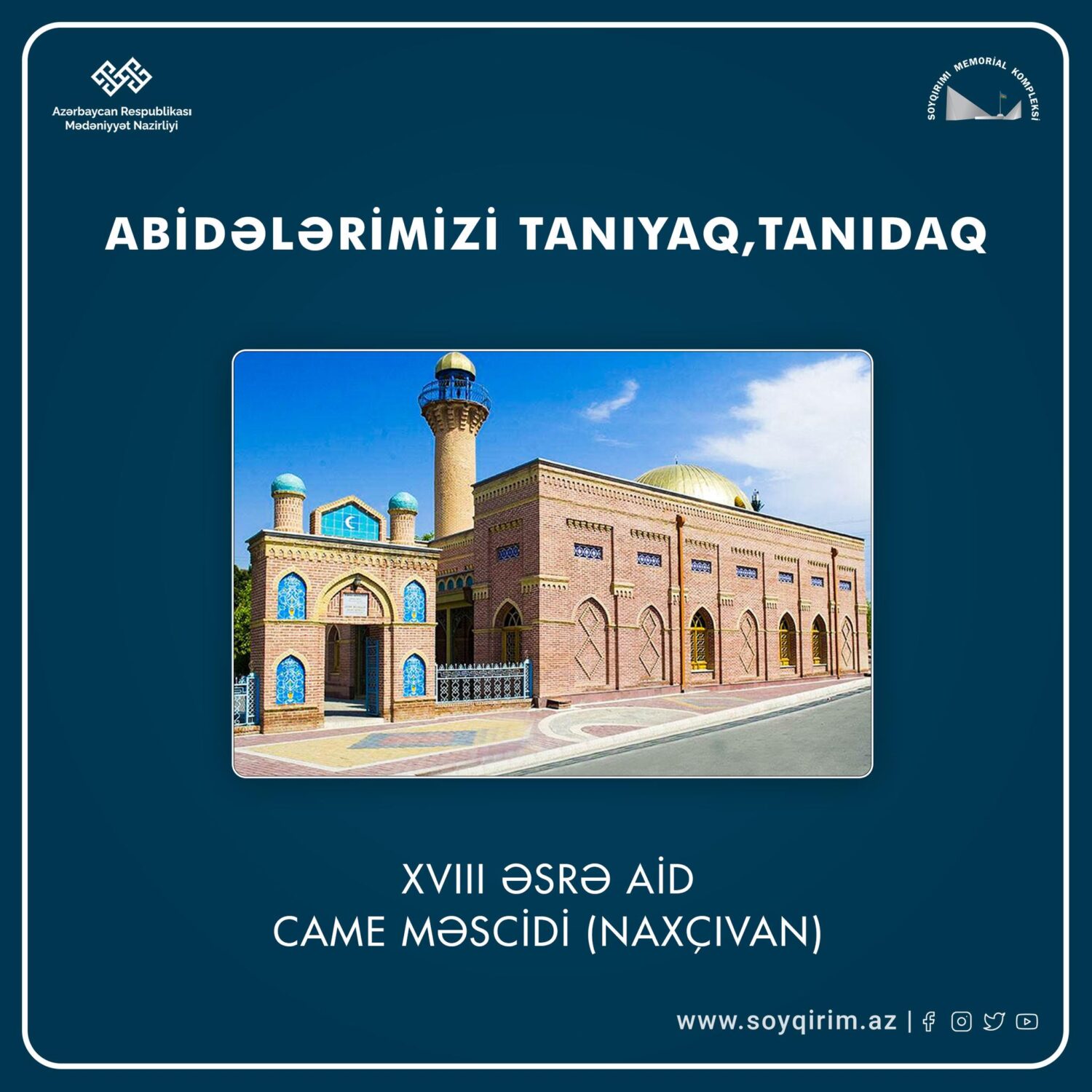
On the eve of the International Day of Museums on May 18, Nurjan Allahverdiyeva, an employee of the Scientific Research, Exposition, and Fund Department of the "Genocide Memorial Complex" in Guba, visited the Nakhchivan Memorial Museum. During her visit, N. Allahverdiyeva provided information about the ongoing work at the Genocide Memorial Complex and presented the Nakhchivan Memorial Museum with newly printed maps in Azerbaijani and English. These maps marked the locations in the Guba region where the events of the genocide occurred.

“Azərbaycan Mülki Aviasiya Muzeyi”

Azərbaycan Mülki Aviasiya Muzeyi 2005-ci ilin aprel ayında “Azərbaycan Hava Yolları” Dövlət Konserni tərəfindən Azərbaycan Mülki Aviasiya Muzeyinin yaradılması haqqındakı qərara əsasən, 2008-ci ildə istifadəyə verilmişdir.
Mülki Aviasiya Muzeyi Milli Aviasiya Akademiyasının ərazisində yerləşən dördmərtəbəli tədris korpusunun nəzdində, I mərtəbədə yerləşir.
Muzey ekspozisiya və fond şöbəsindən ibarətdir. Muzeyin fondu muzey əşyalarının toplanması, mühafizə olunması, uçot-qeydiyyat işinin aparılması funksiyasını həyata keçirir. Muzeyin fondunda Azərbaycanın mülki aviasiyasının dünənini və bu gününün öyrənilməsində zəruri olan əyani vəsaitlər, qəzet materialları, əlyazmaları, qərar və sərəncamlar kimi dövlət sənədlərinin surətləri, fotoşəkillər, filmlər, bədii ədəbiyyat, təsviri sənət nümunələri və s. toplanmışdır. Onların ümumilikdə sayı 11045-dən artıqdır.
Muzey milli aviasiyamızın tarixinin və bugünkü inkişafının təbliği üçün ekskursiyalar həyata keçirir.

"The Azerbaijan Medicine Museum"

The Azerbaijan Medicine Museum has been in operation since January 29, 1986, as per Order No. 162 of the Ministry of Health of the Azerbaijan SSR. Its establishment aimed to shed light on and preserve an essential aspect of Azerbaijani cultural heritage—the history of medicine and healthcare development in the republic, along with the notable contributions of Azerbaijani scientists to both national and global science.
Situated within the premises of the former Karashaher hospital, where the esteemed statesman Nariman Narimanov practiced medicine from 1914 to 1917, the museum serves as a significant hub for showcasing this heritage. With a total of 13,845 items housed in its collection, the museum’s treasury continuously grows with the addition of new materials.
Regular visitors to the museum include students from the Azerbaijan Medical University, doctors from the Medical Training Institute, students from secondary medical educational institutions, as well as foreign guests and local citizens, all contributing to the ongoing appreciation and understanding of Azerbaijan’s medical legacy.

On the eve of the 101st anniversary of the birth of the great leader Heydar Aliyev, a student-teacher team from Azerbaijan State Pedagogical University and Khazar University, specializing in history and history-geography and led by Dr. Sevil Bahramova, visited the "Genocide Memorial Complex" in Guba.

There, Dr. Rakhshanda Bayramova, the director of the complex, provided the students with insights into Heydar Aliyev’s legal and political evaluation of the genocide perpetrated against Azerbaijanis. Subsequently, the students toured the Genocide Museum.

Abdugappor Kyrgyzbeyov, rector of Nizami Tashkent State Pedagogical University of Uzbekistan, Executive Director Erkin Nuriddinov of Uzbekistan-Azerbaijan Friendship Society, Vugar Mirzayev from Azerbaijan Cultural Center named after Heydar Aliyev in Uzbekistan, and Yusif Aliyev, director of Azerbaijan State Pedagogical University Guba Branch visited the "Genocide Memorial Complex" in Guba.

During their visit, they were briefed on the ethnic cleansing, deportation, and genocide perpetrated against Azerbaijanis in pursuit of the “Great Armenia” myth by Armenian nationalists throughout history. Specifically, they learned about the genocide of 1918, which resulted in the deaths of over 50 thousand innocent residents. The visitors were also provided with booklets detailing the historical facts of the genocide.

"The Ashabi-Kahf"

The Ashabi-Kahf sanctuary is located approximately 12 km from the city of Nakhchivan, in the Julfa district, between the Hachadag and Nahajir mountains, at an altitude of 1665 meters above sea level. Studies have confirmed that the “Ashabi-Kahf” cave mentioned in the Holy Quran is situated in Nakhchivan.
The name “Ashabi-Kahf” is derived from the Arabic language. “Ashab” means “adolescent boys,” and “kahf” means “cave” or “place of refuge.” “Ashabi-Kahf” is not only a shrine but also one of the oldest historical monuments in Azerbaijan. The shrine comprises several parts, including “Yeddi Kisena,” “Garden of Paradise,” “Black Stone,” “Damcikhana,” and a Mosque.
Under the directive of the esteemed leader Heydar Aliyev, improvement and restoration works were carried out at the shrine. At the entrance of the shrine, an inscription informs visitors that the “restoration and beautification works at the Ashabi-Kahf shrine were conducted in 1998 under the order and patronage of the honorable President of Azerbaijan, Heydar Aliyev.”